
Vasa Warship That Sank in Minutes and Preserved 333 years
Commissioned by King Gustavus Adolphus, the Swedish warship Vasa sank during its maiden voyage in 1628. Structural flaws caused by excessive weight and royal demands for extra armament made the vessel unstable. It capsized shortly after leaving Stockholm harbor, remaining submerged for over three centuries in the harbor silt.
The Baltic Sea’s low salinity and oxygen-poor environment prevented the wooden hull from rotting. Rediscovered in 1956 and raised in 1961, the vessel underwent extensive chemical preservation. Today, the nearly intact ship serves as a historical time capsule, illustrating 17th-century maritime engineering and the consequences of flawed design.
In 1961, divers in Stockholm harbor pulled something out of the mud that shouldn’t have existed anymore.
A wooden warship, sunk for over three centuries, rose to the surface with 95 percent of its original structure still intact. No major shipwreck had ever survived like this.
The Vasa ship should have rotted away decades earlier. Instead, it became one of the strangest survival stories in maritime history — and the reason for its long sleep on the seafloor is even stranger than its rediscovery.
A Warship Built to Rule the Baltic
To understand the Vasa ship, you have to understand the war behind it.
In the early 1600s, Europe was tearing itself apart in the Thirty Years’ War. Sweden’s ambitious king, Gustavus Adolphus, wanted more than just a strong navy. He wanted the entire Baltic Sea under Swedish control.
His real fight wasn’t against some distant enemy. It was against his own cousin, King Sigismund III of Poland.
To prove Swedish dominance once and for all, Gustavus Adolphus ordered a warship unlike anything the region had seen. It needed to do two things at once.
First, it had to be a floating weapon — powerful enough to shatter any enemy fleet in a single battle. Second, it had to be propaganda in wood and paint.
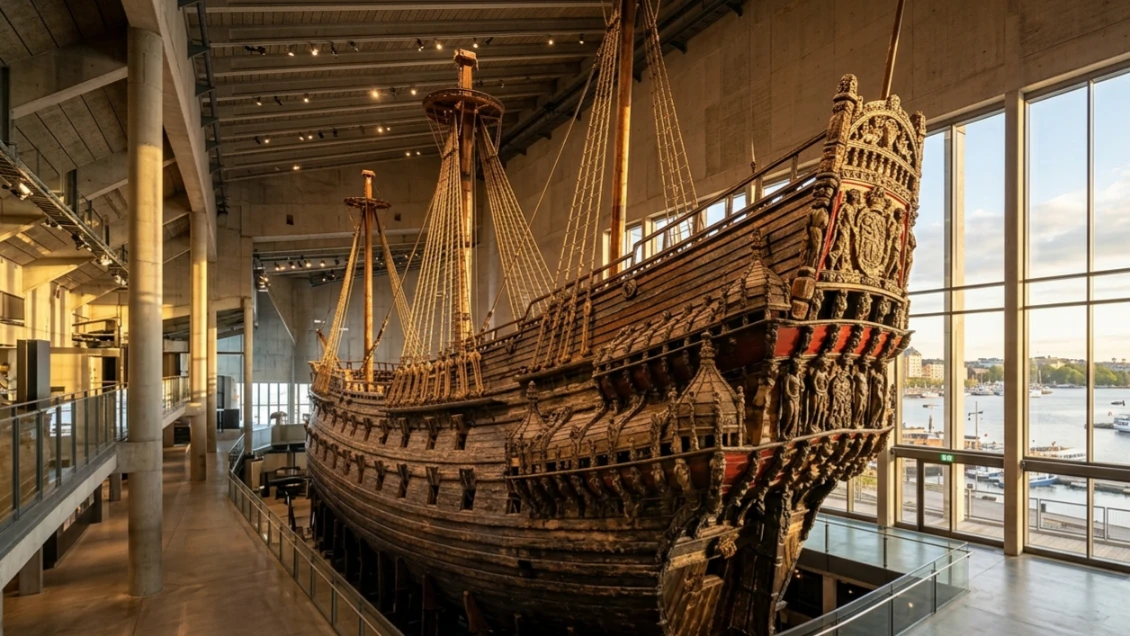
More than 500 carved wooden sculptures and 200 ornaments covered the ship, painted in bold reds and golds. Roman emperors, biblical heroes, lions, and mocking caricatures of Polish nobility were carved into her hull.
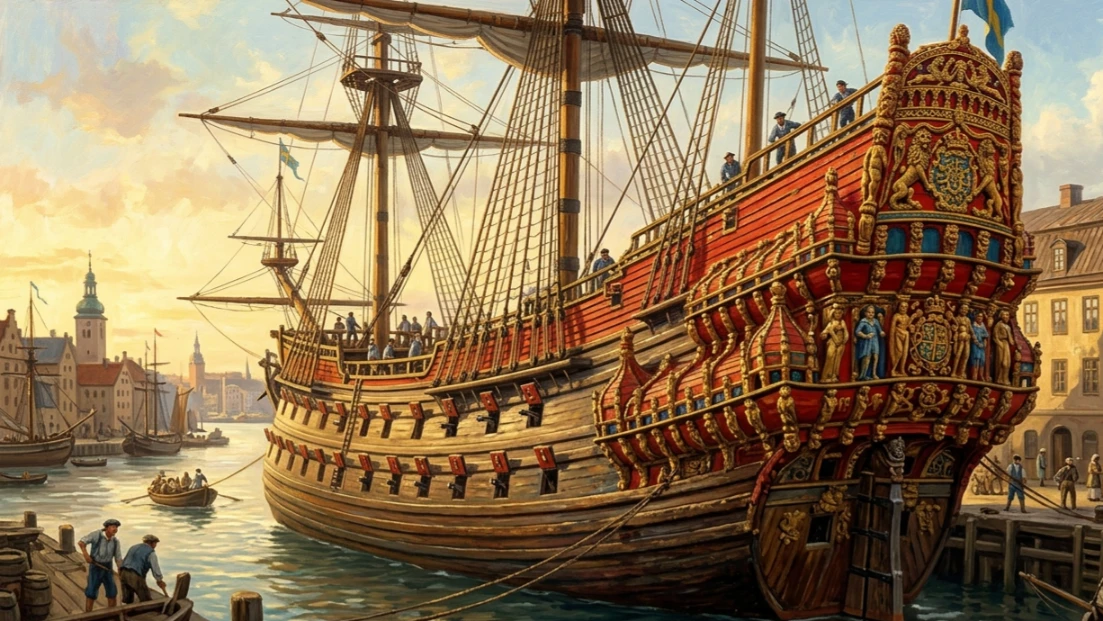
Every detail was designed to make onlookers tremble at the power of the Swedish crown.
A King Who Wouldn’t Listen
Building this warship fell to master shipwright Henrik Hybertsson. He died in 1627, before the Vasa ship was finished, leaving the project without its original architect.
Meanwhile, the king kept changing his orders from abroad.
Gustavus Adolphus insisted on something unusual: two full decks of heavy bronze cannons instead of the standard single gun deck, giving the ship 64 guns in total. Under royal pressure, the shipbuilders made the vessel taller and wider than a ship of her size could safely carry.
As a result, there wasn’t enough room below deck for the ballast stones needed to balance all that extra weight up top. The Vasa ship was, in effect, top-heavy from the very beginning.
The warning signs were impossible to miss. Days before departure, with Admiral Klas Fleming watching, the crew ran a standard stability test — 30 sailors dashing from one side of the deck to the other.
After just three passes, the ship tilted so dangerously that the test had to be stopped immediately. One more pass and she might have capsized right there at the dock.
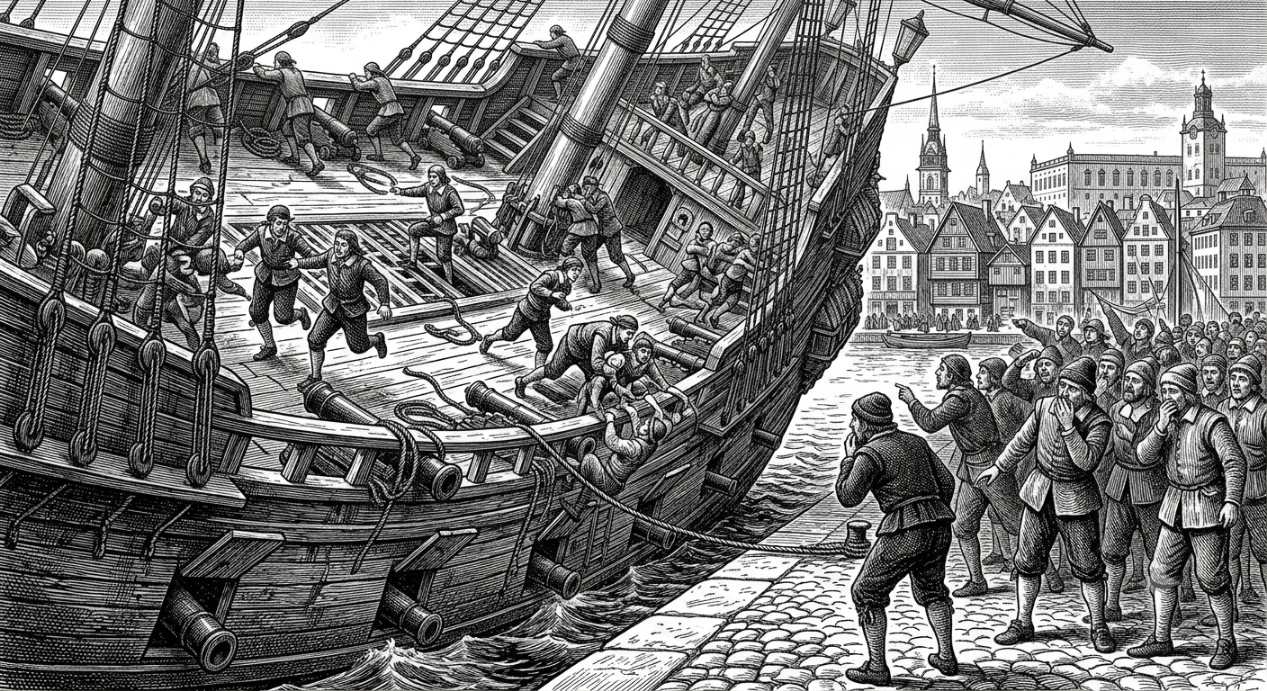
But nobody in the royal court had the courage to walk up to the king and tell him his masterpiece was, in truth, a floating coffin.

The Vasa Ship’s First and Final Voyage
On the afternoon of August 10, 1628, thousands of Stockholm residents lined the harbor to watch history in the making.
Sailors’ families packed the decks alongside the crew, invited along for what was meant to be a short, festive first sail.
As the Vasa ship pulled away from shore, her lower gun ports were opened to fire a ceremonial salute. It was a decision that would prove fatal.
The ship had traveled barely 1,300 meters when a mild gust of wind caught her sails and tipped her to port. Water poured straight through the open gun ports.
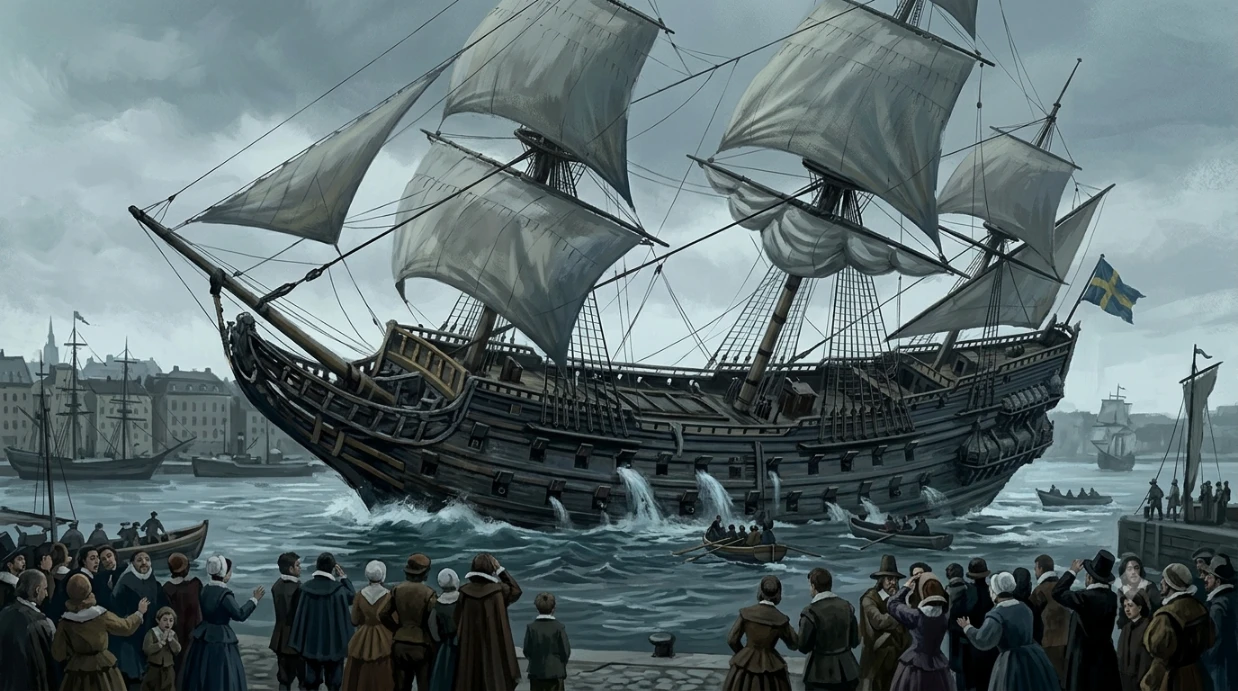
Within minutes — in full view of the very people who had come to celebrate her — the Vasa ship rolled onto her side and sank to the harbor floor. An estimated 30 people drowned that day, with some accounts placing the toll as high as 50.
Why Nobody Could Raise the Vasa Ship for Centuries
Sweden tried to recover the wreck almost immediately. But 17th-century technology stood no chance against 1,200 tons of ship buried in mud, 32 meters below the surface.
There were no powerful cranes or winches strong enough for the job. Early attempts using ropes and wooden vessels failed again and again — ropes snapped, and the mud refused to let go.
The Diving Bell Miracle
In the 1660s, a man named Albrecht von Treileben tried a different approach: the diving bell.
Using this primitive device, brave divers descended into freezing, pitch-black water without any oxygen supply. Working with little more than an iron hook, they managed to salvage over 50 heavy bronze cannons from the wreck.
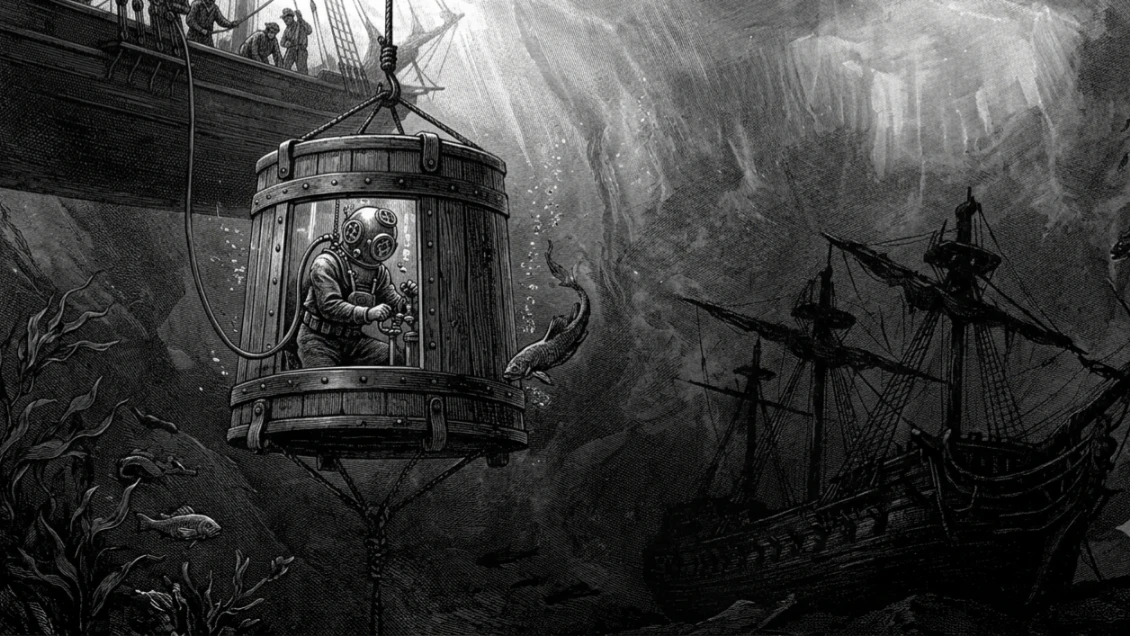
Bronze was so valuable at the time that selling these cannons covered the entire cost of the salvage operation.
Once the valuable cannons were gone, there was no financial reason left to raise the massive wooden hull. Efforts to recover the Vasa ship quietly stopped.
As the decades turned into centuries, the people who remembered exactly where she sank passed away. Eventually, the Vasa ship’s location in Stockholm harbor was simply forgotten.

The Baltic Sea’s Strange Gift: How the Vasa Ship Survived 333 Years
Wooden shipwrecks around the world usually crumble within a few decades. The Vasa ship should have followed the same fate. Instead, the Baltic Sea did something unusual.
Shipworms — the tiny creatures responsible for devouring sunken wood almost everywhere else in the ocean — cannot survive in the Baltic. The sea’s salt levels are simply too low for them.
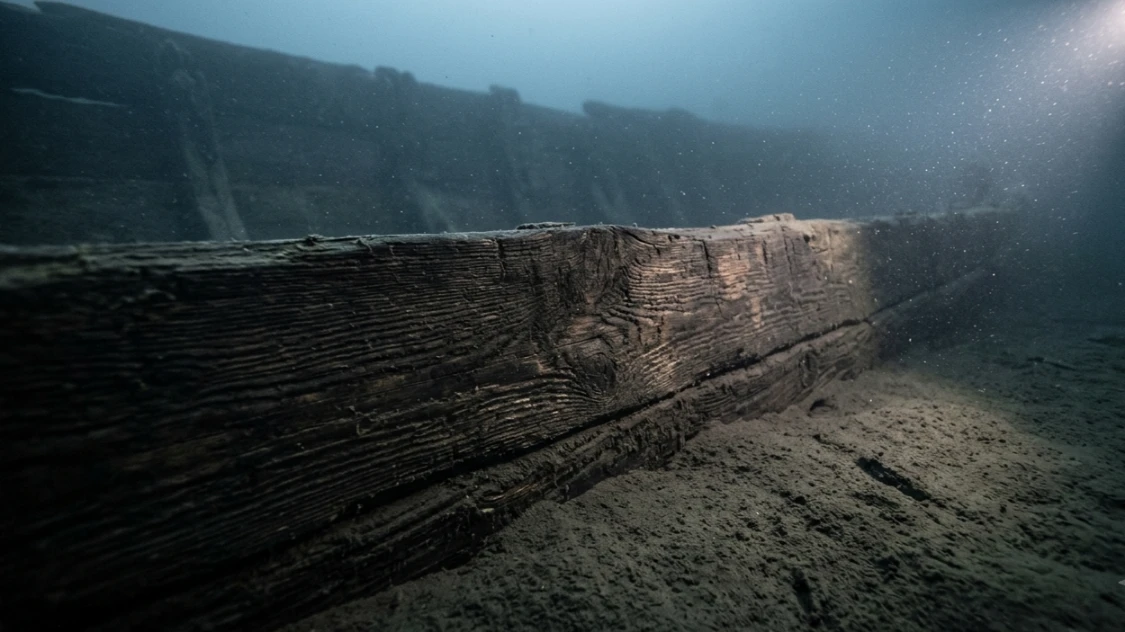
In addition, the harbor’s dark, freezing mud created an oxygen-poor environment where bacteria couldn’t thrive either. Without shipworms or active bacterial decay, the Vasa ship’s timber had almost nothing left to destroy it.
Bringing the Vasa Ship Back to the Light
In 1956, a maritime history enthusiast named Anders Franzén began combing through old records, convinced the wreck could still be found. Using a homemade core sampler, he eventually pulled up a fragment of blackened oak from the harbor floor.
He had found the Vasa ship.
Between 1956 and 1961, divers dug six tunnels beneath the hull using high-pressure water jets. Heavy steel cables were threaded through these tunnels, and pontoons were used to lift the wreck step by step.
On April 24, 1961, the Vasa ship broke the surface of Stockholm harbor for the first time in 333 years.
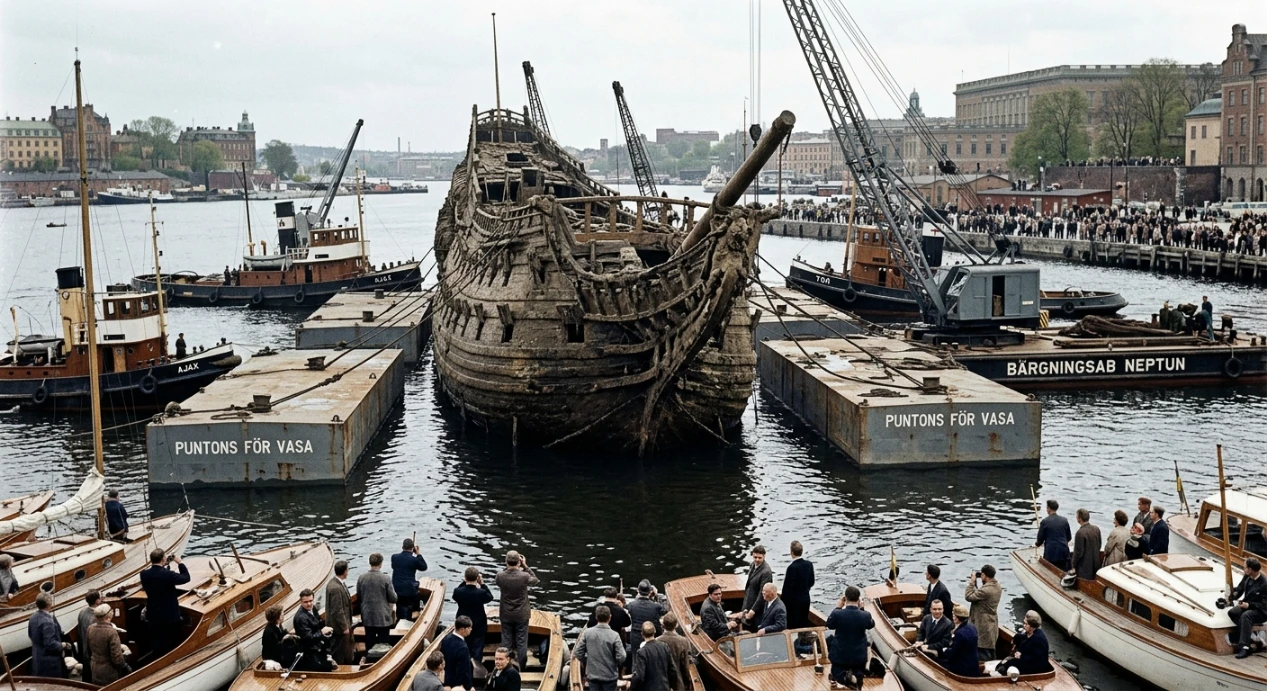
The biggest danger wasn’t over, though. Centuries-old waterlogged wood tends to shatter the moment it dries out. To prevent that, conservators sprayed the hull continuously with polyethylene glycol (PEG) for 17 straight years.
The chemical slowly replaced the water trapped inside the wood fibers. By the time the ship finally dried, her timber had become as solid as stone.

Today, the Vasa ship stands inside Stockholm’s Vasa Museum — a 69-meter hull surrounded by the sailors’ shoes, tools, wooden spoons, clay jugs, and even skulls recovered from the wreck. Each piece is a frozen fragment of that single afternoon in 1628.
The Final Decisions of the Titanic’s Wealthiest Passengers
Conclusion: A Disaster That Became a Time Capsule
The Vasa ship was meant to announce Swedish power to the world. Instead, it became a monument to arrogance, rushed engineering, and a king nobody dared to challenge.
Ironically, the very disaster that humiliated Sweden in 1628 is what preserved this ship so perfectly for the modern world to study.
Few warships have ever failed so completely — and few have ever taught us so much because of it.