
Lawrence of Arabia: The Spy Who Toppled an Empire
During World War I, British intelligence officer T.E. Lawrence used archaeological expertise to facilitate the Arab Revolt against the Ottoman Empire. By distributing gold and promising independence, he coordinated guerrilla warfare with tribal leaders. These efforts destabilized Ottoman control and supported British strategic interests throughout the Middle East.
Despite assurances of Arab sovereignty, secret agreements between Britain and France eventually partitioned the territory into colonial mandates. This mission of strategic deception contributed to the collapse of the Ottoman Empire. The resulting artificial borders and broken promises continue to influence Middle Eastern geopolitics more than a century later.
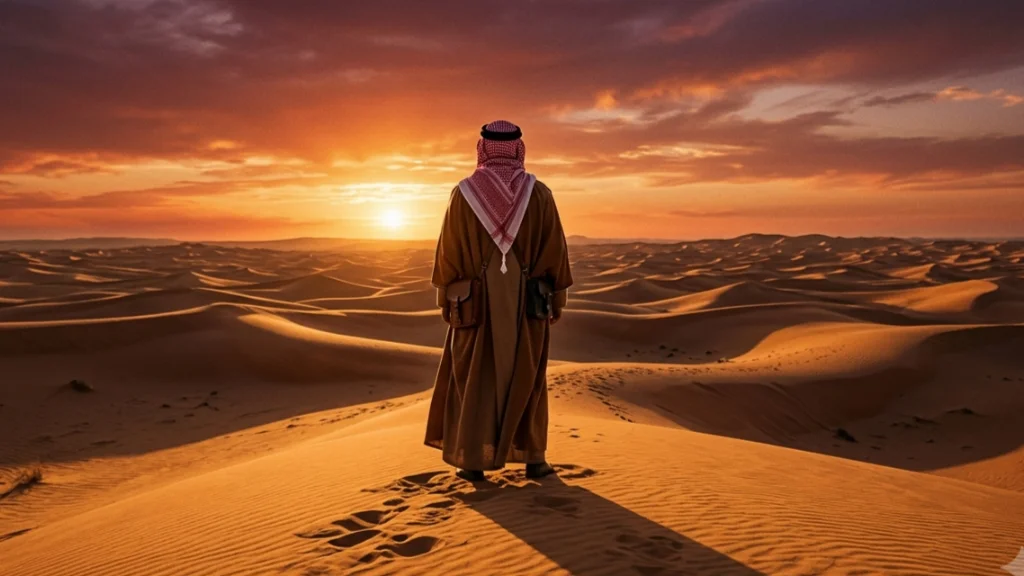
In the summer of 1916, a young British officer rode into the Arabian desert dressed as a sheikh. He carried no army, no artillery, no fleet.
He carried gold, promises, and a secret mission from London.
Within two years, a 600-year-old empire would begin to unravel behind him. History would remember him as Lawrence of Arabia. But the story of how he got there — and what he was really sent to do — is stranger than the legend.
A Child Born Into Scandal
Thomas Edward Lawrence was born in Wales in 1888, the second of five sons who, by law, shouldn’t have existed.
His father, Sir Thomas Chapman, was an Anglo-Irish baronet already married with four daughters. His mother, Sarah Junner, was the family’s governess.
When the affair was discovered, Chapman made a choice most men of his class never made. He walked away from his title, his wife, and his estate. He and Sarah fled to England, took the surname “Lawrence,” and lived as husband and wife — though they never legally married.
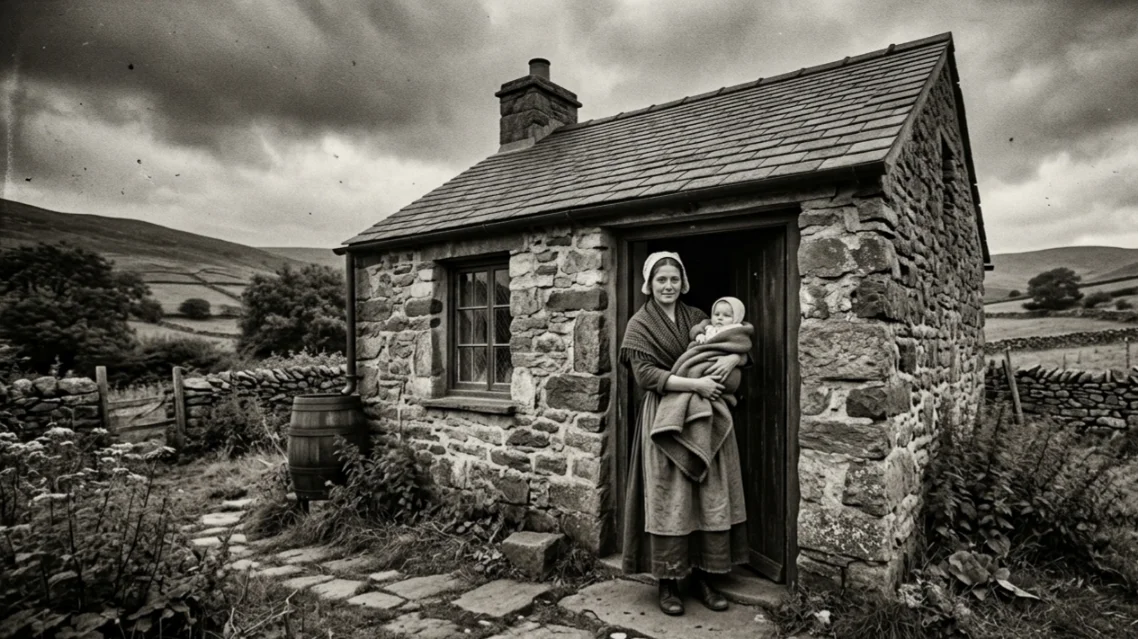
Sarah herself had been born out of wedlock. Around age ten, young Thomas discovered the truth about his own birth. It shaped a man who would spend his life comfortable with secrets and double identities — a trait that made him unusually well suited for what came next.
From Archaeologist to Intelligence Officer
Before the war, Lawrence worked as an archaeologist at Carchemish, on the Ottoman border in what is now Syria.
The digging was real. So were the ancient finds. But the timing was not a coincidence.
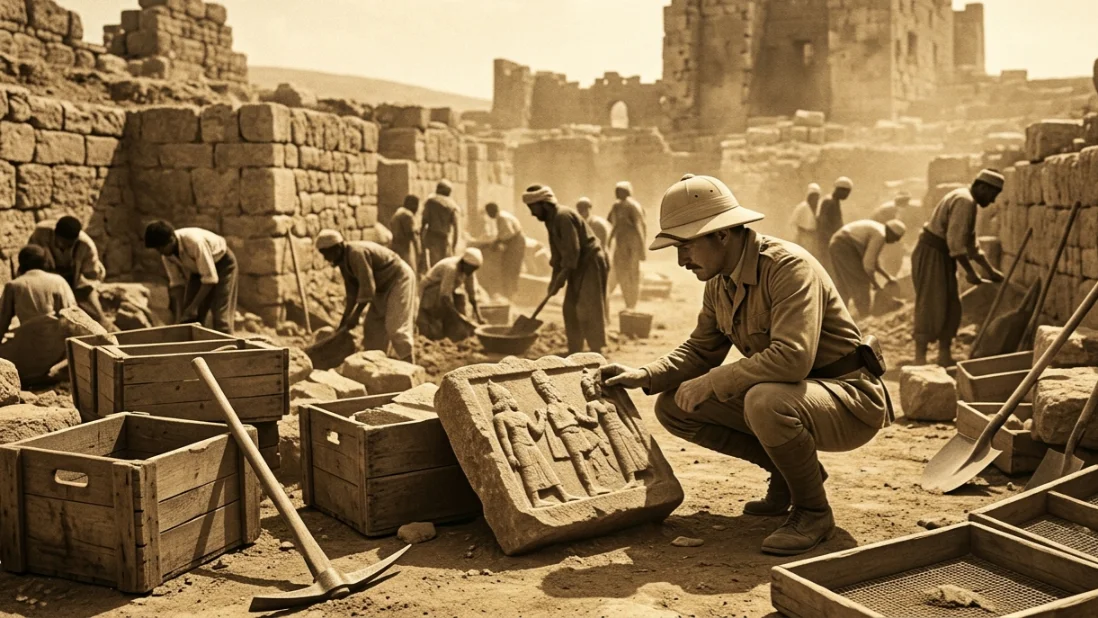
In 1914, Lawrence joined a survey of the “Wilderness of Zin” in the Negev desert, officially cataloguing Byzantine ruins. In practice, the expedition mapped terrain that British forces would later fight over — and kept an eye on German engineers building the Berlin-to-Baghdad railway nearby.
When the Ottoman Empire entered the First World War, Lawrence’s fieldwork made him valuable. He was pulled into the Arab Bureau, a British intelligence unit based in Cairo, tasked with understanding — and exploiting — the Arab provinces of the Ottoman Empire.
That’s where the man later known as Lawrence of Arabia was made.
Kut al-Amara: A Humiliation the Ottomans Didn’t Forget
Britain’s war in Mesopotamia did not start well.
In December 1915, an Ottoman army under Khalil Pasha surrounded a British-Indian garrison at Kut al-Amara, on the Tigris River. Every relief attempt failed.
By April 1916, with food and hope gone, roughly 13,000 British and Indian troops surrendered. It remains one of the largest capitulations in British military history.
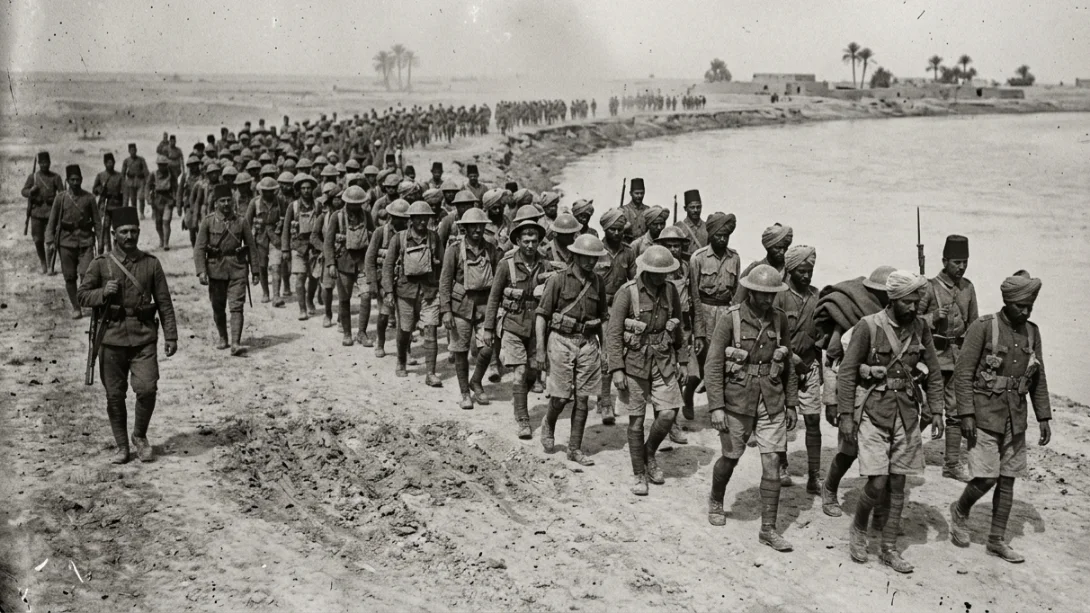
The defeat rattled London. It also proved a hard lesson: the Ottoman army could not be beaten by force alone, at least not quickly. Britain needed another way in.
A New Strategy: Turn the Empire Against Itself
That “other way” was intelligence, money, and a British officer who could pass — at least well enough — as an Arab.
The Arab Bureau sent Lawrence into the field alongside colleagues like Gertrude Bell, a British archaeologist and political officer who had spent years travelling the Middle East and building relationships with tribal leaders. Bell knew the region’s languages, geography, and power brokers better than almost any Westerner alive, and her reports shaped British strategy throughout the war.
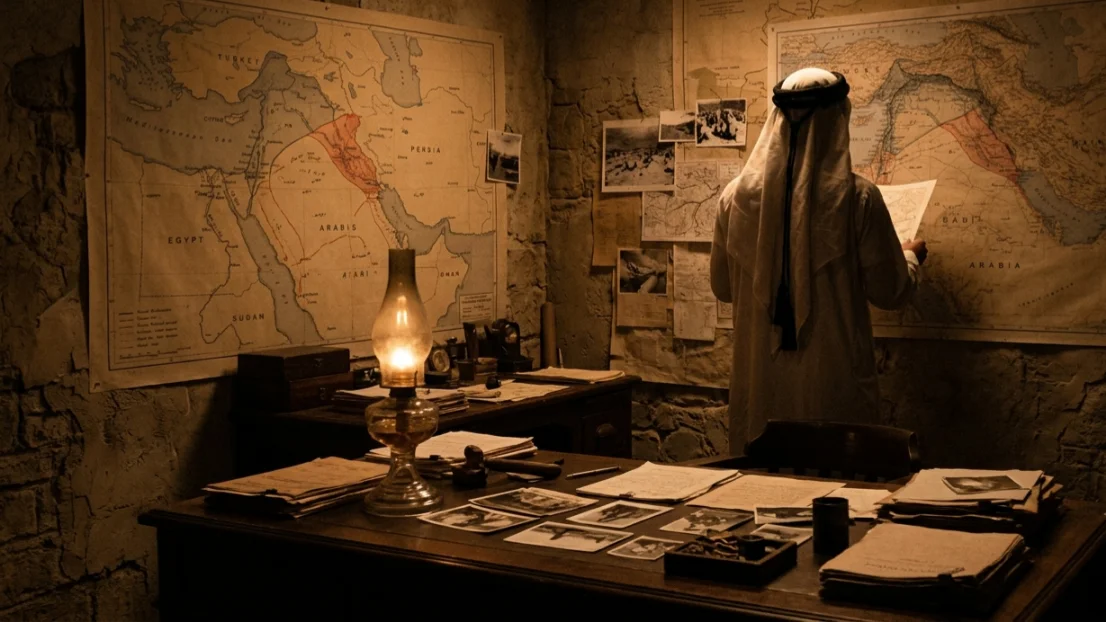
Lawrence adopted Arab dress and customs. He learned to move through tribal networks that no uniformed British officer ever could. His job was simple to describe and brutally difficult to execute: turn Arab discontent with Ottoman rule into open revolt.
Buying Loyalty in the Desert
Revolt, it turned out, had a price tag.
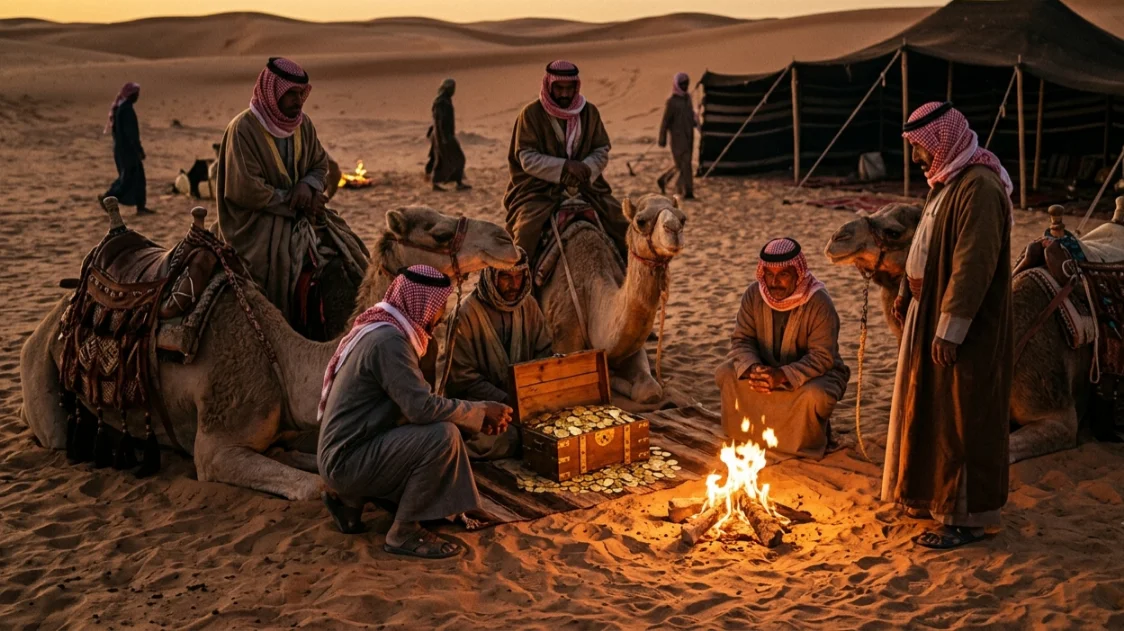
Bedouin fighters would not commit to a cause without payment upfront, in gold. British subsidies to the Arab Revolt climbed steadily through the war — reaching roughly £220,000 a month by late 1918, alongside rifles, ammunition, and grain.
Lawrence became one of the men on the ground distributing that gold, using it to hold together a coalition of tribes that often had little loyalty to anyone beyond their own sheikh.
Meanwhile, Arab guerrilla fighters — trained and guided by British officers — spent 1917 and 1918 blowing up sections of the Hejaz railway, the Ottoman Empire’s main military supply line running south to Medina. Each attack chipped away at Ottoman control of Arabia.
Sparking the Arab Revolt
The revolt itself began with a promise.
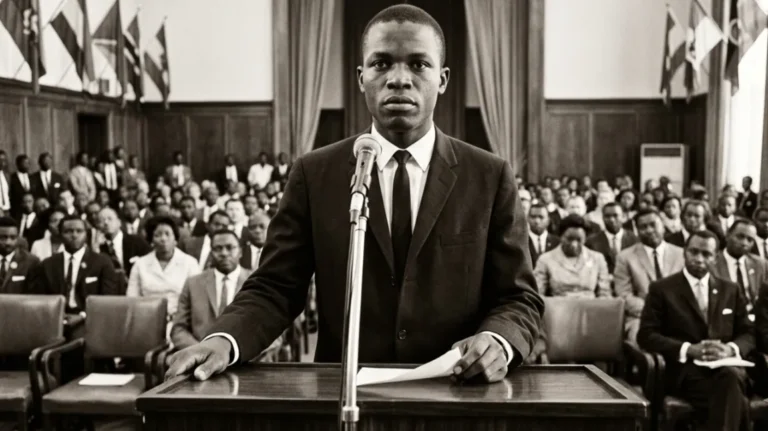
In a series of letters exchanged between 1915 and 1916, Britain’s High Commissioner in Egypt, Henry McMahon, assured Sharif Hussein of Mecca — the Ottoman-appointed guardian of Islam’s holiest cities and a descendant of the Prophet Muhammad — that Britain would support Arab independence in exchange for revolt against Ottoman rule.
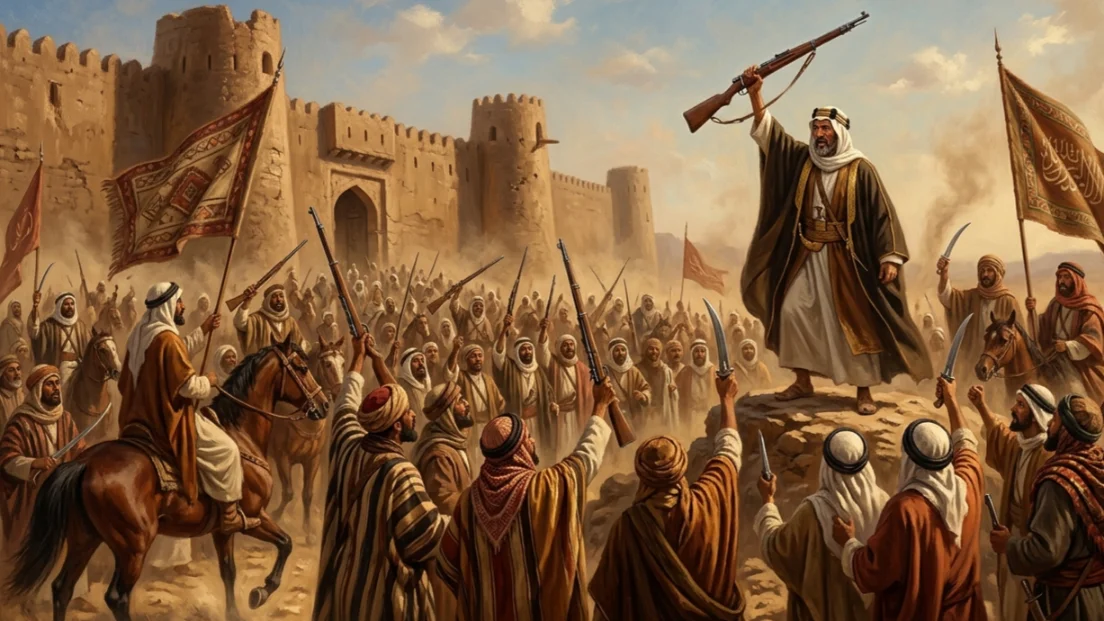
Hussein took Britain at its word. In June 1916, he and his sons — Ali, Abdullah, and Faisal — declared revolt, and Arab forces began attacking Ottoman garrisons across the Hejaz.
Lawrence became liaison officer to Faisal, Hussein’s most capable son, and rode alongside Arab fighters in the campaign that would eventually take Damascus in 1918.
Britain, for its part, called the results a triumph. Lawrence returned home with a new title attached to his name for the rest of history: Lawrence of Arabia.
The Price of Victory
What Hussein didn’t know — because Britain never told him — was that London had already promised the same land to someone else.
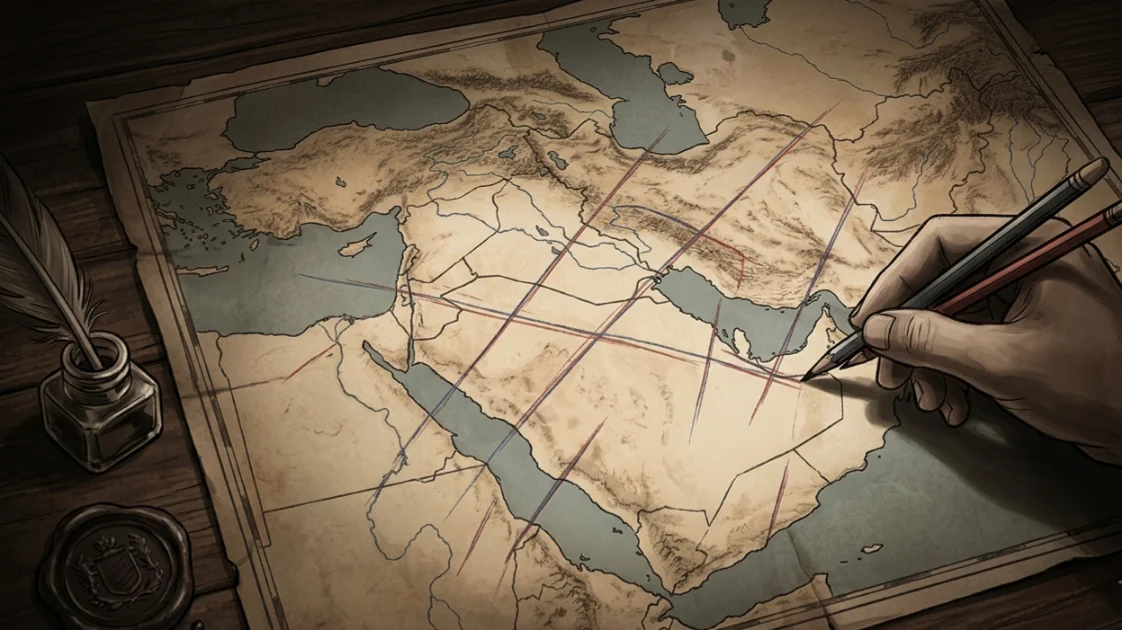
The 1916 Sykes-Picot Agreement, signed secretly between Britain and France, carved the Ottoman Arab provinces into future zones of British and French control. It directly contradicted the independence Britain had promised Hussein.
By 1918, the Ottoman Empire’s grip on the Middle East had collapsed. Within a few years, the Ottoman Caliphate itself would be abolished. In its place came a patchwork of new states — Iraq, Transjordan, Syria, Lebanon — drawn largely by British and French hands, with Gertrude Bell herself helping to draft the borders of modern Iraq.
Hussein, the man whose revolt had helped bring it all about, was pushed aside within a decade, his kingdom absorbed by a rival dynasty.
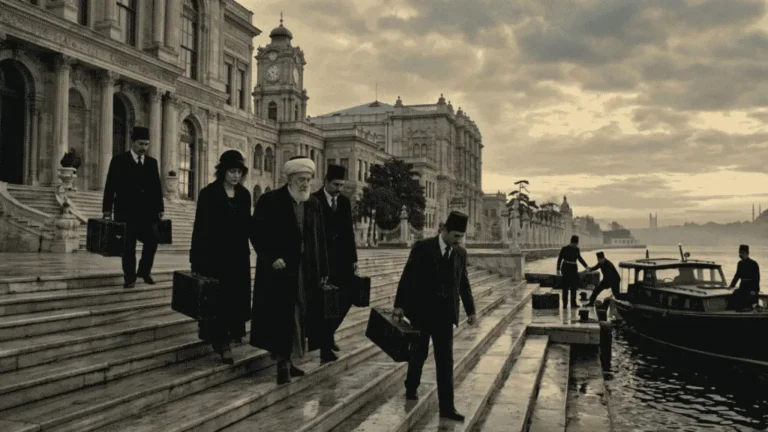
The Untold Story of the Ottoman Dynasty’s Expulsion from Turkey
Conclusion: The Legend and the Ledger
Lawrence of Arabia is remembered today as a romantic adventurer — the desert warrior in flowing robes, immortalized on film. The reality was colder: a wartime intelligence officer who used archaeology as cover, gold as leverage, and a broken promise as a weapon.
The Ottoman Empire didn’t fall to Lawrence alone. But his campaign in the desert was one thread in a much larger British strategy to dismantle an empire from within — and to redraw the map of the Middle East once it was gone.
The gold ran out. The promises were broken. And the borders Britain left behind are still being contested a century later.