


The Day Britain Called Tipu Sultan a Heretic
The British East India Company employed a sophisticated propaganda campaign against Tipu Sultan during the late eighteenth century. To justify conflict and recruit Muslim soldiers, officials spread false rumors claiming he had abandoned his faith for Wahhabism or Shiism. This strategy effectively used religious legitimacy as a political weapon.
Historical evidence suggests Tipu Sultan maintained an inclusive administration, employing Hindu officials and funding various temples. His coinage celebrated Islamic unity, and his personal library reflected a deep interest in Sufism. Despite the enduring sectarian myths created for wartime convenience, he remained a pragmatic ruler committed to his kingdom.
It was a Friday in March 1799. As worshippers filed out of mosques across the Deccan, a town crier raised his voice with an announcement that would have stopped anyone in their tracks.
Fateh Ali Tipu, son of the Sufi ruler Hyder Ali, had abandoned his faith. He had become a Wahhabi, the crier declared. The news spread from the conquered outskirts of Karnataka to the streets of Hyderabad itself.
It wasn’t true. But that never mattered. The story of Tipu Sultan‘s supposed apostasy is one of history’s earliest and most effective smear campaigns, and it’s a story most people have never heard.
A Fourth War Was Coming
By 1799, the East India Company had already fought Tipu Sultan three times and lost more often than it won. Mysore, under Hyder Ali and then Tipu, had proven to be the fiercest obstacle to British expansion in southern India.
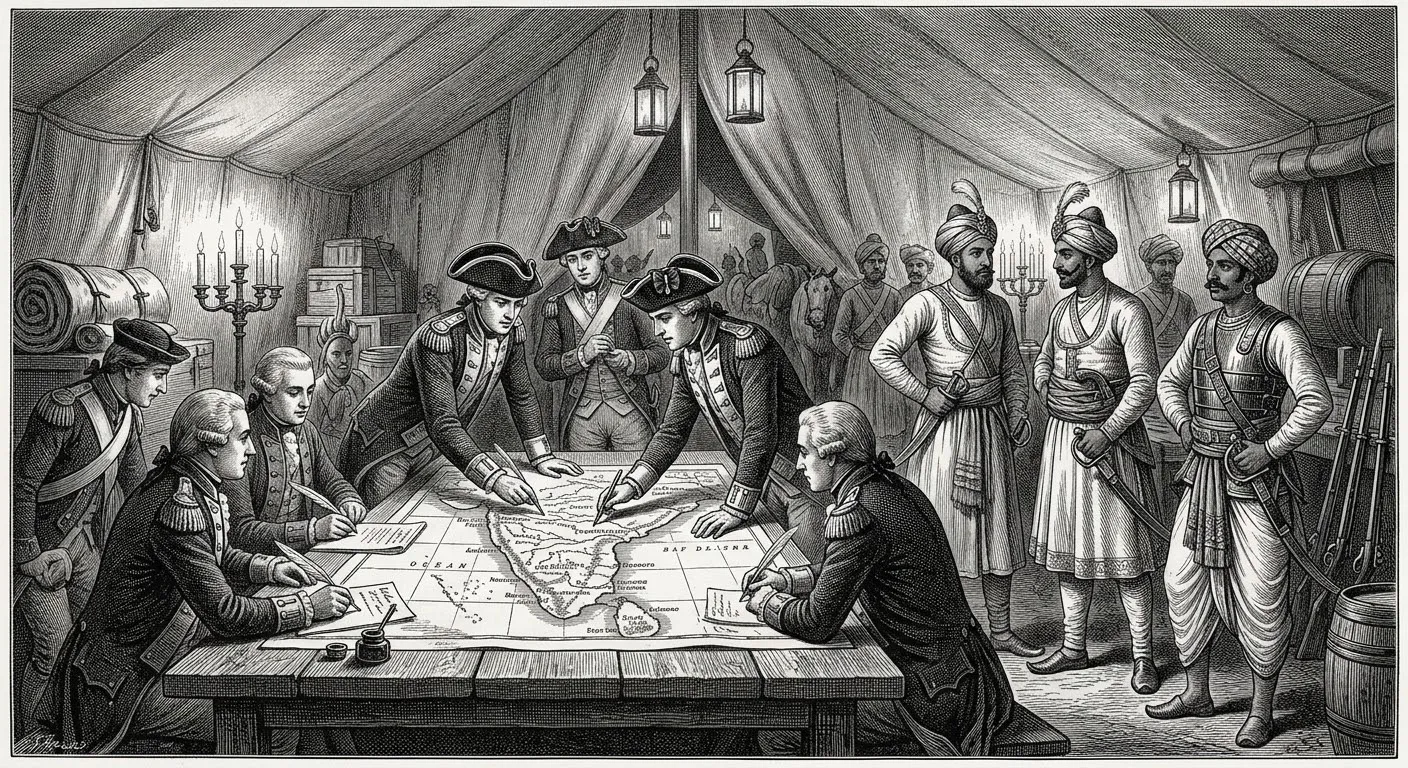
So when the Company allied with the Marathas and the Nizam of Hyderabad for a fourth war against Mysore, it didn’t rely on soldiers and cannon alone. It reached for a weapon that cost nothing and traveled faster than any army: religion.
The Religious Card
According to this account, the Company understood something simple. A war against a fellow Muslim ruler needed justification, especially for the Muslim soldiers it hoped to recruit from Hyderabad and beyond.
So the rumor was planted. Tipu Sultan, the story went, had strayed from mainstream Islam and embraced Wahhabism, a puritanical movement viewed with suspicion by many South Asian Muslims of the era.

It was a clever move. Turn Tipu into a heretic, and fighting him stops looking like betrayal. It starts looking like duty.

When Fatwas Became Weapons
The rumor alone wasn’t enough. The next step, this account describes, was religious legitimacy, and that meant fatwas.
Muftis in Hyderabad state were reportedly approached to issue rulings declaring that fighting the “Wahhabi Sultan” was not just permitted but obligatory, promising divine reward to anyone who joined the campaign.
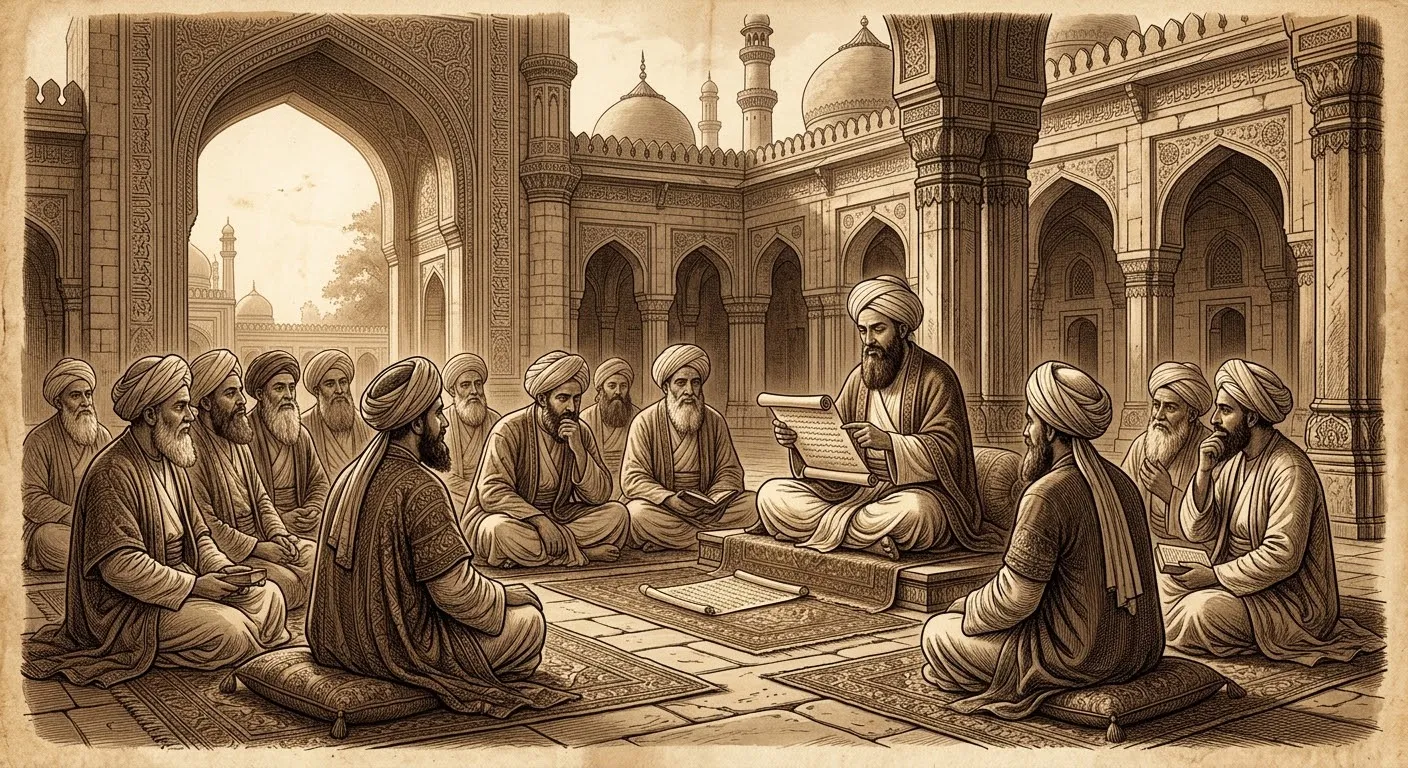
What makes this episode strange is that the propaganda wasn’t even consistent. In some regions, criers announced that Tipu had turned Wahhabi. In others, the story was that he had turned Shia. Two contradictory rumors, spread simultaneously, both designed to reach the same outcome: convince Muslim soldiers to fight a Muslim king.
A Pattern That Repeated Itself
If this sounds like a one-off wartime trick, it wasn’t. A similar strategy, by this account, resurfaced roughly a century later during the First World War.
When Britain needed Muslim soldiers from the subcontinent to fight the Ottoman Empire, a comparable religious ruling was reportedly sought. This time the argument was different: that the Ottoman Sultan-Caliph had no real claim to guardianship of Islam’s holiest sites, and that the true authority belonged instead to the Sharif of Mecca.
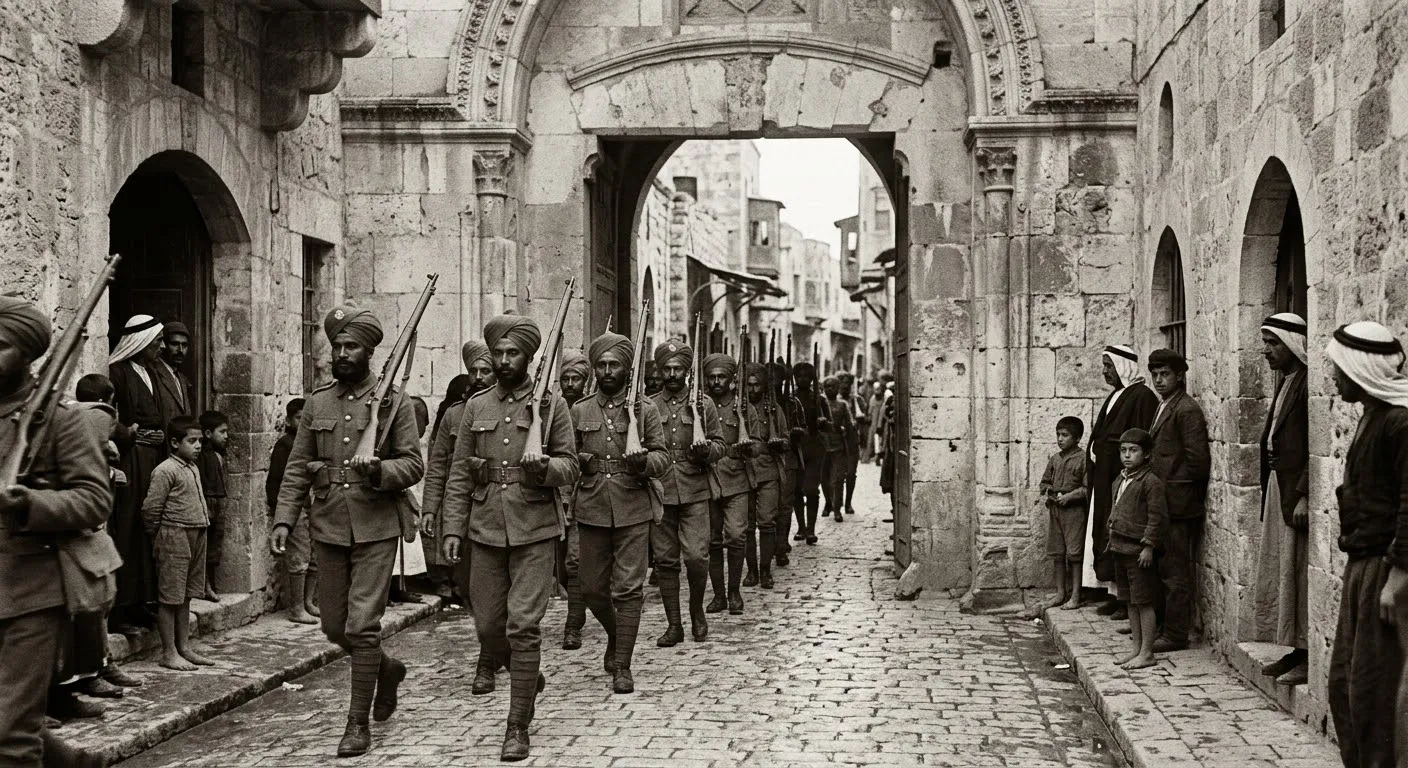
Because of this, thousands of Indian Muslim soldiers marched into Jerusalem as part of the British campaign against Ottoman Turkey, a war many of them had been persuaded to see as religiously justified rather than politically convenient for London.

History’s Long, Bitter Echo
What followed is one of history’s sharper ironies. The Sharif of Mecca’s revolt, launched under the banner of Arab independence, helped the British take Jerusalem from the Ottomans.
Afterward, that same city passed into British control rather than Arab hands. And the descendants of the very uprising that helped deliver Jerusalem to Britain are, generations later, still fighting for the independence that revolt was supposed to secure.
Meanwhile, back in India, the Khilafat Movement rose in protest of how the British treated the defeated Ottoman Caliphate, a reversal that shows how quickly political loyalties, once manufactured, can turn.
The Man Behind the Myth
So who was Tipu Sultan, really, beneath the propaganda?
His tomb carries a Persian inscription that has outlived every rumor spread against him: “Tipu banam-e-Din-e-Muhammad shaheed shud.” Tipu died a martyr in the name of the faith of Muhammad.

Far from the sectarian caricature painted by his enemies, Tipu Sultan ran one of the most religiously inclusive courts in 18th-century India.
The Truth in Tipu’s Own Court
Tipu’s finance minister, Purnaiah, was Hindu. So were several other senior officials in his administration, holding positions of real power rather than symbolic ones.
His generosity extended well beyond his own court. Historical accounts, including the Mysore Gazetteer, record that Tipu Sultan provided regular grants to as many as 156 Hindu temples across his kingdom, including funding the restoration of the Sringeri Sharada Peetham after Maratha forces looted it in 1791. He addressed its head priest as “Jagadguru” in his own letters.
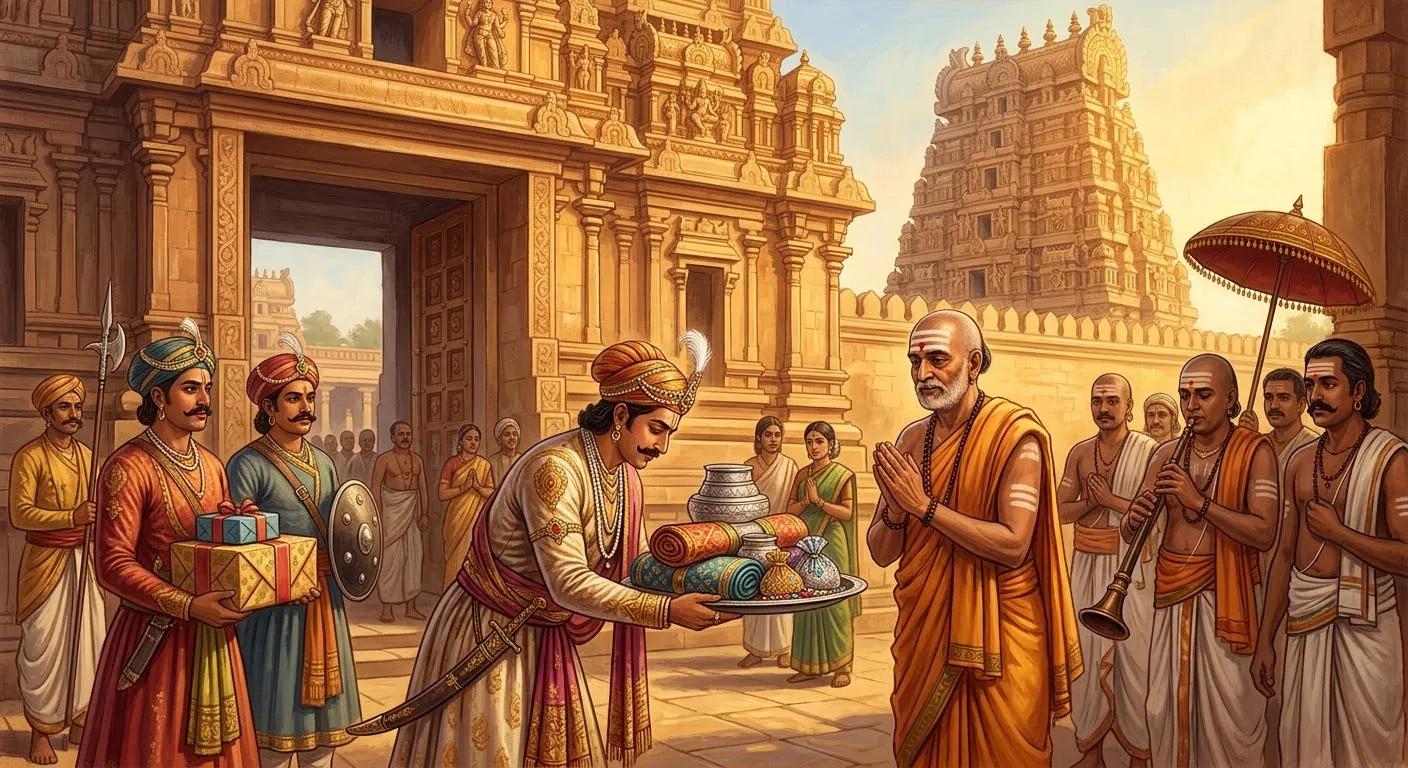
This is not the record of a ruler obsessed with religious purity. It’s the record of a king who governed a diverse kingdom pragmatically, whatever his enemies later claimed.
Coins That Told a Different Story
Tipu’s own currency reflected this same layered religious identity, rather than any single sectarian agenda.
His most valuable coin was named Ahmadi, honoring the Prophet Muhammad. Others followed: Siddiqi, after Abu Bakr; Farooqi, after Umar; Usmani, after Uthman; and Haidari, after Ali. His elite guard carried the name Asadullahi, “Lion of God.”
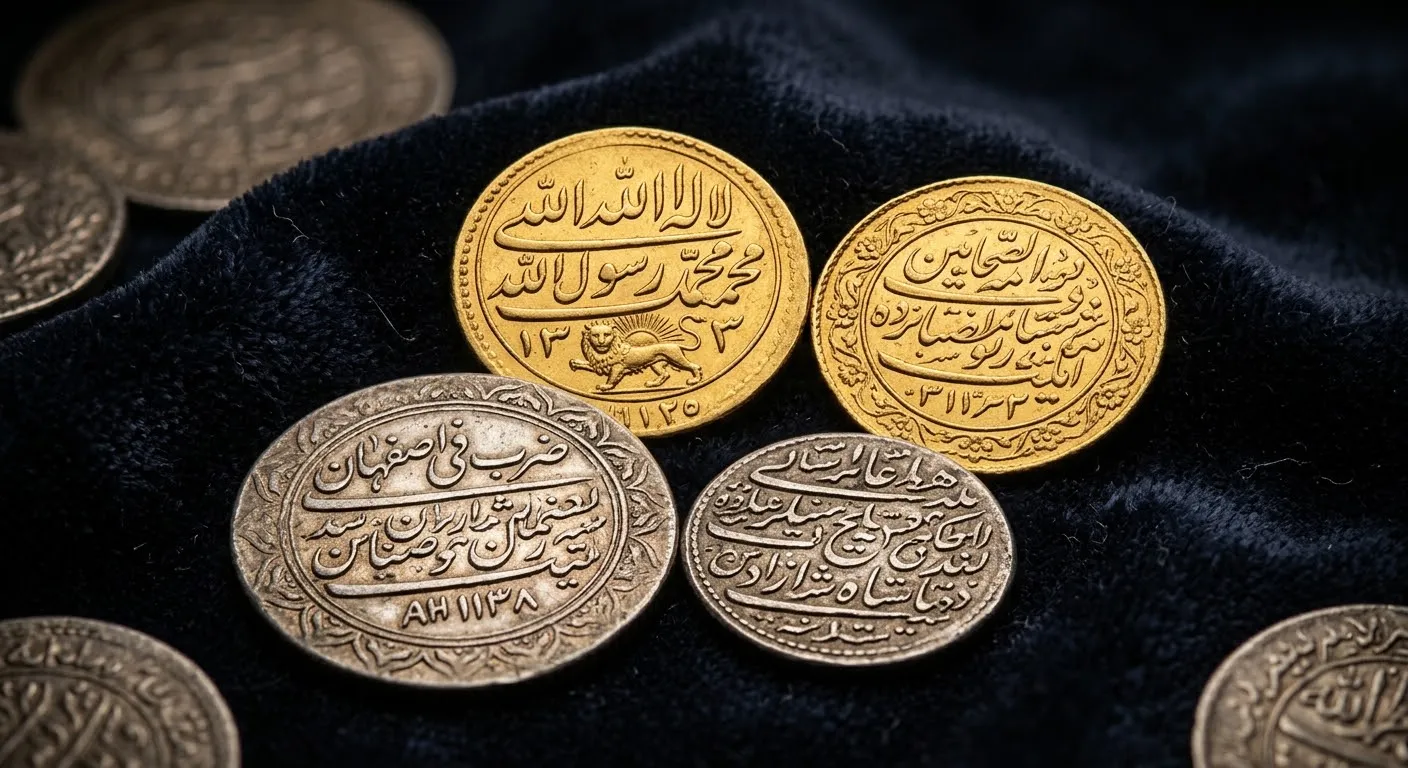
Naming coinage after all four of Islam’s early caliphs, rather than favoring one sect’s lineage, was a deliberate signal of unity, not the mark of a fringe sectarian ruler.
An Unanswered Letter to Istanbul
There’s a smaller, more poignant detail buried in this story. Tipu reportedly wrote to the Ottoman Sultan offering to fund the digging of a canal between the Euphrates River and Najaf, a gesture of goodwill toward the wider Muslim world.
By the time his envoys returned from that diplomatic mission, Tipu was already dead, killed defending Seringapatam in May 1799.
Rewriting Tipu After His Death
Tipu’s death didn’t end the propaganda. It simply changed shape.
With Krishnaraja Wodeyar restored to the throne and Purnaiah now administering Mysore under British oversight, a new narrative began circulating in mosques and sermons: that Tipu had never been a genuine man of faith at all, only a ruler who used Islam as a political tool.
The supposed evidence was his personal library. When the British catalogued it after Seringapatam fell, Charles Stewart published the full list in 1809 as “A Descriptive Catalogue of the Oriental Library of the Late Tippoo Sultan,” a copy of which survives in Pakistan’s national archives today.
By this later account, critics pointed to roughly 190 books of poetry in that library against a comparatively smaller number of Quran and Hadith texts, presenting it as proof of insincerity.
What went conveniently unmentioned was that the same library held some 115 books on Sufism, a detail that undercut the earlier “Wahhabi” accusation entirely. No one announced that.
The Fatwa That Cost the Muslim World 300 Years
The Real Cost of the Tipu Sultan Wahhabi Propaganda
At the heart of the Tipu Sultan Wahhabi propaganda campaign was an uncomfortable truth: it didn’t need to be accurate, nor did it need to be consistent.
It only had to be believed long enough for soldiers to take sides, for fatwas to be issued, and for a war to cloak itself in the guise of righteousness.
Whether the charge was Wahhabism, Shiism, or empty political ambition, the target and the purpose stayed exactly the same.
The phrase “Sufi Hyder Ali,” deliberately employed in the original rumor, subtly implied that Tipu had forsaken his father’s spiritual legacy, and that allegiance to Hyder Ali now necessitated opposition to his son.
A Legacy Still Waiting to Be Told Honestly
Strip away three centuries of shifting propaganda, and what remains is a ruler who funded temples and mosques alike, corresponded respectfully with Hindu clergy, named his currency after Islam’s earliest unifying figures, and died defending his kingdom rather than surrendering it.
The tragedy isn’t only that Tipu Sultan was slandered in his own time. It’s that the labels invented to justify a war outlived the war itself, while the men who profited from spreading them left no trace at all.
Tipu banam-e-Din-e-Muhammad shaheed shud. Some inscriptions, it turns out, outlast every rumor written against them.