
How Victorian London’s Poor Paid to Sleep Over a Rope
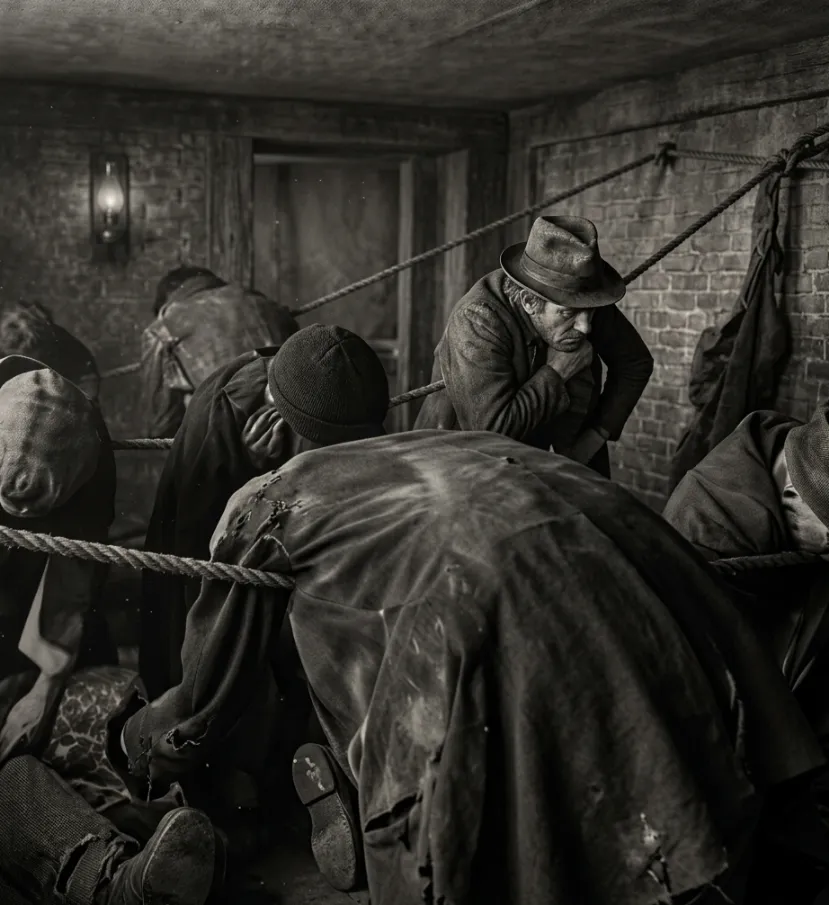
Victorian London offered tiered sleeping arrangements for the homeless based on cost. For one penny, individuals could sit on benches, while two pennies allowed them to sleep leaning over a rope. This two-penny hangover required users to balance their weight until the rope was cut each morning.
Four pennies secured a wooden box in a coffin house, providing the only way to sleep lying down. These survival systems highlighted extreme poverty during the British Empire. Organizations like the Salvation Army managed these spaces until public awareness eventually led to more humane, free shelters.
Imagine paying two pennies to sleep bent over a rope. Not in a bed. Not on a floor. Bent forward, chest resting against a rope stretched across a dark room, packed shoulder-to-shoulder with dozens of other exhausted men.
This wasn’t a punishment. It was a privilege.
Welcome to the world of the two-penny hangover — one of Victorian London’s most desperate, and most forgotten, survival systems. If you’ve never heard of it, you’re about to understand just how brutal poverty really was at the height of the British Empire.
Victorian London: Rich Empire, Starving Streets
Britain in the late 1800s ruled a quarter of the entire world; factories roared, ships dominated every ocean, and wealth was legendary.
However, none of that wealth reached the people sleeping in London’s gutters.
Thousands of workers, sailors, and fallen businessmen lived without shelter. Winter nights brought freezing rain and bitter cold. Meanwhile, the law made sleeping on the streets illegal. Police enforced “moving on” laws that treated homelessness as a crime.
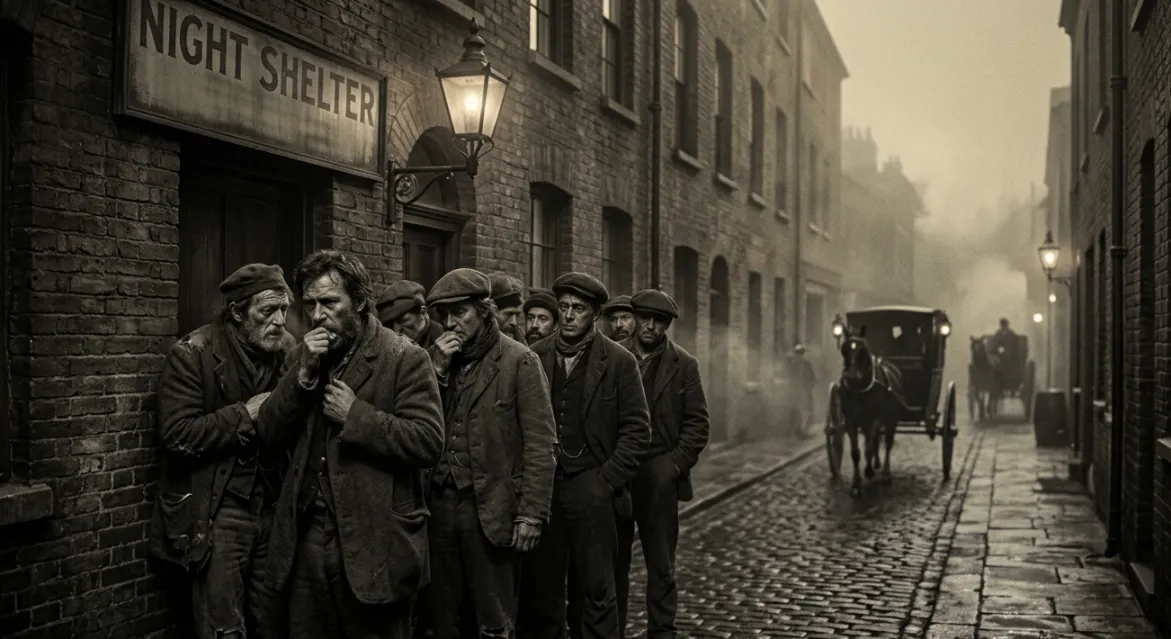
So the desperate found other options. Cheap. Barely human. But better than prison — or death.
The Three Tiers of Survival
Victorian London developed a grim pricing system for the homeless. The less you had, the worse your night would be.
One Penny: The Sit-Up
For a single penny, you bought warmth and a bench. You also got a cup of tea or coffee, maybe a piece of bread.
What you didn’t get was sleep.
Officials monitored the room all night. The moment your eyes closed, someone shook you awake. You paid for shelter, not rest. Rows of hollow-eyed people sat upright on hard wooden benches from dusk until morning, too exhausted to speak and too poor to afford anything better.
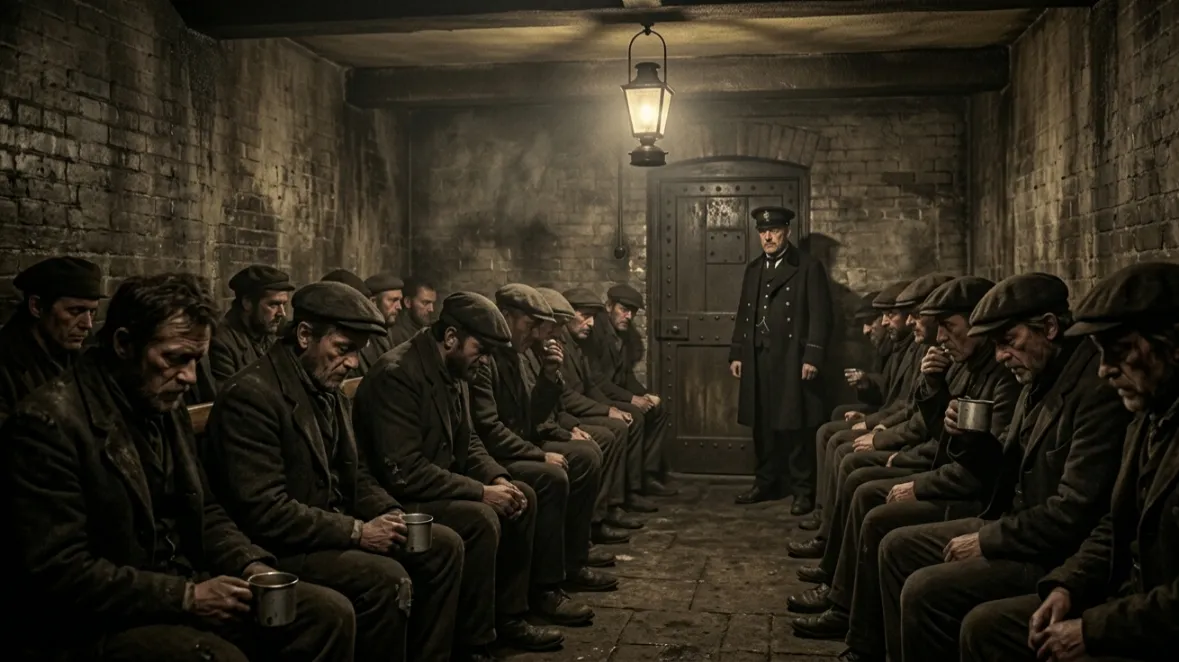
One man described it plainly to a reporter: “Seats rather hard, but a bit of waste paper makes it a lot softer. We’re too sleepy to make a row.”
Two Pennies: The Two-Penny Hangover
For one extra penny, the experience changed just enough to matter.
You still got the bench and the food. But now, a rope stretched across the front of the room at chest height. You could lean over it. Let it take your weight. Close your eyes and actually sleep — hunched forward, supported by nothing but a length of rope.
Dozens of men lined up this way every single night. Hanging over the rope. That’s where the name came from: the two-penny hangover.
Then, at five or six in the morning, someone cut the rope.
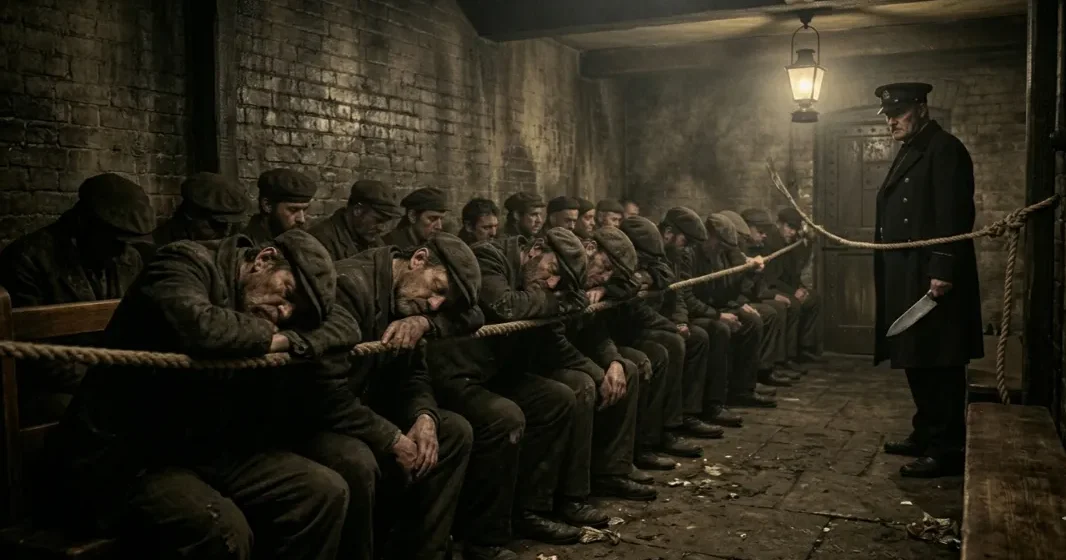
Everyone fell forward at once. Jolted awake. Stumbling to their feet. Time to go. Make room for the next shift.
George Orwell witnessed this practice himself and wrote about it in Down and Out in Paris and London (1933):
“The lodgers sit in a row on a bench; there is a rope in front of them, and they lean on this as though leaning over a fence. A man, humorously called the valet, cuts the rope at five in the morning.”
Humorously called the valet. The bitter irony in that phrase says everything.
Four Pennies: The Coffin House
If you somehow scraped together four pennies, you earned something almost unimaginable — the ability to lie down.
Small wooden boxes, shaped and sized exactly like coffins, lined the floors of so-called coffin houses. You climbed in, stretched out flat, and slept on your back like a human being.
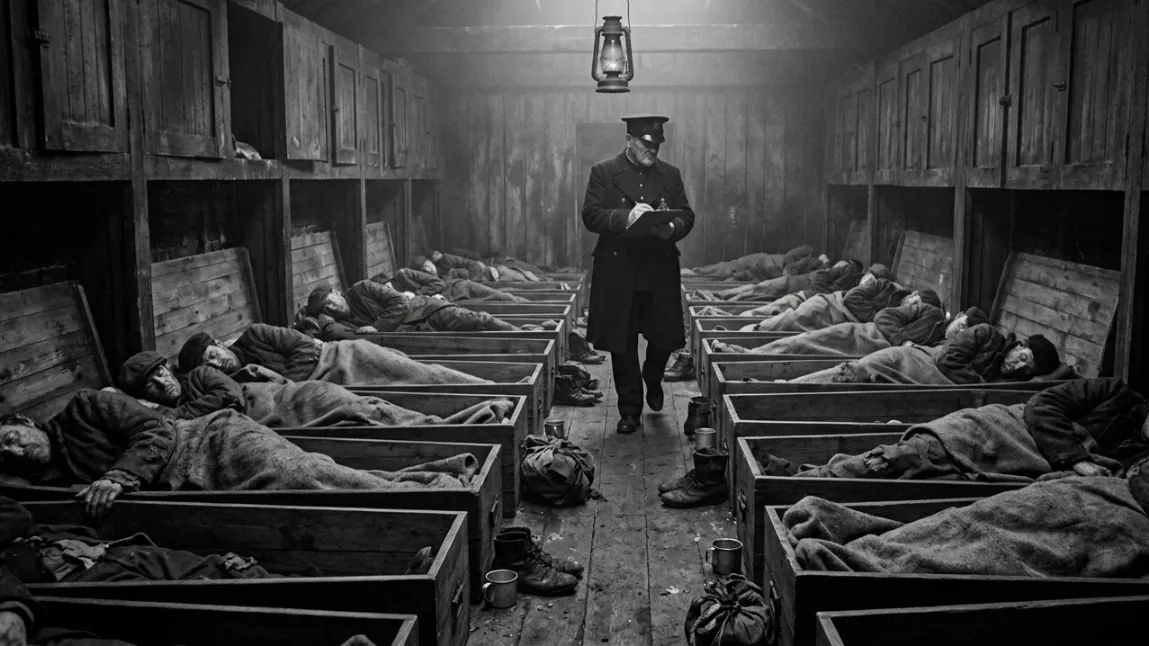
However, the shelters weren’t heated. Some mornings, workers made their rounds, checking boxes, and discovered that one or two occupants hadn’t woken up. They had frozen to death during the night.
Coffin houses were the cheapest way to sleep lying down in London. And sometimes, they were also the last place people ever slept.

The Scale of the Problem
Between 200 and 300 people used these shelters every single night in Sheffield alone. That figure didn’t even account for London, Manchester, or any other industrial city.
The need was staggering. Because of this, organisations like the Salvation Army stepped in to operate many of these spaces. They began as the East London Christian Mission, hoping to offer comfort and draw people toward faith.
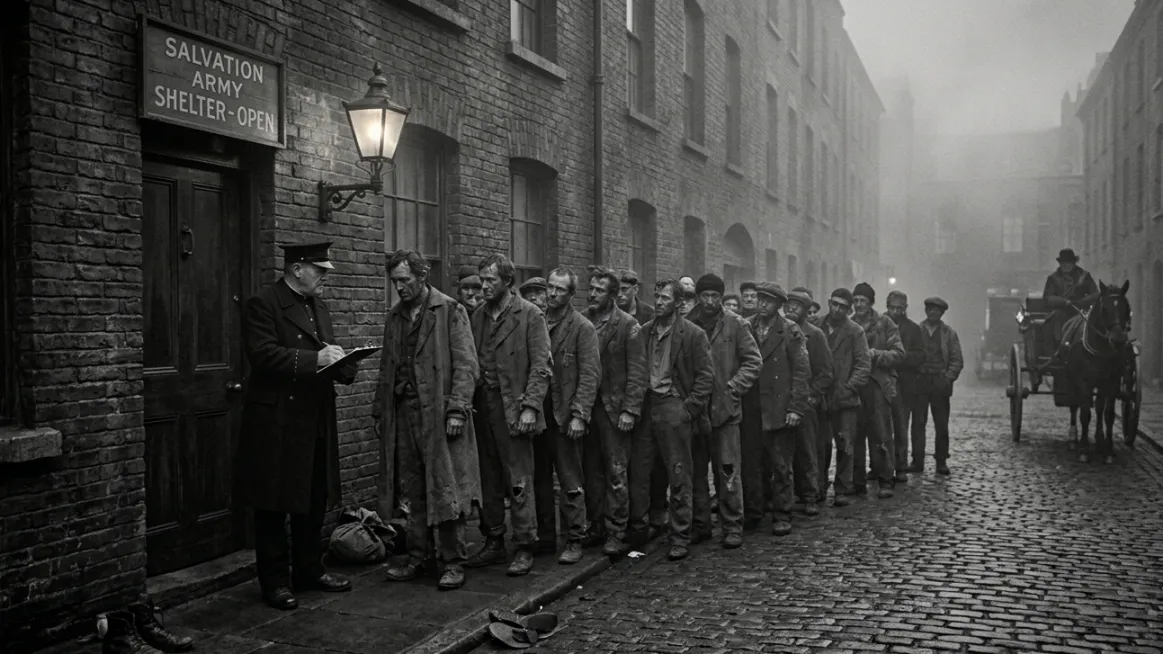
In addition, they tried to bring dignity to a dignityless situation. However, the system they helped run was still one where human beings paid pennies to sleep bent over ropes.
Eventually, as public awareness grew, free homeless shelters began to emerge. The penny sit-ups and two-penny hangovers slowly disappeared from London’s streets.
But for decades, this was simply normal life for thousands of people.
Did the Two-Penny Hangover Give Us the Word “Hangover”?
Some historians have suggested that the modern term “hangover” — meaning the morning-after suffering from a night of drinking — actually originates from this practice.
The theory goes that the grogginess, stiffness, and disorientation from a night spent hanging over a rope resembled the feeling people associated with drinking too much.
However, most language historians consider this a compelling myth rather than a hard fact. The word “hangover” as we use it today likely developed through different linguistic roots.
Still, the practice itself needs no embellishment. It was real. It was documented. Charles Dickens referenced it as far back as 1836 in The Pickwick Papers. Photographs survive. Firsthand accounts fill newspapers and the literature of the era.
When Doctors Sold Cigarettes: The Real History of Smoking in the 1940s and 1950s
What the Two-Penny Hangover Really Tells Us
The two-penny hangover isn’t just a historical curiosity. It’s a mirror.
It shows us what happens when a society builds enormous wealth and leaves its most vulnerable people to sleep in coffin boxes and lean over ropes. It shows how poverty forces people to pay even for the most basic human needs — and still receive barely enough to survive.
For example, the men in those shelters weren’t lazy or broken. They were workers. Sailors. Ordinary people are caught in a system that offers them no safety net. As a result, they paid their last pennies not for comfort, but just to avoid freezing to death.
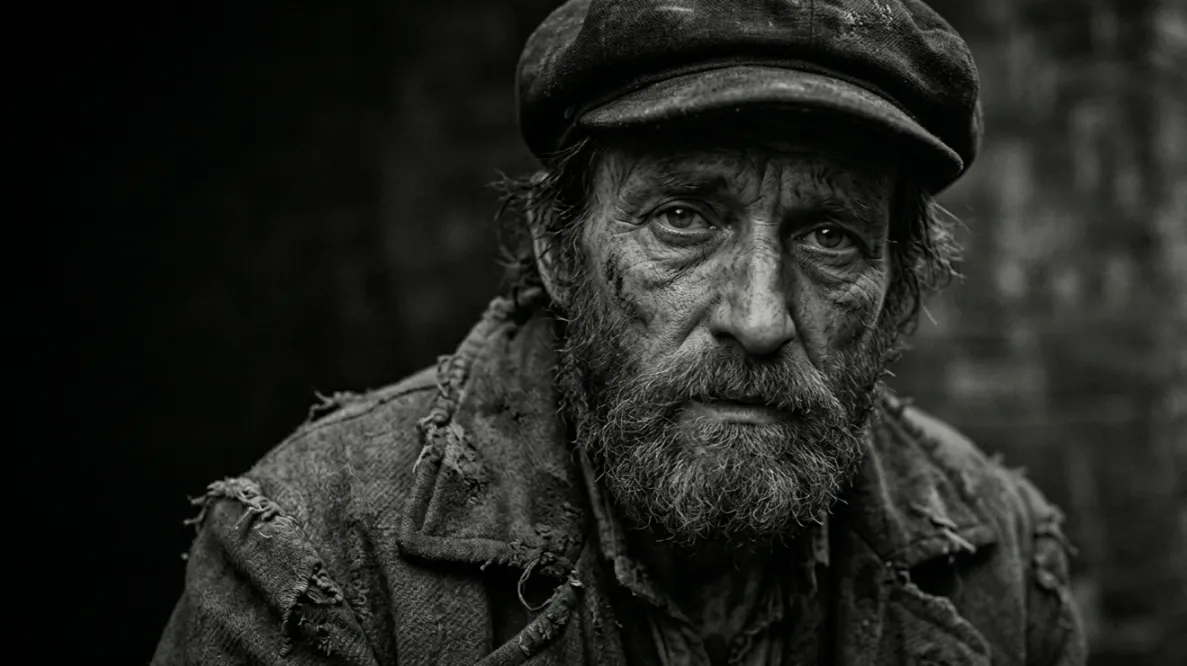
Afterward, they walked back into the same world that had failed them. And did it all again the next night.
Conclusion: The Morning They Cut the Rope
The two-penny hangover stands as one of the most striking symbols of Victorian-era poverty. At the height of the British Empire — when Britain ruled the world — thousands of its own citizens were paying to sleep hunched over ropes in cold, crowded rooms.
Every morning, someone cut that rope. And everyone fell forward at once.
It’s easy to look at this and think: that was then, this is now. However, the story of the two-penny hangover deserves more than a footnote. It deserves to be remembered — because forgetting it makes it far too easy to repeat.