
When Soldiers Used Urine to Survive a Poison Gas Attack — The Remarkable Story of Ypres 1915
What would you do if the air itself became your enemy?
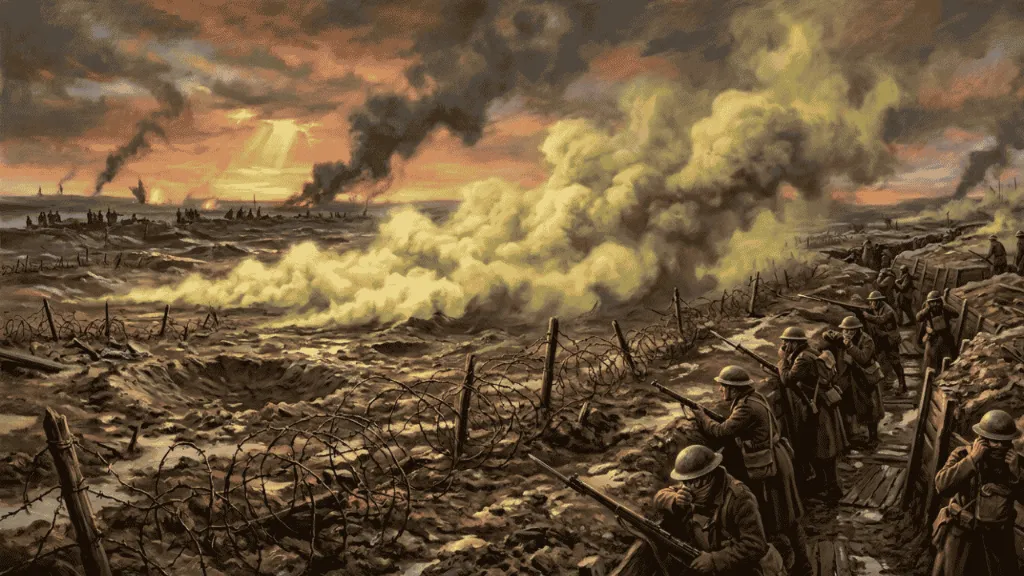
On a cold evening in April 1915, thousands of Allied soldiers found themselves facing a weapon none of them had ever seen before. A yellow-green cloud crept silently across No Man’s Land — and inside it was death.
This is the true story of chemical warfare’s first major battlefield use, and how one doctor’s quick thinking turned something utterly disgusting into a life-saving tool. The Battle of Ypres 1915 didn’t just change military history. It changed science, warfare, and the way humans think about survival under impossible pressure.
The Night the Air Turned Into a Weapon — Second Battle of Ypres 1915
The date was April 22, 1915.
The Second Battle of Ypres was already brutal. Soldiers on both sides had grown used to bullets, artillery, and cold. However, nothing could have prepared them for what the Germans were planning that evening.
Behind German lines, engineers had quietly placed thousands of heavy metal cylinders in long rows. Inside each one was chlorine gas — the world’s first large-scale chemical weapon deployed in combat.
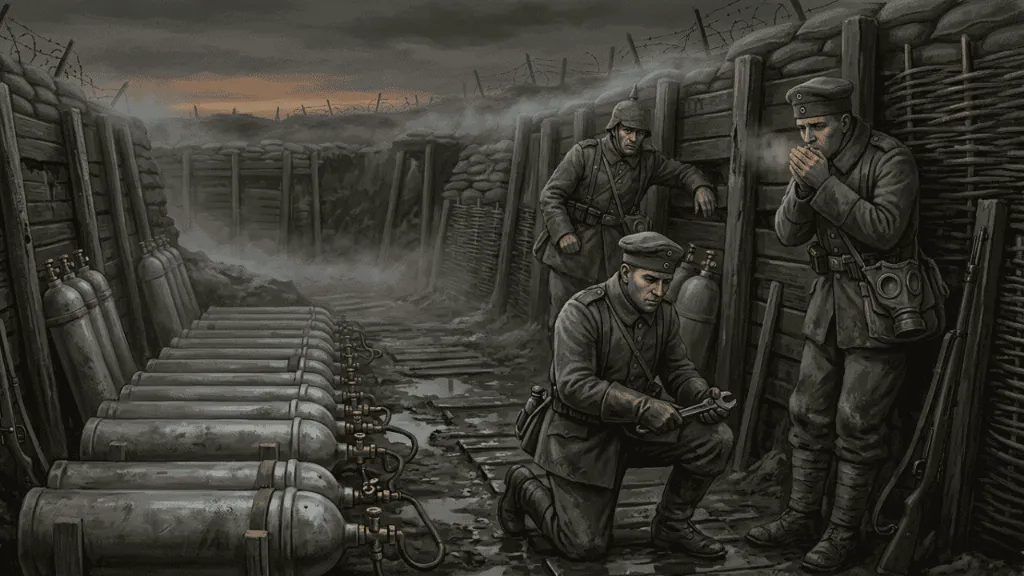
The soldiers waited. They weren’t waiting for an order to charge. They were waiting for the wind.
The Yellow-Green Cloud That Changed Everything
As soon as a cool breeze began drifting toward Allied positions, German troops opened the cylinder valves all at once.
Within minutes, a strange, sickly yellow-green mist began rolling across the ground. It moved slowly, almost lazily — hugging the earth, sliding into every ditch and hollow.
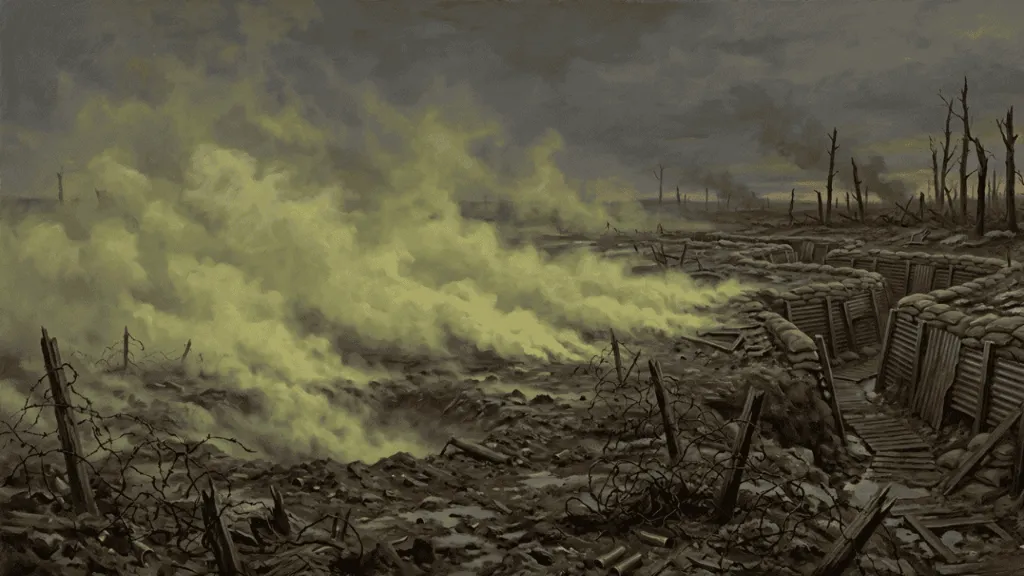
French and Algerian soldiers on the Allied side watched it approach with confusion. They had faced bullets, cannons, and bayonets. Meanwhile, nobody had ever trained them to fight the air itself.
When the cloud reached the trenches, chaos erupted.
Soldiers grabbed their throats. Some fell to the ground immediately. Others stumbled backward, eyes burning, lungs seizing. Chlorine gas doesn’t just poison — it reacts with moisture in the lungs to form hydrochloric acid. In other words, men were being burned alive from the inside.
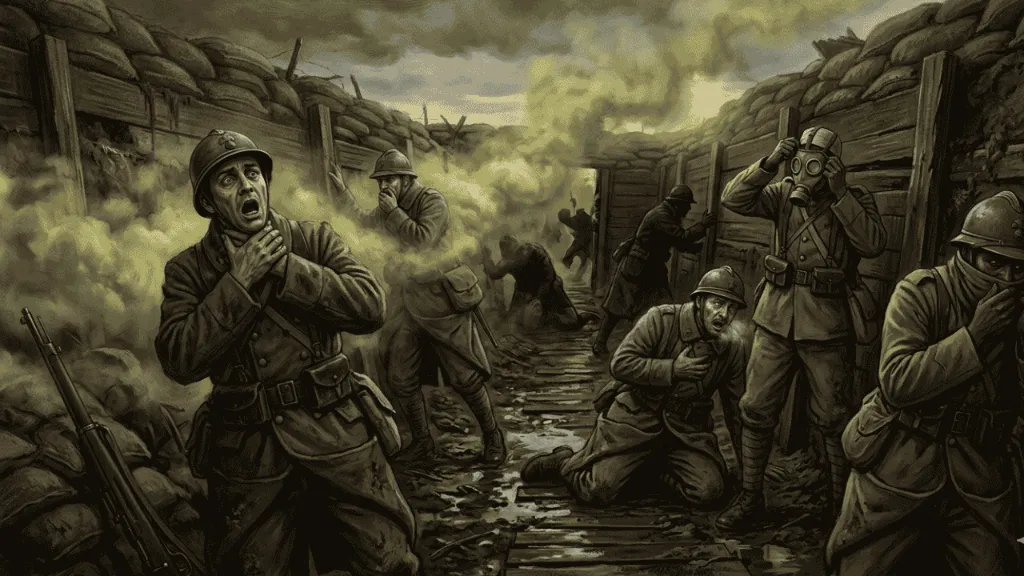
As a result, entire sections of the Allied line collapsed. Within hours, a nearly four-mile-wide gap had opened in the front — and German forces began moving in.
One Doctor, One Observation, One Wild Idea
Among the Canadian soldiers in those trenches was a young military physician named Francis Scrimger.
While others panicked, Scrimger observed. He noticed something small but significant — soldiers who happened to have a wet cloth pressed against their faces were coping slightly better than those who didn’t.
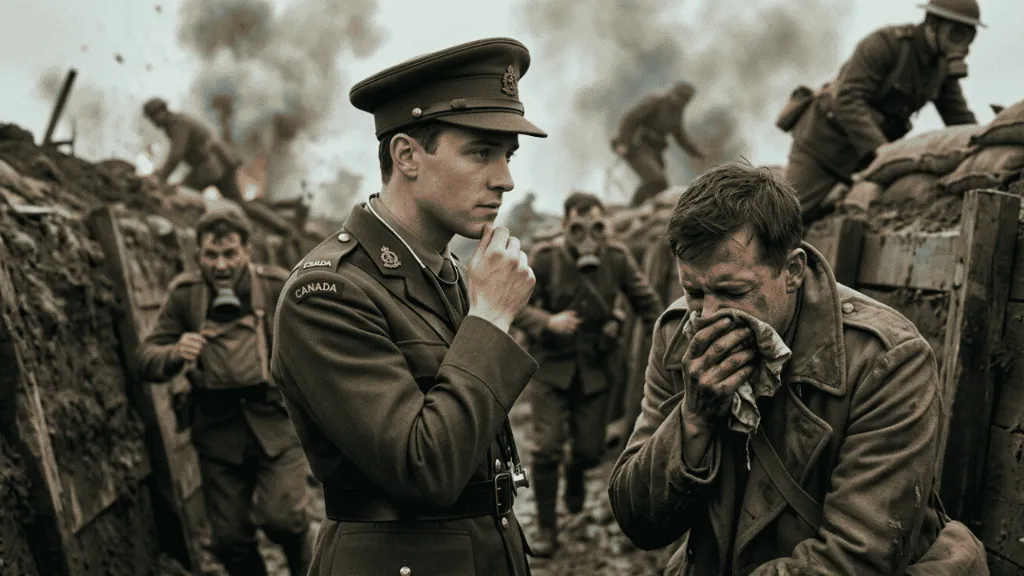
That single observation triggered a flash of chemistry knowledge.
Chlorine is an acid-forming gas. Ammonia is alkaline. Alkaline substances neutralize acids. And ammonia — in small but real quantities — exists naturally in human urine.
He had found a shield. Not a perfect one. But possibly enough.
The Order That Shocked Every Soldier
Within moments, an order spread through the Canadian trenches that sounded absolutely insane.
Urinate on your cloth, your handkerchief, anything fabric — and press it over your face.
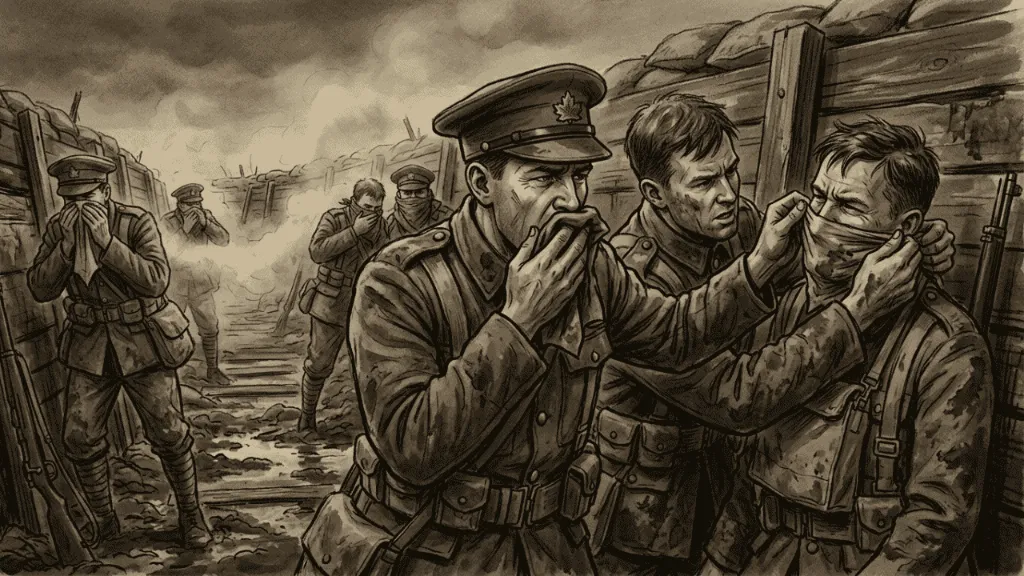
No one had time for embarrassment. No one had time to argue. The cloud was already there.
Thousands of soldiers did exactly that.
The smell was unbearable. However, something remarkable happened next — they could still breathe.
Their lungs weren’t filling with acid. The makeshift filters weren’t perfect, but they were buying time. And in battle, even a few minutes can rewrite history.
The Stand That Nobody Expected
When German troops advanced through the lingering gas cloud, they expected to find bodies.
Instead, they found soldiers.
Faces wrapped in soiled cloth. Eyes streaming with tears. Rifles still pointing forward.
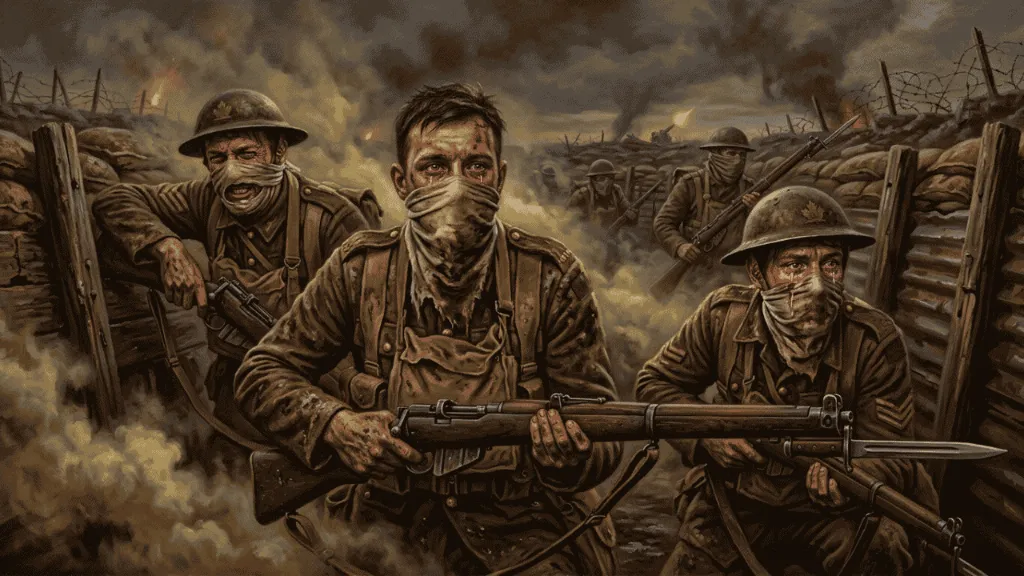
The Canadian troops did not break. For two full days, they held their ground in those poisoned trenches — coughing, burning, and barely breathing — but fighting.
Meanwhile, Francis Scrimger moved through heavy shellfire, personally carrying wounded men to safety. His courage that day earned him the Victoria Cross, Britain’s highest military honor.
Eventually, the line held. The German advance stalled. A massive breakthrough had been stopped — not by superior firepower, but by a moment of desperate, clear-eyed thinking.
How Urine Masks Led to Modern Gas Masks
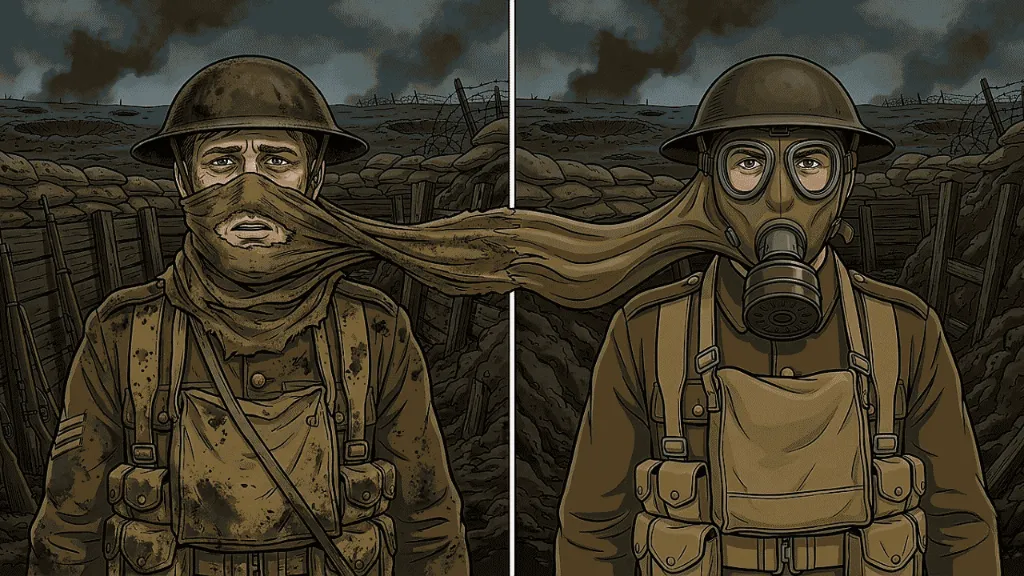
The improvised urine filters used at Ypres weren’t just a battlefield curiosity. They were, in a very real sense, the first gas masks in history.
Military scientists took note. Because of this crude but effective solution, researchers began developing proper chemical filtration systems for soldiers. Within years, the modern gas mask — with its sealed face piece and chemical-absorbing filters — became standard military equipment worldwide.
In addition, the Battle of Ypres in 1915 forced every major army to take chemical warfare defense seriously for the first time. It reshaped military training, international law, and the science of protective equipment.
What This Story Really Teaches Us
This isn’t just a war story. It’s a story about human intelligence under pressure.
The soldiers at Ypres didn’t have high-tech equipment. They didn’t have time to call headquarters. They had a wet cloth, basic chemistry knowledge, and the will to survive.
For example, most people think great wartime heroes are the ones with the biggest guns or the most medals. However, history keeps proving something different. The men who changed the outcome at Ypres were the ones who stayed calm enough to think.
That’s a lesson worth carrying long after the history lesson ends.
Quick Facts Box
| Event | Second Battle of Ypres |
|---|---|
| Date | April 22, 1915 |
| Location | Ypres, Belgium |
| Chemical Used | Chlorine Gas |
| Key Figure | Captain Francis Scrimger, VC |
| Legacy | Foundation of modern gas mask design |
Source
Based on historical research from: “Gas! The Battle for Ypres, 1915” Authors: J. McWilliams & R.J. Steel
Conclusion — The Battle of Ypres 1915 and the Science of Survival
The Second Battle of Ypres in 1915 introduced the world to chemical warfare. It also showed us something quietly powerful — that human ingenuity doesn’t need perfect conditions to work.
A doctor noticed something. He thought fast. He acted without hesitation.
And thousands of men breathed when they shouldn’t have.
The next time you hear about someone solving an impossible problem with nothing but clear thinking and what’s available around them, remember the trenches of Ypres. Remember the men with soiled cloth pressed to their faces, holding the line while the air itself tried to kill them.
Sometimes the difference between life and death is just one idea — and the courage to act on it.