
The Soldiers Who Never Came Back: A Story Buried Beneath Steklno’s Fields
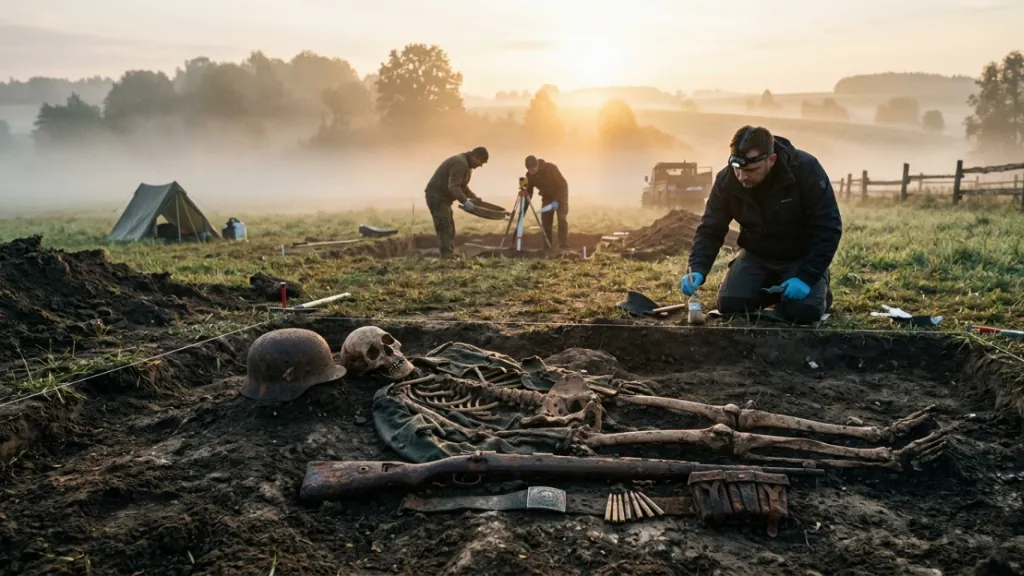
Archaeologists in Steklno recently uncovered the remains of five German soldiers killed during the final stages of World War II. Found alongside weapons and equipment, the discovery includes intact identification tags, indicating these individuals were never officially recorded as casualties and remained listed as missing for eighty years.
The soldiers, including two elite paratroopers, likely fell during the chaotic Pomeranian Offensive against advancing Soviet forces. Forensic analysis revealed traumatic combat injuries from a final stand. This discovery provides a rare opportunity to identify the deceased and offer long-awaited closure to their descendants.
The fields of Steklno look peaceful today—quiet, green, and untouched by time. But beneath that calm surface, history was waiting. Not just fragments of war… but a story that had been silenced for nearly 80 years.

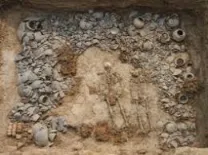
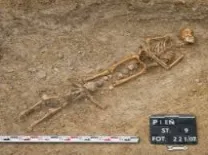
It began with a careful excavation. Archaeologists weren’t expecting much—perhaps scattered relics, maybe a forgotten trench. Instead, they uncovered something far more haunting: the remains of five German soldiers, lying exactly where they had fallen during the final days of World War II.
A Battlefield Frozen in Time
As the soil was gently removed, a grim picture emerged.
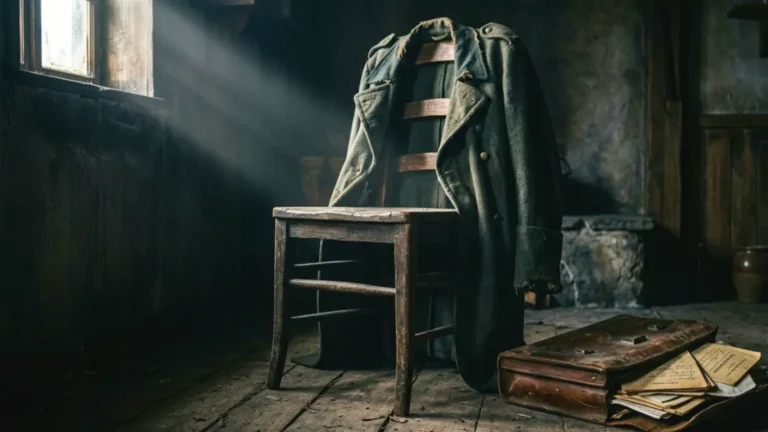
The bodies weren’t randomly scattered—they were positioned in a way that suggested resistance. A last stand. Around them lay rusted weapons, shattered equipment, and fragments of uniforms. Every detail pointed toward a violent, desperate confrontation.
This wasn’t just a burial site.
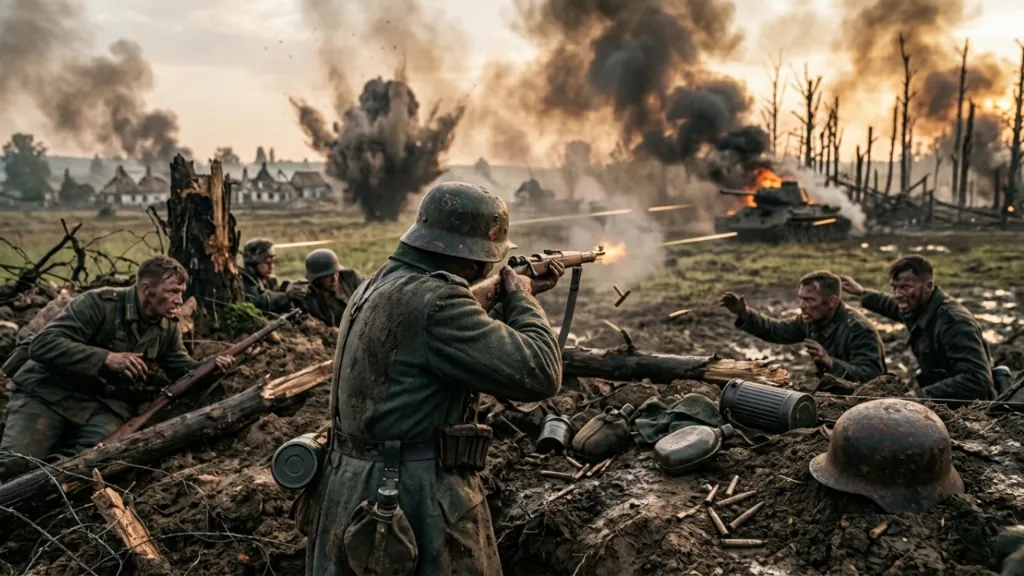
It was a battlefield, preserved by time.
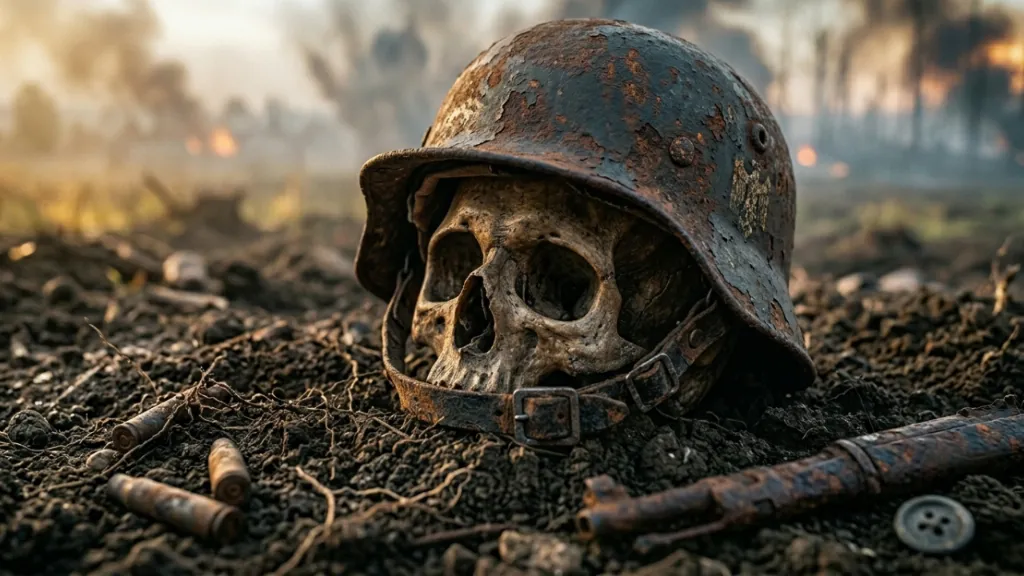
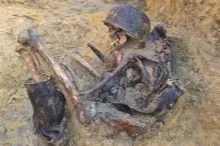
Forensic analysis revealed clear trauma—bullet wounds, blast injuries, fractured bones. One skull was discovered still encased inside a corroded helmet, as if the moment of death had been sealed and hidden from the world.
The Detail That Changed Everything
Among the most significant discoveries were four intact German identification tags.
That detail changed the entire narrative.
In the German military system, when a soldier died, their ID tag was split in two. One half stayed with the body; the other was sent up the chain of command to officially record the death.
But here, the tags were untouched.
Unbroken.
Which meant something chillingly clear:
these men were never officially declared dead.
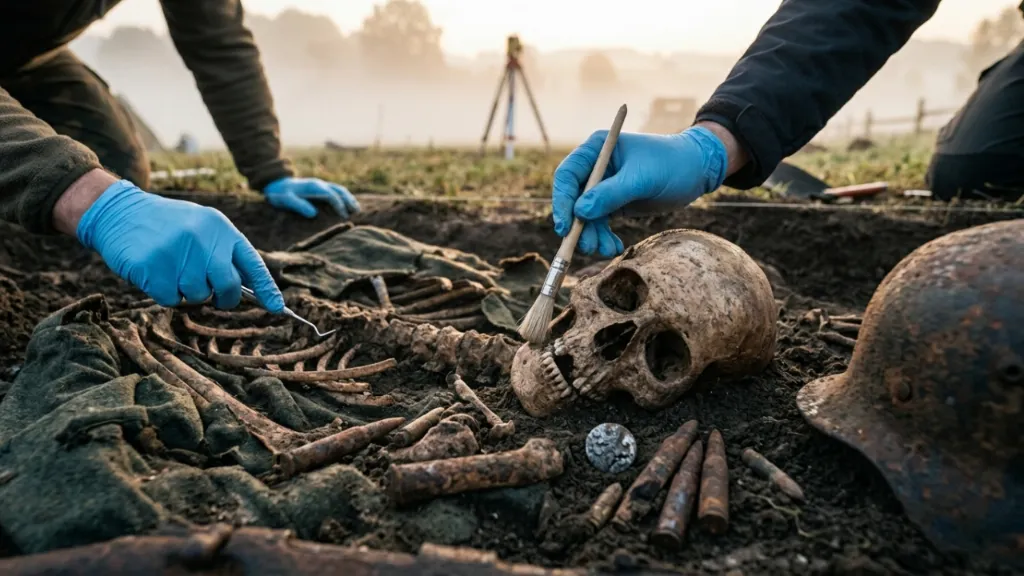
For eight decades, they weren’t listed as casualties. They weren’t honored, buried, or even acknowledged.
They were simply… missing.
The Chaos of the Pomeranian Offensive
Historical context places this tragedy during the Pomeranian Offensive, one of the final and most chaotic phases of the war. Soviet forces were advancing rapidly, crushing German defenses and pushing relentlessly toward Berlin.
Units were collapsing. Communication lines were breaking. Records were lost.
In that chaos, men disappeared.
Among the fallen in Steklno were two Fallschirmjäger—elite German paratroopers. By this stage of the war, even these highly trained soldiers were no longer fighting in specialized roles. They had been thrown into frontline infantry combat, often under-equipped and overwhelmed.
It was a war Germany was already losing—but these men were still fighting it.
A Death Without Witness
What happened in those final moments?
The evidence suggests an intense, close-range battle. Perhaps they were cut off from their unit. Perhaps they made a final attempt to hold their ground.
No one survived to tell their story.
No report was filed. No message was sent.
And so, the world moved on—without them.
The Families Who Never Knew
Back home, families waited.
Days turned into months. Months into years. Eventually, hope faded into uncertainty. These soldiers were listed among the missing—no bodies, no graves, no closure.
Imagine living a lifetime without knowing.
No funeral.
No confirmation.
No ending.
Just silence.
After 80 Years… A Return to History
Now, after eight decades, the silence has finally been broken.
With the discovery of their remains—and especially the intact ID tags—there is a real chance these soldiers can be identified. Names may be recovered. Families, perhaps descendants, may finally learn the truth.
This discovery is not just archaeological.
It is deeply human.
More Than a War Story
War is often told through victories, strategies, and political outcomes. But beneath those narratives are individuals—people who lived, fought, and disappeared without recognition.
The five soldiers of Steklno were not just casualties.
They were forgotten.
Until now.
And maybe, just maybe… history is finally ready to remember them