
The Night That Changed Science Forever: The Story of X-Rays
It was a cold evening in 1895.
Inside a quiet laboratory at the University of Würzburg, Germany, a physicist named Wilhelm Röntgen was working alone. The world outside was unaware that history was about to change.
Electricity was still a mystery back then. Scientists across Europe were obsessed with strange glowing tubes and invisible energies. Röntgen was one of them.
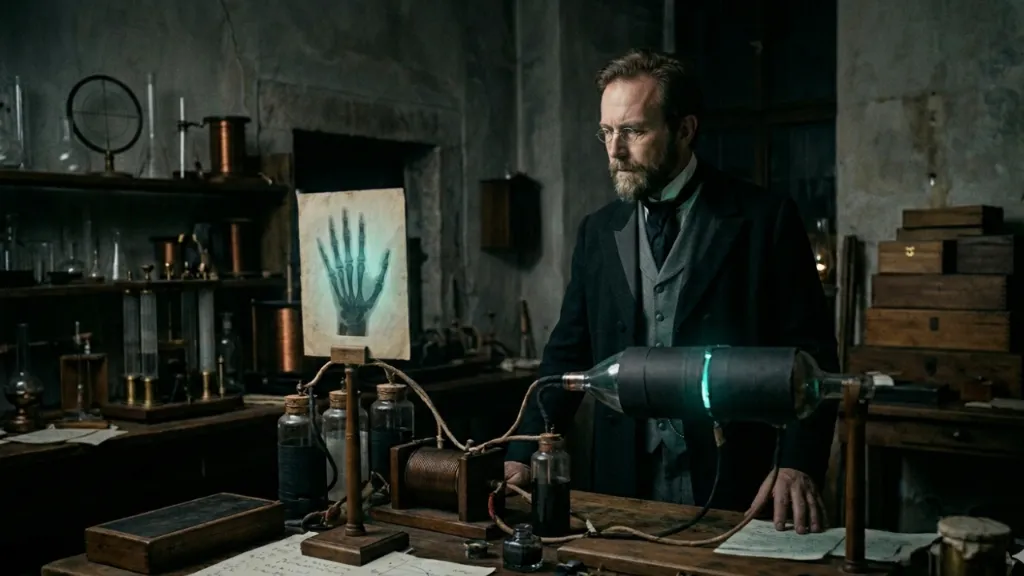
His lab was dimly lit. Thick curtains covered the windows. On his table sat a strange glass device—a cathode ray tube—wired to a high-voltage power source. He had wrapped it in black cardboard to block any visible light.
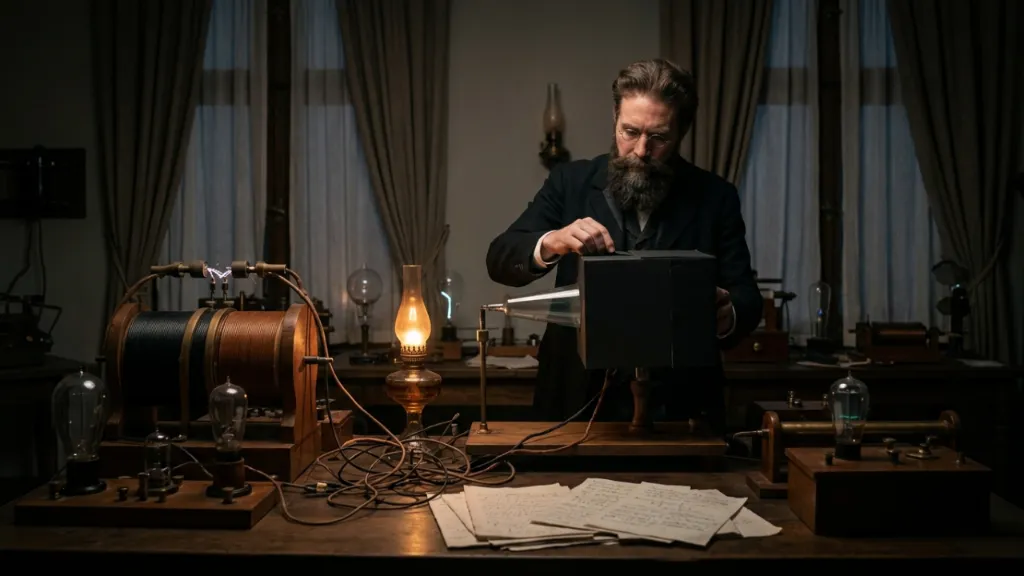
But then… something unexpected happened.
Across the room, a small screen coated with a chemical began to glow.
Röntgen froze.
“That’s impossible,” he must have thought.
The tube was completely covered. No light should escape. Yet the screen shimmered in the darkness like a ghostly signal.
Instead of ignoring it, he leaned closer.
Curiosity took over.
The Invisible Force
Night after night, Röntgen locked himself in that lab.
He stopped sharing his work with colleagues. He even ate and slept there sometimes. Something was happening—and he needed to understand it.
He began placing different objects between the tube and the glowing screen.
Books… wood… pieces of cloth…
The glow continued.
But when he placed a piece of metal, the shadow appeared.
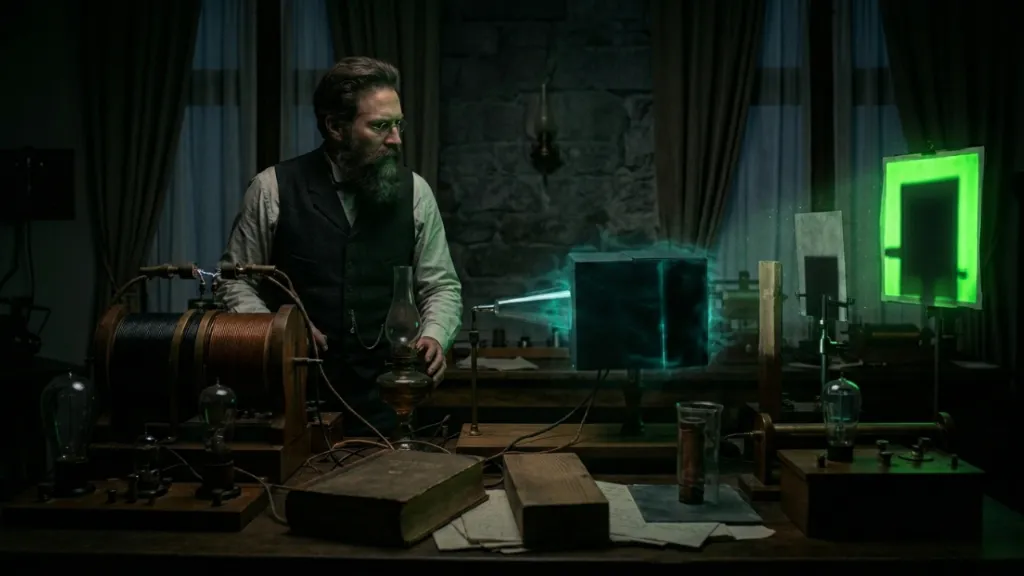
Denser objects blocked the rays.
This wasn’t ordinary light.
This was something entirely new.
He called them X-rays—because “X” meant unknown.
The Moment That Shocked the World
One day, he decided to try something bold.
He asked his wife, Anna Bertha, to help him.
She hesitated—but agreed.
Röntgen placed her hand between the mysterious rays and a photographic plate. The machine buzzed softly as the exposure began.
Minutes later, he developed the image.
What appeared on that plate was unlike anything ever seen before.
Her bones.
Clear. Visible. Haunting.
And on one finger… her wedding ring.
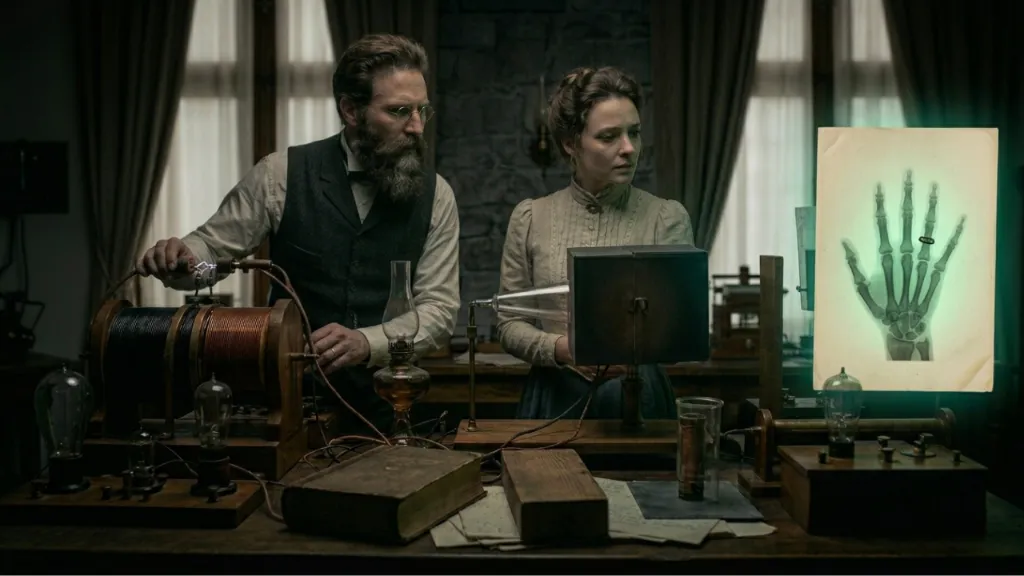
When she saw it, she was terrified.
“I have seen my own death,” she reportedly whispered.
It wasn’t just an image.
It was the first time in human history someone had looked inside a living body without making a single cut.
A Discovery Spreads Like Fire
Röntgen published his findings in December 1895.
Within weeks, the news spread across the world.
Scientists were stunned.
Doctors were amazed.
By 1896—just one year later—X-rays were already being used in hospitals to detect broken bones and locate bullets inside wounded patients.
Before this, doctors could only guess what was happening inside the body.
Now, they could see it.
The Dark Side of Discovery
But there was a problem.
No one knew the dangers.
Early users of X-rays exposed themselves without protection. Some suffered burns. Others developed serious health issues over time.
Radiation safety didn’t exist yet.

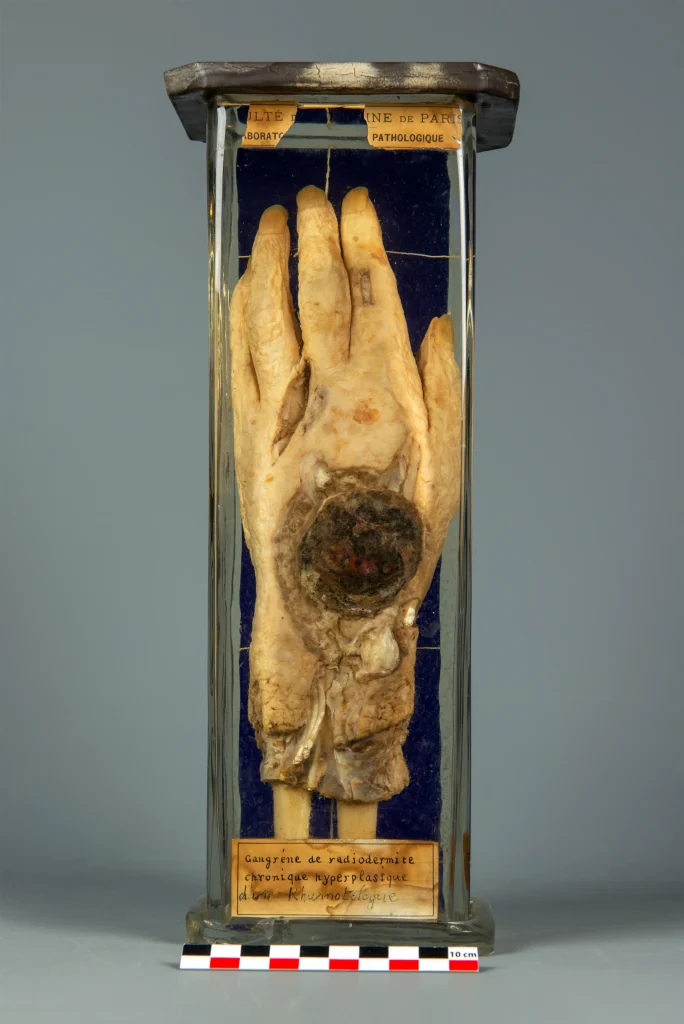
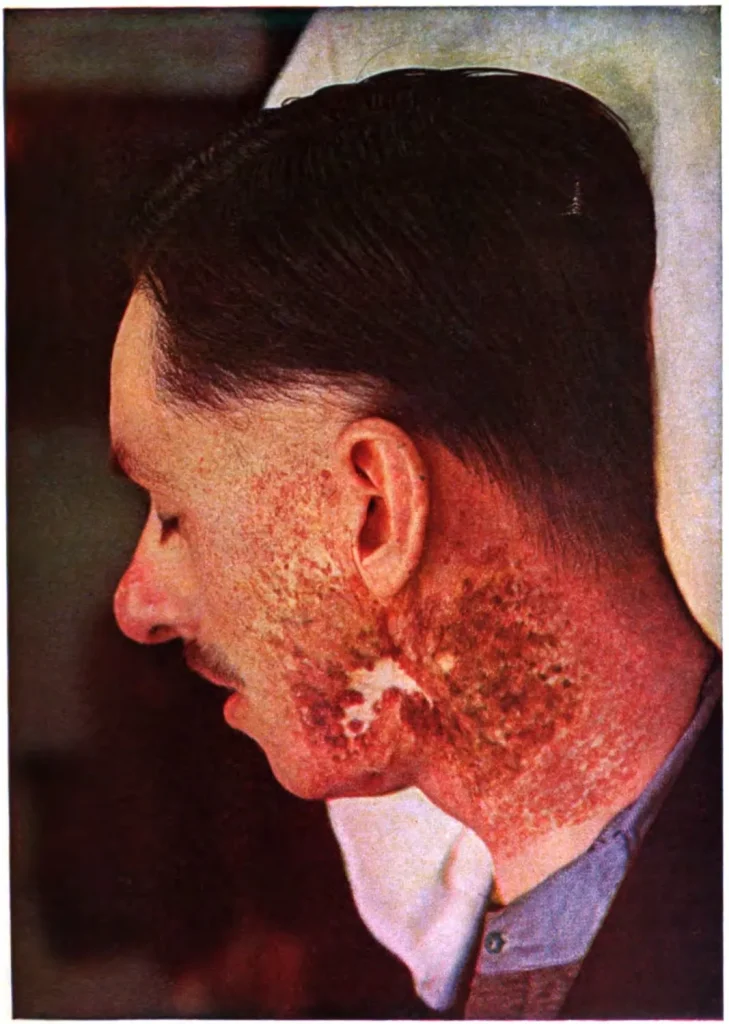
It took years before scientists understood that this invisible power could also harm.
Even then, the world didn’t stop.
Because the benefits were too powerful to ignore.
A Man Who Refused to Profit
In 1901, Wilhelm Röntgen received the very first Nobel Prize in Physics.
He had changed the world.
But here’s what makes his story even more remarkable—
He never patented X-rays.
He believed this discovery should belong to humanity, not to one man.
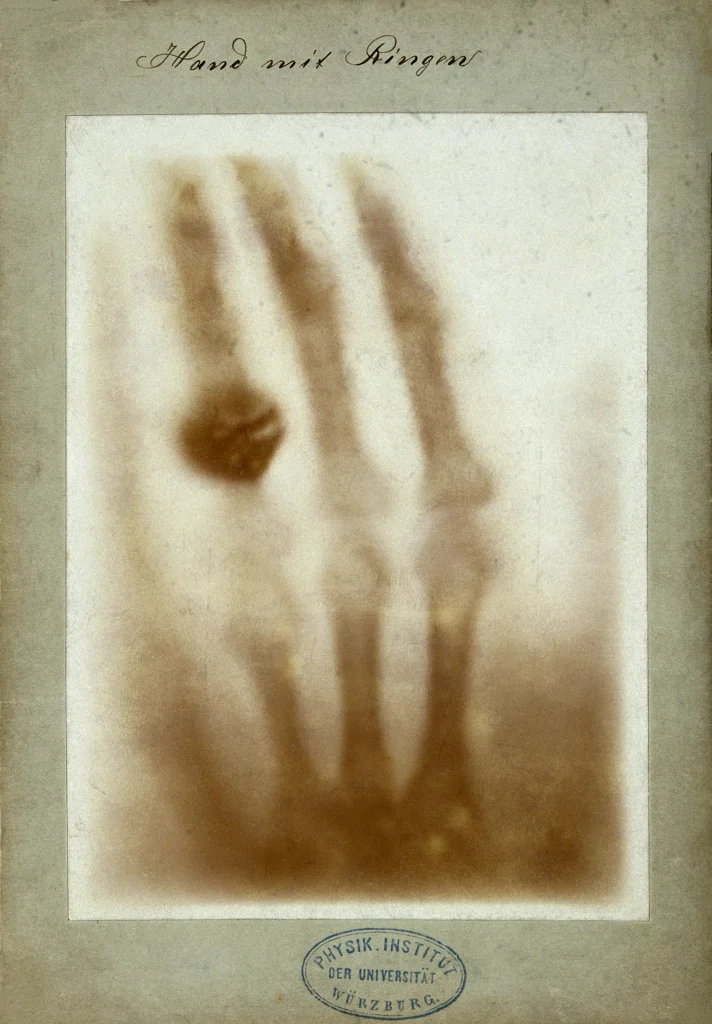 First X-ray image
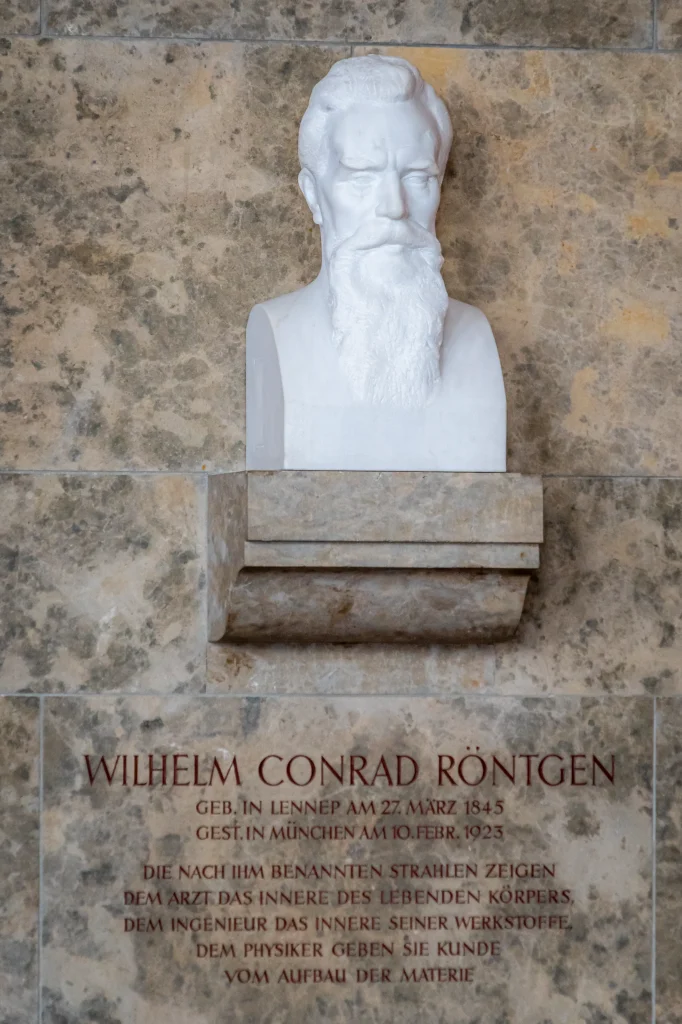
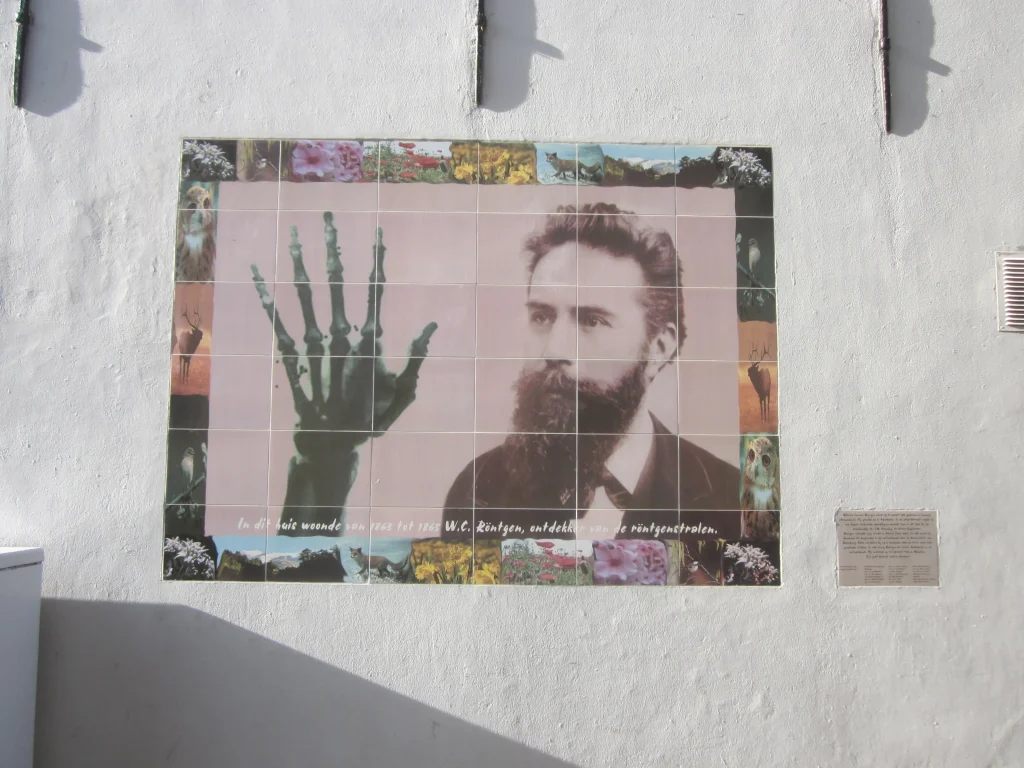
 Wilhelm Röntgen Residency
 Memo
Memo Wilhelm Röntgen,s grave
 Memo
Memo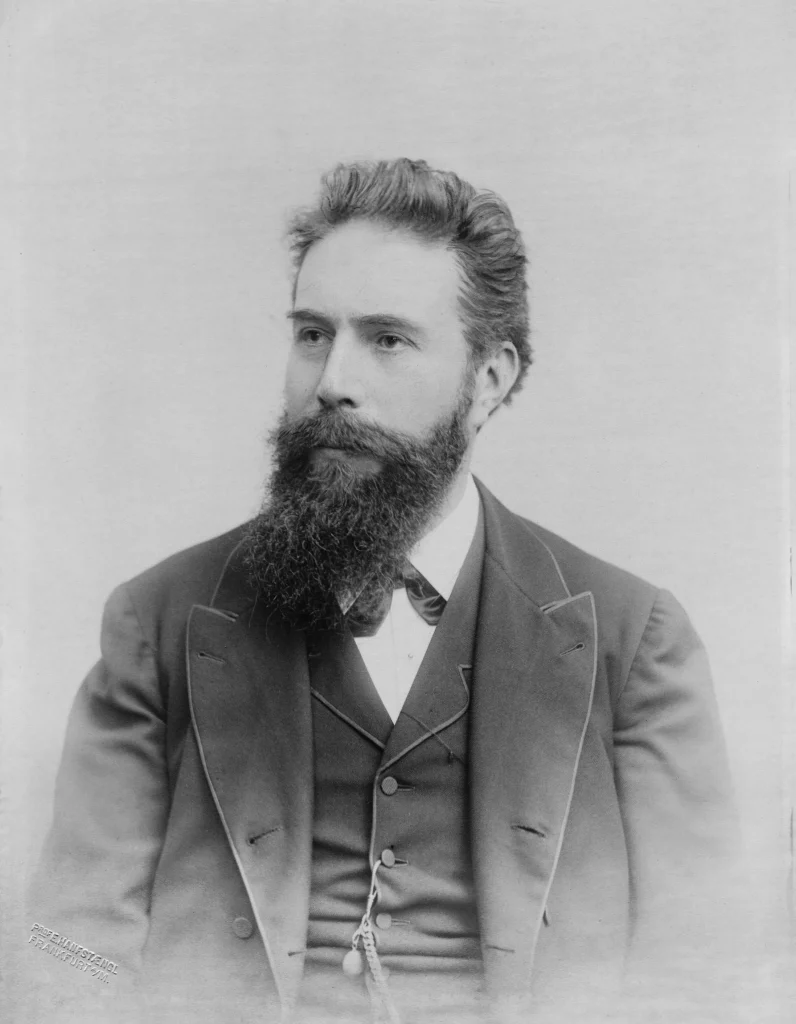 Wilhelm Röntgen
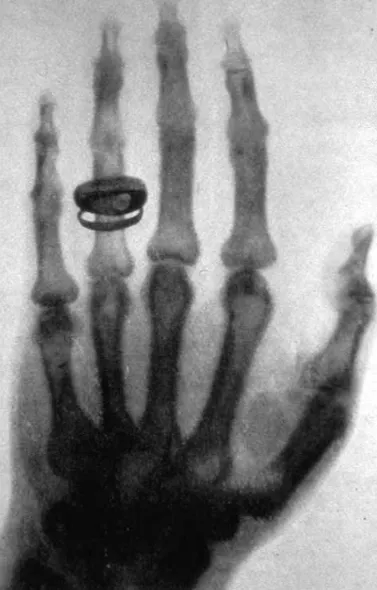 Anna Bertha,s hand
More Than Just an Accident
People often call it a “lucky accident.”
But that’s not entirely true.
Many scientists saw strange things.
But Röntgen paid attention.
He asked questions.
He stayed curious.
That’s what made the difference.
Final Thought
In a small, dark laboratory… with basic equipment and no grand plan…
A man noticed a faint glow.
And instead of ignoring it—he followed it.
That glow became X-rays.
And X-rays became one of the most powerful tools in human history.
Sometimes, the biggest discoveries don’t come from searching for answers…
They come from noticing what others ignore.