
Xerxes I — The Persian King Misjudged by Hollywood
Xerxes I ruled the Achaemenid Empire from 486 to 465 BCE, governing a vast territory renowned for its infrastructure and sophisticated administration. Under his leadership, the Persian Empire maintained its status as a highly organized civilization, managing diverse populations across territories including modern Iran, Egypt, and parts of India.
Historical records and archaeological findings contrast sharply with modern cinematic depictions. Evidence shows a refined monarch who prioritized major architectural projects, such as the expansion of Persepolis. His legacy centers on his administrative capabilities and the preservation of a complex imperial system that spanned three continents during his reign.
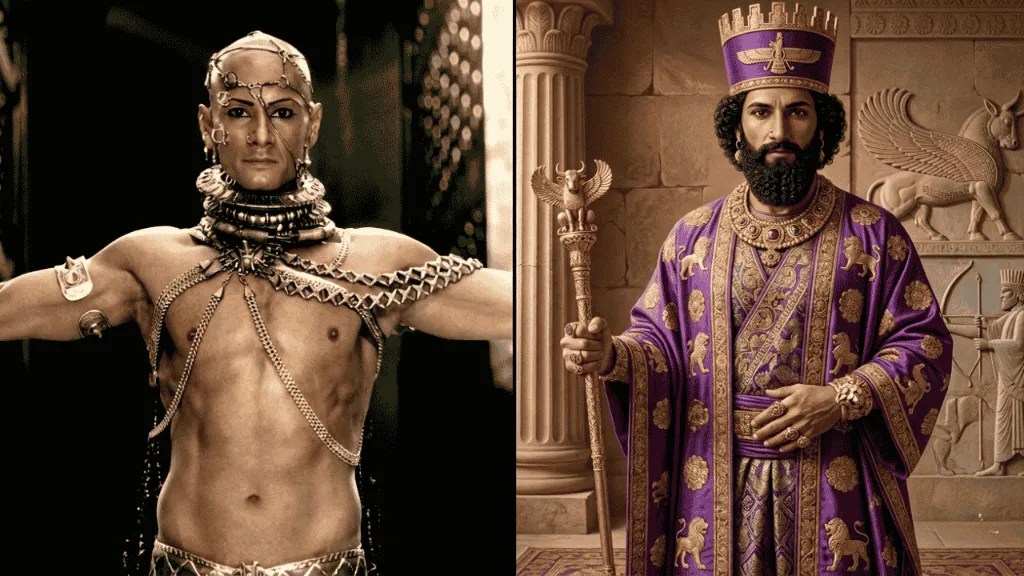
When most people hear the name Xerxes, the first image that comes to mind is usually the strange, heavily fictionalized ruler from the 300 movie.
A towering figure covered in jewelry, speaking like a tyrant from a fantasy world.
But history tells a very different story.
The real Xerxes I was not a savage king from a barbaric empire.
He was the ruler of one of the most advanced, wealthy, organized, and culturally sophisticated civilizations of the ancient world — the Achaemenid Empire.
In fact, many historians consider him one of the most powerful monarchs of his era.
This is the story of the real Xerxes.
The Real Captain Jack Sparrow Was a Muslim Pirate Hollywood Doesn’t Want You to Know About
Who Was Xerxes I?
Xerxes I, also known as Xerxes the Great, ruled the Persian Empire from 486 BCE to 465 BCE.
He was the son of Darius I and the grandson of Cyrus the Great — the legendary founder of the Persian Empire.
By the time Xerxes inherited the throne, Persia had already become the largest empire the world had ever seen.
The empire stretched across:
- Modern-day Iran
- Egypt
- Mesopotamia
- Parts of India
- Anatolia
- Central Asia
- The Levant
Millions of people from different cultures, languages, and religions lived under Persian rule.
Managing such a massive empire required intelligence, diplomacy, military strength, and administrative skill.
And Xerxes successfully maintained that empire for nearly two decades.
The Persian Empire Was Highly Advanced
Hollywood films often portray ancient Persia as cruel or uncivilized.
Historically, the opposite is closer to reality.
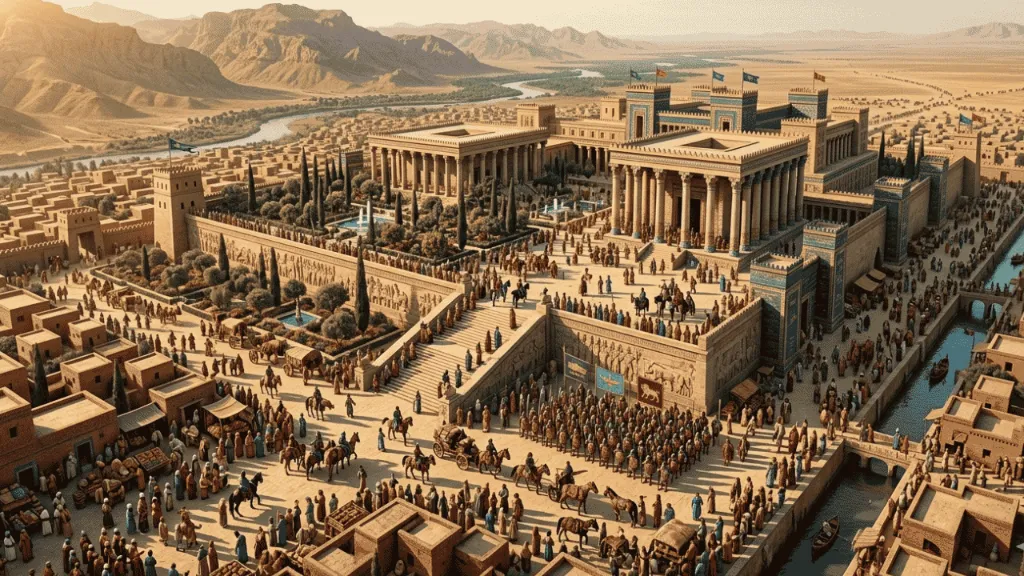
The Achaemenid Empire was famous for:
- Religious tolerance
- Efficient administration
- Road networks
- Architecture
- Engineering
- Trade systems
- Cultural diversity
The Persians built royal roads connecting distant parts of the empire.
They developed one of the ancient world’s most sophisticated communication systems.
Even the Greeks — Persia’s rivals — respected Persian wealth and organization.
The empire’s capital cities such as Persepolis displayed extraordinary craftsmanship and architectural brilliance.
Xerxes and the Famous Greek Campaign
Xerxes is best known for his invasion of Greece in 480 BCE.
This military campaign became legendary because of battles such as:
- Battle of Thermopylae
- Battle of Salamis
The movie 300 focuses heavily on Thermopylae, where a small Spartan force resisted the Persian army.
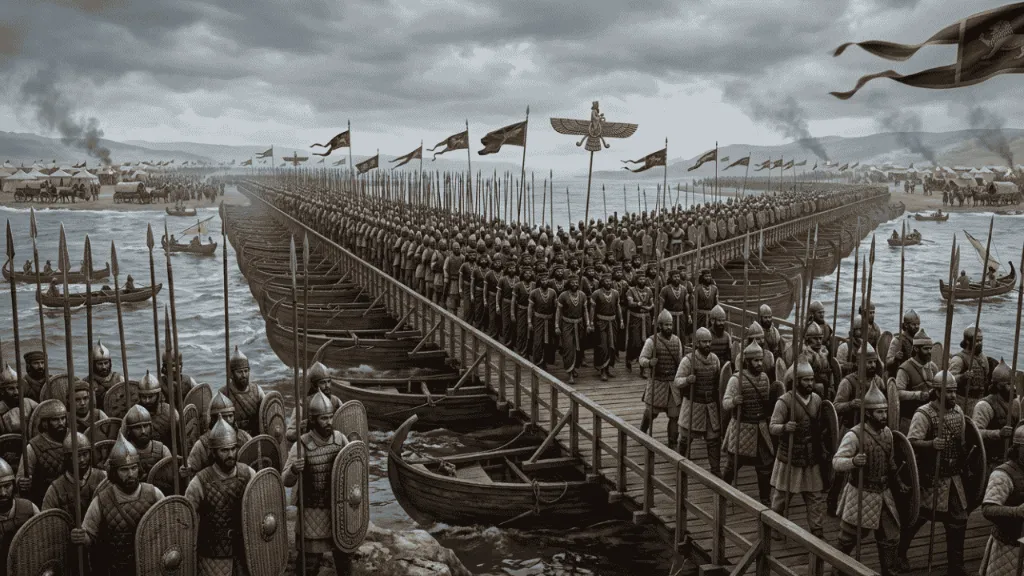
However, the film dramatically exaggerates and fictionalizes many details.
Historically:
- The Persian army was not composed of monsters or slaves.
- Xerxes was not a god-king demanding worship from everyone.
- Persian soldiers were disciplined and professionally organized.
- Many Greek city-states actually sided with Persia.
The war itself was part of a larger geopolitical struggle between powerful civilizations.
The Real Appearance of Xerxes
One of the biggest inaccuracies in 300 is Xerxes’ appearance.
The movie presents him almost like a fantasy villain.
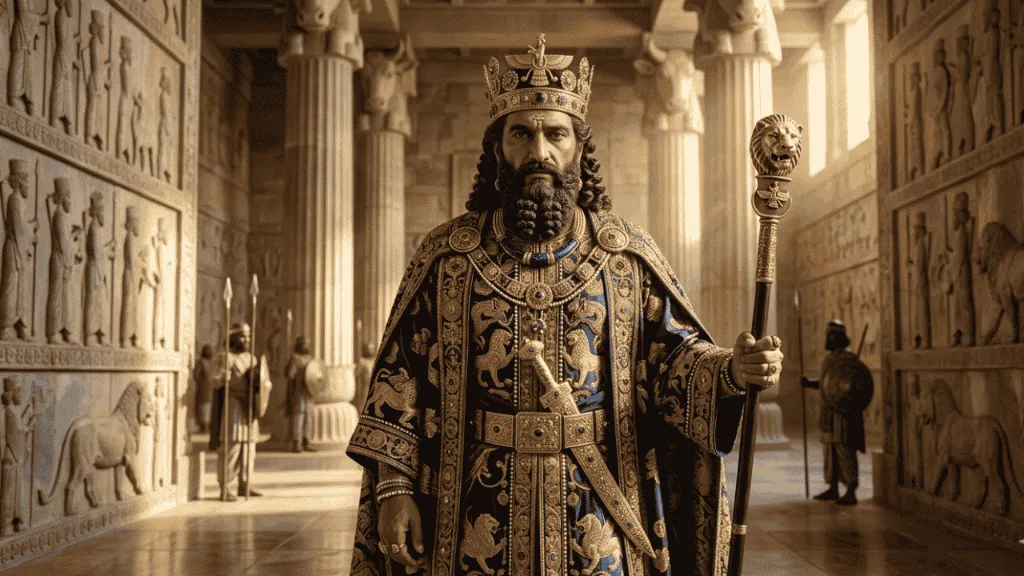
But ancient Persian carvings and reliefs discovered in Iran show something completely different.
Persian kings were usually depicted as:
- Elegant
- Well-groomed
- Bearded
- Wearing royal robes
- Carrying symbols of authority
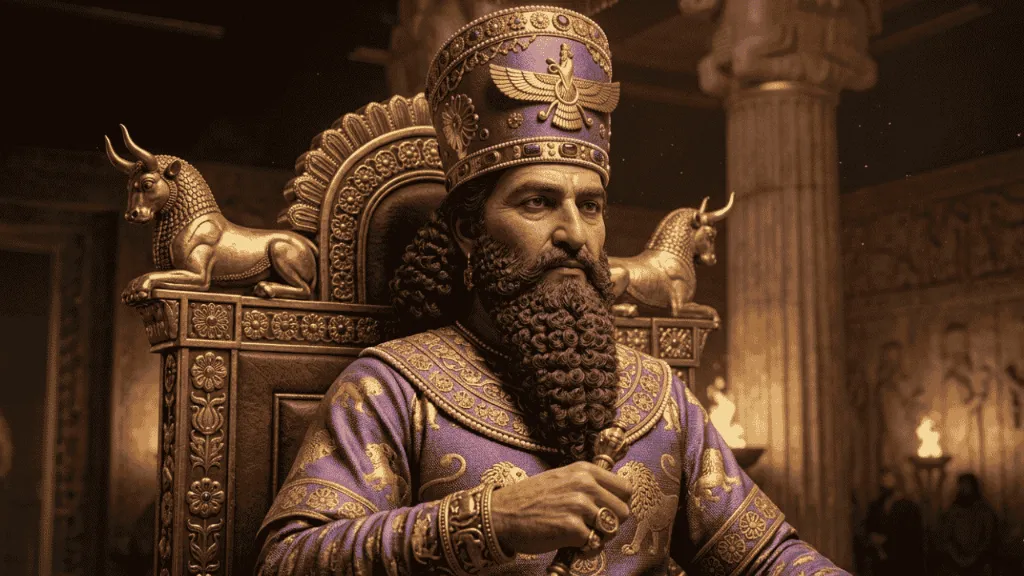
Their clothing reflected sophistication and royal dignity.
The detailed stone carvings at Persepolis reveal carefully designed garments, jewelry, and hairstyles.
These artworks suggest refinement — not barbarism.
Why Hollywood Changed History
The film 300 was based more on graphic novels and stylized fantasy than historical accuracy.
Its main purpose was entertainment, not education.
To create a dramatic “good versus evil” story, Persia was portrayed as exotic, terrifying, and monstrous.
This kind of portrayal is not new.
For centuries, many Western stories depicted eastern empires as mysterious or barbaric enemies.
Modern historians, however, increasingly challenge these stereotypes.
Today, researchers emphasize that ancient Persia was one of the world’s greatest civilizations.
Xerxes as a Builder and Administrator
Xerxes was not only a military ruler.
He also continued major construction projects started by his father.
At Persepolis, he expanded palaces, ceremonial halls, and monumental gateways.
Some inscriptions from his reign still survive today.
These projects demonstrated the empire’s immense wealth and engineering capabilities.
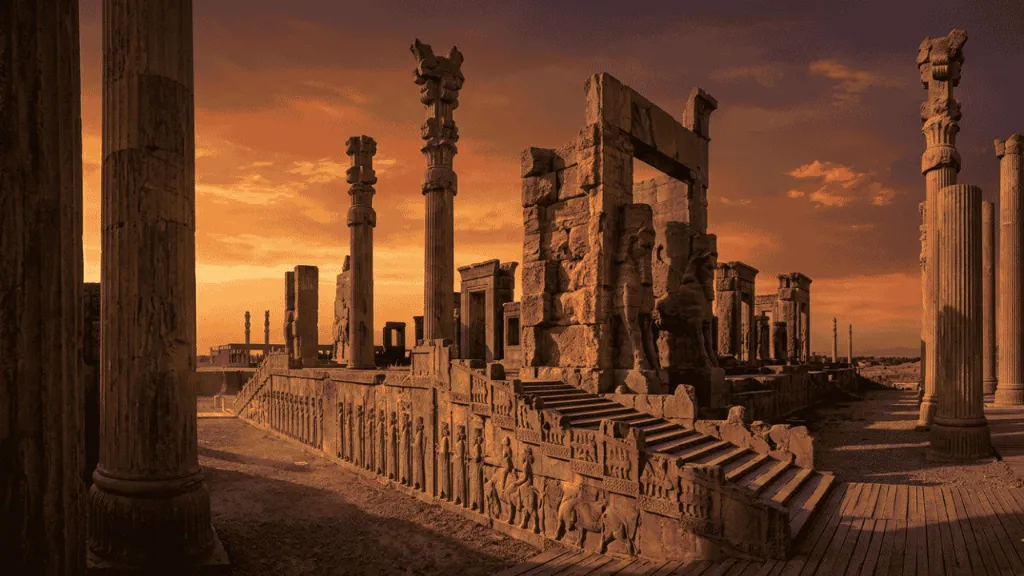
He also maintained control over a multicultural empire that stretched across three continents — no small achievement in the ancient world.
Was Xerxes Really “The Great”?
Unlike Cyrus the Great, Xerxes is not universally known by the title “The Great.”
However, some historians and researchers do use the phrase “Xerxes the Great” because of:
- The scale of his empire
- His political influence
- His military power
- His monumental building projects
- His role in preserving Persian dominance
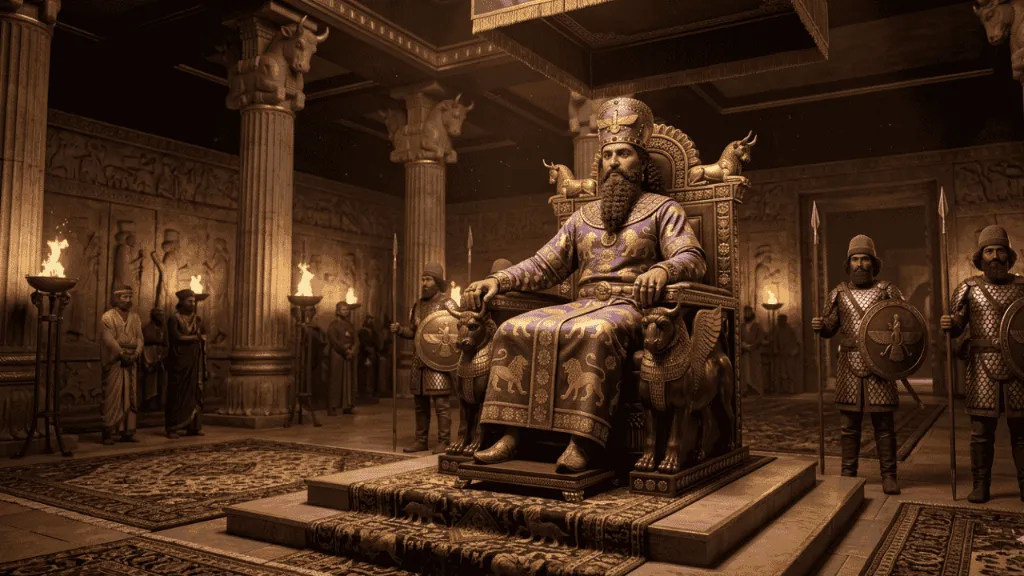
Although his Greek campaign is often remembered as a setback, his reign itself was far from weak or insignificant.
The Lasting Legacy of Xerxes
More than 2,500 years later, Xerxes remains one of history’s most misunderstood rulers.
Popular culture transformed him into a fictional villain, but archaeology and historical research reveal a far more complex figure.
He ruled one of humanity’s greatest empires during its peak.
He governed vast territories, supervised grand construction projects, and maintained a sophisticated imperial system inherited from generations of Persian kings.
The real Xerxes was not a monster from fantasy cinema.
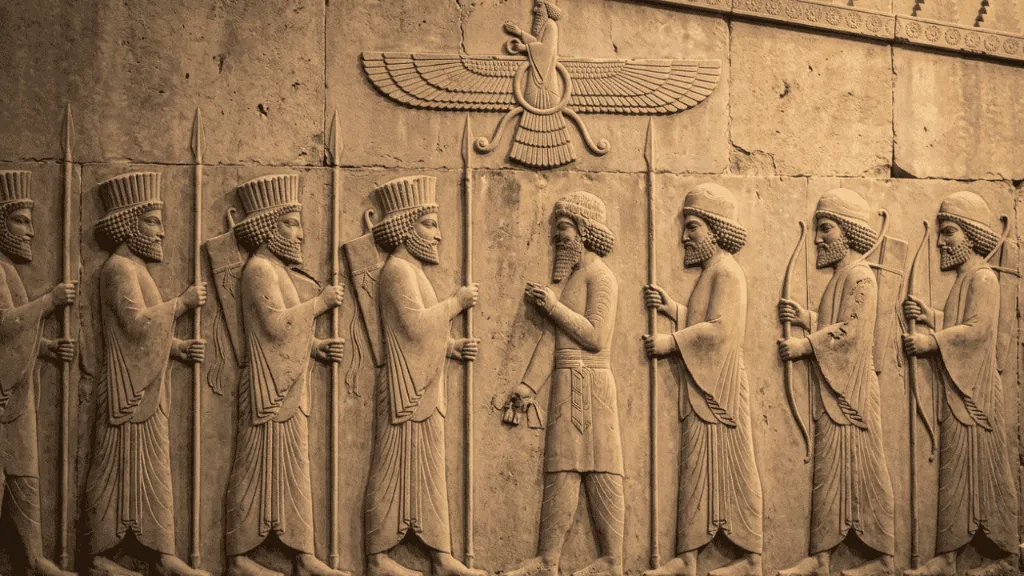
He was a king of an advanced civilization whose legacy still survives in the ruins of ancient Persia.
Conclusion
Movies can shape public opinion, but they do not always reflect historical truth.
The portrayal of Xerxes I in 300 may be visually memorable, yet it ignores the historical reality of the Persian Empire.
Ancient Persia was a center of culture, administration, architecture, and political power.
And Xerxes himself was far more sophisticated, capable, and influential than Hollywood’s fictional version suggests.
Understanding the real history behind famous films helps us separate entertainment from reality — and appreciate civilizations the way they truly were.