
The Breaking Wheel: Medieval Europe’s Most Terrifying Public Punishment
Throughout history, societies have always devised ways to punish wrongdoing. But some punishments went far beyond simple execution. They were designed to terrorize and leave a permanent mark not just on the condemned, but on every soul who witnessed it. Among the darkest of these methods stands the Breaking Wheel, a medieval torture device that turned a human body into a public spectacle of suffering and state power.
What Was the Breaking Wheel?
The Breaking Wheel was a method of execution widely used across medieval and early modern Europe, primarily from the 12th to the 18th century. Governments in France, Germany, and the Holy Roman Empire employed it as an official legal punishment for the most serious crimes.
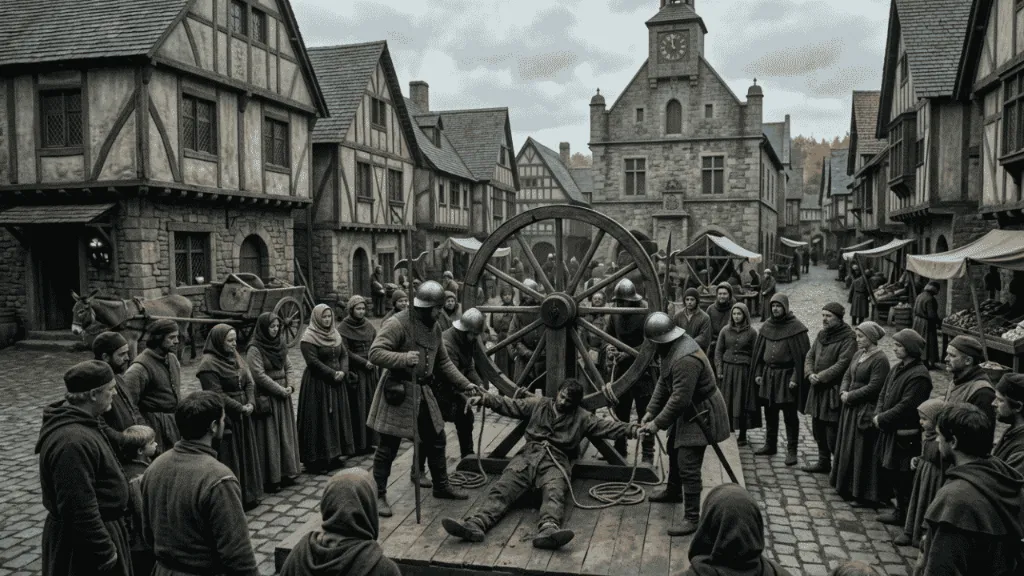
It was not just a death sentence. It was a warning. Authorities reserved it for crimes like murder, armed robbery, treason, and severe violations of state law. In that era, rulers didn’t simply want justice — they wanted fear.
How Did the Breaking Wheel Work?
The process was brutally systematic. Executioners used a large wooden or iron wheel — similar in shape to a cart wheel — and placed it in a public square or open field. They then spread the condemned person flat on the ground, limbs stretched outward so each body part remained exposed and accessible.
The executioner stepped forward with a heavy iron bar or hammer.
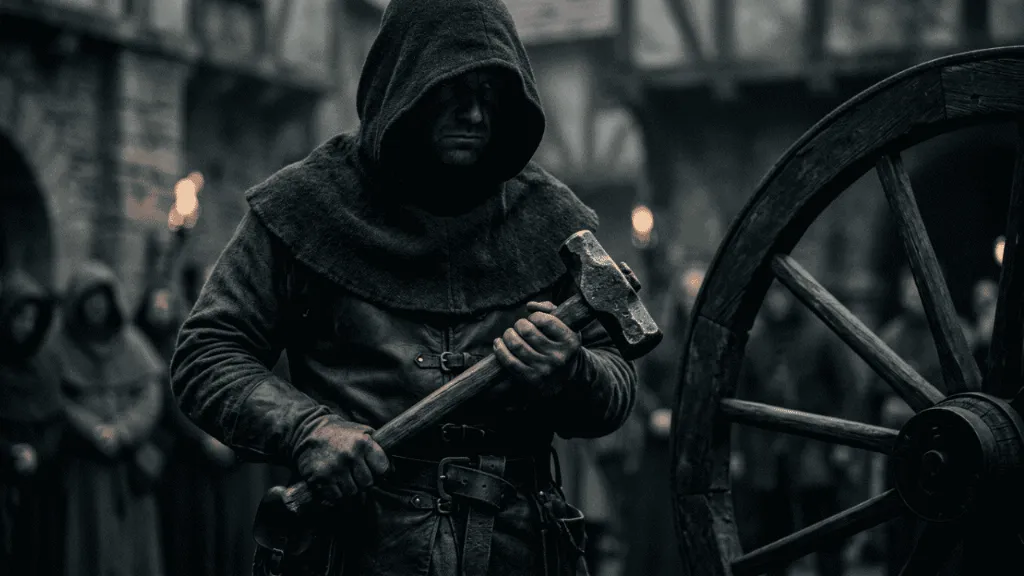
The first blow landed — and a bone snapped. Then another blow. And another. The arms, legs, and ribs broke one by one, in a deliberate sequence calculated to keep the person alive for as long as possible.
The Wheel as a Display of Power
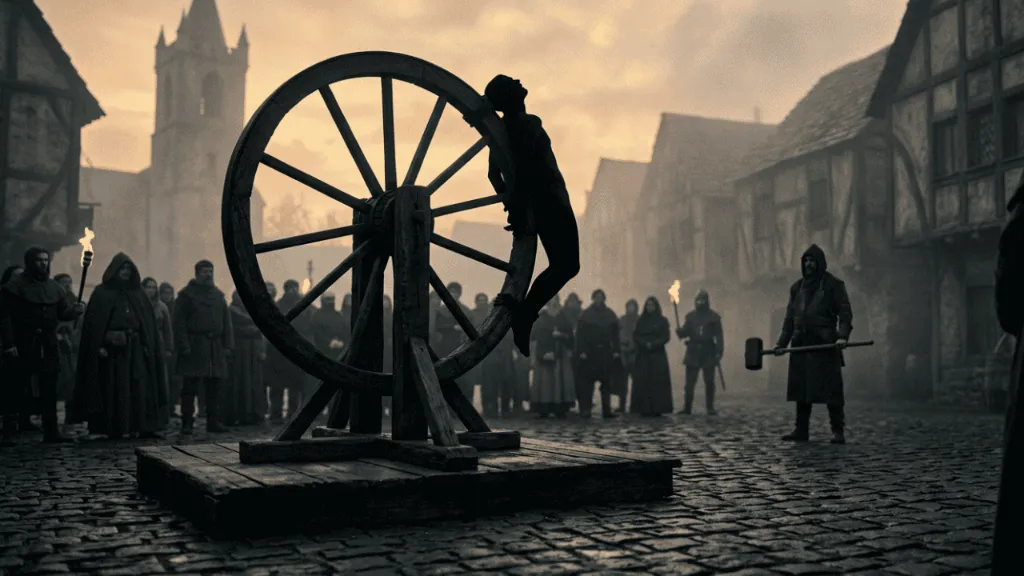
After the breaking, executioners bound the shattered body to the wheel itself. Sometimes they raised the wheel high on a pole, making the condemned visible to everyone in the surrounding area. This began the second — and often longer — phase of the punishment.
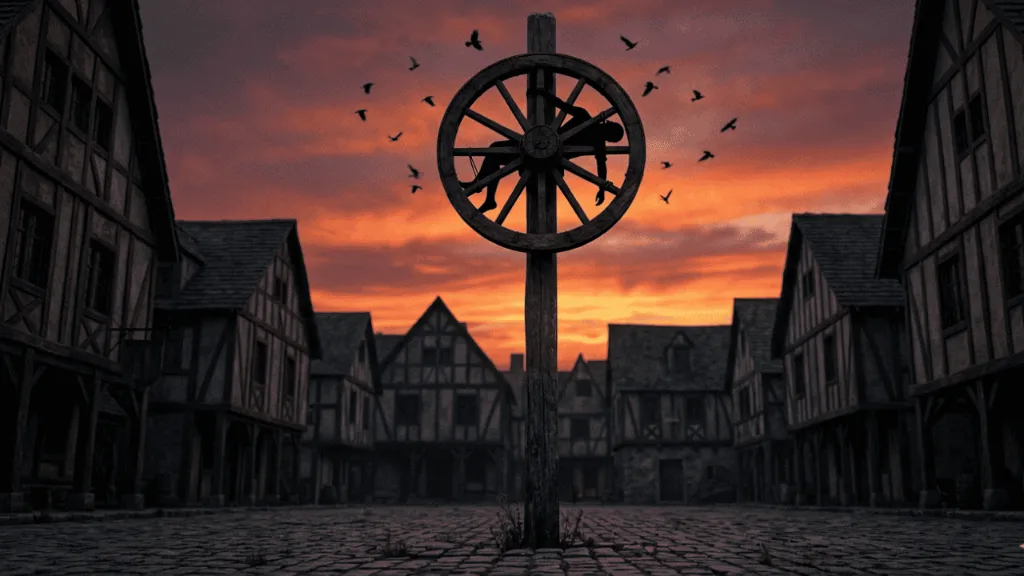
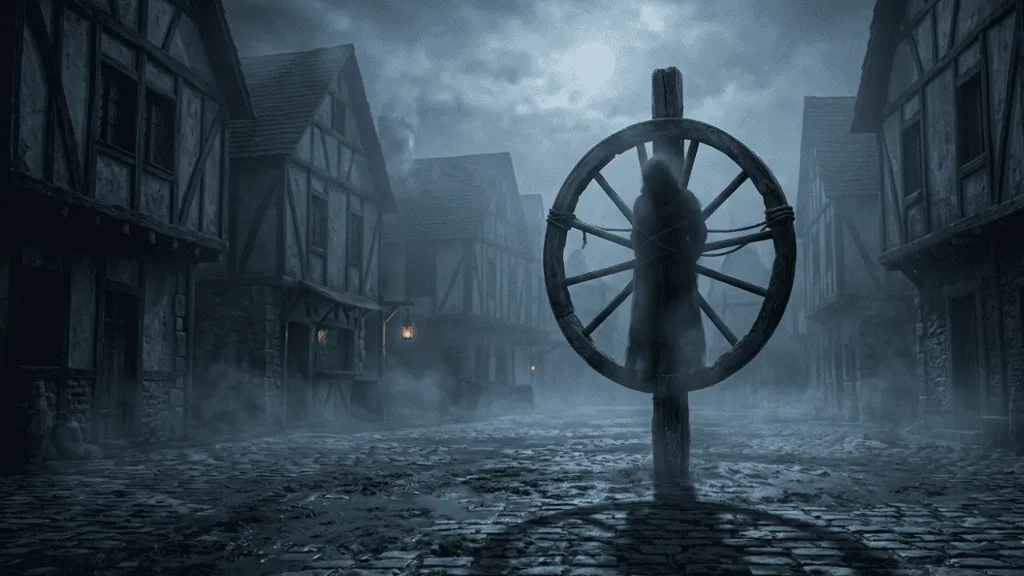
The person remained alive. Hours passed. Sometimes days. Sun, cold, open wounds, and thirst compounded the agony. Birds would pick at the exposed flesh. The condemned endured all of it while still breathing.
The Crowd That Watched
Public executions in the Middle Ages were not private affairs. People gathered to watch. Some came out of curiosity. Others brought their children, treating the spectacle as a moral lesson. Meanwhile, many simply stood in silence, absorbing the horror.
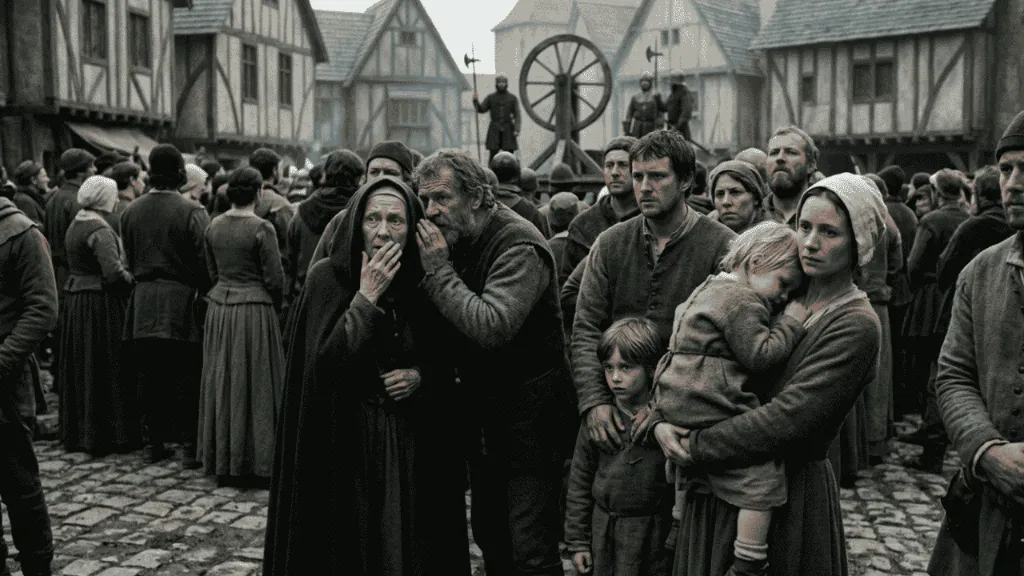
Because of this, the Breaking Wheel functioned as something more than punishment. It was a message — broadcast to the entire community — about what the state could and would do to those who defied its laws.
The Executioner’s Role
Occasionally, an executioner would show mercy at the end. One final blow — aimed to kill quickly — could end the suffering. However, this was not always the case. In many recorded instances, authorities deliberately withheld even that small mercy, allowing the punishment to run its full, drawn-out course.
Why Did the Breaking Wheel Eventually Disappear?
The Breaking Wheel did not vanish overnight. As European societies gradually changed through the 17th and 18th centuries, ideas about justice, dignity, and human rights began to shift. Enlightenment thinkers challenged the cruelty of public spectacle punishments. Legal reformers pushed for more humane alternatives.
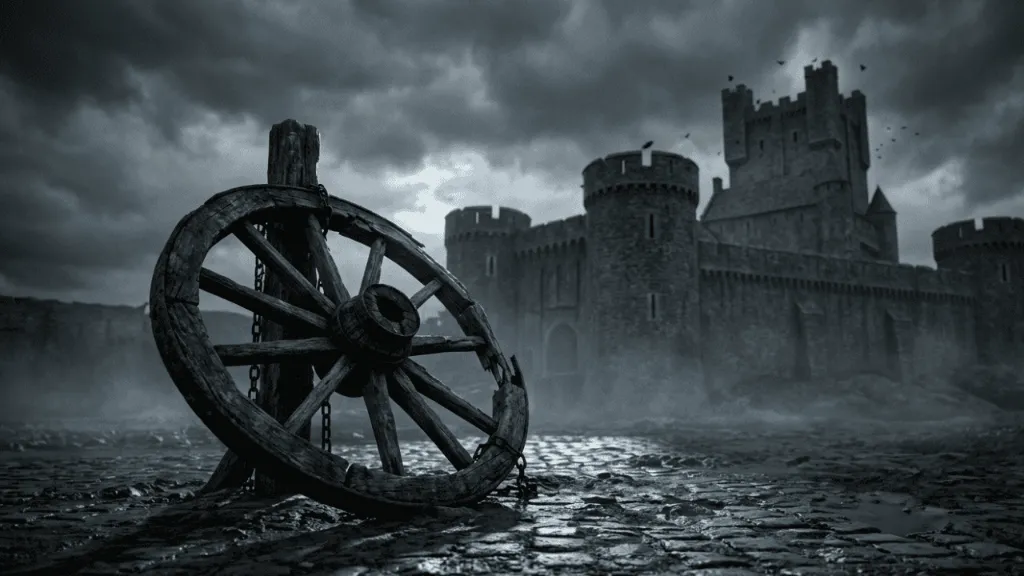
Eventually, by the close of the 18th century, the Breaking Wheel had largely disappeared from European law. In some regions it lingered slightly longer, but its era was effectively over.

The Lasting Legacy of the Breaking Wheel
Even after it disappeared from courtrooms and public squares, the Breaking Wheel left a deep imprint on history. It represents a time when law and terror were deliberately fused — when rulers used visible suffering to maintain social control.
Historians today study it not simply as a curiosity of cruelty, but as evidence of how power shapes punishment. The Breaking Wheel was never just about one criminal. It was about silencing an entire population through collective dread.
In addition, it raises questions that remain relevant: Where is the line between justice and cruelty? And who decides where that line sits?
Conclusion
The Breaking Wheel stands as one of history’s most chilling examples of punishment as performance. It reminds us that legal systems are never neutral — they reflect the values, fears, and power structures of their time. Afterward, when Europe moved toward reform, it was partly because thinkers refused to let this kind of brutality go unquestioned.
Today, the Breaking Wheel serves as a dark mirror — one that shows us how far civilization has traveled, and why the protection of human dignity must remain non-negotiable.