
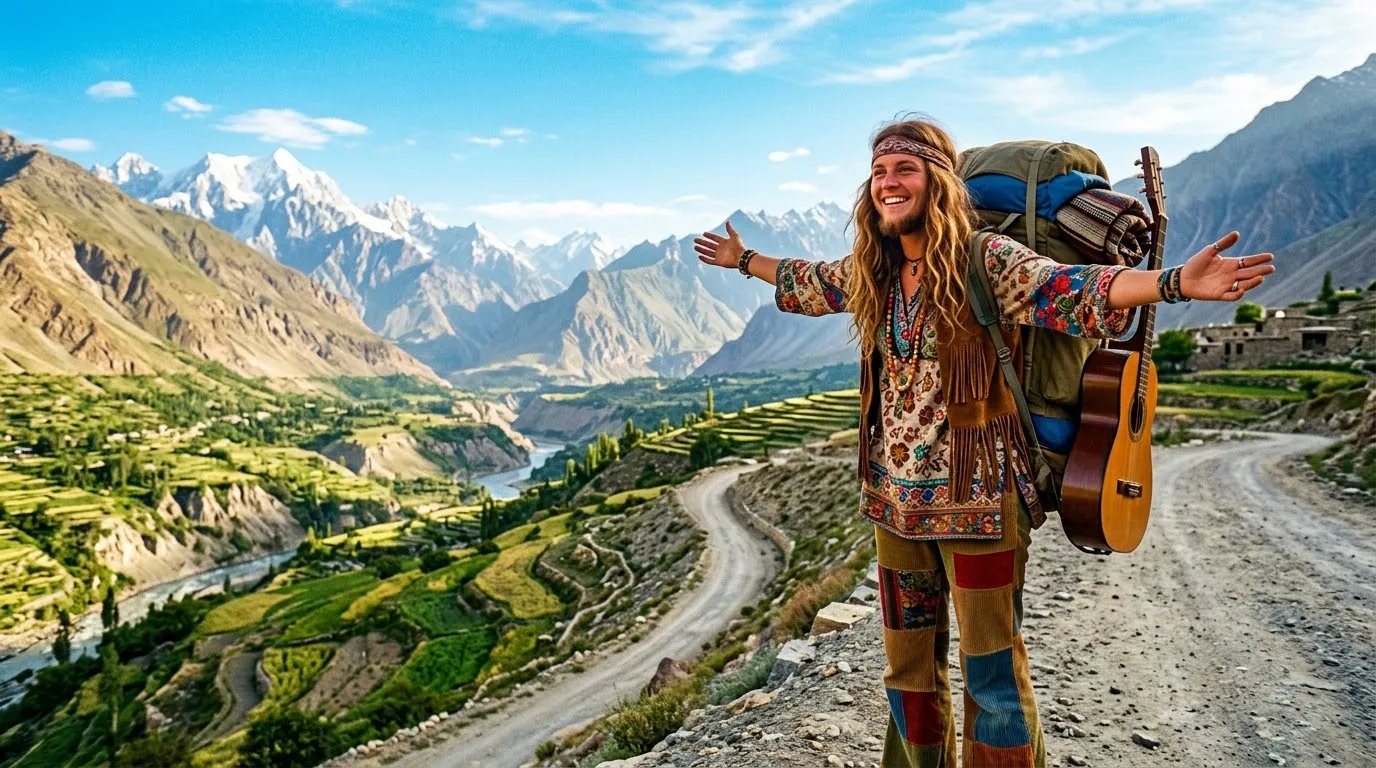
The Hippie Trail: Freedom, Drugs, and Hollywood’s Obsession
During the late 1960s, young Westerners traveled the Hippie Trail overland to Asia seeking spiritual fulfillment. This route primarily passed through Pakistan, India, and Nepal, driven by cultural events such as the Beatles’ visit to India. Pakistan served as a central waypoint for travelers visiting Sufi shrines and historic cities.
Political instability in the late 1970s, including the Iranian Revolution and the Soviet invasion of Afghanistan, closed the trail. Despite its reputation for peace, the movement involved significant risks and drug culture. Hollywood has documented these experiences for decades, reflecting on both the era’s idealism and its darker consequences.
Imagine walking away from your entire life. No goodbye to your parents. No notice to your boss. Just a backpack, a thumb raised at the roadside, and a destination six thousand miles east.
In the late 1960s and early 1970s, hundreds of thousands of young Westerners did exactly that. They called the route they followed the Hippie Trail. And for a strange, short window in history, Pakistan sat right at its heart.
This is the story of how that happened — why it suddenly stopped, and how Hollywood has spent decades trying to make sense of it ever since.
A Generation Restless With Peace
Around six decades ago, America was not at ease with itself.
Two world wars had already reshaped the country. Now a third conflict, in Vietnam, was creeping into daily life. Jobs were plentiful. Power was growing. But something else was missing.
People had money and status. What they didn’t have was peace of mind. A quiet question began spreading through American homes: if wealth and power couldn’t buy contentment, what could?

The answer many young people settled on was strange, at the time, to their parents’ generation: look east.
The Summer of Love Lights the Match
That question soon crossed the Atlantic. European newspapers and broadcasters picked up the same debate — that money wasn’t everything, and that people needed something more than a nine-to-five life could offer.
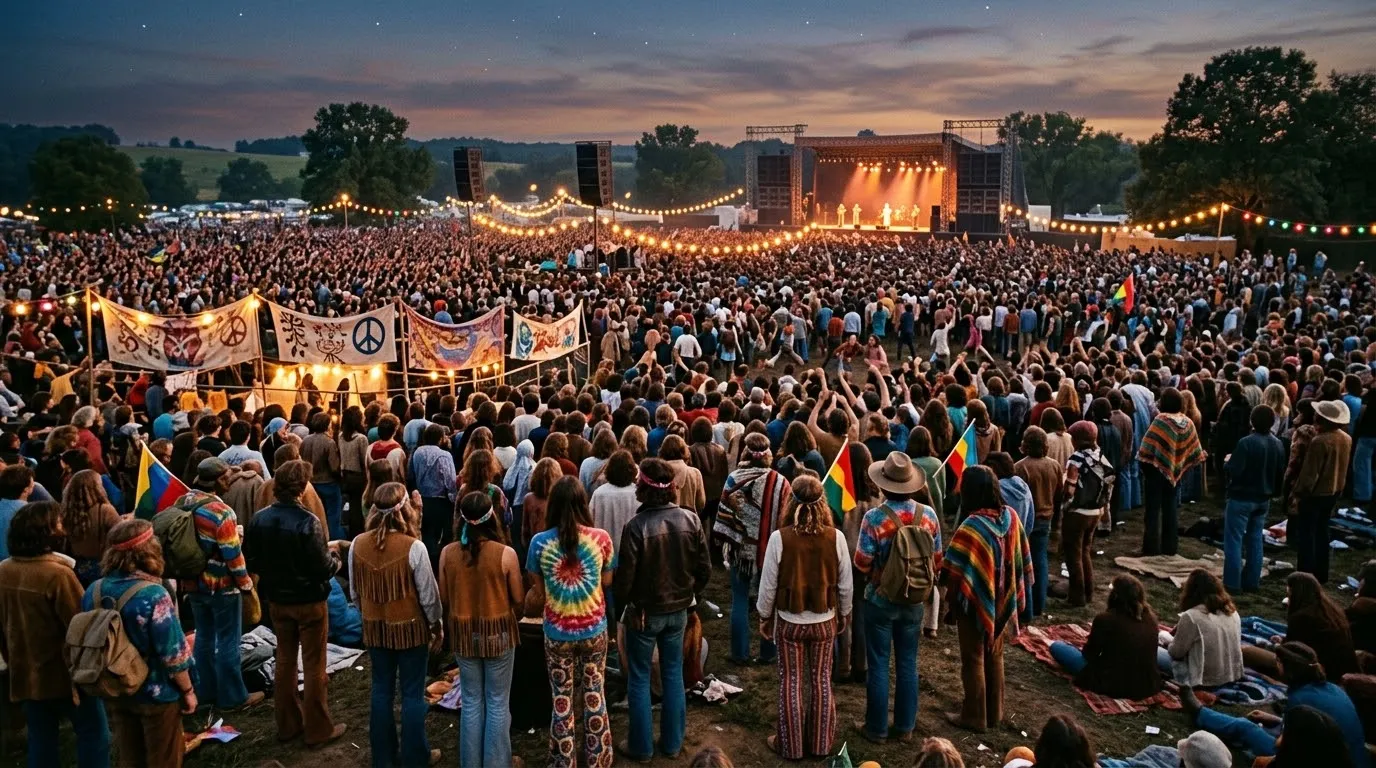
Then, in 1967, San Francisco became the epicenter of a cultural explosion. Tens of thousands of young people gathered there in what became known as the Summer of Love. It’s widely considered the breakthrough moment for what the world would soon call hippie culture.
A year later, that culture found its most famous messengers.

When the Beatles Discovered the East
In 1968, the Beatles traveled to Rishikesh, India, to study meditation under Maharishi Mahesh Yogi. It wasn’t a small trip. It was the most famous band on the planet, publicly turning toward Eastern spirituality.
The story went viral, decades before that word meant what it means today. Newspapers and television carried a single message to millions of young readers: the East has wisdom.

For a generation already restless, that was an invitation.
Woodstock and a Movement Finds Its Voice
Then came 1969, and Woodstock.
Over three days, an estimated 400,000 to 500,000 people gathered for a single music festival. It remains one of the defining images of the era — proof that this wasn’t a small, fringe idea anymore. It was a movement.
And movements need somewhere to go. For this one, that somewhere was Asia.
Following the Hippie Trail East
This is where the Hippie Trail — also called the overland route — took shape. Young Europeans began leaving home in large numbers, heading toward Pakistan, India, Nepal, and Afghanistan in search of meaning they felt their own societies couldn’t offer.
Many of them walked away from their old lives without warning. Some left families and friends without a word. Others quit jobs without telling a boss. A few simply packed a bag and disappeared eastward, quietly.
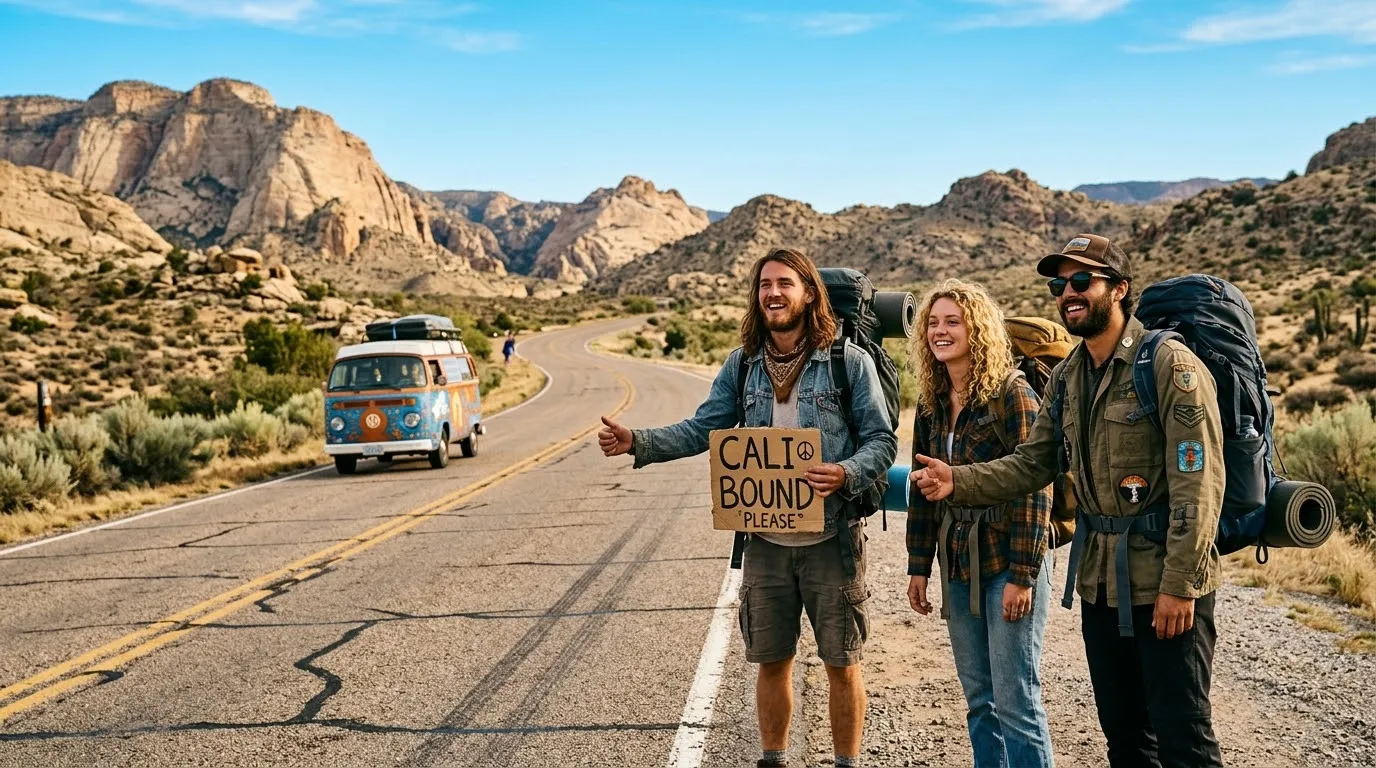
They traveled cheap, often by hitchhiking — catching free rides from strangers along the highway. It was adventurous. It was also dangerous. Robberies and violent incidents were part of the journey for some travelers along the way.
The Route They Followed
The classic path ran roughly like this:
- London or another European city
- Istanbul, Turkey
- Iran
- Afghanistan
- Pakistan
- India
- Nepal
Thousands walked, drove, or hitchhiked this exact line for nearly a decade.
Pakistan’s Place on the Hippie Trail
Pakistan wasn’t a footnote on this journey. It was one of its most important stops.
Peshawar, Rawalpindi, Lahore, Swat, and Chitral became favorite waypoints for travelers moving through the region. Sufi shrines across the country held a particular pull, offering exactly the kind of spiritual atmosphere many travelers were chasing.

From Lahore, the route continued naturally into India, and from there, onward to Nepal.
Kathmandu’s Freak Street: The Trail’s Final Stop
If the Hippie Trail had a final destination, many travelers would point to Kathmandu.
The city’s Jhochhen area — nicknamed “Freak Street” by the travelers themselves — became legendary among the Hippie Trail’s followers. Accounts from the period describe entire stretches of the market lined with hashish shops, one after another.

For a certain kind of traveler, this corner of Nepal wasn’t just a stop. It was practically the destination itself.
Freedom, Love, and Escape: Not Every Traveler Was a Seeker
It’s worth being honest here: not everyone on the Hippie Trail was searching for spiritual peace.
Some travelers embraced free love as their guiding philosophy. Others were drawn almost entirely by the region’s easy access to drugs, unrestricted by the laws they’d left behind at home.
In many ways, the single biggest draw of the whole movement was freedom from convention—the idea that happiness didn’t require money, and that adventure and self-discovery could happen for free, side by side.
Three Events That Shut Down the Trail
The 1970s, however, brought the era to a fast and permanent close. Three political shocks, arriving in quick succession, made the “free” environment travelers relied on disappear almost overnight.
Pakistan, 1977. A military takeover changed the country’s political and social climate, tightening the open atmosphere the trail depended on.
Iran, 1979. The Iranian Revolution reshaped the country entirely, cutting off a key link in the overland route.
Afghanistan, 1979. The Soviet invasion turned a former waypoint into a war zone, making the classic path through Afghanistan effectively impassable.
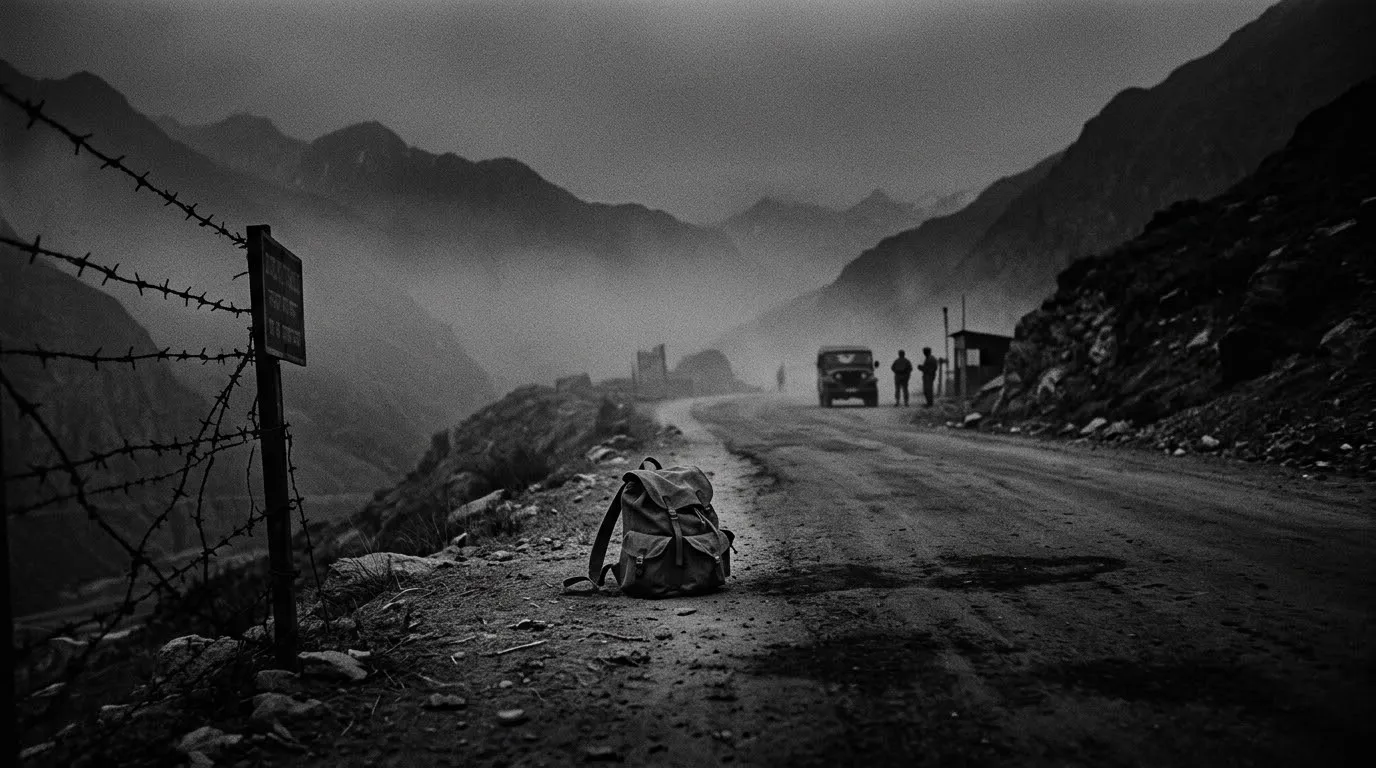
As a result, the free-spirited environment that had defined the Hippie Trail for nearly a decade evaporated within just a few years. Many former travelers eventually settled into ordinary office jobs, just like the parents they’d once tried to escape. Others stayed behind, some remaining at ashrams in India, some forming small permanent communities across the region.
Was the CIA Behind the Hippie Movement?
One conspiracy theory has followed the hippie era ever since: the claim that the CIA quietly encouraged drug culture among young people specifically to weaken political movements within various countries.
It’s worth being careful with this one. Evidence does exist that the CIA experimented with LSD during this period, most notably through the real, declassified MKUltra program. However, no credible, established evidence has ever directly linked the agency to engineering the global hippie movement itself. It remains a theory — a compelling one, but an unproven one.
Hollywood represents the Hippie Era
Hollywood never really let go of this period, either. For more than fifty years, filmmakers have kept returning to it, sometimes to celebrate it, sometimes to pick apart what it actually cost the people inside it.
Easy Rider (1969) got there first, and became a cultural landmark. Dennis Hopper and Peter Fonda played two bikers riding across the American Southwest, brushing up against the era’s drug culture and its darker edges. Made for roughly $400,000, it went on to earn around $60 million worldwide and picked up two Academy Award nominations.
Woodstock (1970), Michael Wadleigh’s sprawling concert documentary, captured the festival itself — Jimi Hendrix, Janis Joplin, The Who, and Joe Cocker among the performances that turned three muddy days into a defining generational memory.
Hair (1979) brought the Broadway musical to the screen, using song and dance to dramatize the hippie movement’s clash with the Vietnam draft.
The Doors (1991), directed by Oliver Stone, traced Jim Morrison’s rise through the psychedelic rock scene that grew up alongside the counterculture.
Forrest Gump (1994) told a gentler, more mainstream version of the story through Jenny, Forrest’s childhood friend, who drifts through anti-war protests, communes, and drug use as the decades roll past — a character written specifically to embody the era’s turbulence.
Almost Famous (2000) and Across the Universe (2007) picked up the thread a decade later, using music — Rolling Stone journalism in one, a Beatles-inspired love story in the other — to explore what was left of that spirit into the 1970s.
Taking Woodstock (2009), directed by Ang Lee, went behind the scenes of the festival itself, following the people who scrambled to organize it in the first place.
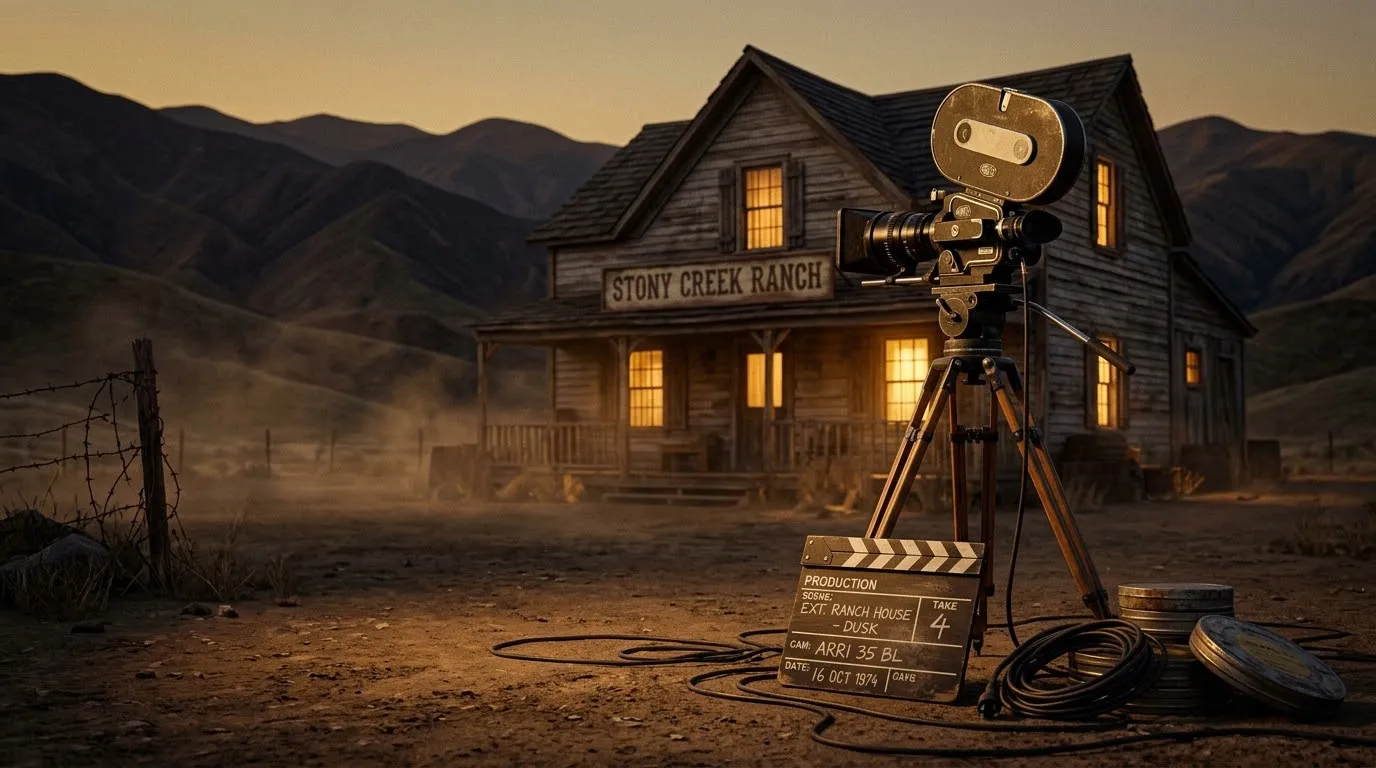
The most unsettling entry, though, came in 2019. Once Upon a Time in Hollywood, directed by Quentin Tarantino, sent its characters to Spahn Ranch — the real hippie commune outside Los Angeles that had quietly become home to Charles Manson’s followers. The film builds toward the 1969 murder of Sharon Tate, using the ranch and its unwashed, glassy-eyed residents to show how the same free-love ideals that powered peaceful communes elsewhere curdled, in this one specific case, into something genuinely dark.
It’s a useful reminder, watching it today: the hippie era wasn’t one story. It was thousands of them, running in parallel — some searching for peace on a road through Pakistan, others finding something far more dangerous much closer to home.
How Viking Sex Slaves Helped Build Iceland — The Hidden History
Conclusion: A Trail That Still Raises Questions
The Hippie Trail lasted barely a decade, yet it left a lasting mark on how the West imagined the East — and how briefly, unexpectedly, Pakistan became a waypoint on one of the strangest journeys in modern history.
Hollywood, for its part, still hasn’t finished picking through what happened. Every decade or so, another film tries to explain it again, from the freedom of Easy Rider to the horror lurking at Spahn Ranch.
Was the Hippie Trail truly a movement toward freedom and self-discovery? Or was it, for many, a more complicated escape wrapped in the language of peace?
Perhaps it was always both.