

Tutankhamun’s Tomb: The Legendary Discovery That Shocked the World in 1922
Archaeologist Howard Carter discovered Tutankhamun’s intact tomb in Egypt’s Valley of the Kings in 1922. The find included thousands of artifacts and the pharaoh’s mummy, offering unprecedented insights into ancient Egyptian life. It remains one of the most significant archaeological discoveries in history.
Following the discovery, rumors of a lethal curse spread due to several deaths among the expedition team. While the press sensationalized these events, scientific research suggests potential health risks from ancient mold. However, statistical evidence and the long life of Howard Carter largely debunk the supernatural narrative.
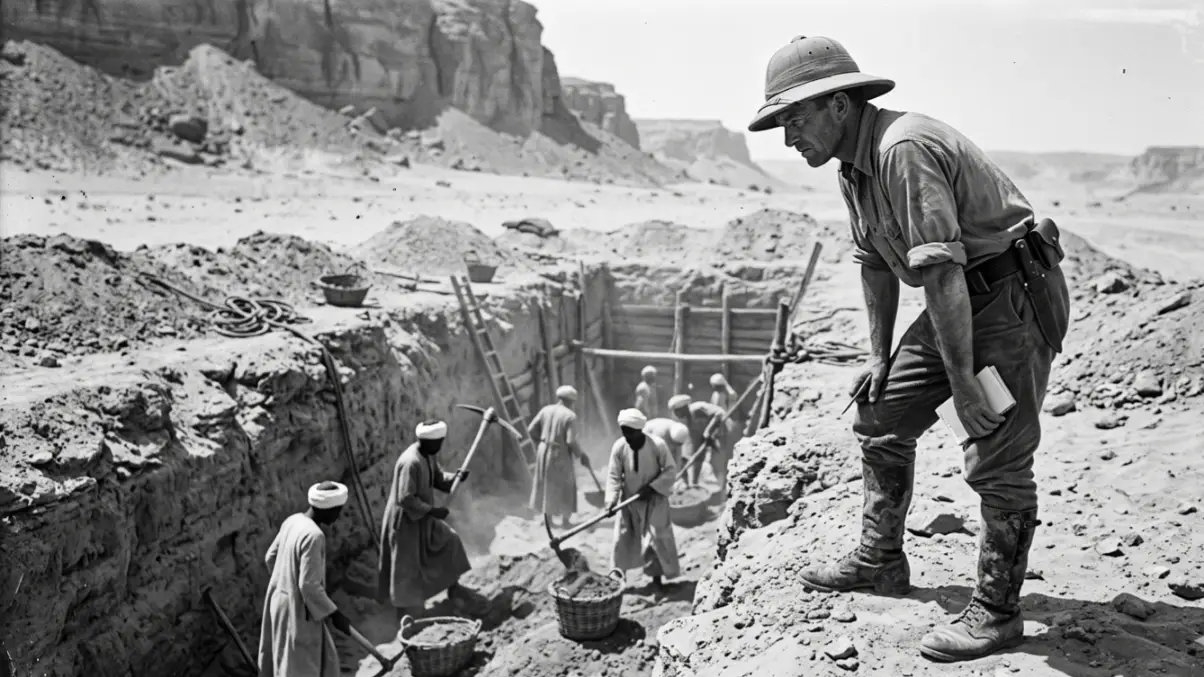
The year was 1922. Deep in the Egyptian desert, a determined young archaeologist named Howard Carter was about to make history. For years, treasure hunters and scholars had searched desperately for undisturbed royal tombs. Most of them had been looted centuries ago.
However, Carter refused to give up. He believed that at least one pharaoh’s tomb still lay hidden beneath the sand — untouched, unlooted, and waiting.
He was right.
A Discovery That Stunned the Entire World
On November 4, 1922, Carter’s team uncovered a hidden staircase in the Valley of the Kings. It led to a sealed door. Behind that door sat a treasure untouched for over 3,000 years.
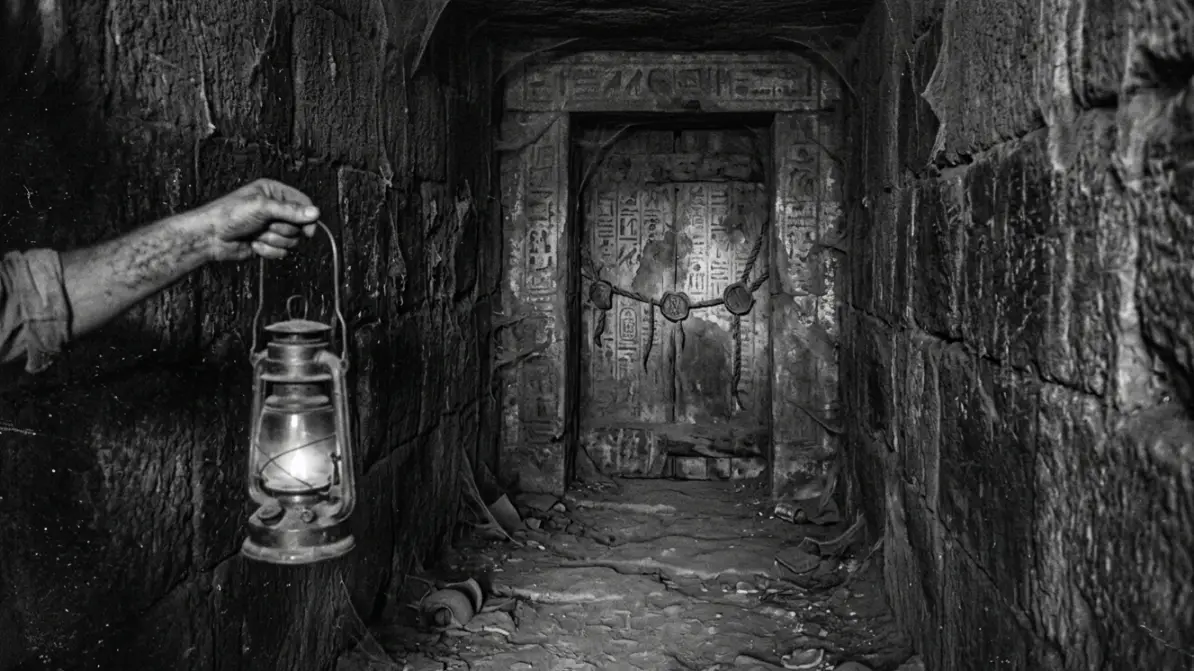
Carter later described peering through a small hole in the door by candlelight. His sponsor, Lord Carnarvon, asked anxiously, “Can you see anything?”
Carter’s reply became one of the most famous lines in archaeological history: “Yes, wonderful things.“
Inside the Tomb of Tutankhamun, his team discovered gold-covered chariots, jeweled thrones, carved statues, ritual objects, and mountains of priceless artifacts. The sheer scale of the find was breathtaking.
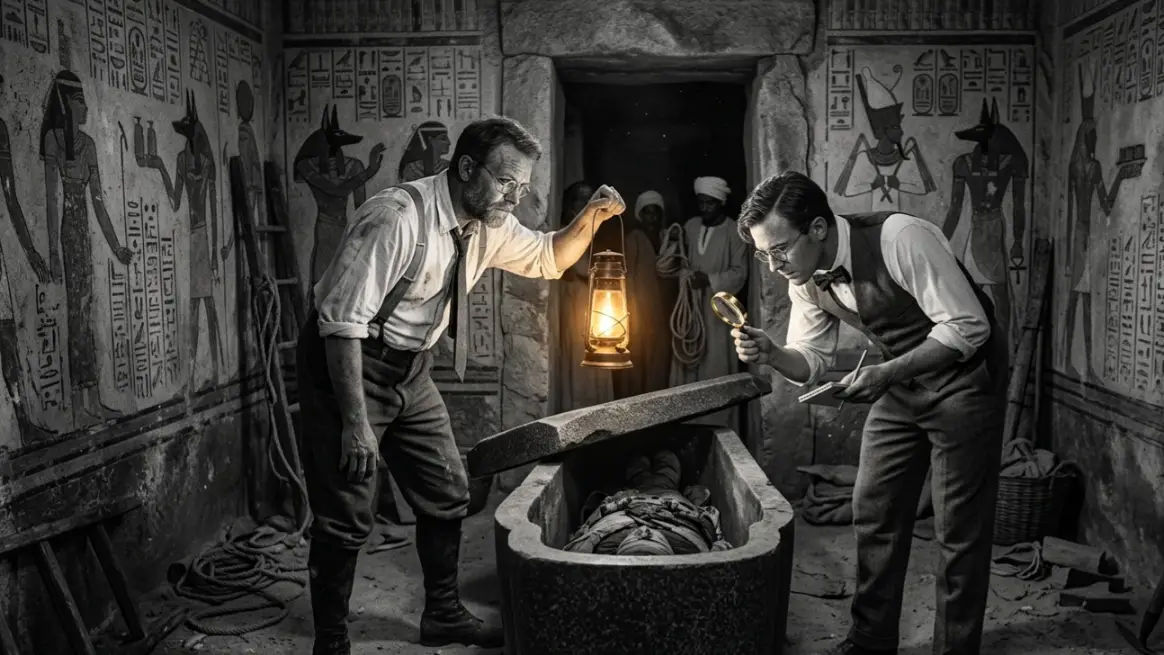
Most remarkable of all was the mummy of Tutankhamun himself — the young pharaoh who had died around age 18 — perfectly preserved after thousands of years.
Who Was Tutankhamun?
Tutankhamun ruled ancient Egypt around 1332–1323 BC. He became pharaoh at just nine years old, making him one of the youngest rulers in Egyptian history.
He is often called the “boy king.” For centuries, his identity was almost completely forgotten. Because of this, his tomb was never targeted by ancient tomb robbers, which is exactly why Carter found it intact.
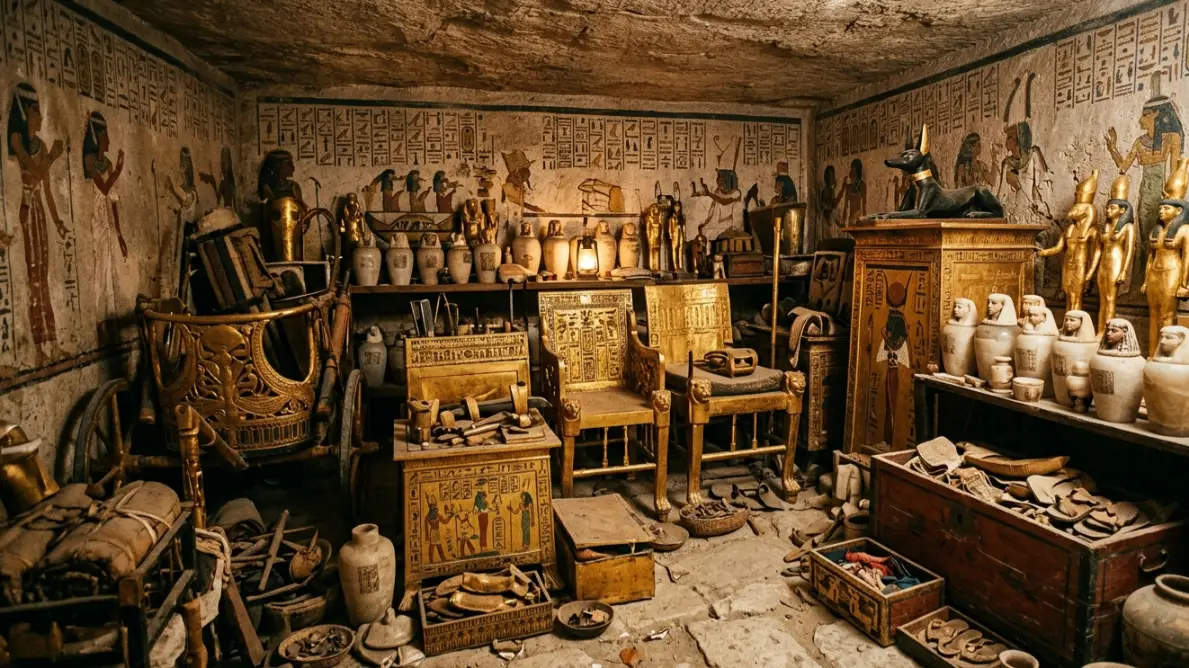
His discovery opened a window into the daily life, religious beliefs, and artistic brilliance of ancient Egypt like nothing before it.
The Curse of Tutankhamun Begins
News of the discovery exploded across global newspapers almost overnight. Millions of people were fascinated. However, the excitement soon turned into something far more unsettling.
Shortly after the tomb was opened, strange and troubling events began to unfold.
Several people connected to the expedition started dying under mysterious circumstances. Lord Carnarvon — the wealthy English nobleman who had personally funded the entire dig — fell suddenly ill. He died just a few months after the tomb was opened, in April 1923.
The stories spread fast.
The “Warning” That Was Never Really There
Newspapers ran wild with the story. Journalists claimed that an ancient inscription on the tomb’s entrance read:
“Death shall come on swift wings to him who disturbs the peace of the king.”
The public was gripped with fear. Meanwhile, more deaths among those connected to the expedition seemed to confirm the legend.
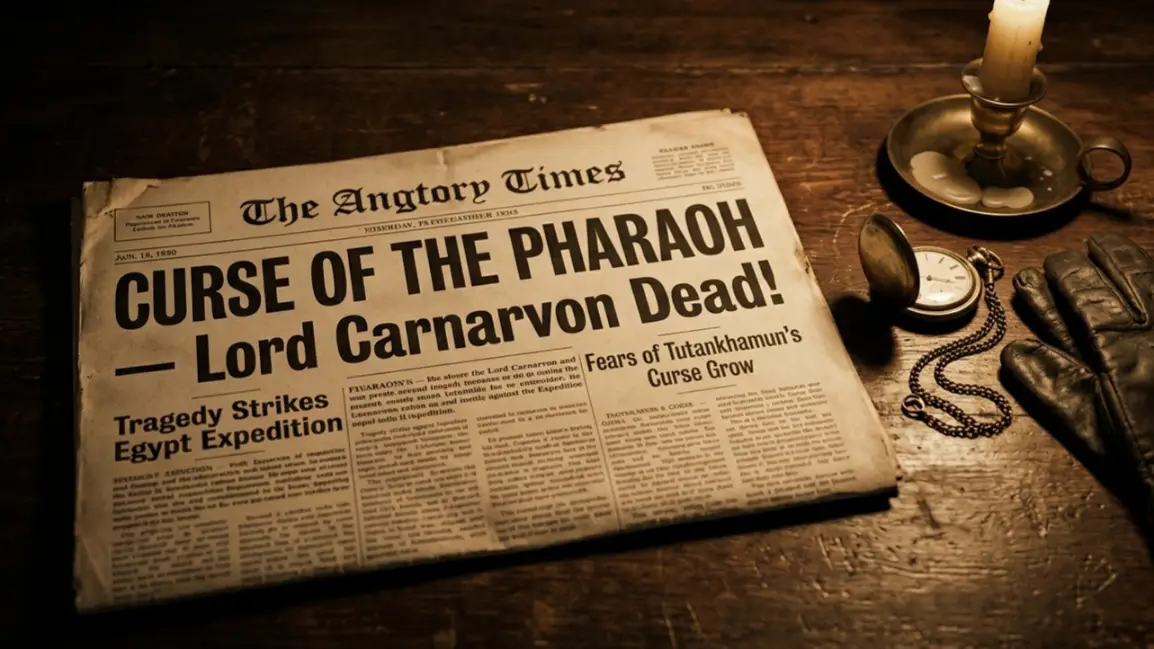
However, when archaeologists and Egyptologists carefully examined the tomb, they found no such inscription. The famous curse warning simply did not exist — at least not in the dramatic form the press had described.
Yet the damage was already done. The legend of the Curse of Tutankhamun had taken on a life of its own.

What Science Says About the “Curse”
Eventually, researchers began looking for rational explanations. Several scientists proposed that ancient tombs could harbor dangerous mold spores or bacteria sealed inside for thousands of years.
When the tomb was opened and fresh oxygen flooded in, those microorganisms may have become active again. People who entered the sealed space could have inhaled toxic fungi or pathogens — potentially explaining the unexplained illnesses and deaths.
For example, a 2003 study in the journal Clinical Infectious Diseases pointed to toxic mold as a plausible culprit.
In addition, many historians noted a key fact the press conveniently ignored: most people who entered the tomb lived perfectly long, healthy lives. Howard Carter himself continued excavating the site for a decade afterward and died at the age of 64.
Statistics, in other words, never really supported the curse narrative.
How Viking Sex Slaves Helped Build Iceland — The Hidden History
Why the Curse Story Captured the World’s Imagination
So why did the myth spread so powerfully?
The 1920s were a time of enormous public fascination with ancient Egypt. Afterward, the discovery coincided with the golden age of horror fiction — Dracula, Frankenstein, and mysterious mummy stories were already deeply embedded in popular culture.
The press had a ready audience hungry for the supernatural. Because of this, they gave that audience exactly what it wanted: a story of ancient revenge, forbidden knowledge, and divine punishment.
The curse was, in many ways, a story that the modern world needed to believe — not one that history actually provided.
The Real Legacy of Tutankhamun’s Tomb
The discovery of the Tomb of Tutankhamun remains the most significant archaeological find of the 20th century. It gave historians an extraordinary, fully intact snapshot of ancient Egyptian royal life.
Over 5,000 artifacts were catalogued from the tomb. Many of them are now housed in the Egyptian Museum in Cairo, though a new permanent home awaits them at the Grand Egyptian Museum in Giza.
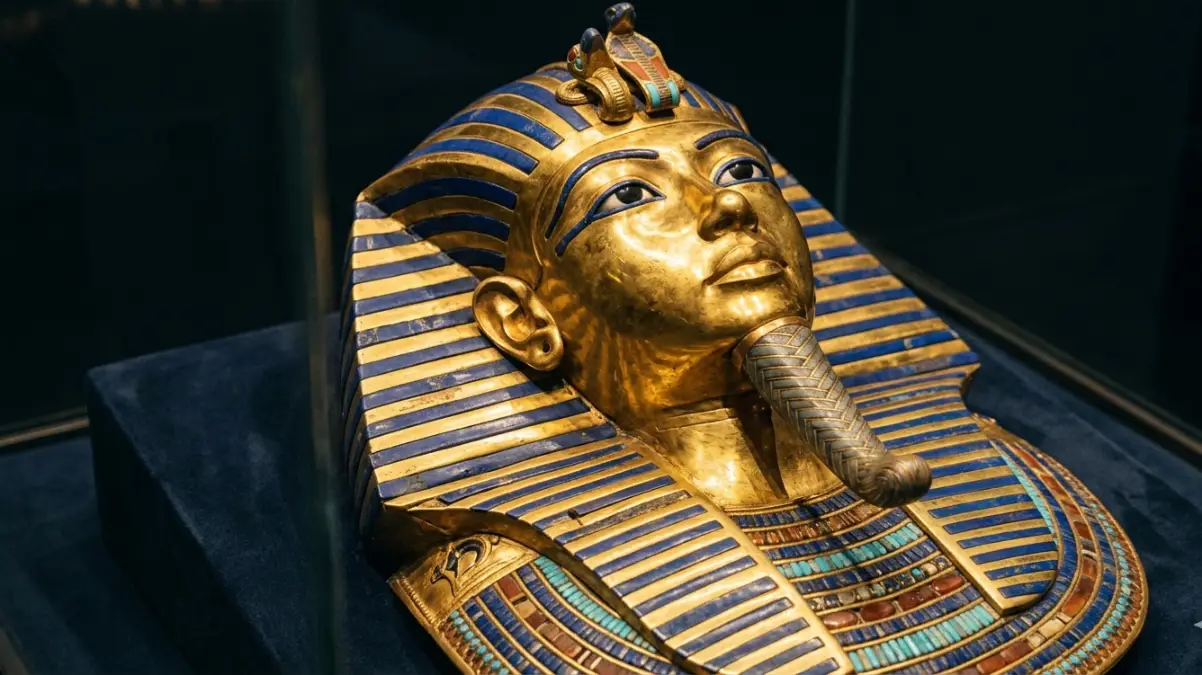
Tutankhamun’s golden death mask, in particular, has become one of the most recognizable images in all of human history.
Conclusion: The Curse That History Refuses to Forget
The Curse of Tutankhamun may have been born from fear, fueled by the press, and dismissed by science — but it refuses to die.
Perhaps that says something important about us as humans. We are drawn to mystery. We sense that the past holds power. And when we disturb something ancient and vast, a quiet voice inside us whispers that some doors are better left closed.
Whether the curse was real or imagined, one truth is undeniable: Howard Carter’s discovery in 1922 changed the world. It brought a forgotten boy king back to life — and reminded us that history has a way of reaching out across the centuries and grabbing us by the throat.
Some secrets, it seems, were never meant to stay buried.