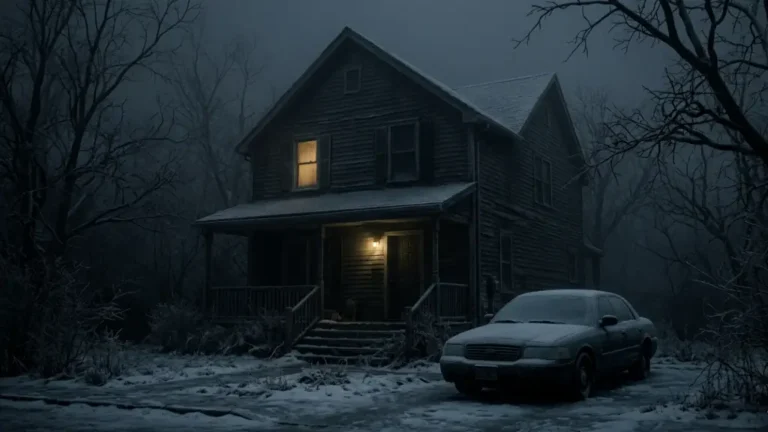

Blanche Monnier: Hidden in Her Own Home for 25 Years
Blanche Monnier was a French socialite imprisoned in a dark room by her family for twenty-five years. Her mother confined her in 1876 after Blanche refused to break off an engagement with an unsuitable suitor. Despite the family’s high social standing, she lived in total isolation and filth.
Authorities discovered Blanche in 1901 following an anonymous tip. While her mother died after being arrested and her brother avoided lasting legal consequences, Blanche never fully recovered from the trauma. She spent her remaining years in a psychiatric hospital, passing away in 1913 without ever regaining her former life.
In 1901, French police broke open a door they weren’t supposed to find.
What waited on the other side had been hidden for nearly a quarter century — sealed away from sunlight, from society, from every person who had walked past that house without a second thought.
Nobody had reported her missing. Nobody had filed a complaint. And yet, behind a locked door in one of Poitiers’ most respectable homes, something deeply disturbing had been taking place for twenty-five years.
This is the story of Blanche Monnier — a woman who didn’t disappear into the unknown. She disappeared into her own family’s house.
A Life That Looked Perfect From the Outside
In the late 19th century, Blanche Monnier had every advantage life could offer.
She grew up in a wealthy, well-connected family in Poitiers, France. Her family held a respected position in local society. Blanche herself was known as an intelligent, charming young woman with a promising future.
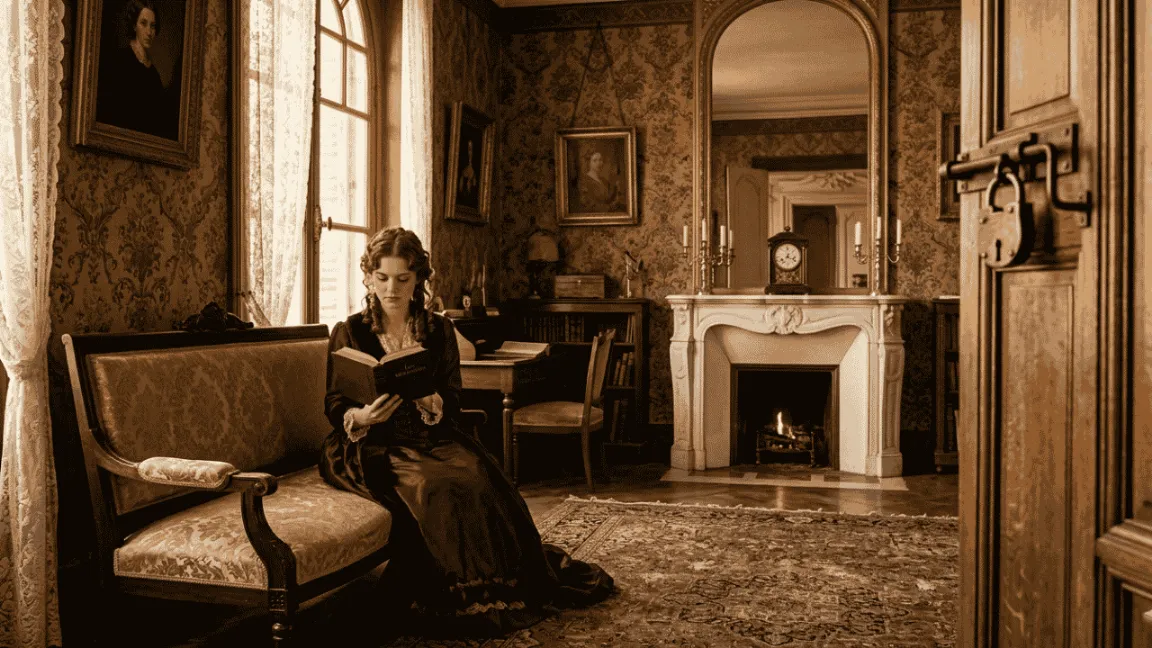
By all appearances, her life was enviable.
However, beneath that polished surface, a private conflict was quietly building — one that would eventually consume everything.
The Choice That Started It All
Blanche had fallen in love.
The man she wanted to marry was not wealthy. He didn’t come from a prestigious family. In the eyes of her mother, Madame Louise Monnier, he was simply unacceptable — beneath the family’s social standing and unworthy of the Monnier name.
Madame Monnier made her position clear. Blanche had a choice: abandon the relationship, or face the consequences.
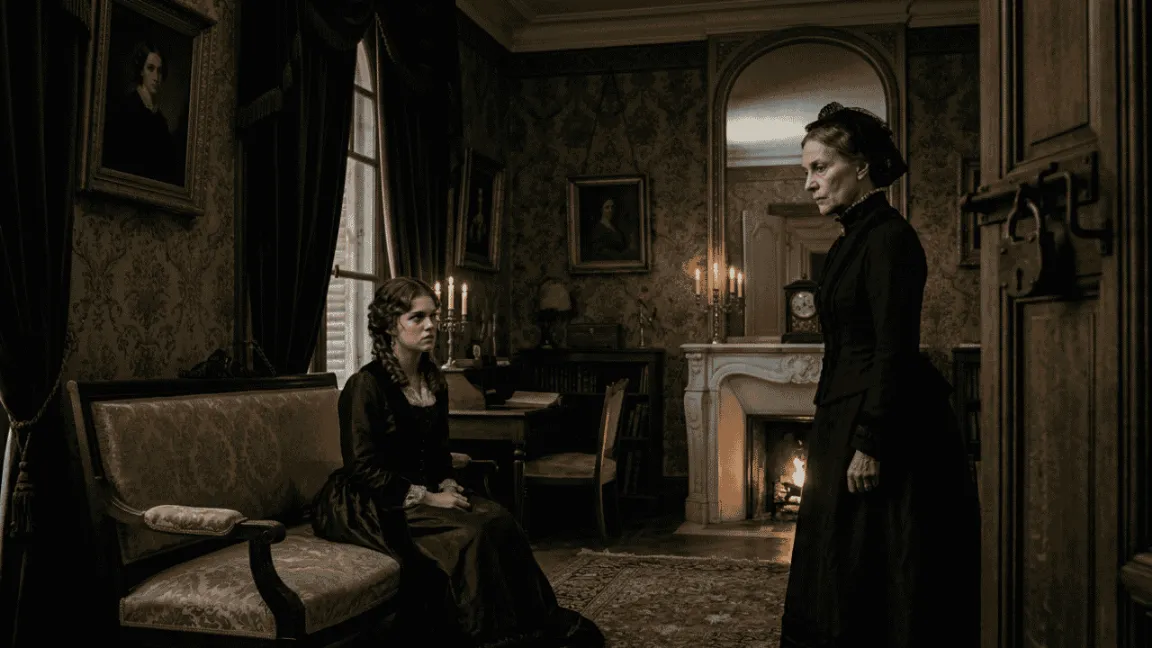
Blanche refused to give him up.
For a woman of her time and class, that kind of defiance was rare. And the punishment her family decided upon was something no one could have imagined.

She Vanished — And Life Went On
One day, Blanche Monnier was just gone.
Neighbors assumed the family had sent her away — perhaps to visit relatives, or to live elsewhere. A few people asked questions early on. Eventually, even those questions faded.
Meanwhile, the Monnier household continued as normal.
Guests came and went. Dinners were hosted. Madame Monnier maintained her social reputation without any visible difficulty. The family remained a fixture of respectable Poitiers society for years — then decades.
Nobody looked too closely. Nobody dared to.
And that, as it turned out, was exactly what the family had counted on.
The Letter That Broke the Silence
In May 1901, the Attorney General of Paris received an anonymous letter.
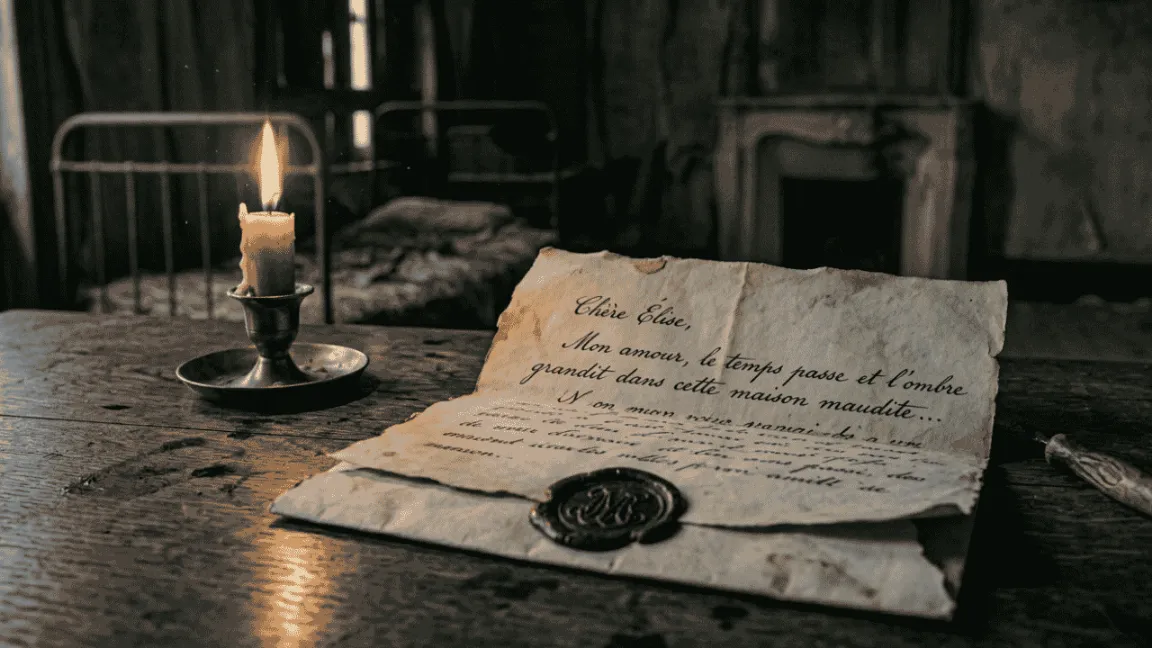
The writer claimed that a woman was being held captive inside the Monnier family home — deliberately imprisoned, hidden from the world. Authorities weren’t entirely sure what to make of it. The Monniers were a reputable family. The claim seemed almost too outrageous to believe.
But they investigated anyway.
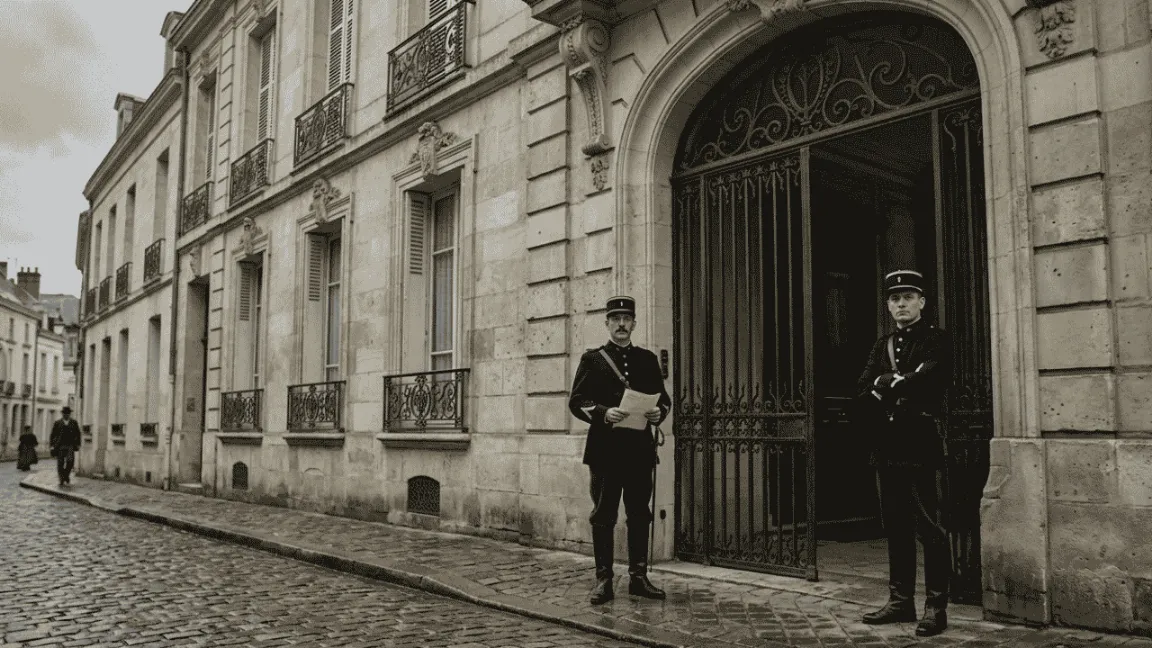
When police arrived at the house and forced open a locked upstairs room, they were not prepared for what they found.

Behind the Locked Door
The room was dark. The shutters had been nailed shut for years, blocking out all natural light.
The smell hit them first.
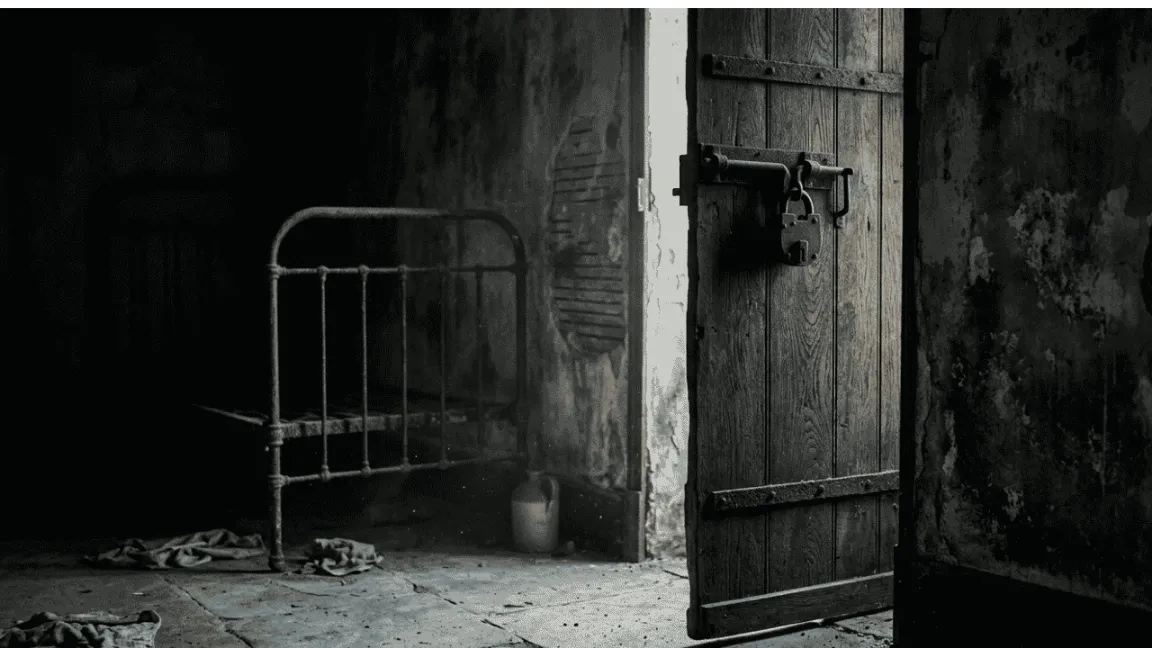
Inside, lying on a rotting mattress surrounded by filth and decay, was a woman. She was emaciated, barely recognizable as the vibrant young woman she had once been. She shielded her eyes from the sudden light — eyes that hadn’t seen daylight in decades.
It was Blanche Monnier.
She had been imprisoned in that room for twenty-five years.
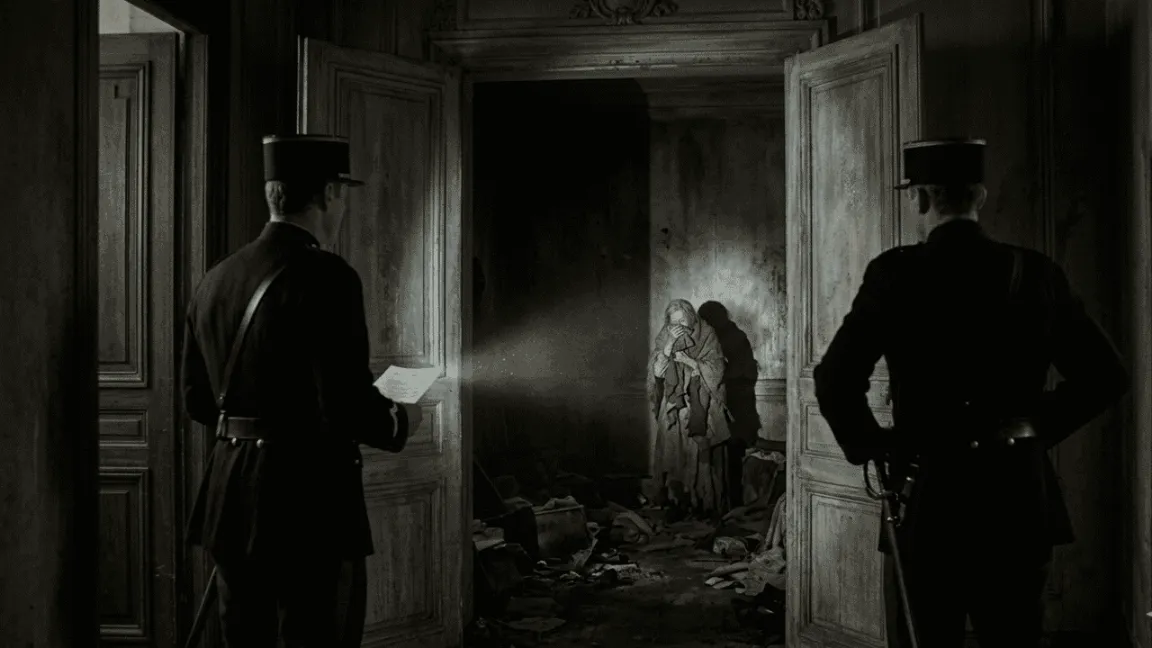
The news broke across France like a thunderclap. Newspapers from Paris to London carried the story. Readers across Europe asked the same stunned question: how does a woman disappear for a quarter century while her family hosts dinner parties downstairs?
How Did No One Know?
The answer is as troubling as the crime itself.
The Monnier family’s social standing worked as a shield. Wealthy, well-connected families in 19th-century France operated with a level of privacy that ordinary citizens didn’t question. Neighbors respected the Monniers too much to pry. Authorities had no reason to investigate a family for their own reputation.
Because of this, the walls of that house protected something monstrous for twenty-five years.
Blanche wasn’t hidden in a dungeon or a secret location. She was hidden in a bedroom — in a home on an ordinary street, in an ordinary city, surrounded by ordinary people who never once suspected a thing.
Justice That Never Fully Arrived
Madame Louise Monnier was arrested immediately after the discovery.
Her son Marcel, Blanche’s brother, was also taken into custody and faced charges for his role in the imprisonment. The case went to trial and generated fierce public debate across Europe.
However, justice proved frustratingly incomplete.
Madame Monnier died just fifteen days after her arrest — before she could face sentencing. Marcel was initially convicted, but a French appeals court later overturned his sentence on a legal technicality.
In the end, no one served a meaningful time for what had been done to Blanche.
A Freedom That Came Too Late
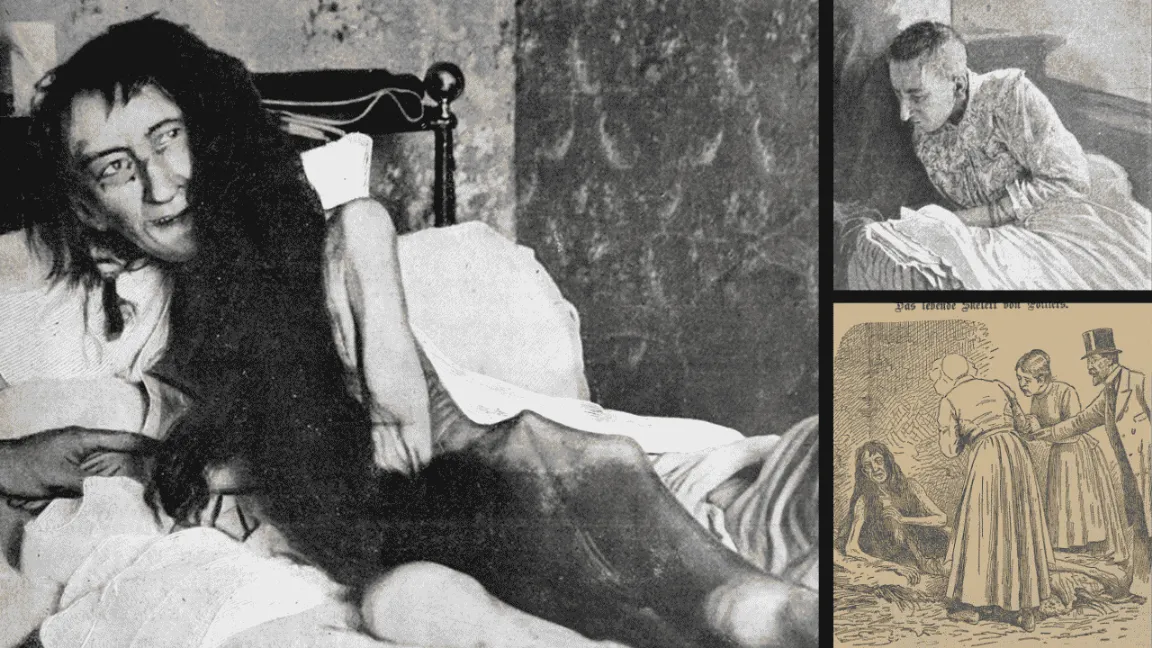
Authorities rescued Blanche Monnier in May 1901, but the woman they found bore little resemblance to who she had once been.
Twenty-five years of isolation, malnourishment, and confinement had destroyed her physical and mental health entirely. She required full-time medical care for the remainder of her life.
The sharp, spirited young woman who had once refused to surrender her happiness never fully recovered.
Blanche spent her final years in a care facility. She died in 1913 at around 64 years of age — quietly, without fanfare, and without the justice she deserved.
Missing Husband Found at Home Eight Months Later
The Case of Blanche Monnier Still Haunts Us Today
More than a century later, the story of Blanche Monnier remains one of the most disturbing true crime cases in French history.
Not because it involved a mysterious location or an unknown perpetrator. The perpetrators were her own family. The location was her own home.
What makes this case so deeply unsettling is its ordinariness. The house on the rue de la Visitation in Poitiers looked like every other house on the street. The Monniers looked like every other respectable family.
And behind a door that no one thought to open, a woman was slowly disappearing — not into death, but into an endless, lightless silence.
Blanche Monnier’s story is a reminder that cruelty rarely announces itself. It doesn’t always look like a villain. Sometimes, it wears the face of a respectable family, lives in a well-kept home, and hides behind the comfort of a good reputation.
Her voice was silenced for twenty-five years. The least we can do is make sure her story is never forgotten.
Conclusion
The case of Blanche Monnier is not just a true crime story from 19th-century France. It is a chilling demonstration of what unchecked family control, social privilege, and collective silence can enable.
She didn’t vanish into the unknown. She was hidden in plain sight — a few steps away from a world that never thought to look for her.
Eventually, the truth came out. But for Blanche, it arrived far too late to give her back what had been stolen.
History tends to remember battles and empires. But some of its darkest chapters unfold behind closed doors, in quiet homes, where no one thinks to ask what lies on the other side.
Blanche Monnier’s story is one of them. And it deserves to be remembered.