
Fake Toll Plaza Scam Fooled Gujarat for 18 Months
In Morbi, Gujarat, a fake toll plaza operated for eighteen months by rerouting traffic through private land. Led by Amarshi Patel, the scam used uniforms and discounted rates to collect over 75 crore rupees from unsuspecting drivers. The operation bypassed the official Vaghasiya checkpoint until media reports prompted action.
Investigations revealed that official complaints were ignored for months despite reports to local authorities. Five individuals face charges of extortion and cheating for their roles in the unauthorized operation. The case highlights how administrative negligence and local influence allowed an illegal checkpoint to function openly on a national highway.
For a year and a half, thousands of drivers pulled up to a toll booth on a Gujarat highway, paid their fee, and drove on. None of them suspected that the men collecting their money had no legal right to a single rupee of it.
This wasn’t a Bollywood script. It happened on a real national highway in India, and it ran for so long that even the district administration was reportedly aware of it before anyone acted. This is the story of the fake toll plaza scam that quietly drained crores of rupees out of ordinary commuters — and almost got away with it.
A Second Gate Appears on the Highway
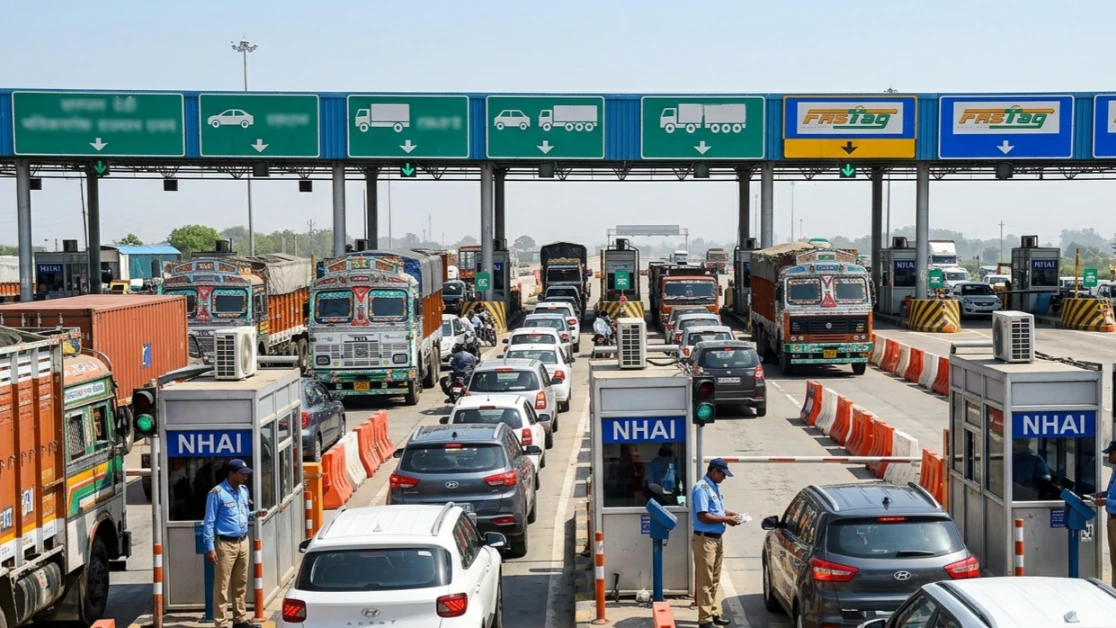
The story unfolds in Morbi district, in the Indian state of Gujarat. On the Bamanbore-Kutch national highway, between the towns of Morbi and Wankaner, sits the legitimate Vaghasiya toll plaza — a government-recognized checkpoint, licensed and properly operated.
However, just off that same stretch of road, near Vaghasiya village, a second toll booth had appeared. It looked official. It collected money like the real one. There was just one problem: it wasn’t supposed to exist at all.
The Man Behind the Factory Wall
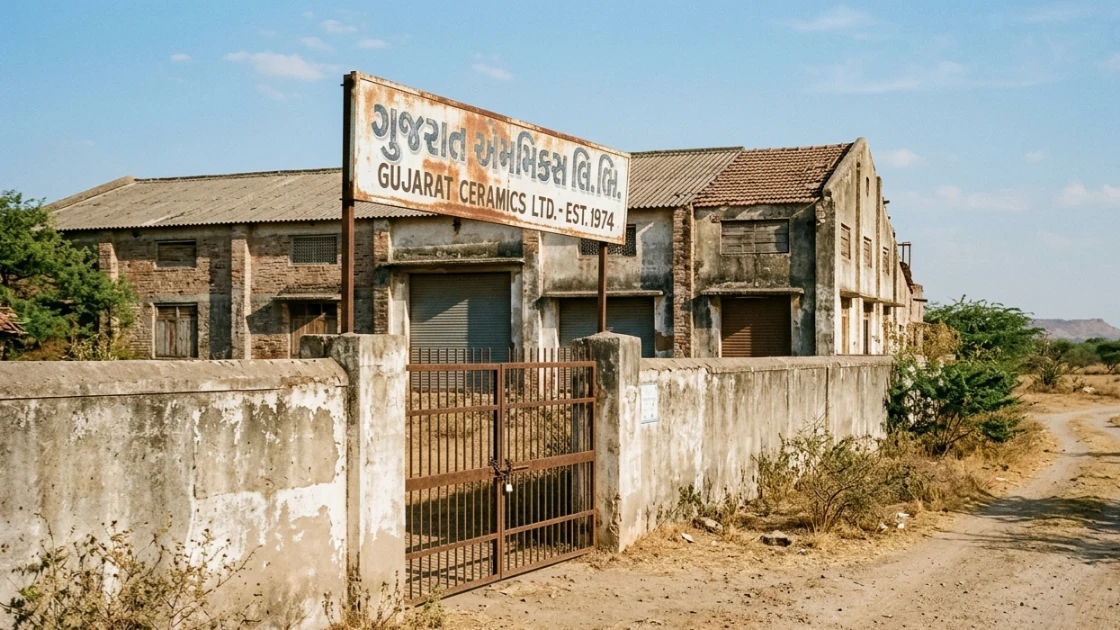
At the center of the scheme was Amarshi Patel, the owner of a shuttered ceramic unit known as White House Ceramics. Instead of letting the factory sit idle, Patel allegedly turned its boundary wall into the entrance of an entirely different business.
He had two gates built into the wall. From there, traffic was quietly rerouted off the highway, through the factory’s land and the nearby village, bypassing the genuine Vaghasiya toll plaza completely.
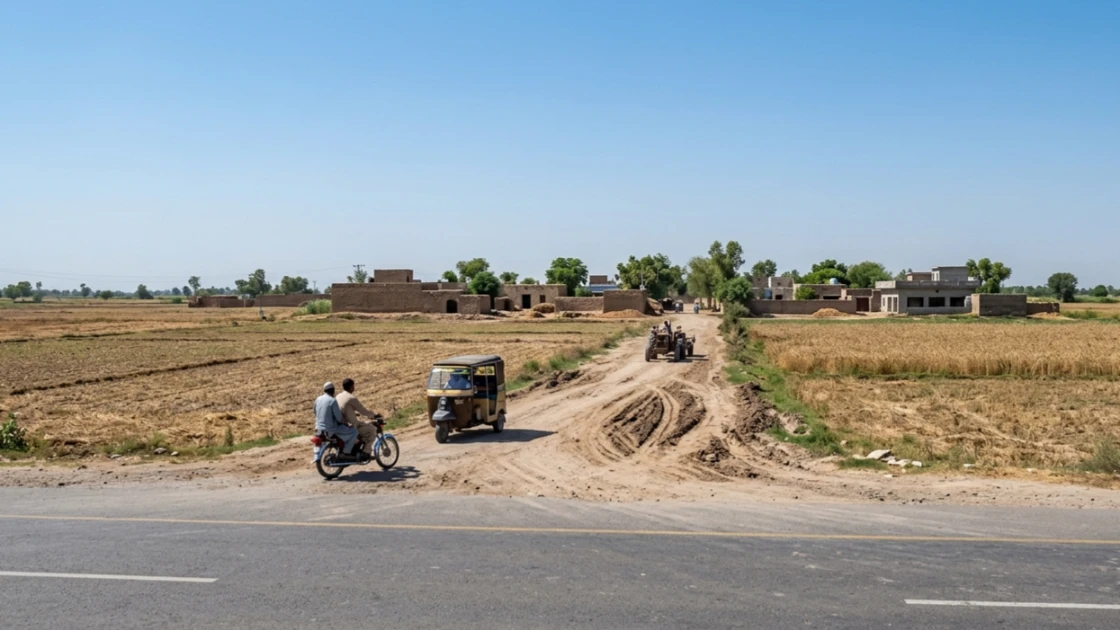
Drivers who took this “shortcut” were stopped and told to pay — not at the licensed booth down the road, but at Patel’s private checkpoint instead.

How the Fake Toll Plaza Scam Actually Worked
What made this fake toll plaza scam so effective wasn’t just the rerouted traffic. It was how convincing the whole operation looked.
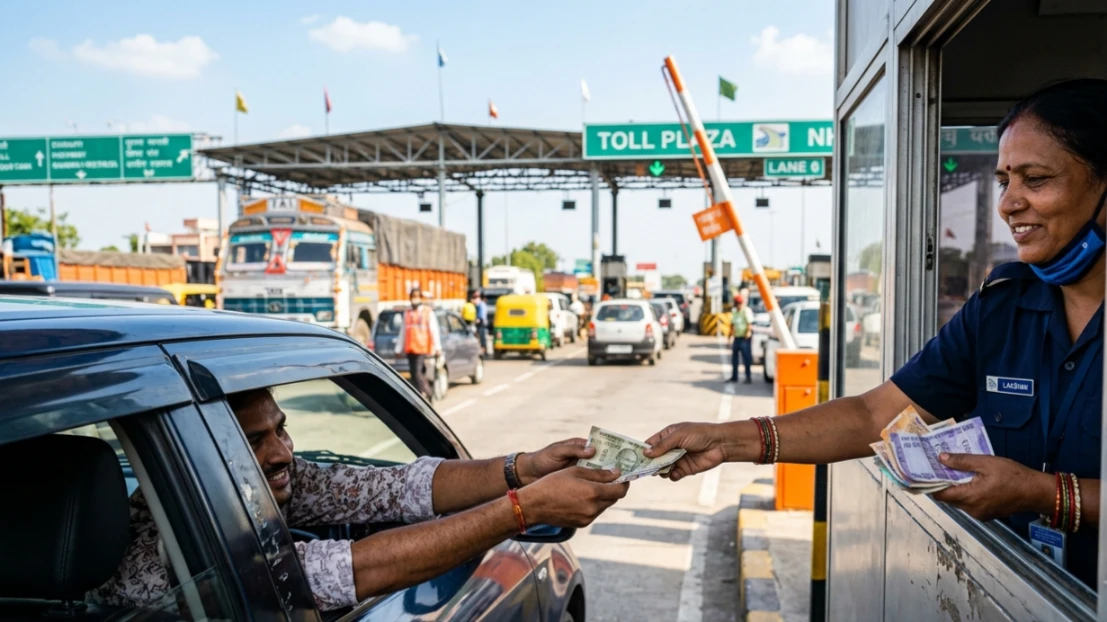
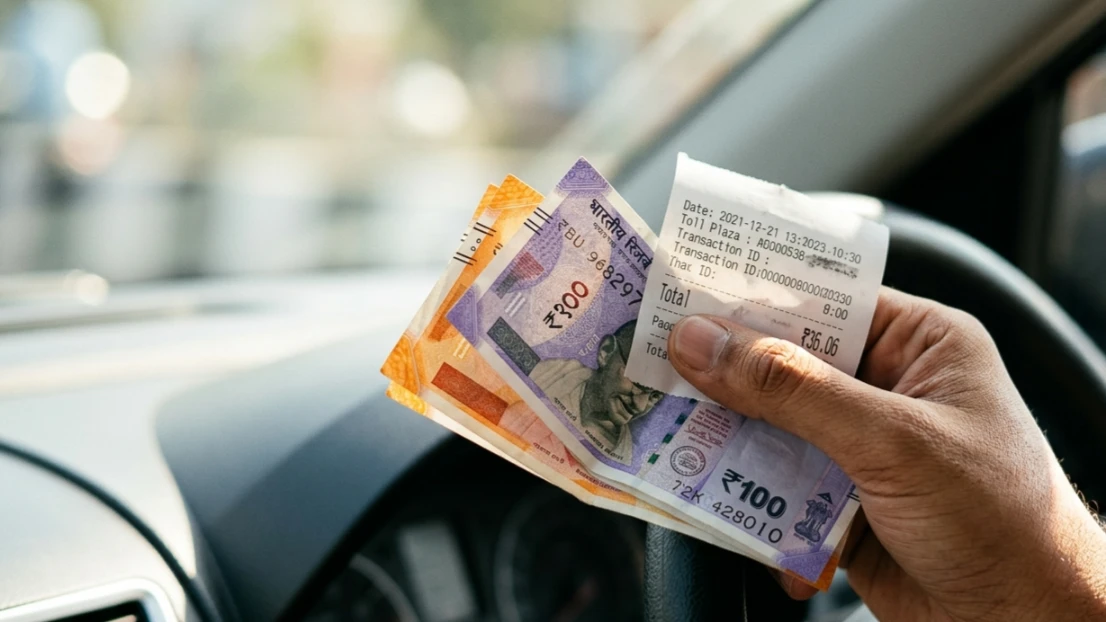
The men running the booth reportedly wore uniforms similar to real toll workers. They issued printed receipts. To a driver passing through at speed, there was little reason to think anything was wrong.
A Uniform, a Cheaper Receipt, and Silent Commuters
The cleverest part of the scam was the pricing. The genuine Vaghasiya toll plaza charged vehicles anywhere from ₹110 to ₹595, depending on the type of vehicle. The fake booth charged just ₹20 to ₹200 — roughly half the official rate.
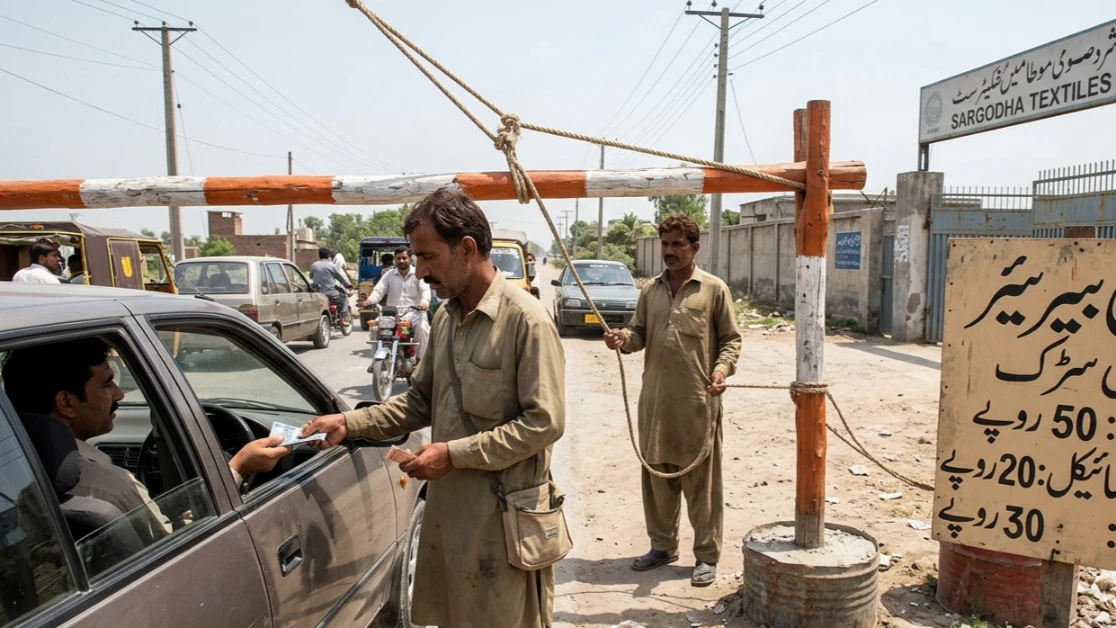
Because of this discount, almost nobody complained. Drivers assumed they were getting a bargain, not realizing they’d been diverted away from the real toll plaza and were paying an unlicensed operation instead.
Nine Million Dollars, One Illegal Gate
This wasn’t a small-time hustle. The scam ran for around 18 months, quietly pulling money from daily commuters, private landowners, and even government officials who used the road.
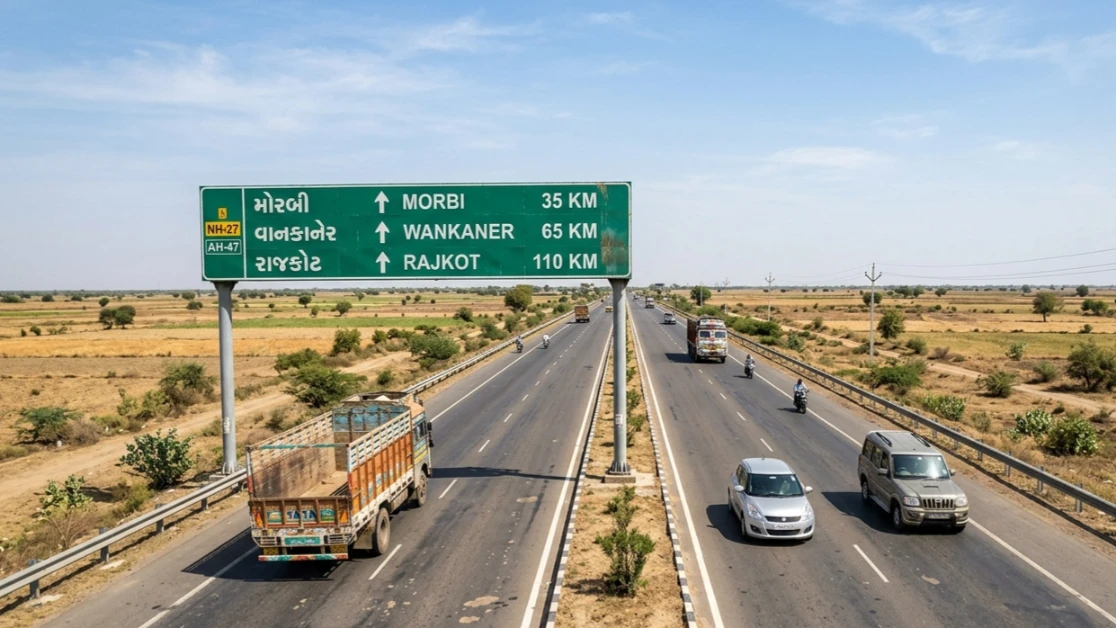
By the time it was exposed, investigators estimated the group had collected more than ₹75 crore — close to nine million US dollars — through a checkpoint that had no legal authority to exist.

The Warnings Nobody Acted On
Here’s the part that turns this from a clever con into something far more troubling: officials had been warned long before the story broke publicly.
According to reports, the operator of the legitimate toll plaza sent written complaints to the district collector, the superintendent of police, and local officials in Wankaner. A formal police complaint was also lodged at the Wankaner police station. Despite this, no action followed for months, fueling public suspicion that local administration had turned a blind eye.
The Story Breaks — And the Cover-Up Unravels
Eventually, local journalists began reporting on the illegal toll booth. As the coverage spread, the district collector publicly confirmed that authorities had received information about vehicles being diverted away from the real toll plaza.
Meanwhile, the timing made things worse for Gujarat’s administration. The fake toll plaza came to light just weeks after another scandal — a network of fraudulent government offices operating elsewhere in the state — had already embarrassed local authorities.
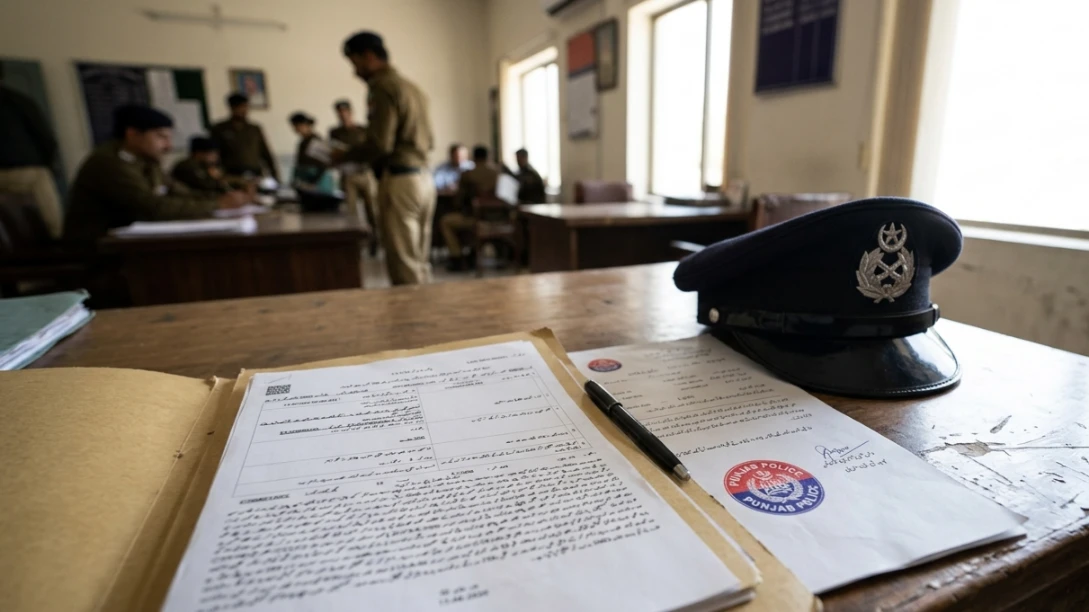
Police and officials moved quickly this time, visiting the site, launching an investigation, and formally registering a complaint.
The Forgotten Story of Lucknow’s 1920 Municipal Election
Arrests, Bail, and an Uncomfortable Question
Police eventually filed an FIR against five men, all residents of Waghasiya in Wankaner: Amarshi Patel, along with Ravirajsinh Jhala, Harvijaysinh Jhala, Dharmendrasinh Jhala, and Yuvrajsinh Jhala. They faced charges including extortion, criminal breach of trust, and cheating.
One detail stood out. Ravirajsinh Jhala was reportedly a retired army serviceman — a fact that raised uncomfortable questions about how much local standing and influence had allowed the operation to continue unchallenged for so long. All five were later released on bail as the case moved through the courts.
Conclusion: What the Fake Toll Plaza Scam Reveals
The fake toll plaza scam in Morbi wasn’t built on sophisticated technology or elaborate planning. It survived on something much simpler — official negligence, local influence, and a public willing to stay quiet for a discount.
For 18 months, a private wall with two gates functioned as a government checkpoint in everything but law. It took persistent journalism, not administrative oversight, to finally shut it down.
It’s a reminder that some of the boldest frauds don’t hide in the shadows at all. They stand in plain sight, on a public highway, collecting money in broad daylight — right up until someone finally asks the right question.