

The Woman Who Lived 70+ Years in an Iron Lung
Martha Lillard survived over seven decades using an iron lung after contracting polio as a child in 1953. Paralyzed and unable to breathe independently, she relied on the obsolete negative-pressure ventilator. Despite medical advancements and the difficulty of finding spare parts, she lived a full life through art and teaching.
Lillard remained one of the last survivors in the United States to use the 1928 technology. While she used other breathing techniques during the day, the iron lung was essential for sleep. She passed away at 78 in 2026, significantly outliving original medical expectations through resilience and mechanical ingenuity.
Doctors told her parents she wouldn’t live to see her 20th birthday.
She proved them wrong for more than seven decades.
Martha Ann Lillard spent most of her life sealed inside a 750-pound metal cylinder, breathing only because a machine invented in 1928 forced air in and out of her lungs. She became known as one of the last iron lung survivors in the United States. But her story isn’t just about survival. It’s about how a five-year-old’s birthday party turned into a lifelong battle that almost nobody thought she could win.
A Birthday That Changed Everything
On June 8, 1953, Martha turned five. Her family took her to a small amusement park in Oklahoma to celebrate.
It was the happiest kind of ordinary day. Nobody knew it would be her last one as a healthy child.

Polio was tearing through America that summer. The vaccine was still two years away, and the disease was quietly moving through communities, striking children hardest. A little over a week after her party, Martha woke up with a sore throat and a neck that hurt too much to lift off the pillow.
Within days, she couldn’t move. Her arms, her legs, and eventually the muscles that controlled her breathing simply stopped responding. Doctors rushed her to the hospital and diagnosed polio.
To keep her alive, they placed her inside an iron lung.
What Is an Iron Lung, and How Did It Keep Her Alive?
An iron lung is a negative-pressure ventilator, invented in 1928 by Philip Drinker and Louis Shaw at Harvard. For decades, it was the only technology capable of breathing for a paralyzed patient.
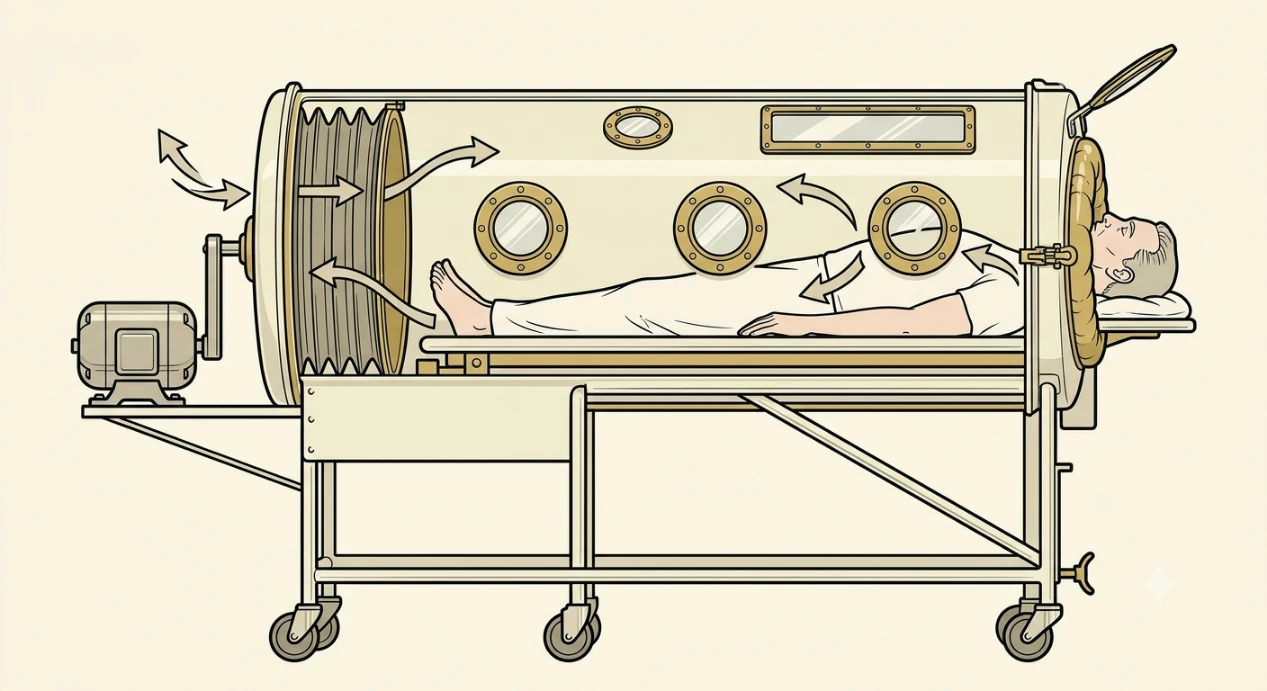
The device is essentially a sealed metal tube. The patient’s entire body lies inside it, with only the head sticking out through an airtight collar.
Here’s the clever part: when polio paralyzes the diaphragm, the lungs can no longer expand on their own. A pump beneath the cylinder pulls air out, creating a vacuum inside. That negative pressure makes the patient’s chest expand automatically, drawing air in through the nose and mouth. When the pump releases the vacuum, the chest falls, and the patient exhales.
It isn’t glamorous engineering. But for Martha, it was the difference between life and death.

Was She Trapped Inside the Machine Forever?
Not entirely — though she couldn’t survive without it, either.
As Martha regained some strength, she was able to spend stretches of her day outside the cylinder. She relied on a technique called glossopharyngeal breathing, sometimes nicknamed “frog breathing,” where she used her throat muscles to gulp air into her lungs. Later, a portable BiPAP mask gave her more freedom during waking hours.
Because of this, Martha created an incredibly rich life. She painted, wrote poetry, tutored children, cared for her pets, and enjoyed watching old Hollywood films.

However, sleep was a different story. The body can’t consciously manage glossopharyngeal breathing while unconscious, so every night — and during any stretch when fatigue set in — Martha had to return to the iron lung to breathe safely.
Why Didn’t She Switch to a Modern Ventilator?
As medicine advanced, doctors eventually tried moving Martha onto modern positive-pressure ventilators, the kind that use a tube to push air directly into the lungs.
It didn’t work.
Polio had left her lung tissue permanently weakened. The forceful pressure of modern ventilators either injured her or left her in pain. Only the iron lung’s gentler, more natural rhythm let her breathe without damaging what little lung capacity she had left.
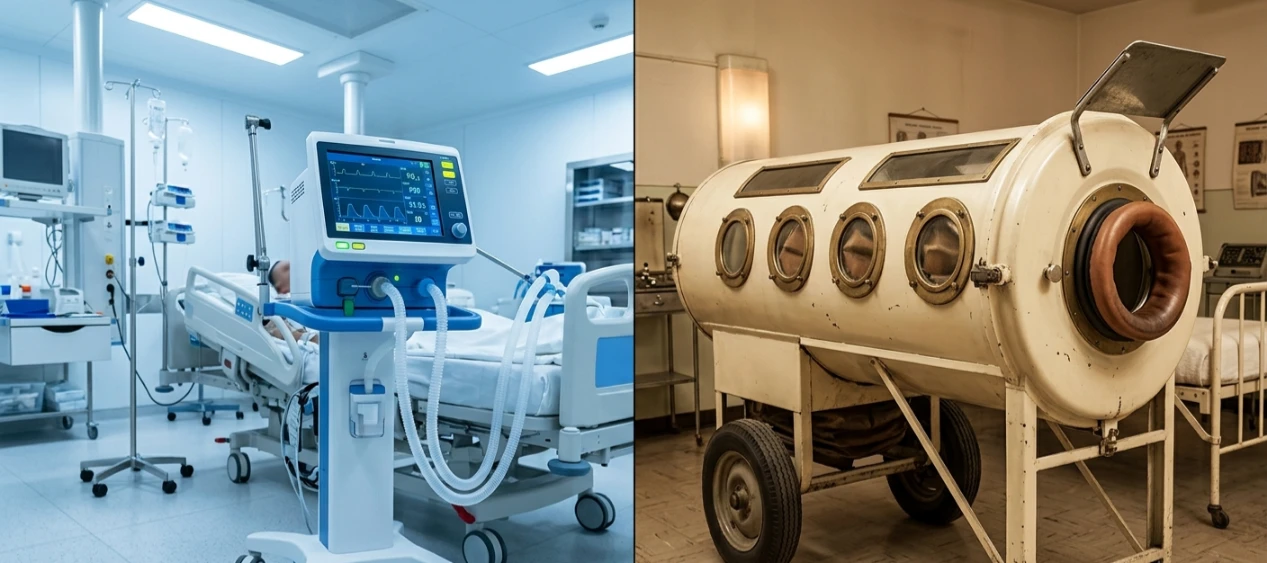
In other words, the very machine that medicine had moved on from was the only one still built to fit her body.
A Losing Race Against Spare Parts
By the 1990s, every company that once manufactured iron lungs had stopped producing spare parts. For Martha, this turned ordinary maintenance into a survival mission.
When a motor failed, a belt snapped, or a collar wore out, she had to track down decommissioned iron lungs sitting in old hospitals and museums and salvage their parts just to keep her own machine running.
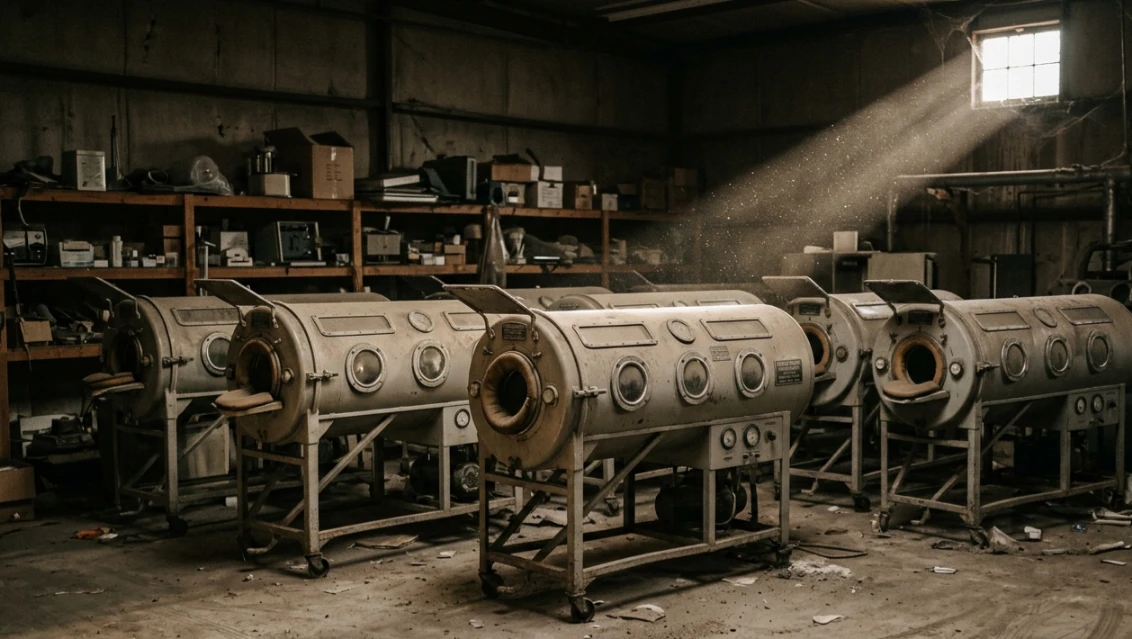
The danger became terrifyingly real one winter, when a severe ice storm knocked out power across her area. Her emergency backup generator failed to start, and Martha found herself trapped inside a cold, powerless machine with no way to breathe on her own. Rescue crews reached her just in time.

It was a stark reminder that her survival depended on technology the modern world had almost entirely forgotten how to fix.
The Dark Lobotomy History Behind a Nobel Prize
A Legacy Written in Grit
Martha Lillard never treated her paralysis as a prison. She turned it into a canvas — filling her days with art, writing, teaching, and the people and animals she loved.
After fellow iron lung survivor Paul Alexander died in March 2024, Martha became the last known person in the United States still living with the help of one. She continued fighting to keep her decades-old machine running, even as its parts grew harder and harder to replace.
In June 2026, after her aging iron lung finally began to fail beyond repair, Martha Lillard died at her home in Shawnee, Oklahoma. She was 78 years old — nearly six decades past the age doctors once said she’d never reach.
By the time she passed, this remarkable iron lung survivor had already secured her place in history: living proof that a machine built in 1928, and a will that refused to quit, could outlast almost everything the world threw at her.