
The Last Mughal Emperor’s Final, Forgotten Years
After the 1857 uprising, the British exiled Bahadur Shah Zafar, the last Mughal emperor, to Rangoon. He lived his final four years imprisoned in a converted garage. He died in 1862 at age 87 and was buried in an unmarked grave on the grounds of a British residence.
The emperor’s downfall resulted from both British military force and internal decay, including corruption and weak leadership. His descendants still live in Yangon today. His story serves as a historical warning about how administrative failures and a lack of accountability can dismantle even the most powerful empires.
A knock came on a British officer’s door in the dead of night. A servant girl stood there in tears, begging him to hurry.
Inside a small outbuilding nearby lay a dying old man. He could barely breathe. He wanted one last thing before the end — a window opened, so he could feel free air on his face.
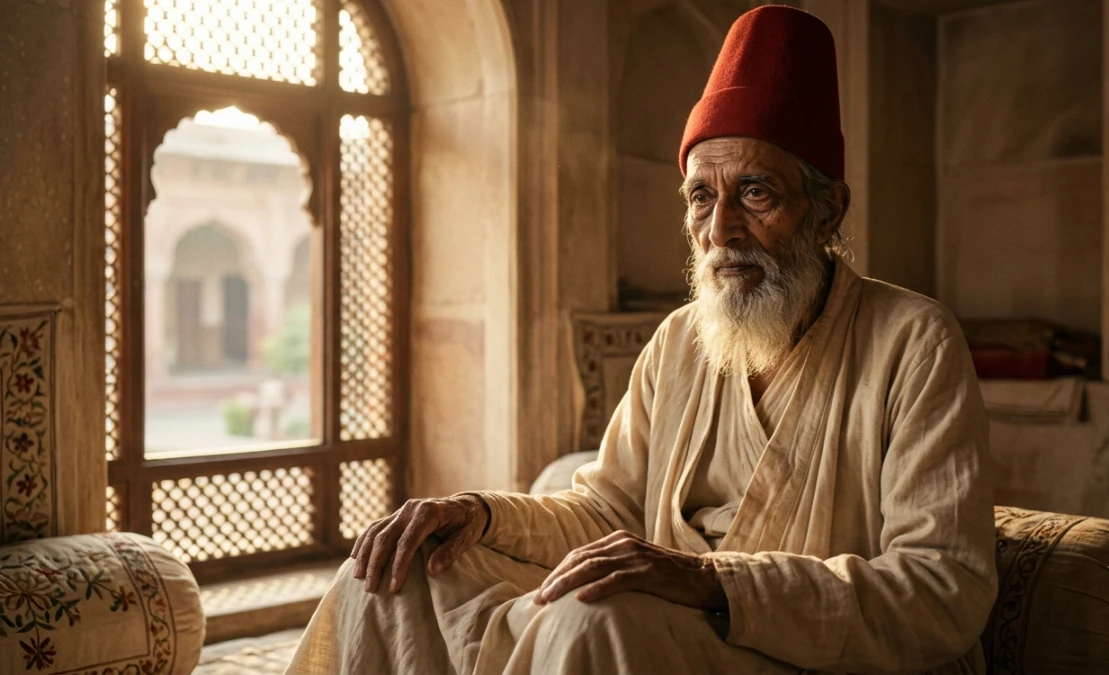
That old man had once worn the crown of Hindustan. His name was Bahadur Shah Zafar, and this was the final chapter of the Mughal Empire, playing out not in a palace, but in a converted garage in Rangoon.
This is the story of how the last Mughal emperor spent his final years — and why his death still carries a warning for rulers today.
From the Red Fort to a Foreign Shore
After the crushing defeat of the 1857 uprising, the British made their decision. Bahadur Shah Zafar, the last emperor of Hindustan, would not stay in India.
He was placed aboard a British ship bound for Rangoon, in present-day Myanmar. His wife and several members of his family traveled with him.
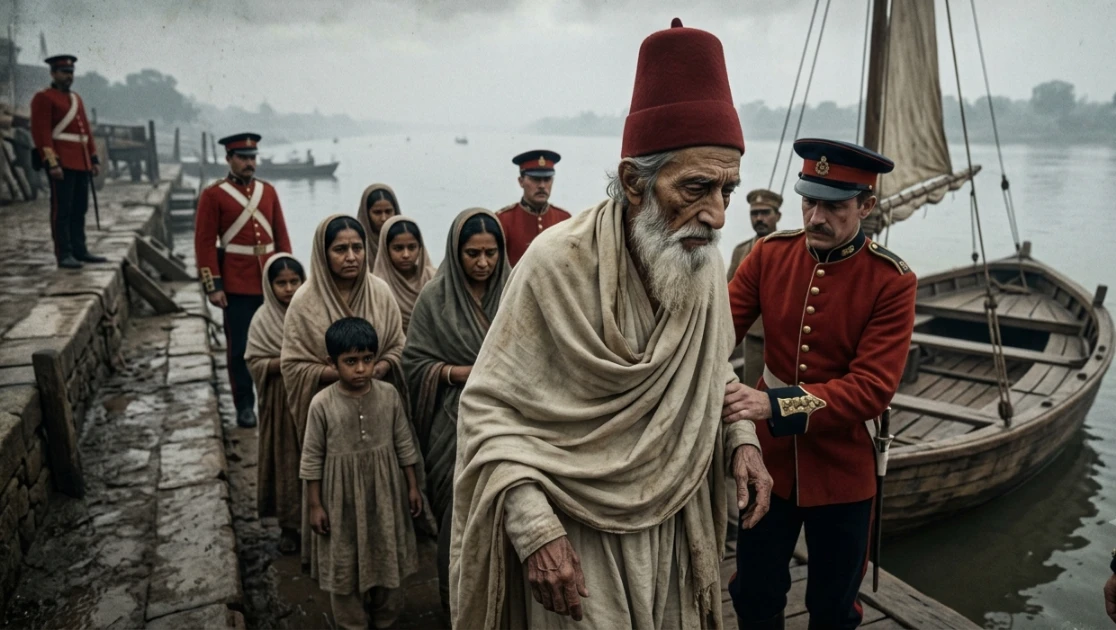
The ship reached Rangoon in the closing months of 1858. Captain H. Nelson Davies, the officer in charge of the city, was waiting at the harbor to receive his new prisoner.
Davies accepted the emperor and his household, signed for them like cargo, and brought them to his own residence. He now faced a problem no British officer had faced before.
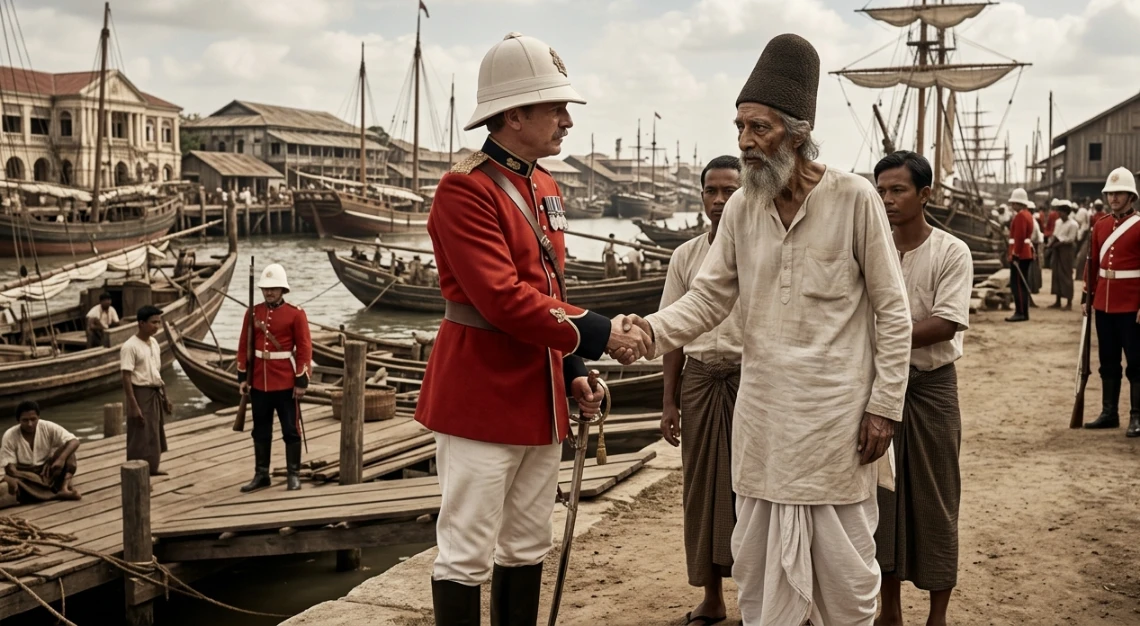
Rangoon had no facility built to hold a king. Zafar was the first exiled monarch the city had ever seen.
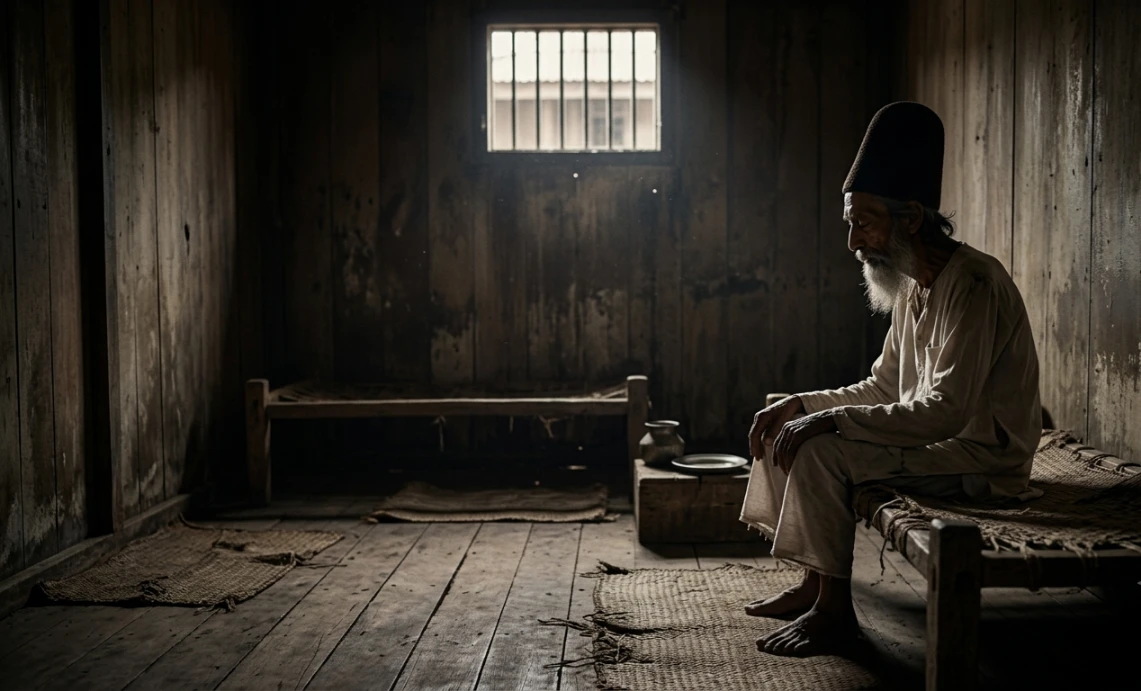
So Davies made an unusual choice. He cleared out his own garage and turned it into the emperor’s prison.
Bahadur Shah Zafar arrived at that garage in 1858. He would live there for the next four years, guarded day and night, cut off from the empire that once bowed to him.
The Night an Empire Quietly Ended
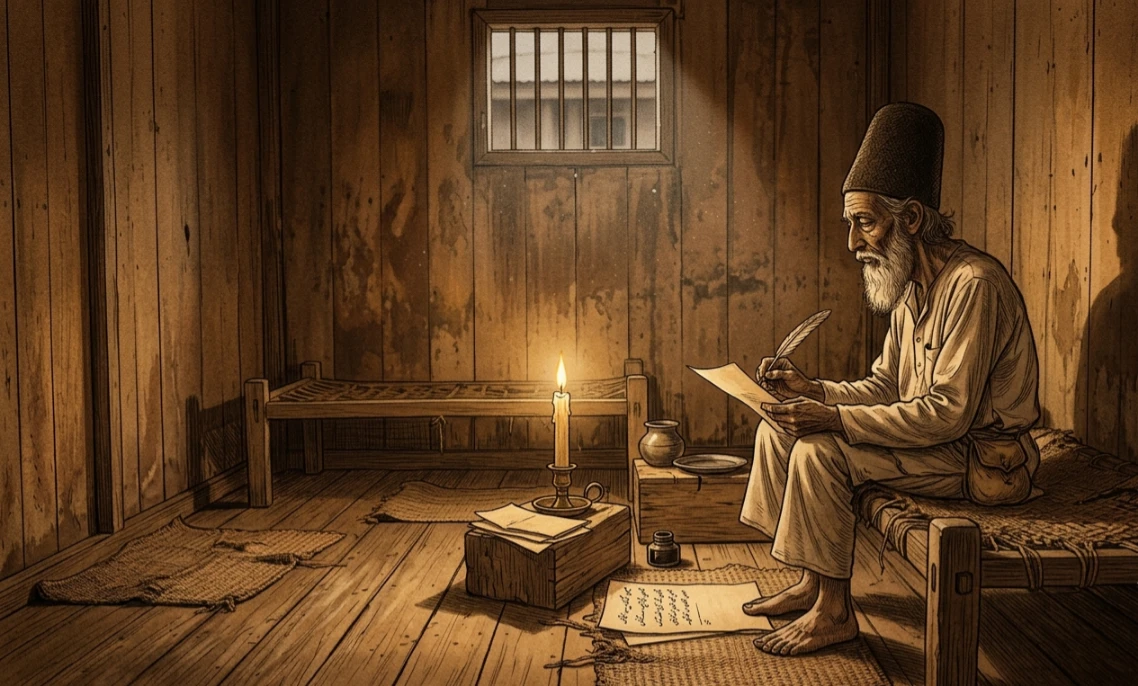
It was here, inside that cramped garage, that Zafar reportedly composed the couplet that would outlive him — the sorrowful lines lamenting that even two yards of earth in his homeland were denied to him. Historians still debate how much of the poem is truly his, but it has been tied to his name and his exile for generations.
By November 7, 1862, the emperor’s health had collapsed completely.
His servant girl rushed to Captain Davies‘ door that cold morning, frantic. The guard on duty tried to turn her away, saying his commander could not be disturbed. She would not stop crying.
Eventually, the noise reached Davies himself. He came out, and she fell at his feet, begging him to have the garage window opened. The dying emperor wanted to breathe open air one final time.
Davies picked up his pistol, gathered his guards, and walked into the room himself.
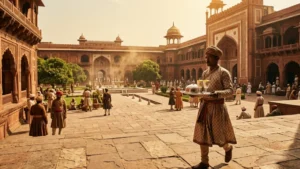
The Death of the Last Mughal Emperor
What Davies found inside was a scene of quiet devastation. The blanket had slipped half onto the floor. The emperor’s head rested on the pillow, but his neck had already gone slack.
Captain Davies had seen countless faces in his career. He later said none carried the helplessness he saw on that one.
This was not the face of a king anymore, in his eyes. It was the face of a man stripped of everything, silently pleading for a single breath of freedom.
Davies placed a hand on the emperor’s neck. There was no pulse left to find. Bahadur Shah Zafar, at 87 years old, had died.
Davies sent word to the only close family present in Rangoon: young Mirza Jawan Bakht, one of Zafar’s sons, and the boy’s tutor, Hafiz Muhammad Ibrahim Dehlvi.
No Land Left for a King’s Burial
The two men washed the emperor’s body, wrapped it, and offered what funeral prayers they could manage under the circumstances.
Then came a bitterly ironic problem. Nowhere in Rangoon was there official land set aside to bury the last emperor of Hindustan.
Captain Davies ultimately had a grave dug inside the grounds of his own official residence. Zafar was laid to rest there, in soil that had essentially been offered as an act of charity.
Historical accounts note that Zafar had once hoped to be buried in Mehrauli, near Delhi, close to the shrine of a revered Sufi saint. That wish never came close to being fulfilled.
The grave was also left deliberately unmarked at the time, so it would not become a rallying point or shrine for the emperor’s remaining followers.
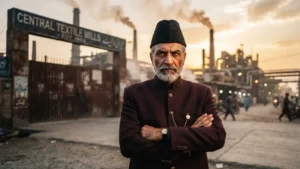
The Coronation Delhi Once Celebrated
As water was sprinkled over the fresh grave and rose petals scattered across it, Hafiz Ibrahim Dehlvi’s mind reportedly drifted back 25 years.
He remembered September 1837, when a 62-year-old Bahadur Shah Zafar was crowned emperor inside the Red Fort in Delhi. Crowds had poured in from across the country to witness it.
The new emperor walked into open court dressed in ceremonial robes, the legendary swords of earlier Mughal rulers strapped at his side. Delhi erupted in celebration. Drummers played, dancers performed, and soldiers struck their swords together in salute.
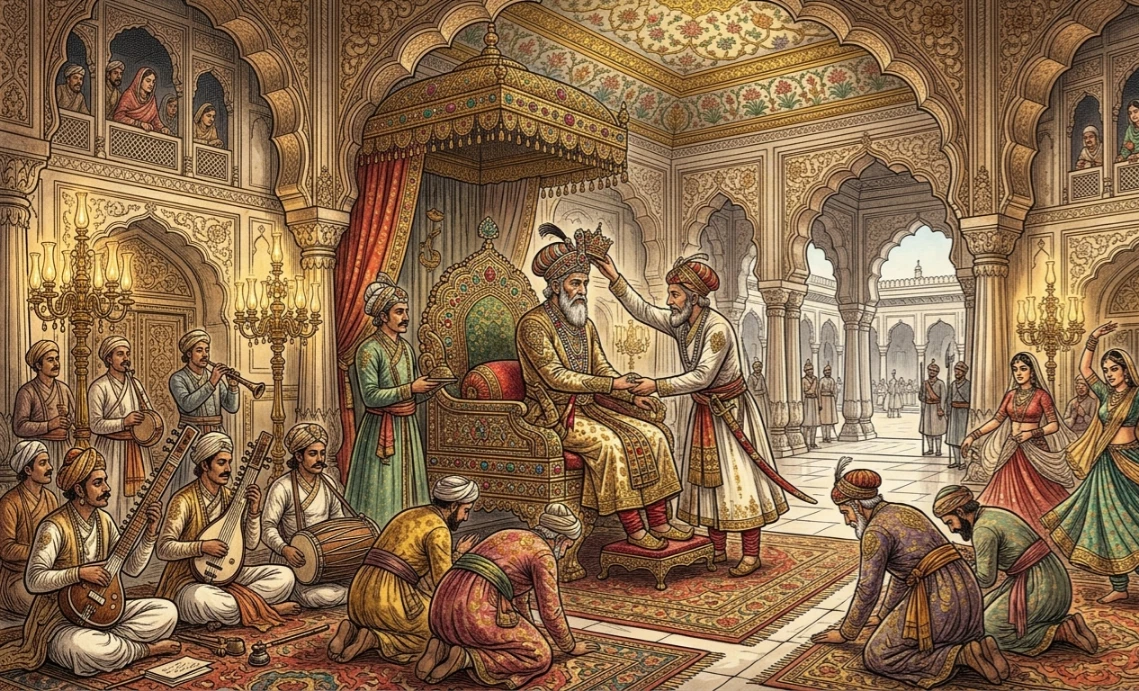
According to popular accounts, the celebrations lasted seven days, and the royal kitchens fed the people of Delhi throughout. It was a coronation befitting an empire that had once ruled a continent.
Now, on the cold morning of November 7, 1862, that same empire’s final ruler did not even have a proper reciter of the Quran available for his own burial.
The Prayer That Moved a British Captain
Hafiz Ibrahim Dehlvi’s eyes filled with tears at the grave. He removed his shoes, stood at the foot of the burial site, and began reciting Surah At-Tawbah from memory.
His voice carried a grief that silenced everyone present. Whether it was the power of the recitation itself, or the weight of everything it represented, even Captain Davies was visibly moved.
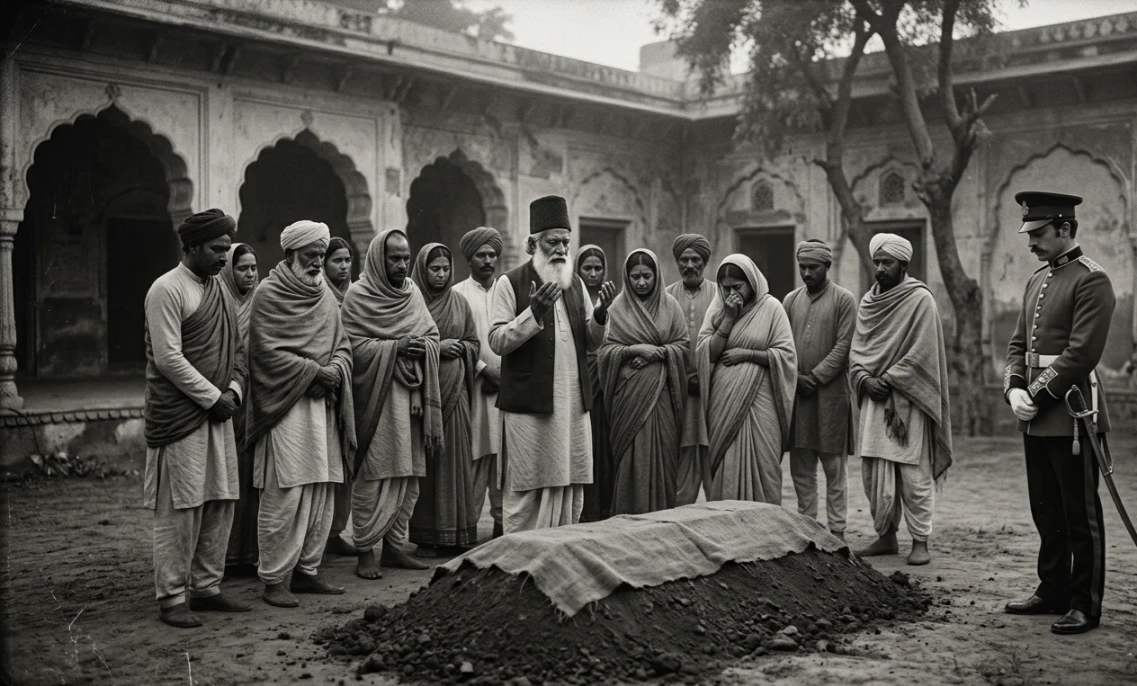
Davies raised his hand and offered the emperor a final salute at the graveside. With that gesture, the Mughal dynasty’s long chapter in Indian history came to its formal close.
What Happened to the Emperor’s Descendants
If you travel to Yangon today, you can still find descendants of Bahadur Shah Zafar living in the older, poorer quarters of the city.
Many live modestly, some in difficult conditions, and rely on state support. They still identify themselves as princes and princesses of the last Mughal emperor, carrying the memory of a dynasty most of the world has forgotten.

It is a striking, sobering image. The bloodline of an emperor who once ruled from Delhi to Bengal now survives quietly in the back streets of a foreign city.
Why the Mughal Empire Really Collapsed
The exile and death of Bahadur Shah Zafar was not simply the result of British military strength. Decades of internal decay had already hollowed out the empire from within.
By most historical accounts, Zafar had surrounded himself with courtiers who prioritized flattery over honest counsel. Corruption spread through the administration largely unchecked.
His sons feuded openly over control of internal and external affairs, and the emperor repeatedly forgave their failures rather than addressing them.
Meanwhile, ordinary people struggled under rising taxes and unpredictable food shortages. Provincial governors and nobles increasingly ignored the throne’s authority altogether, acting as independent rulers in all but name.
By the time the 1857 uprising began, popular support for the Mughal throne had already eroded. Many ordinary citizens felt no strong loyalty either to Zafar or to British rule, and the resistance lacked unified leadership as a result.
The final war effectively sealed the fate that years of weak governance had already set in motion.
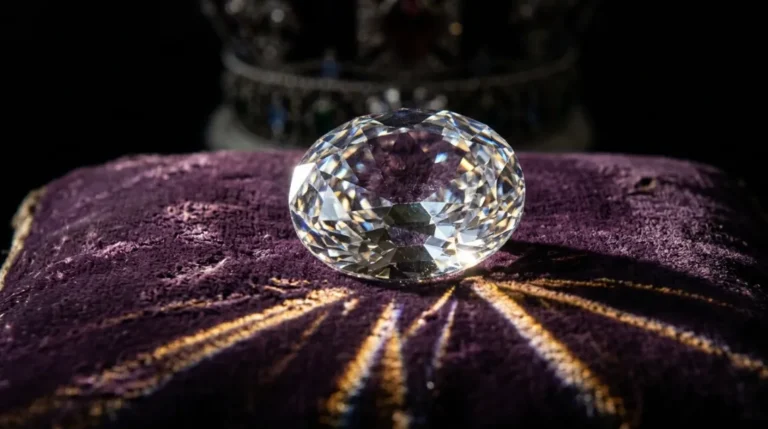
The Koh-i-Noor Diamond: Every Man Who Owned It Was Destroyed
A Lasting Lesson From the Last Mughal Emperor
The story of Bahadur Shah Zafar is more than a tragic footnote in colonial history. It is a warning about what happens when power is built on flattery instead of accountability.
An emperor who once commanded a continent died in a borrowed garage, buried in land he did not own, mourned by almost no one at the time.
His descendants still walk the streets of Yangon today, a quiet reminder of how quickly even the mightiest thrones can fall. Bahadur Shah Zafar’s exile remains one of history’s starkest lessons in how empires are truly lost — not always on the battlefield, but often long before it.