


How a Red Mercury Scam Bankrupted People in Pakistan
In 2013, a widespread financial scam in Pakistan convinced people that old cathode-ray tube televisions contained a valuable substance called Red Mercury. Fraudulent networks manipulated market prices, leading many families to sell their assets to purchase worthless TVs. The phenomenon resulted in significant financial loss across the country.
The scam relied on a long-standing scientific hoax claiming Red Mercury possessed extraordinary properties. When the artificial demand collapsed, victims were left with massive debts and unusable electronics. This event highlights the impact of speculative fraud and the spread of urban legends within local markets.
In 2013, a rusted old television sitting in a Pakistani storeroom was suddenly worth more than a house.
Families dragged bulky cathode-ray TVs down from attics and out of junkyards. Word spread through tea stalls and electronics markets that these dust-covered relics held a secret fortune inside.
That secret had a name: Red Mercury. And chasing it would cost hundreds of families everything they owned.
This is the story of the Red Mercury scam, one of Pakistan’s strangest and most devastating financial frauds.
A Forgotten TV Becomes a Golden Ticket
Before 2013, nobody wanted an old CRT television. Flat screens and LCDs had already taken over Pakistani homes.
Bulky box TVs were junk. Shopkeepers sold them for two or three hundred rupees, if they sold at all.
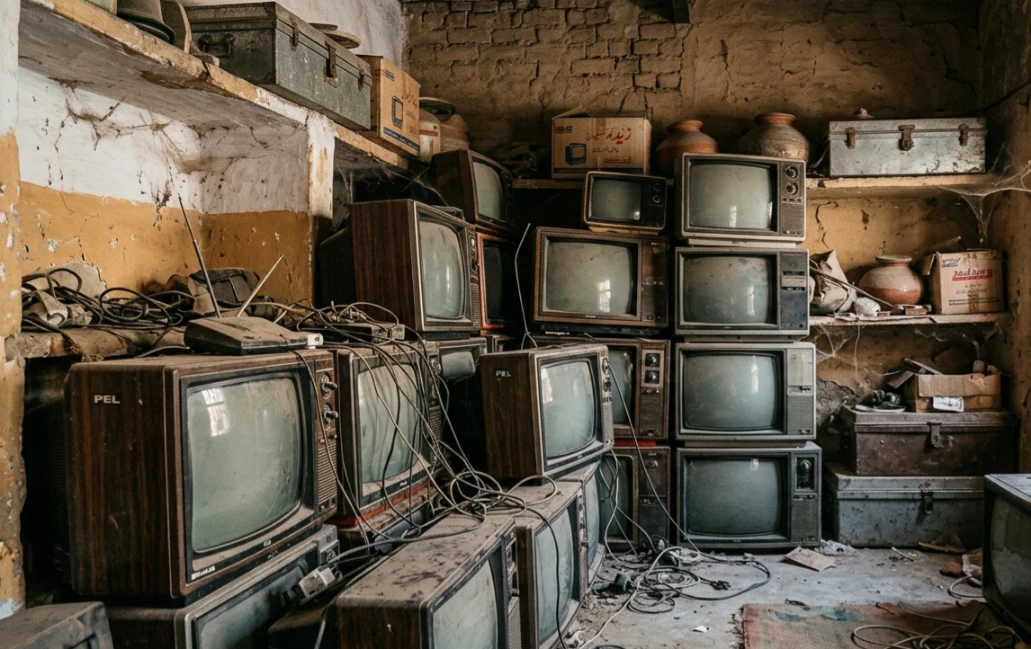
Then, almost overnight, everything changed. Rumors claimed these same TVs were worth lakhs of rupees. Some buyers reportedly offered up to 90 lakh rupees for a single unit.
People couldn’t believe it. But greed has a way of silencing disbelief.
The Myth of Red Mercury Behind the Madness
The scam didn’t start with the television itself. It started with a story about what was hidden inside it.
Rumors spread that certain German and Japanese TV models from the 1960s and 1970s, brands like Telefunken, Philips, and Sony, contained a rare substance inside their cathode-ray tubes and circuit valves.
That substance was called “Red Mercury.” Sellers claimed it was pure white gold or platinum in disguise.
The stories grew wilder with every retelling:
- It was supposedly used to build nuclear weapons.
- Foreign defense and space agencies were said to be secretly visiting Pakistan to buy it.
- It supposedly repelled garlic and mirrors, and made mobile phone signals disappear nearby.
None of it was true. Red Mercury is a decades-old hoax with no scientific basis. It has never existed in any laboratory, and it was certainly never sitting inside a household television.
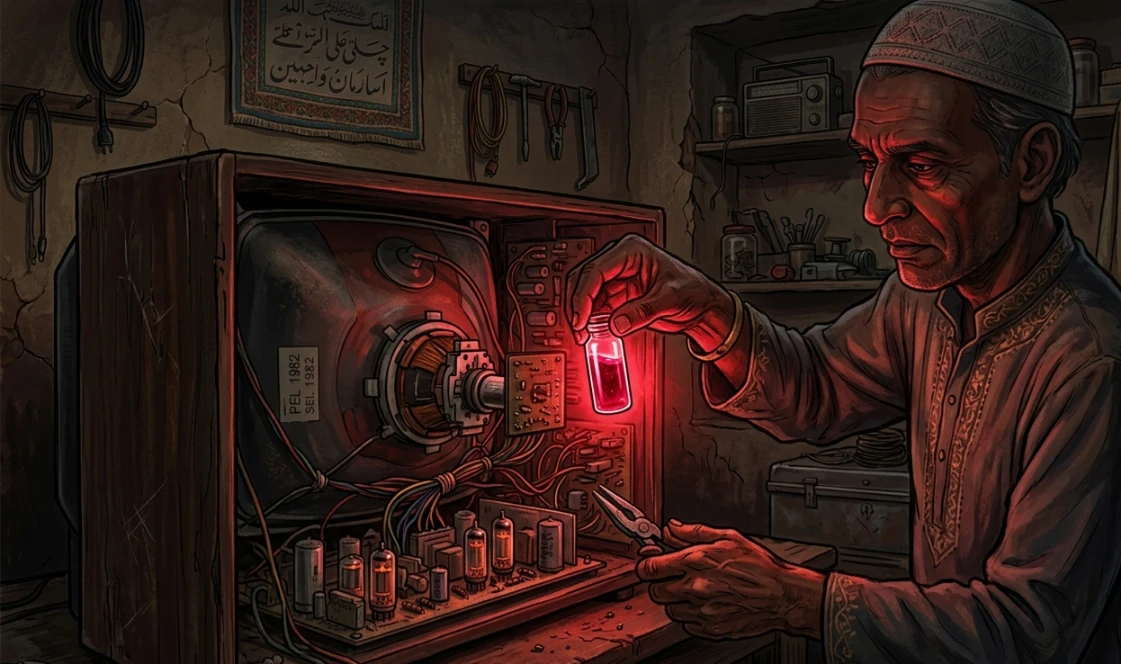
Fraud networks around the world, from the UK to India, have used the same fictional substance to con buyers for decades. Pakistan’s 2013 television craze was simply the local version of a much older international scam.

How the Scam Spread Across Pakistan
The fraud began in Rawalpindi’s old electronics markets, particularly Raja Bazaar and College Road. From there, it jumped to junk markets in Khyber Pakhtunkhwa and beyond.
The method followed a classic “pump and dump” playbook.
First, gang members bought worthless old TVs from unsuspecting shopkeepers, paying 50,000 or even 100,000 rupees for units that had sold for pocket change days earlier.

Word of these strange, generous buyers spread fast. Shopkeepers who received cash for junk couldn’t stop talking about it.
Within weeks, the same buyers returned. This time, they offered even more, sometimes 40 lakh rupees, for a specific German-made model.
Meanwhile, Pakistan’s growing online classified sites, including OLX and Bolee, filled up with listings for these same old TVs priced at 20, 30, and even 50 lakh rupees. Buyers and sellers behind these listings often belonged to the same network, manufacturing fake demand out of thin air.
The Middleman Trap and Blind Greed
Once people saw a 500-rupee TV supposedly worth 50 lakh rupees online, logic didn’t stand a chance.
The gang’s real trick involved a middleman pitch. They would approach a target and explain that a buyer was ready to pay 80 lakh rupees for a rare Telefunken set, and that a farmer in a nearby village was willing to sell one for just 20 lakh.
The pitch was simple: put up the 20 lakh, collect the TV, and split the 60 lakh profit once it sold.

It sounded too easy to refuse. Because of this, people made devastating decisions.
- Families sold their daughters’ wedding jewelry.
- Farmers sold land and livestock at throwaway prices.
- Many borrowed money on interest, sometimes 15 to 25 lakh rupees, just to buy a broken box.

Hope, once it takes hold, is hard to talk someone out of.

The Collapse: Empty Boxes and Broken Dreams
Within a few months, the gang had unloaded roughly 150 to 200 worthless old televisions for crores of rupees combined.
Then, almost overnight, everything went silent. The wealthy buyers stopped answering their phones. Their numbers were disconnected. The contacts simply vanished.
People who had spent their life savings on a single television tried to resell it. Not a single junk dealer would offer even 500 rupees.
Furious and desperate, some smashed open their televisions with their bare hands, searching for the mythical red liquid.
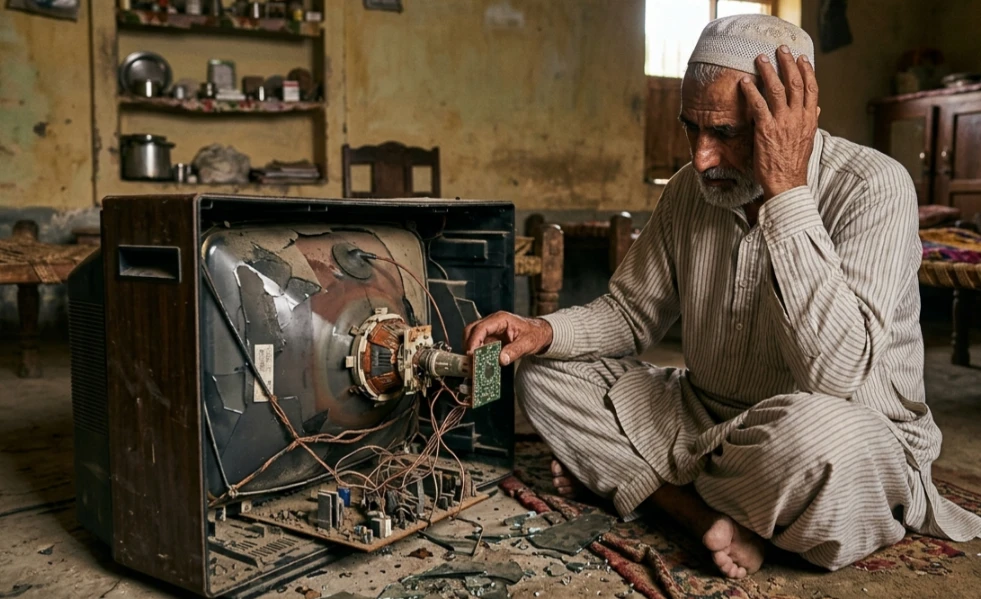
Inside, they found nothing but black dust, rusted wires, and ordinary circuit boards. No gold. No mercury. No fortune.
Fake Toll Plaza Scam Fooled Gujarat for 18 Months
The Real Lesson of the Red Mercury Scam
The Red Mercury scam left a trail of ruined families across Pakistan. Homes were lost. Debts remained long after the dream had died.
It also left behind a warning that still holds true today. When a profit seems to appear out of nowhere, without work, without evidence, without reason, it usually isn’t wealth waiting to be found.
It’s a trap someone else has already built.