
Beneath the City of Light: The Dark Secrets of the Paris Catacombs
The Paris Catacombs hold the remains of approximately 6.5 million people within a vast network of former limestone quarries. Established in the late 18th century to address overflowing cemeteries and public health concerns, the site features bones artistically arranged into walls. It serves as a monumental record of history.
While a small portion is open to the public, hundreds of kilometers of restricted tunnels remain. These hidden spaces attract urban explorers who navigate the depths illegally. This subterranean labyrinth represents a complex intersection of French history, architectural ingenuity, and enduring urban mystery beneath the modern city streets.
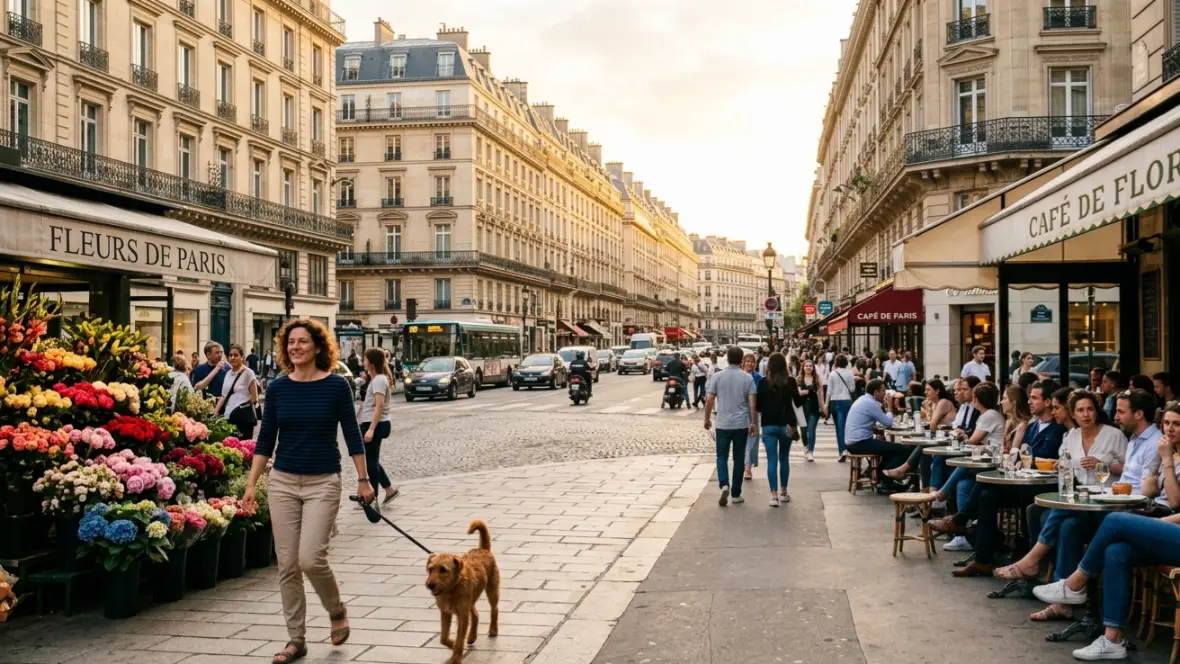
Imagine walking through the bright, lively streets of Paris. Cafés are buzzing, tourists are snapping photos, and the city feels impossibly alive.
Now imagine what lies directly beneath your feet.
Just 20 meters underground, roughly 6.5 million human remains rest in silence. They have been there for centuries. And the walls around them? They are not built from stone or brick. They are built from human skulls and bones.
Welcome to the Paris Catacombs — one of the most haunting and fascinating places on Earth.
From Limestone Quarries to a City of the Dead
The Paris Catacombs did not begin as a burial site. For centuries, workers carved limestone from the ground beneath the city to construct Paris’s grand buildings and famous landmarks.
However, by the 18th century, those exhausted quarries had left a massive hollow network of tunnels under the city. Nobody knew yet what those tunnels would eventually hold.
Meanwhile, above ground, Paris was facing a very different kind of crisis.
When the City’s Cemeteries Overflowed
By the late 1700s, Paris had grown enormously. Its cemeteries, however, had not kept up.
The oldest and most crowded burial ground, the Cimetière des Innocents, had become a public health disaster. Gravediggers kept reopening old graves to make room for new bodies. Mass graves held thousands of corpses layered on top of one another. The smell was unbearable for people living nearby.
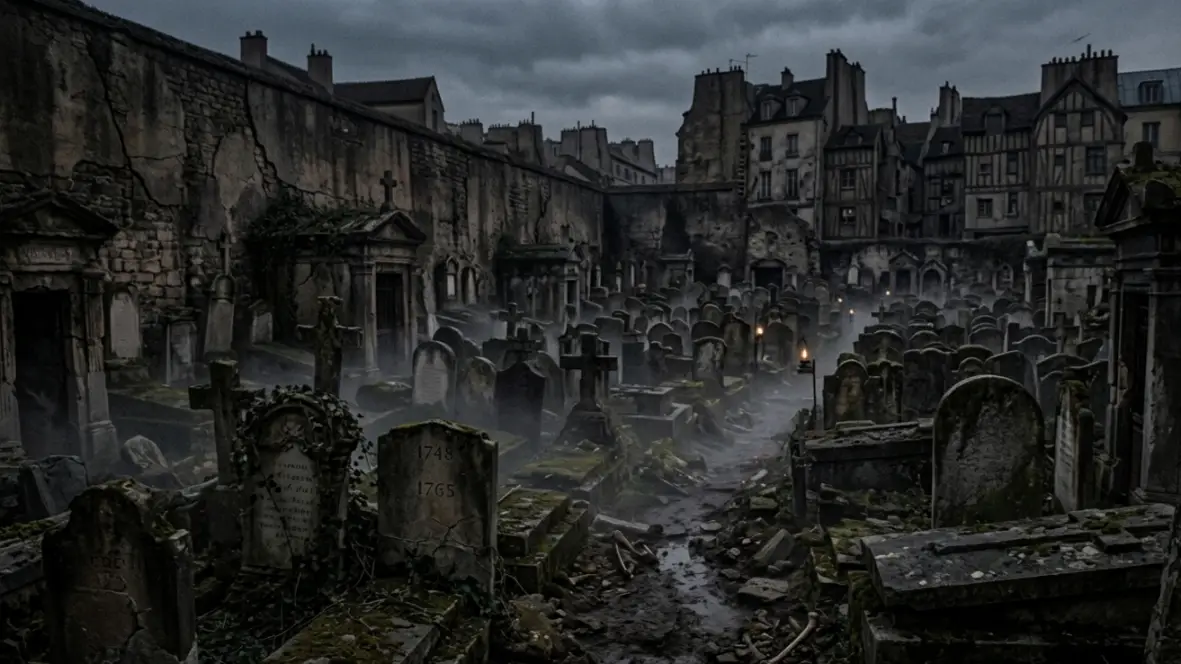
Eventually, things came to a breaking point. A cemetery wall collapsed, and human remains spilled into the basement of an adjacent building.
Something had to change — and fast.
The Midnight Transfer: Moving Millions of Bones
In 1786, during the reign of King Louis XVI — the same king who would later be dethroned during the French Revolution — the French authorities made an extraordinary decision.
They would move the dead underground.
Workers began quietly transferring the bones and remains from overflowing cemeteries into the abandoned limestone tunnels beneath the city. They carried out this work at night, in torchlight processions, while priests walked alongside, chanting funeral prayers.
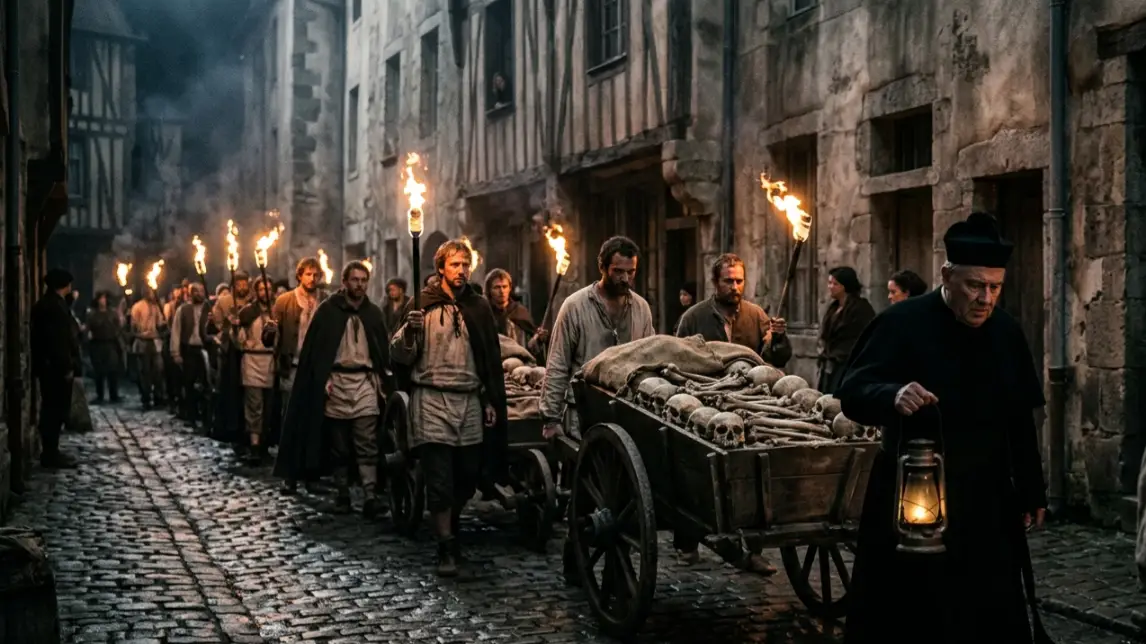
The transfer continued for years.
How Bones Became Architecture
At first, workers simply piled the bones into the tunnels. However, as time went on, someone decided the space deserved more respect — and perhaps more artistry.
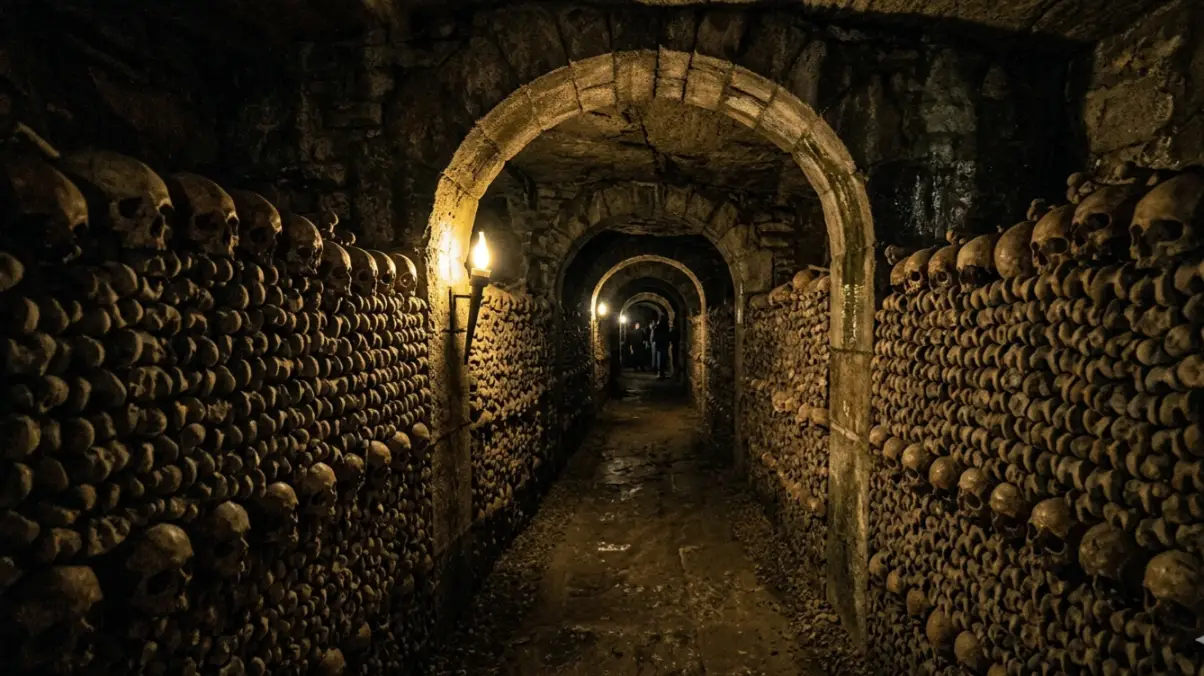
Skulls were stacked into carefully arranged walls. Tibias and femurs were layered in neat rows. Bone pillars rose from the floor. In some sections, workers arranged skulls in the shape of hearts and crosses.
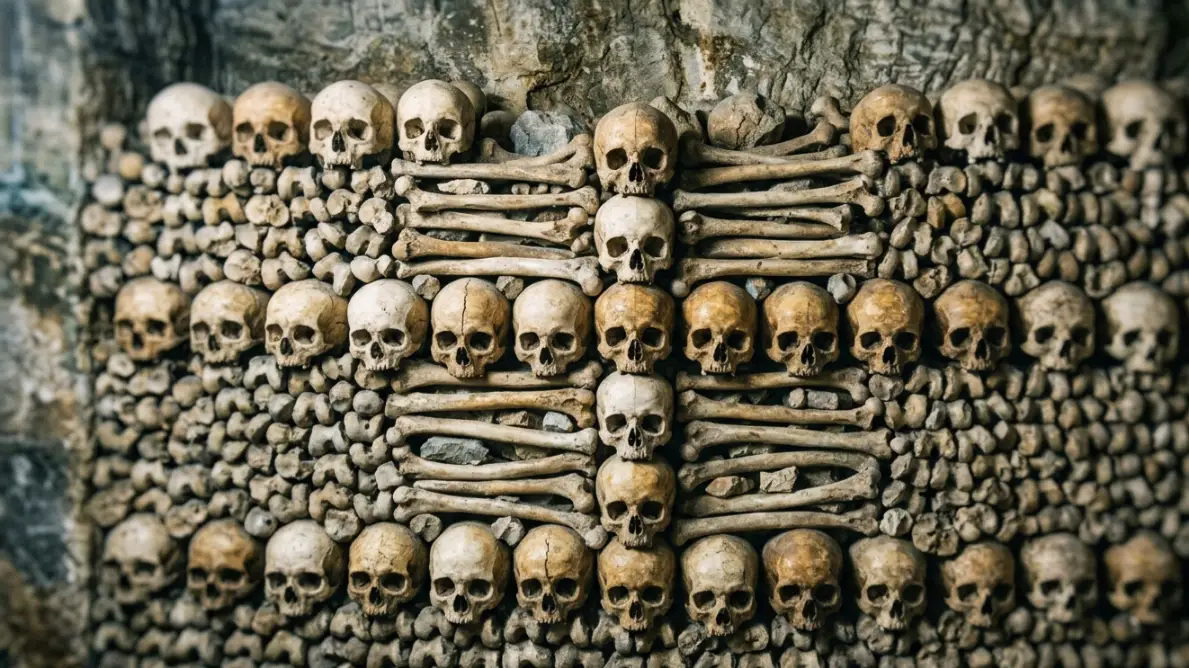
What began as a sanitation solution slowly transformed into something deeply strange and strangely beautiful.
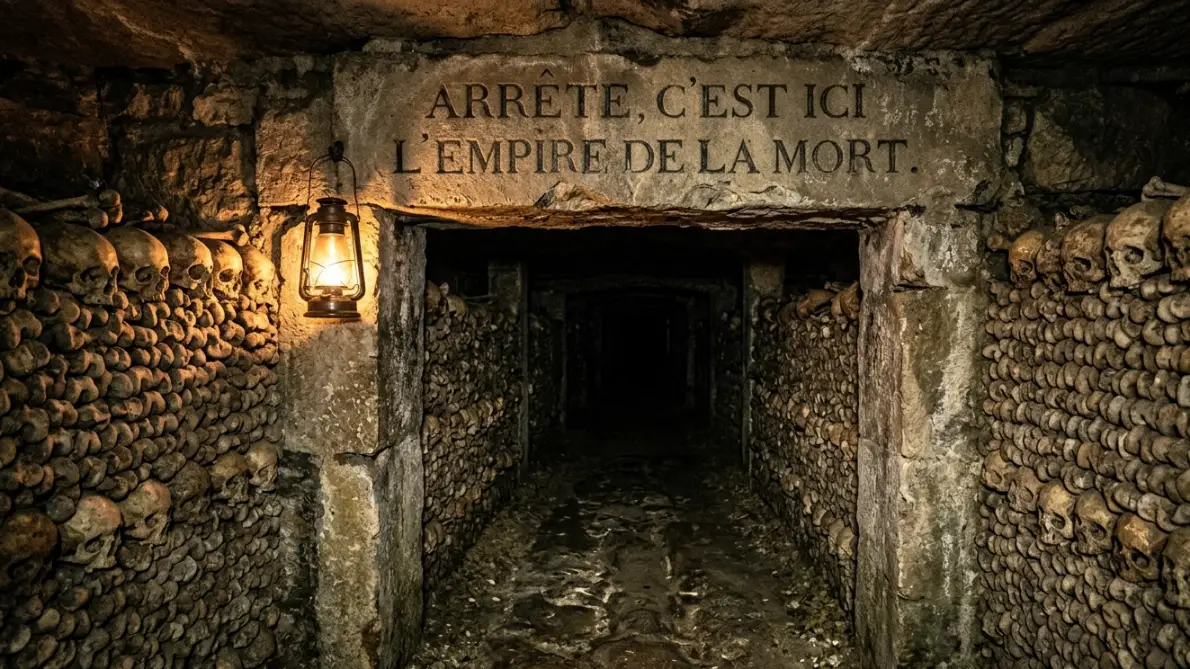
Today, when visitors descend into the catacombs, a carved stone inscription greets them at the entrance:
“Stop. This is the empire of death.”
That single line sets the tone for everything that follows.

What Visitors See Today
The public section of the Paris Catacombs covers about 2 kilometers of the tunnel network. It draws more than 500,000 visitors per year, making it one of the most visited underground sites in the world.
As you walk through the narrow, dimly lit corridors, bones line the walls on every side. Skulls stare outward from tightly packed rows that stretch on and on. In addition, small plaques and markers throughout the tunnels identify which cemeteries the remains originally came from.
It is eerie, yes. But it is also deeply moving.
You are walking through the remains of real people — merchants, priests, children, soldiers — who once lived ordinary lives in the same city above you.
The 300-Kilometer Secret Beneath Paris
Here is something most tourists do not realize.
The public catacombs represent only a tiny fraction of the underground tunnel network. In total, the tunnels beneath Paris stretch for an estimated 300 kilometers. Most of that network remains closed to the public.
Because of this, the tunnels have attracted a different kind of visitor — one who does not bother with official tours.
Blanche Monnier: Hidden in Her Own Home for 25 Years
The Cataphiles: Paris’s Underground Explorers
Parisians have a name for the daring individuals who sneak into the forbidden sections of the tunnels: Cataphiles.
These urban explorers have been navigating the catacombs’ illegal depths for decades. They draw maps, throw underground parties, and sometimes discover parts of the tunnel system that no official survey has ever documented.
For many of them, the catacombs represent a kind of freedom — a hidden city beneath the city, completely outside ordinary life.
However, exploring the restricted tunnels is illegal and carries a fine. Police units specifically patrol the underground passages, and occasional arrests do happen. That has not stopped the Cataphiles.
The Secret Cinema That Vanished Overnight
Of all the strange stories connected to the Paris Catacombs, this one stands apart.
In 2004, police officers exploring a restricted section of the tunnels made an astonishing discovery. Hidden deep underground, someone had built a fully functioning cinema.
There was a large screen, a projector, rows of seats, electrical wiring, telephone lines, a bar, and even a surveillance system installed at the entrance to alert insiders when strangers approached.
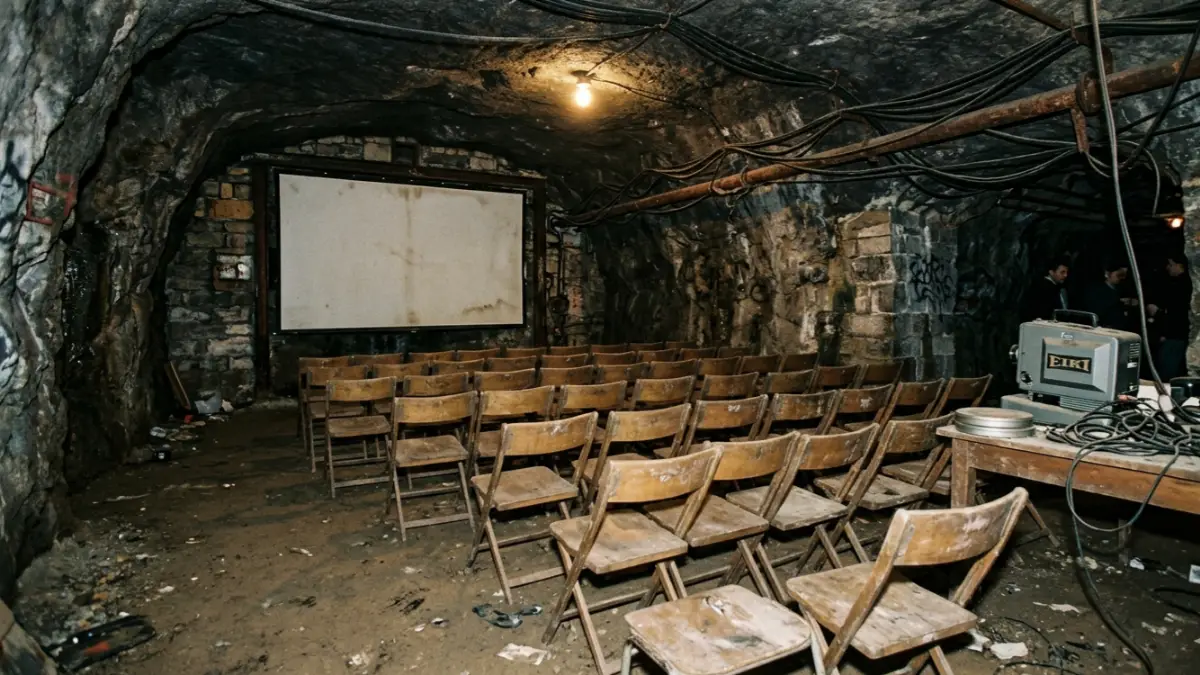
Whoever built it had been operating it for some time.
Afterward, police called in their own technical team to investigate. When officers returned three days later, almost everything was gone. The equipment had vanished. Only a single note remained behind.
It read: “Do not try to find us.”
A secretive group of artists and urban explorers known as Les UX later took credit for the installation. The group is known for carrying out elaborate, unauthorized projects in Paris’s forgotten and hidden spaces.
To this day, the story of the underground cinema remains one of the most mysterious chapters in the history of the Paris Catacombs.
Why the Paris Catacombs Still Fascinate the World
There is something about the catacombs that goes far beyond curiosity about death.
They remind us that cities have layers — not just physical layers of rock and stone, but layers of history, loss, and human ingenuity. Paris built something extraordinary out of a public health emergency. It turned its dead into a monument that has outlasted every building constructed from that same limestone above ground.
In addition, the catacombs remind us that even in the world’s most modern city, secrets still exist. Les UX built a cinema. Cataphiles still roam the tunnels tonight. And 6.5 million souls rest quietly beneath the café where you are drinking your coffee.
Conclusion: The Other Paris
Paris is famous for the Eiffel Tower, its cuisine, its art, and its romance. But beneath all of that is a city that very few people truly see.
The Paris Catacombs are not just a tourist attraction. They are a reminder that history runs deep — literally. Every skull in those walls once belonged to a living person with a name, a family, and a story.
If you ever walk the streets of Paris, remember: you are not just walking through a city. You are walking over one.