
Mount Everest Dead Bodies: The Haunting Truth About the World’s Highest Graveyard
Every year, thousands of people dream of standing on top of the world. Mount Everest calls to adventurers, thrill-seekers, and legends. However, behind the glory of reaching 8,849 meters lies a deeply uncomfortable truth — one that most travel brochures never mention.
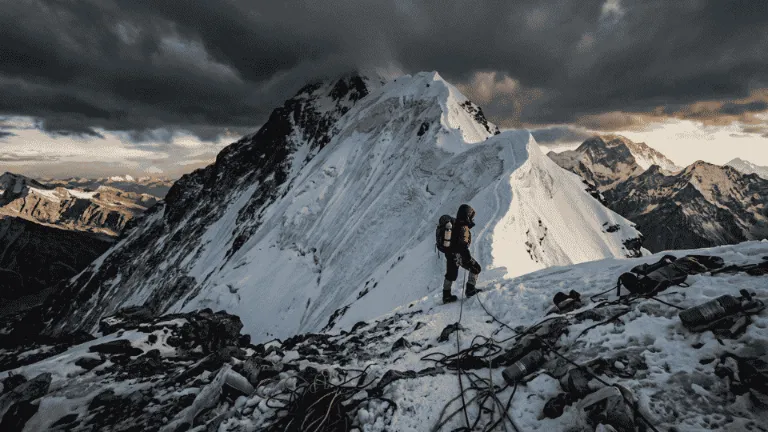
More than 200 dead bodies remain on Mount Everest right now. They haven’t been buried or brought home. They rest where their climbers fell, frozen in time, high above the clouds.
Why Mount Everest Became an Open-Air Graveyard
The mountain doesn’t give up its dead easily. Extreme cold, brutal winds, and dangerously thin air make body recovery nearly impossible above a certain altitude. In fact, rescuers often risk their own lives just attempting it.
Because of this, most bodies stay exactly where they fall. The conditions that kill climbers also preserve them — sometimes for decades. As a result, Mount Everest has quietly become what many now call the world’s highest open-air graveyard.
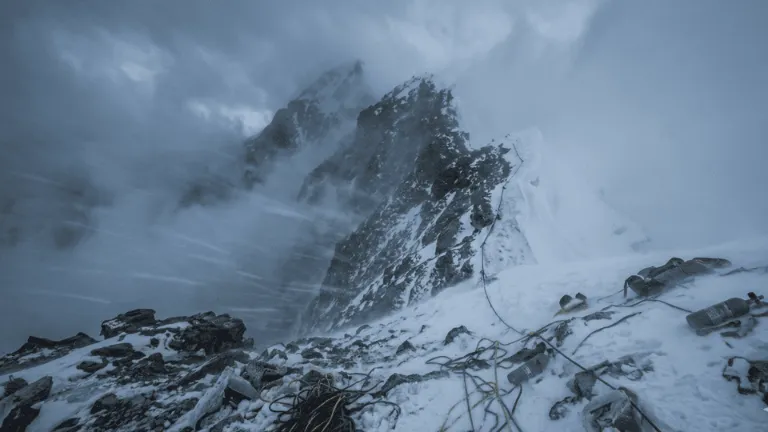
It’s a sobering reality that sits beneath every summit attempt.
The Death Zone: Where the Mountain Becomes a Cemetery
Above 8,000 meters lies what climbers call the Death Zone. At this altitude, the human body starts shutting down. Oxygen levels drop to a third of what they are at sea level. The brain slows. Muscles fail. Decisions become dangerously clouded.
Meanwhile, the weather can turn without warning. A clear morning sky can become a deadly blizzard within hours. Many climbers who die on Everest don’t fall — they stop moving. Eventually, the mountain swallows them whole.
The bodies that remain in the Death Zone are not just tragedies. Over time, they have become something else entirely — landmarks.
Mount Everest Dead Bodies That Guide the Living
This is perhaps the most chilling part of the story. Some Mount Everest dead bodies have become so well-known that climbers use them as reference points on their route. It sounds unthinkable, but at extreme altitude, every marker matters.
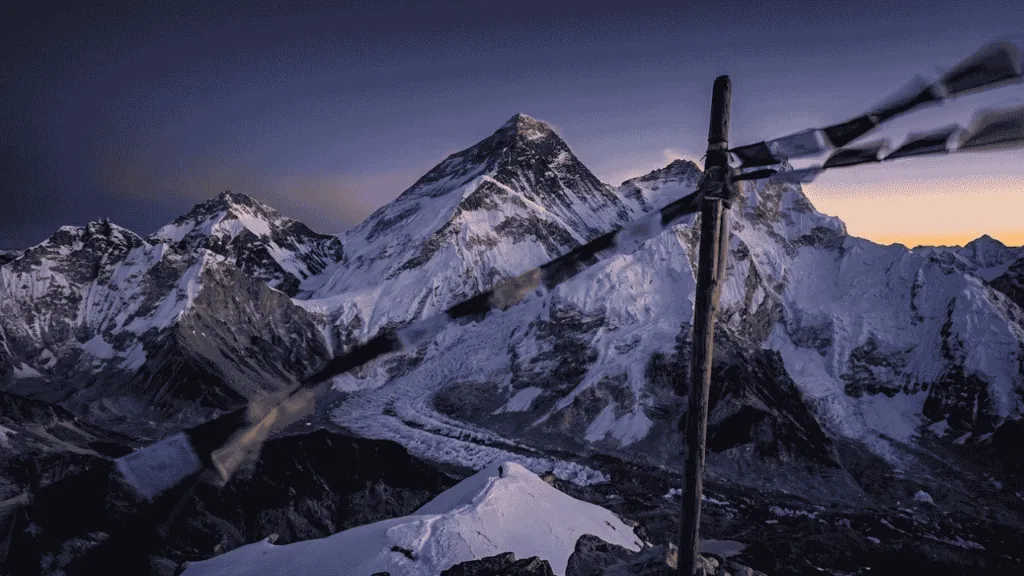
Here are some of the most recognized.
Green Boots: Everest’s Most Famous Landmark
If you’ve read anything about Everest’s darker side, you’ve likely heard the name, Green Boots.
The body is believed to belong to Tsewang Paljor, an Indian climber who died during a catastrophic storm in 1996. He was part of an Indo-Tibetan Border Police expedition attempting the summit via the Northeast Ridge. That night, a fierce storm swept across the mountain and claimed multiple lives.
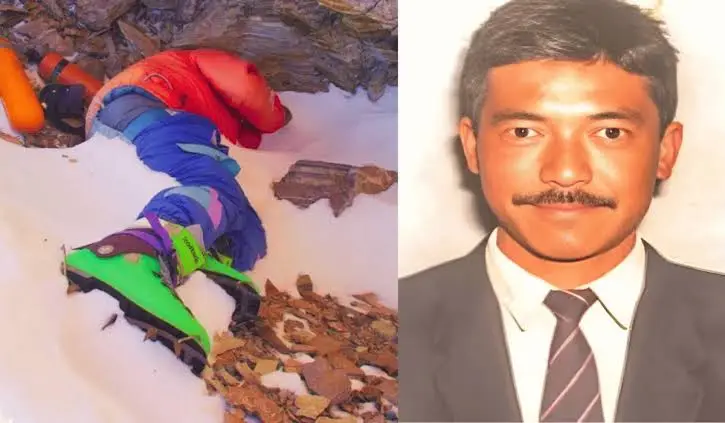
Paljor never made it back down.
For years afterward, his body rested in a small limestone cave near the Northeast Ridge route. His bright green mountaineering boots — still on his feet — became the feature everyone recognized. Climbers began calling him simply Green Boots.
For a long time, passing climbers on the Northeast Ridge would spot those green boots and instinctively know where they stood on the mountain. Green Boots became an unintentional, deeply poignant waypoint.
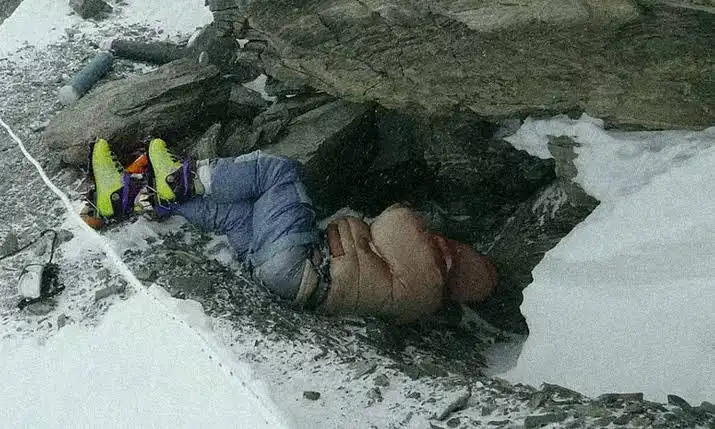
In recent years, reports suggest the body may have been moved or covered. However, the name and the story live on as one of Everest’s most haunting legacies.
Sleeping Beauty (Francys Arsentiev) — Northeast Ridge, ~8,600 Meters
Francys Arsentiev was an American mountaineer who became the first woman from the United States to reach the summit of Mount Everest without the aid of bottled oxygen on May 22, 1998. However, she did not make it back after her ascent.
Francys was climbing with her husband, Sergei Arsentiev. They were both experienced climbers. After reaching the top, Francys started having serious problems during the descent. She became too weak to continue. She may have had hypoxia — not enough oxygen in her body.
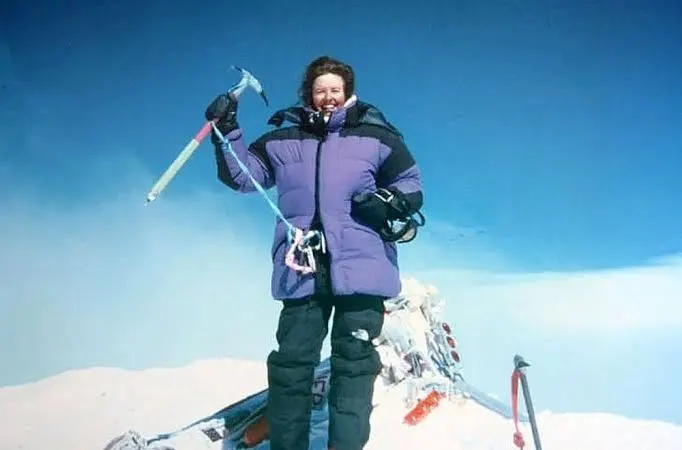
Her body remained on the north face of Mount Everest, preserved by extreme cold in a hauntingly lifelike state. She lay on her side, clad in her purple-and-black summit jacket, still clipped to the climbing rope.
For years, Francys’ body stayed frozen on the mountain at over 8,600 meters. She became known as “The Sleeping Beauty of Everest,” earning this name due to her frozen expression — almost tranquil in her final resting moment.
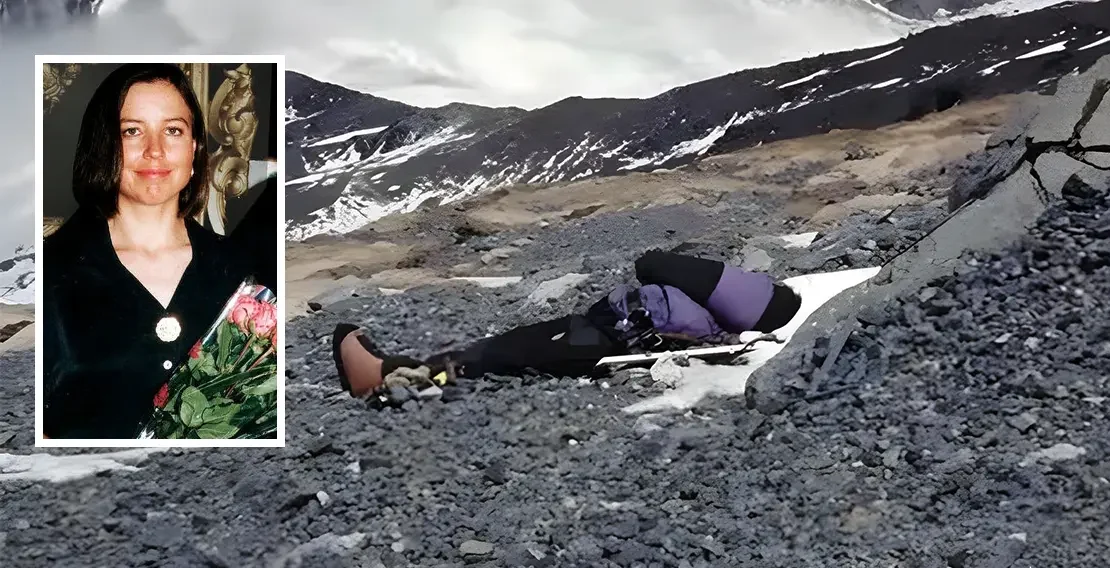
Meanwhile, her husband Sergei went back up into the Death Zone to search for her — and never returned. His body was found lower on the mountain days later.
In 2007, a humanitarian expedition called “The Tao of Everest Campaign,” initiated by climbers Cathy O’Dowd and Ian Woodall, was committed to giving Francys a dignified burial. They wrapped her in an American flag and left a heartfelt note from her son, Paul Arsentiev. They moved her body to a lower altitude, out of view of the main climbing route
George Mallory — North Face, ~8,160 Meters
George Herbert Leigh Mallory was an English mountaineer who participated in the first three British Mount Everest expeditions in the early 1920s. During the 1924 expedition, Mallory and his partner, Andrew Irvine, disappeared on Everest’s Northeast Ridge. They were last seen alive approximately 800 vertical feet from the summit.
The question of whether they reached the top before dying has fascinated the mountaineering world for over a century.
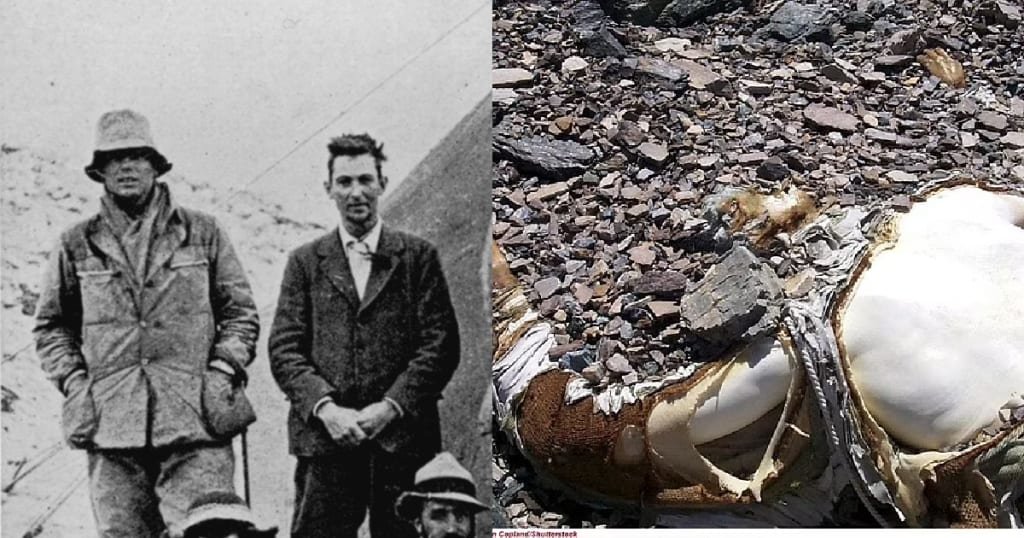
The corpse was frozen and bleached by the sun. It lay face down in the snow, fully extended and pointing uphill. The upper body was welded to the scree with ice. The arms, still muscular, were outstretched above the head.
An envelope found on Mallory’s body was covered in numbers — pressure readings of the oxygen bottles they were carrying. It had long been believed that the climbers didn’t have enough oxygen to get them to the summit. His goggles were found in his pocket, suggesting the two men may have completed their summit push in sunlight and were making their descent after dark.
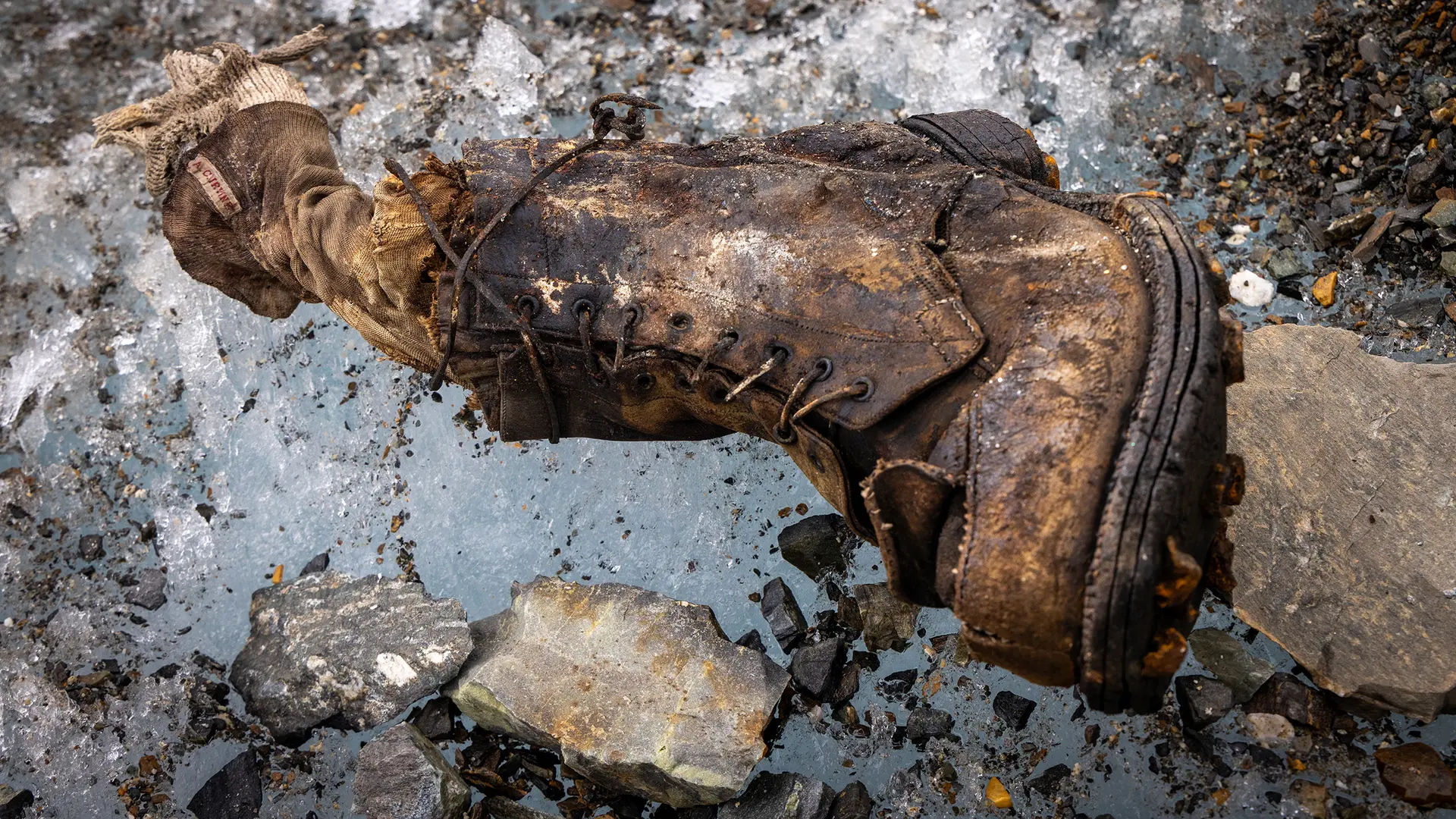
Sandy Irvine’s whereabouts remained a mystery until September 2024, when a National Geographic team found Irvine’s boot and partial remains, sparking fresh interest in their story.
Hannelore Schmatz — Southeast Ridge (South Col), ~8,300 Meters
Hannelore Schmatz was a German mountaineer who was the fourth woman to summit Mount Everest. She collapsed and died on October 2, 1979, as she was returning from summiting Everest via the southern route. Schmatz was the first woman and first German citizen to die on the upper slopes of Everest.
As Hannelore and American climber Ray Genet descended, they decided to rest despite warnings from their Sherpa guides to keep moving. Unfortunately, this decision led to tragedy. The freezing temperatures and lack of oxygen overcame them during the night.
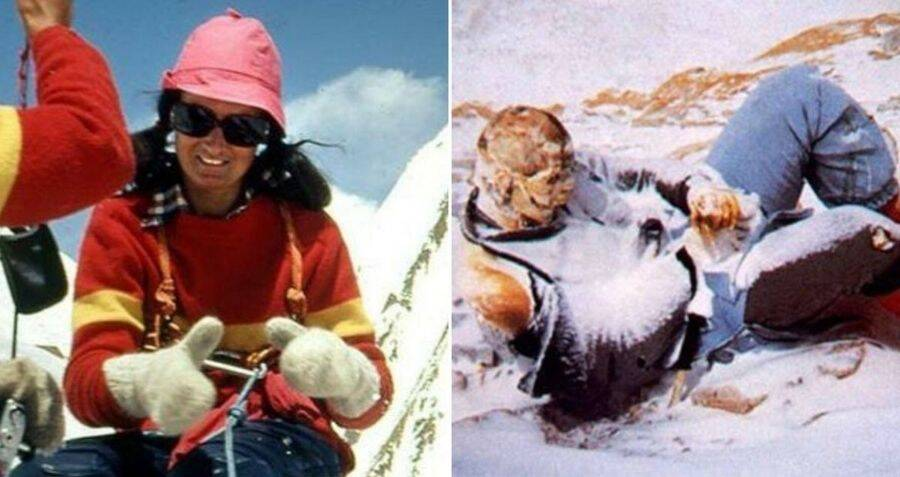
For years, Schmatz’s remains could be seen by anyone attempting to summit Everest via the southern route. Her body was frozen in a sitting position, leaning against her backpack with eyes open and hair blowing in the wind, about 100 metres above Camp IV.
A Nepalese police inspector and a Sherpa who tried to recover Hannelore’s body in 1984 both fell to their deaths. It was finally high winds that blew her remains over the edge and down the Kangshung Face.
Rainbow Valley — Northeast Ridge, Just Below the Summit
Rainbow Valley is an area just below the summit where colorful gear marks the locations of fallen climbers, creating a chilling yet oddly beautiful sight. Zaratours
An area along the northeast route to the summit has earned the nickname “Rainbow Valley” simply because of the multicolored down jackets of the numerous corpses littering the hillside.
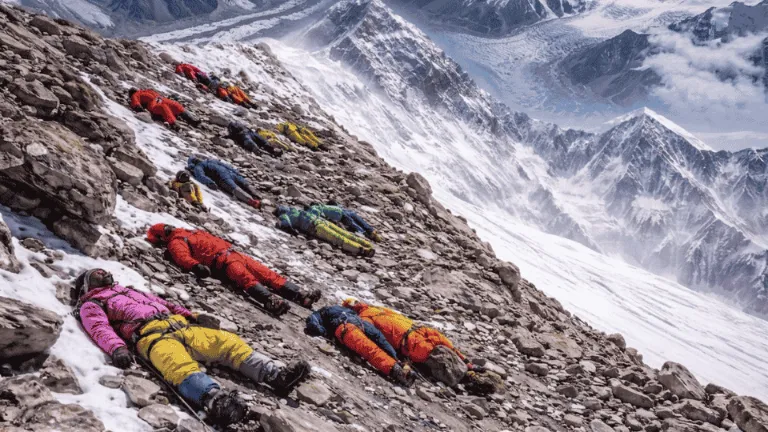
The name sounds almost peaceful. The reality is anything but. This stretch of the mountain holds some of the highest concentrations of fallen climbers anywhere on Everest. Each splash of color — red, yellow, blue, green — marks a person who never came home.
The Icefall Body — Khumbu Glacier, South Side Approach
The Icefall Body is one of the few areas with practical public access, located in the Khumbu Glacier area. Unlike most bodies frozen high in the Death Zone, this one rests in Everest’s lower reaches — in the notorious Khumbu Icefall, a constantly shifting maze of ice towers and crevasses that every south-side climber must pass through.
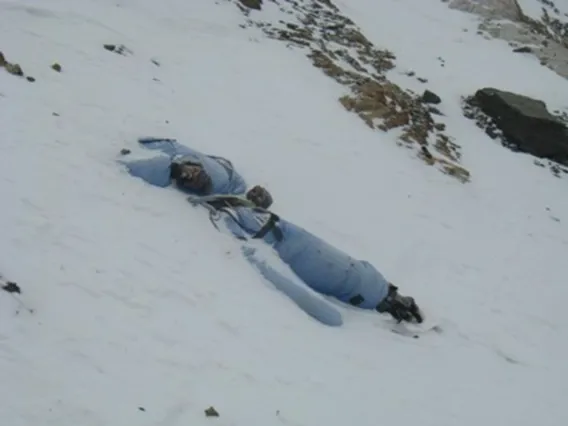
The Khumbu Icefall is considered one of the most dangerous sections of any Everest route. Bodies here serve as a grim early reminder, even before climbers reach altitude.
The Saluting Man — Near the South Summit
The “Saluting Man” is found near the south summit — one of the final landmarks before the true peak. The body’s posture, arm raised as if in a final salute to the mountain, has made it one of the most emotionally striking sights on the Southeast Ridge route.
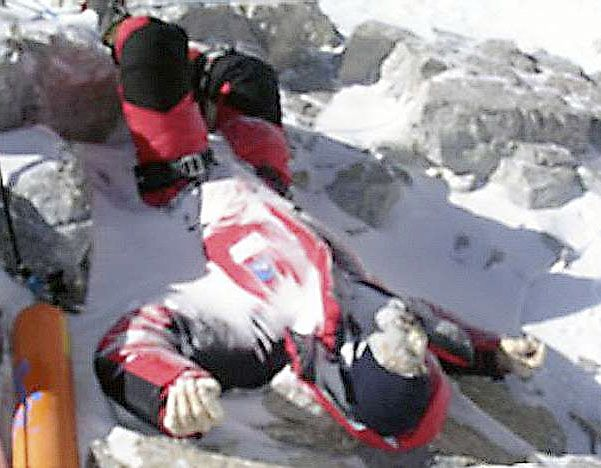
No confirmed identity has been widely published. However, climbers who pass this figure report a deeply unsettling moment — the arm raised toward the sky feels almost intentional, as if this person knew exactly where they were when the mountain claimed them.
The German — Second Step, North Face Route
“The German” rests on the second step of the north face route. The Second Step is one of the most technically demanding sections on the entire Northeast Ridge — a near-vertical rock face at extreme altitude that requires fixed ropes and careful footwork.
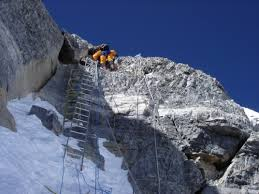
Finding a body here tells climbers exactly how difficult the terrain ahead remains. The German has been a reference point on the north side for years, a silent figure embedded in one of the mountain’s most challenging passages.
The Resting Place: A Warning at the Edge of the Death Zone
Not far from Green Boots lies another body that climbers have come to know as “The Resting Place.”
This individual rests near the same cave system along the Northeast Ridge. The position — arms outstretched, body frozen mid-movement — gives the eerie impression of someone simply pausing to rest.
For climbers pushing upward through exhaustion and altitude sickness, encountering this figure sends a clear message. You have entered the Death Zone. From here, there is no comfort, no safety, and no guarantee of return.
In addition to marking location, The Resting Place serves as a psychological checkpoint — a silent reminder of what the mountain demands from those who dare to challenge it.
Why Can’t the Bodies Be Removed?
Many people ask this question, and it deserves a straight answer.
Removing a body from Everest’s upper reaches requires a team of experienced climbers, specialized equipment, and a reliable weather window. Each recovery mission costs tens of thousands of dollars. More importantly, it puts living people at serious risk.
For example, in 2019, a recovery effort on a lower section of the mountain required multiple teams working in dangerous conditions over several days. And that was far below the Death Zone.
Above 8,000 meters, the logistics become almost impossible. The body weight increases dramatically due to ice. Terrain is treacherous. Climbers themselves are barely surviving on bottled oxygen. Afterward, even a partially successful recovery can leave a rescue team dangerously depleted.
Because of this, most families — and most governments — make the heartbreaking decision to leave their loved ones where they rest.
The Human Cost Behind the Statistics
It’s easy to read “200+ bodies” and feel nothing. Numbers can distance us from reality. However, each of those people had a name, a family, and a dream.
Tsewang Paljor was 28 years old when he died. He was a young mountaineer proud to represent his country on one of the world’s greatest challenges. His green boots weren’t a landmark — they were his gear, chosen carefully for a climb he hoped would define his life.
The Resting Place has a story, too. A person made decisions, took steps, and reached that spot through sheer human will — before the mountain claimed them.
These aren’t props or waypoints. They are people.
Mount Everest Dead Bodies: A Conversation the Climbing World Must Have
The presence of so many unrecovered bodies raises serious ethical questions. Should commercial expeditions continue at this scale? Who bears responsibility for recovery efforts? How do we honor the dead while still allowing the living to pursue the summit?
There are no easy answers. Meanwhile, the mountain continues to attract thousands of hopeful climbers every season.
Some argue that leaving bodies on Everest is disrespectful. Others believe the mountain itself becomes their resting place — a final home more powerful than any cemetery on Earth.
What’s certain is this: the conversation matters. And so does understanding the full picture before ever setting foot on that glacial trail.
Conclusion: The Mountain Remembers What We Forget
Mount Everest’s dead bodies are not a footnote. They are a fundamental part of the mountain’s story — one that every aspiring climber, every adventure traveler, and every curious reader deserves to know.
Over 200 people rest on those icy slopes right now. Some wear green boots. Some stretch their arms toward a summit they never reached. All of them remind us that nature — even at its most beautiful — is completely indifferent to human ambition.
Everest will keep your dream. But it may also keep you.
Before the glory, understand the cost.