

She Claimed Her Unborn Baby Could Recite the Quran
In 1970, an Indonesian woman named Zohra Fona gained international fame by claiming her unborn child could recite the Quran and pray from the womb. Supported by government endorsements, she traveled through several countries, attracting massive crowds of believers who gathered to witness the supposed miracle firsthand.
The nineteen-month deception ended when authorities arrested Fona and discovered a tape recorder hidden against her body. The device played recordings of religious recitations and infant sounds. This case serves as a notable example of how social proof and spiritual longing can facilitate widespread belief in fraudulent claims.
In 1970, a woman from Indonesia walked into some of the most powerful rooms in the world — presidential palaces, grand mosques, and the offices of international journalists — with an extraordinary claim.
She said her unborn child could speak.
Not just babble. According to her, the baby recited the Quran from inside the womb. It is called the adhan five times a day. It prayed. And it had already announced where it would be born: Mecca.
Crowds pressed their ears against her stomach and swore they could hear it.
A Simple Village Woman With an Impossible Story
Her name was Zohra Fona (also spelled Fiona), and she came from a small village in Indonesia. By all appearances, she was an ordinary woman. No political connections. No religious credentials. No formal education to speak of.

But in 1970, she made four claims that would change her life — and stun the Muslim world.
She said:
- A child was growing in her womb who could speak aloud.
- The child prayed five times a day, like a Muslim adult.
- The child recited the Holy Quran from inside her womb.
- The child would be born in Mecca — not in Indonesia, not in a hospital, but in the holiest city on earth.
These were not whispered rumors. Zohra stated them publicly, repeatedly, and with complete confidence.
When the Presidential Palace Believed Her
What made this story explode beyond village gossip was official endorsement.
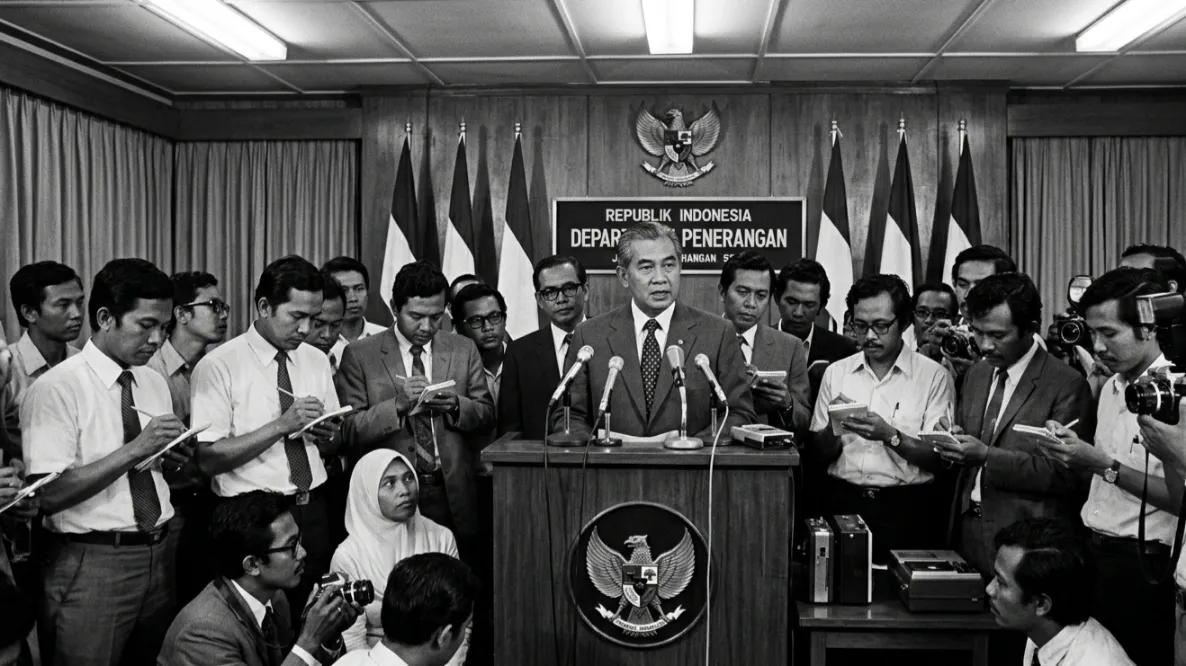
Indonesia’s presidential spokesperson came forward and confirmed that he had personally heard the sounds coming from Zohra’s womb. The state had effectively put its credibility behind her claim.
As a result, the story didn’t stay local for long.
News of the “miraculous unborn child” spread rapidly across the Muslim world. The New York Times covered the story on October 31, 1970, reporting that Zohra had claimed her child would remain in the womb for two full years before being born in Mecca.
Two years. In the womb. Reciting scripture.

A World Tour Funded by Faith
With presidential backing and international media attention, Zohra and her husband began traveling. The couple visited several countries, including:
- Japan
- Malaysia
- Germany
- Pakistan
Everywhere they went, crowds gathered. Believers lined up for a chance to press their ear to her stomach and hear the recitation for themselves. Many of them came away convinced.

Meanwhile, Zohra maintained a carefully crafted defense against any accusation of exploitation. She claimed the child itself had forbidden her from accepting money from anyone.
It was a brilliant move. Because she never directly profited in an obvious way, the charge of fraud was harder to make stick.
Pakistan: Where Scholars Led the Prayers Behind Her
Of all the countries Zohra visited, Pakistan may have produced the most remarkable scenes.
It was 1970. General Yahya Khan’s martial law was in force. Political activity was banned. The country was tense and spiritually restless, with elections on the horizon and uncertainty in the air.
Into this atmosphere walked Zohra Fona.
Senior Pakistani journalist Aslam Malik later described what happened:
“Every person was restless to hear the child’s recitation. Zohra Fona led prayers at several locations, and scholars — along with ordinary Muslims — prayed behind her. When she came to the Badshahi Mosque in Lahore, there was not an inch of space left.”
Read that again. Scholars led — or joined — congregational prayers behind a woman who claimed her womb contained a speaking miracle.

The Badshahi Mosque in Lahore, one of the largest mosques in the world, was packed to capacity.
For nineteen months, this continued.

The First Cracks
Not everyone was convinced.
Some Pakistani doctors quietly expressed skepticism. A few journalists asked uncomfortable questions. And in Indonesia, a medical team formally requested the right to examine Zohra.

She refused.
Her reason? The miraculous child inside her had forbidden any examination.
It was the same pattern as before — every challenge was deflected back through the child’s supposed supernatural authority. You couldn’t question her without implicitly questioning the miracle itself.
However, the refusal to allow any medical examination began to raise eyebrows. And eventually, the questions became too loud to ignore.
Mukhtar Mai: The Woman Who Refused to Be Silenced
The Arrest — and What They Found
Zohra eventually tried to disappear.
She changed her name and, accompanied by her nephew, attempted to board a flight. She was tracked down and arrested at the home of a village headman in Gambut.
When authorities examined her body, the fraud unraveled in seconds.
Beneath her clothing, tied tightly against her abdomen with rope, was a towel. Hidden within it — or concealed on her body — was a tape recorder.
Model number: EL 3302/OOG No. 189984.
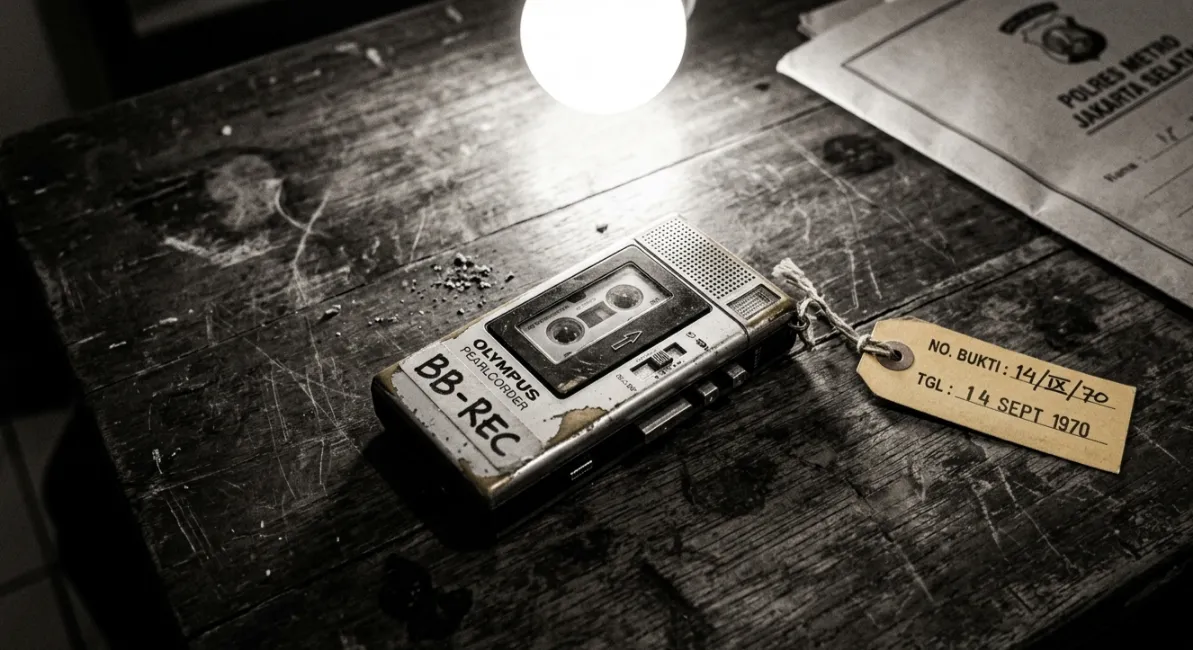
Inside the device was a cassette tape. On it: recordings of the adhan, Quranic recitation, and — crucially — the sound of a crying baby.
Everything that crowds had pressed their ears against her stomach to hear had come from that small machine, strapped to her body, played on a loop.
(Source: Harian Pos Kota, September 15, 1970)
Why Did So Many People Believe Her?
This is the question that lingers long after the fraud is exposed.
Zohra Fona wasn’t a sophisticated con artist with elaborate props and a trained team. She had a tape recorder and a towel. And yet she fooled presidential spokespersons, international journalists, religious scholars, and hundreds of thousands of ordinary believers across multiple continents.

A few factors made this possible.
Desire shaped perception. Many people wanted this to be true. The idea of a child reciting the Quran in the womb touched something deep — a longing for the miraculous in a world that felt increasingly chaotic.
Social proof accelerated belief. Once the Indonesian presidential office confirmed the sounds, skepticism became an act of impiety for many. If officials believed it, ordinary people felt permission to believe too.
The refusal to be examined felt righteous. In a religious context, demanding a physical examination of a claimed miracle can feel disrespectful. Her refusals were read as modesty and deference to the divine — not evasion.
The political vacuum in Pakistan played a role. With public life suppressed under martial law, a spiritual spectacle filled a psychological gap. People were hungry for something to gather around.
The Legacy of Zohra Fona
The Zohra Fona case remains one of the most striking examples of mass religious credulity in the twentieth century — not because the people who believed were foolish, but because of how powerfully human psychology, social dynamics, and spiritual longing can override critical thinking.
She was caught. The tape recorder was real. The miracle was not.
But for nineteen months, from village homes in Indonesia to the grand steps of the Badshahi Mosque in Lahore, an ordinary woman with a hidden cassette player made the world believe a baby was praying in her womb.
The Zohra Fona hoax is a reminder that extraordinary claims — no matter how sincerely believed or widely endorsed — still demand extraordinary evidence.