

Mountains of Bison Skulls and the Hidden War on Native Americans
In the 1870s, the U.S. government and military supported the mass slaughter of American bison to weaken Native American tribes. This systematic destruction targeted the primary resource for Plains nations, including the Lakota and Comanche. Consequently, bison populations plummeted from millions to just a few hundred animals.
The slaughter functioned as ecological warfare, using engineered starvation to force Indigenous communities onto reservations. By destroying the foundation of their survival, officials broke tribal resistance without relying solely on battlefield combat. Today, the decimated herds and cultural impact remain as evidence of this calculated conquest strategy.
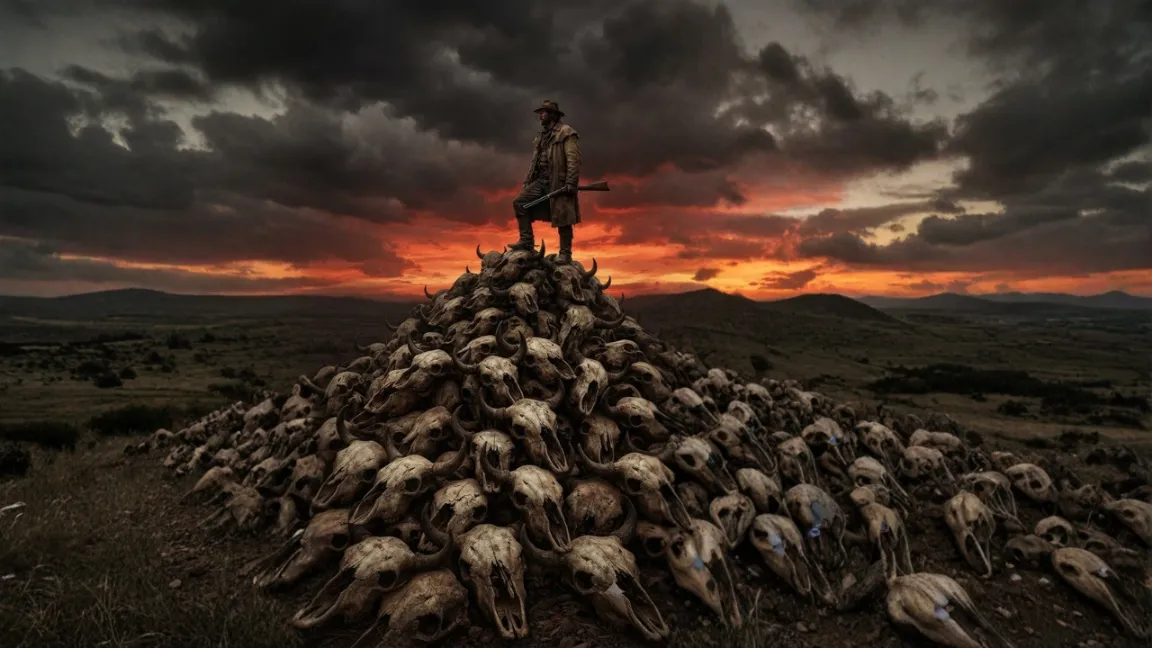
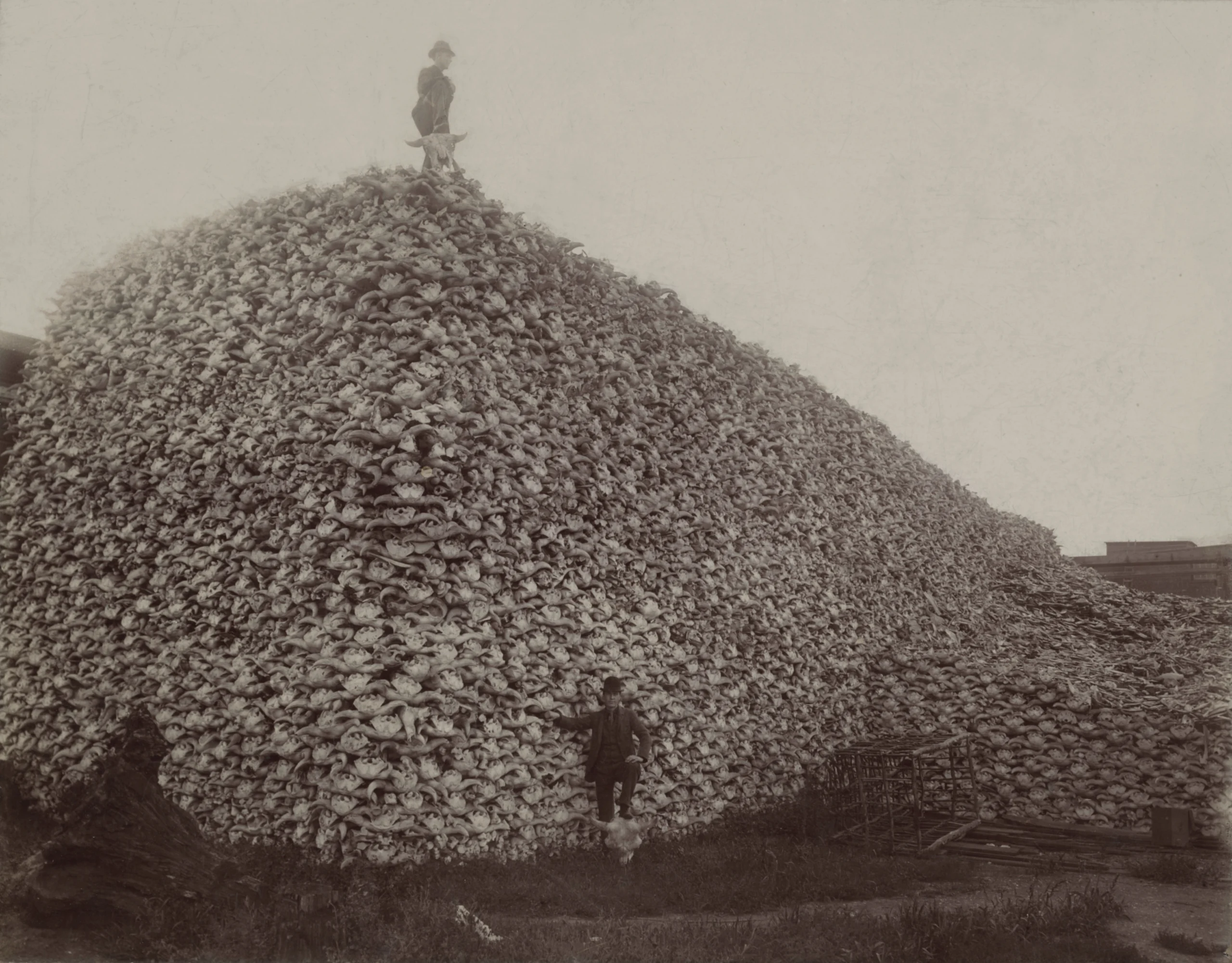
A black-and-white photograph from 1870 shows something almost incomprehensible. A man stands atop a mountain of bison skulls so vast it dwarfs the building behind it.
Thousands upon thousands of skulls, stacked like firewood, waiting to be ground into fertilizer or bone china.
At first glance, it looks like the byproduct of a hungry, expanding nation. But the truth is far darker. This wasn’t about feeding people. It was about starving them.
A Nation That Already Had Plenty of Meat
Here’s what makes this image so unsettling. America in the 1870s wasn’t short on food.
Livestock production was booming. Millions of cattle grazed across endless pastures, with no shortage of water or grazing land in sight.
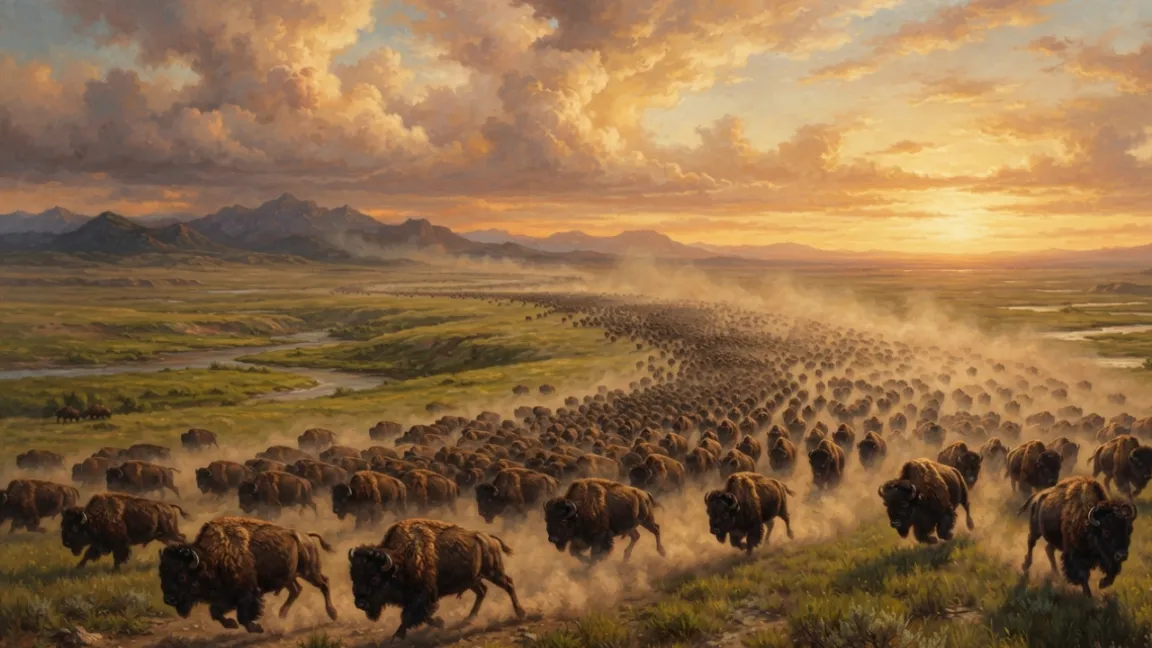
So why slaughter millions of wild bison and leave their bodies to rot on the plains? The meat wasn’t the point. Something else was.
The Real Target Wasn’t the Bison
The mass killing of American bison was a calculated weapon aimed at an entirely different target: the Native American tribes of the Great Plains.
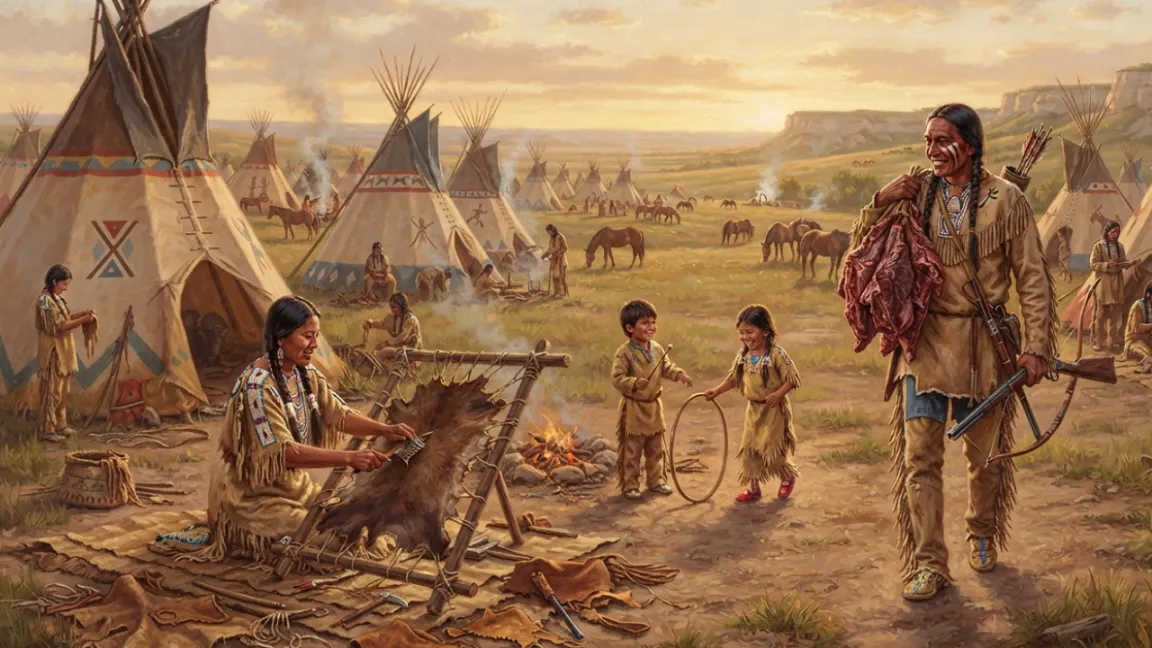
For Plains tribes like the Lakota, Comanche, and Cheyenne, the bison wasn’t just an animal. It was the foundation of survival itself.
Bison meat fed entire communities. Hides became shelter and clothing. Bones were turned into tools. Nothing went to waste. As a result, an entire way of life depended on this one animal.
U.S. military and government officials understood this completely. And that understanding became their strategy.

A Campaign Disguised as Hunting
This wasn’t random overhunting by careless settlers. It became official policy, openly encouraged and even celebrated.
Army officers reportedly urged hunters to kill as many bison as possible. The logic was brutally simple: no bison meant no food, and no food meant no resistance.
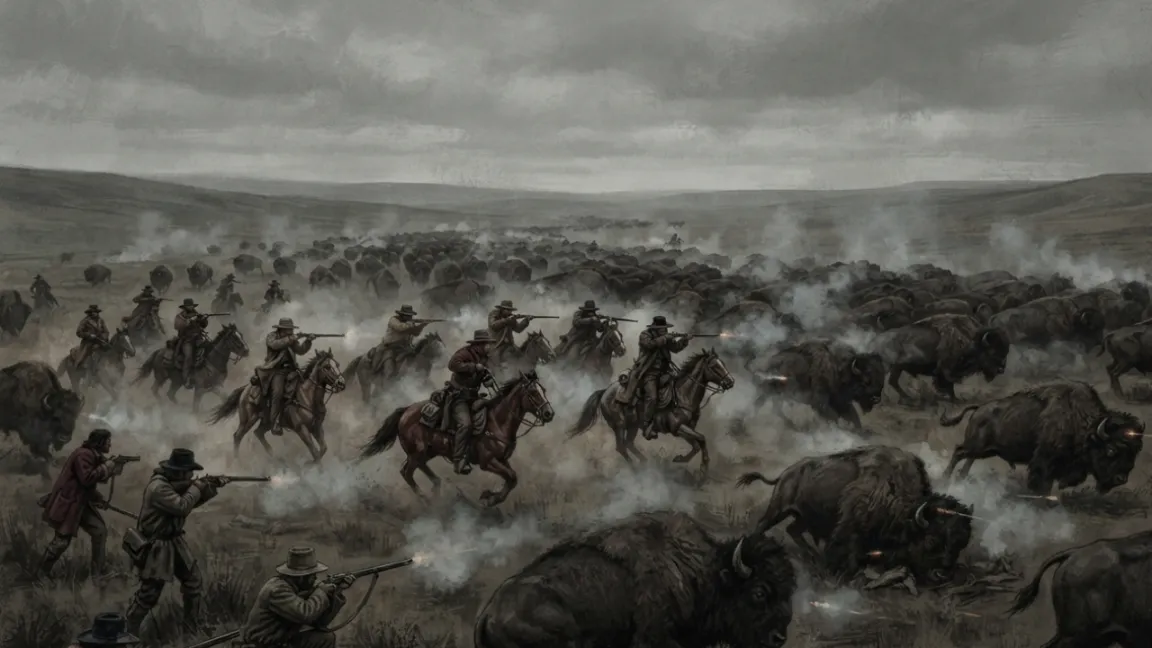
Professional hunters, soldiers, and railroad companies all took part. Trains sometimes stopped so passengers could shoot bison for sport, leaving carcasses to rot where they fell.
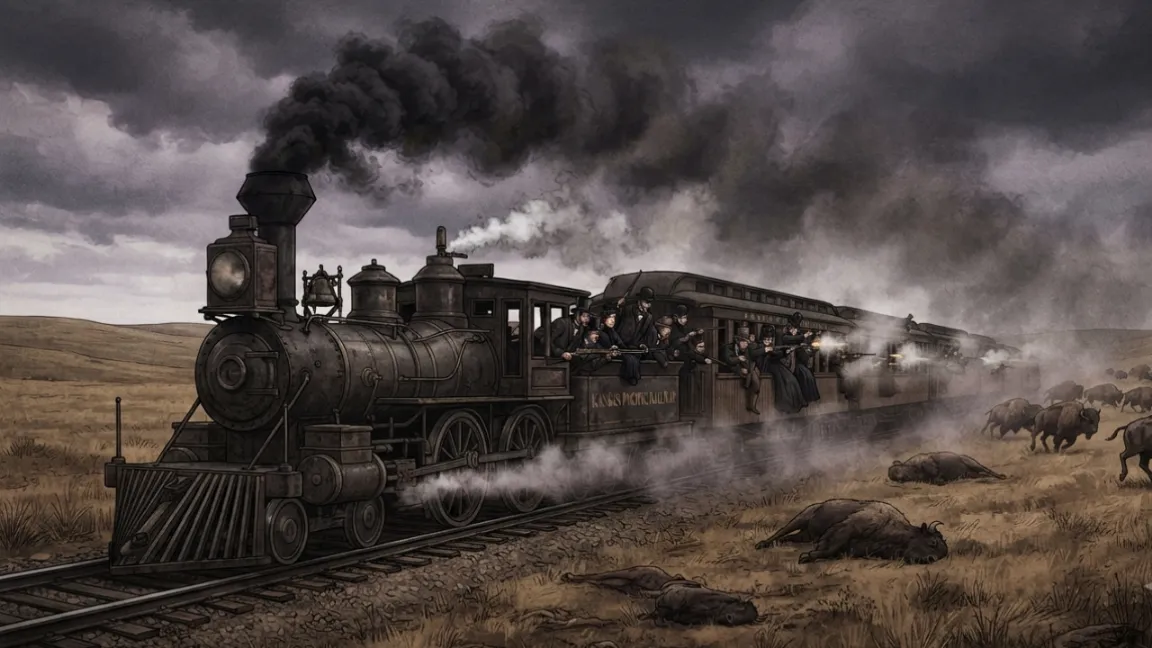
Because of this systematic destruction, bison populations collapsed from an estimated 30 million animals to just a few hundred by the late 1800s.
Starvation as a Weapon of War
Once the herds vanished, the consequences for Native nations were immediate and devastating.
Without bison, traditional food sources disappeared almost overnight. Hunger spread across the Plains, weakening entire tribes both physically and economically.
Eventually, many Native communities found themselves with little choice but to surrender to reservation life, not through military defeat alone, but through engineered starvation.
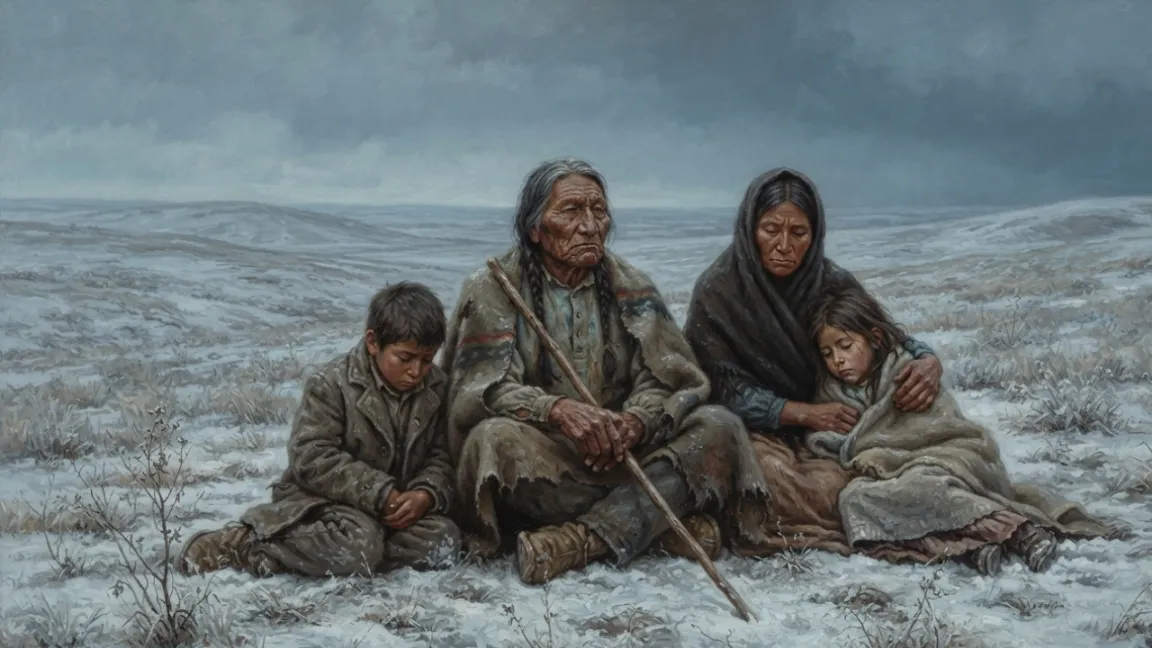
This wasn’t a side effect of westward expansion. For many historians, it stands as one of the clearest examples of ecological warfare used against Indigenous peoples.

What Remains Today
The numbers tell their own grim story. Today, wild bison populations in America remain a tiny fraction of their former size, carefully managed and protected in conservation herds.
Native American populations, too, never fully recovered from the demographic and cultural devastation of this era.
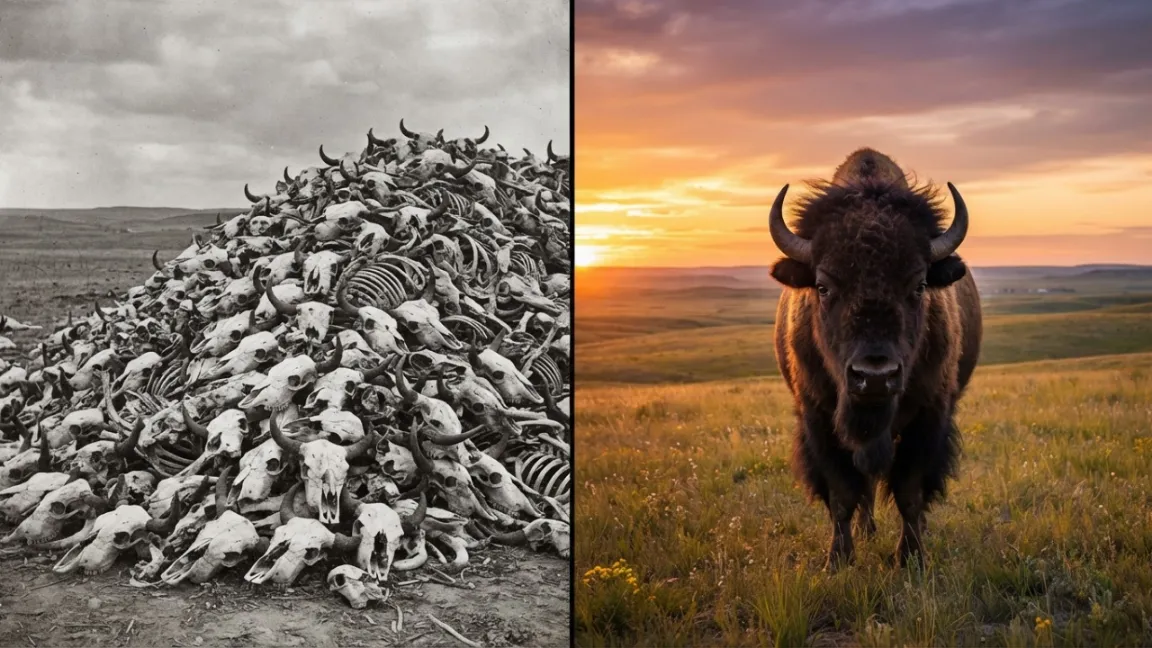
The bison skull pile photograph endures as visual evidence of how mass slaughter became a tool of conquest, hidden behind the language of hunting and industry.
The Massacre at Sea: Vasco da Gama’s Forgotten Crime
A Quiet Genocide Hidden in Plain Sight
The mass killing of American bison wasn’t simply an environmental tragedy. It was a deliberate, calculated strategy designed to destroy Native American tribes by destroying their food source.
Behind those mountains of skulls lies one of history’s most overlooked stories: how a “civilized” nation used starvation as a quiet, effective weapon.
It’s a reminder that some of history’s darkest chapters don’t always involve battlefields. Sometimes, they’re hidden in something as simple as a photograph of bones.