
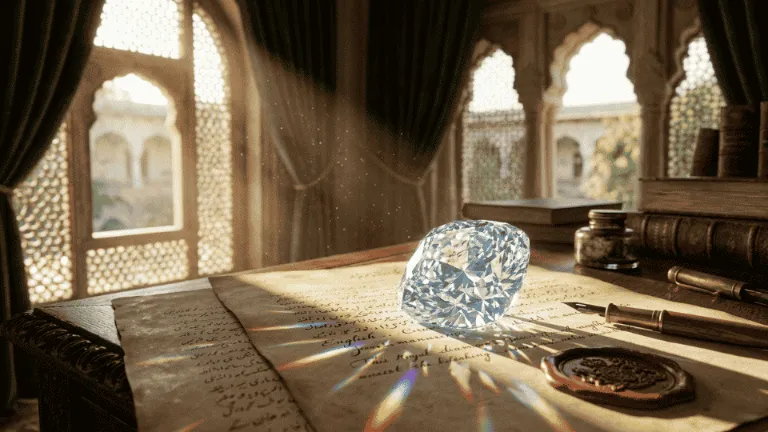
The Jacob Diamond: The Priceless Gem That Sat Forgotten for 37 Years
Imagine finding the world’s fifth-largest diamond — and caring so little about it that you use it to hold down papers on your desk.
That is exactly what happened in Hyderabad, India, in 1912.
This is the true story of the Jacob Diamond, one of the most extraordinary gemstones in human history, and the man who treated it like an ordinary paperweight.
Who Was Mir Osman Ali Khan?
Before we talk about the diamond, you need to understand the man.
Mir Osman Ali Khan, also known as Asaf Jah VII, ruled as the Nizam of Hyderabad from 1911 until 1948. He was not just any ruler. At the peak of his reign, Time magazine declared him the richest man in the world.
His wealth was almost impossible to comprehend. He owned palaces, fleets of cars, mountains of gold, and jewels that would make kings jealous. His treasury held gems worth billions. His personal fortune reportedly stood at around $2 billion in mid-20th-century terms — equivalent to hundreds of billions today.
So when a remarkable diamond came his way, it is not surprising that he barely noticed.
A Diamond Hidden in an Old Shoe
The year was 1912.
While sorting through the personal belongings of his late father, Mahbub Ali Khan, Mir Osman Ali made a startling discovery.
Tucked inside a pair of old shoes was a sparkling, magnificent diamond.
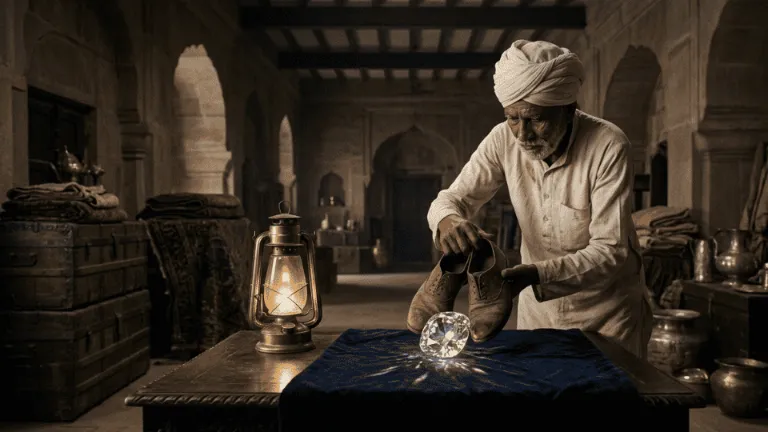
This was no ordinary gemstone. It was the Jacob Diamond — a flawless, pale blue-white diamond weighing an astonishing 184.75 carats. To put that into perspective, most engagement rings today feature diamonds of less than one carat.
However, to the fabulously wealthy Nizam, this discovery did not feel extraordinary. Unimaginable riches already surrounded him. As a result, he picked up the diamond, walked to his desk, and set it down.
There it stayed — not in a vault, not in a museum — but sitting on his desk like a paperweight for the next 37 years.
What Exactly Is the Jacob Diamond?
The Jacob Diamond has a fascinating history that stretches back long before it arrived in Hyderabad.
Origins and Discovery
The diamond is believed to have originated from the famous Golconda mines in India — the same legendary source that produced the Hope Diamond and the Koh-i-Noor. Golconda diamonds are prized worldwide for their exceptional clarity and brilliance.
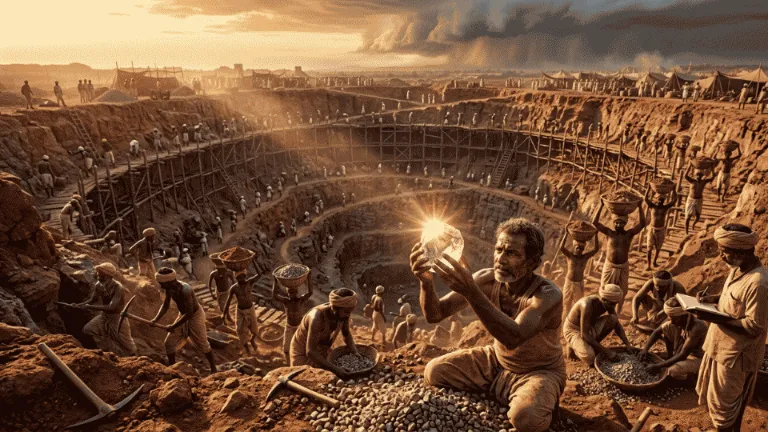
The stone eventually made its way to Europe, where it passed through the hands of royalty and traders alike.
How It Got Its Name
The diamond takes its name from Alexander Malcolm Jacob, a colorful Anglo-Indian jeweler and dealer based in Simla, India. In the 1890s, Jacob attempted to sell the diamond to Mahbub Ali Khan, the then-Nizam of Hyderabad and father of Mir Osman Ali.
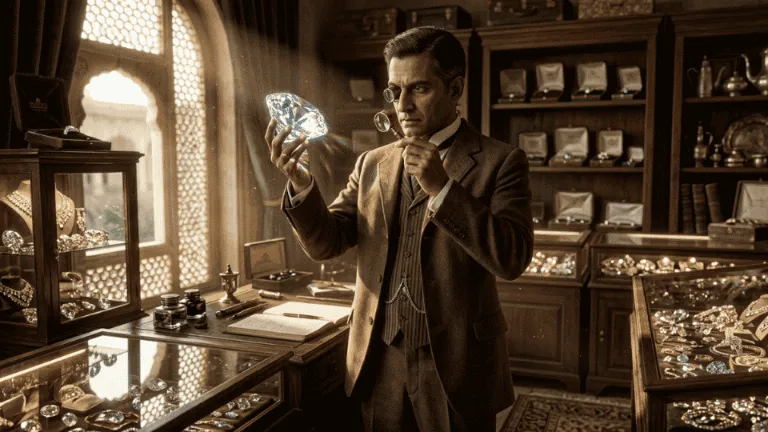
The deal, however, turned into one of the most dramatic legal battles in Indian history.
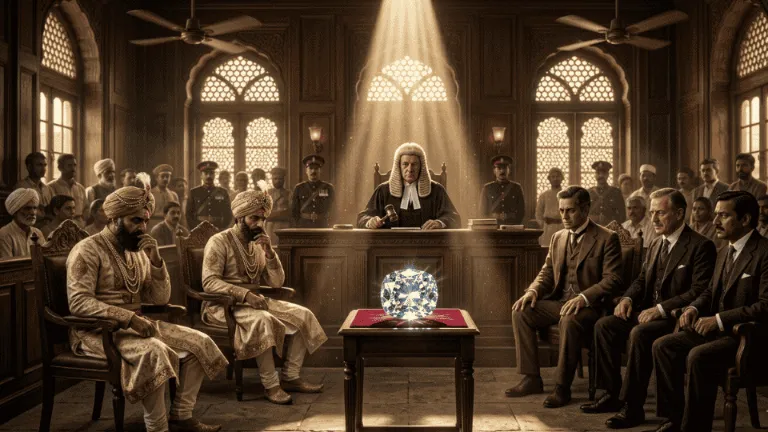
Mahbub Ali Khan purchased the diamond for approximately £46,000 — a colossal sum at the time. Meanwhile, Jacob delivered the gem, expecting full payment. When disputes arose over the transaction, the case landed in court.
Eventually, the Nizam won the legal battle, and the diamond officially entered the royal treasury of Hyderabad.
37 Years as a Paperweight
Here is where the story becomes almost unbelievable.
After Mir Osman Ali discovered the diamond in his father’s old shoes in 1912, he carried it to his royal study. He placed it on his writing desk. And for the next 37 years, this world-class gemstone gathered dust alongside ink pots and official documents.
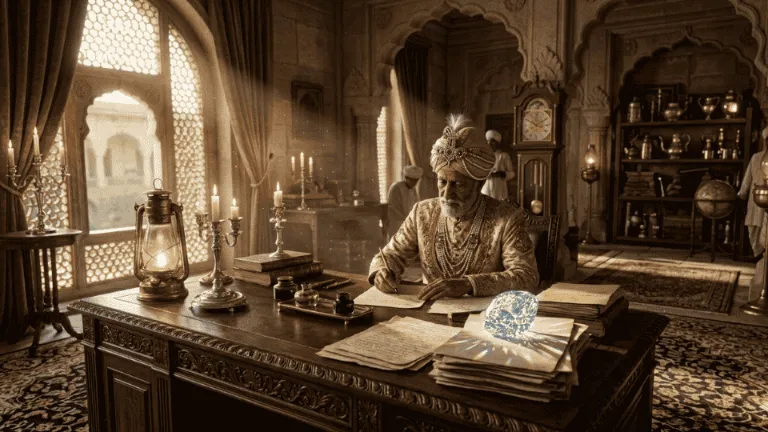
Visitors to the Nizam’s study reportedly saw it sitting there — a massive, glittering stone that they may have mistaken for decorative glass.
Because of this casual treatment, many historians believe the Nizam genuinely had no idea — or simply did not care — about the stone’s extraordinary value. When you own everything, nothing feels precious.
In addition, the sheer size of the diamond may have made it seem almost unreal. At 184.75 carats, it was more like a glass ornament than something a person could wear or display meaningfully in a traditional setting.
A Gem With Record-Breaking Status
The Jacob Diamond holds several remarkable distinctions:
- It ranks as one of the five largest diamonds ever discovered in the world
- It is classified as a Type IIa diamond — the purest and rarest category of diamond, with almost no chemical impurities
- Its color is described as white to pale blue, giving it an extraordinary, almost ethereal glow
- It measures roughly 48 mm × 45 mm × 29 mm in size — about the size of a large walnut
For example, the famous Cullinan Diamond (the largest rough gem-quality diamond ever found) produced multiple large stones. The Jacob Diamond, however, remains exceptional because it was never cut down — it survived intact as a single massive gem.
What Happened to the Jacob Diamond After 1948?
The story does not end with Mir Osman Ali’s desk.
In 1948, Hyderabad was integrated into the Republic of India following military action by the Indian government — a process known as the Police Action. The Nizam’s political power came to an end.
Afterward, Jacob Diamond’s ownership became a subject of significant dispute.
The gem remained in the possession of the Nizam’s estate for decades. However, in 1995, the Government of India officially acquired the Jacob Diamond from the Nizam’s family through a negotiated purchase for approximately ₹30 crore (roughly $10 million at the time).
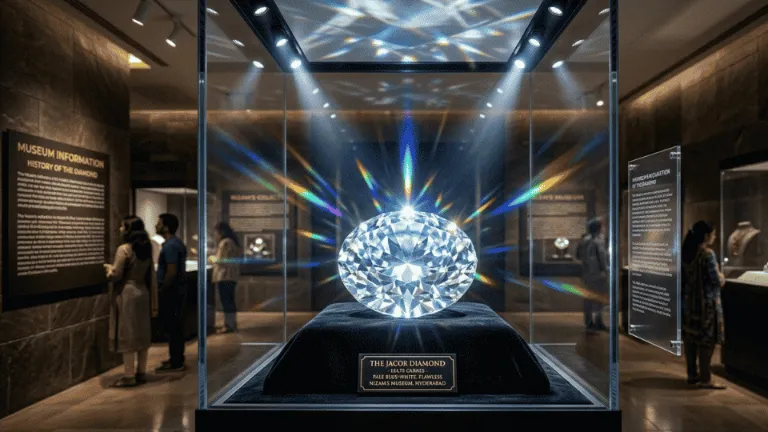
Today, the Jacob Diamond is part of the government collection and is on public display at the Nizam’s Museum in Hyderabad, where visitors can see this legendary stone in person.
Why This Story Still Captivates Us
The story of the Jacob Diamond resonates with people across generations — not just because of the gem’s staggering value, but because of what it reveals about human perception of wealth.
Mir Osman Ali Khan was so extraordinarily rich that a stone worth millions meant nothing to him. He did not lock it away in fear. He did not show it off in pride. He set it on his desk and went about his day.
Meanwhile, ordinary people around the world would have considered that single diamond a life-changing fortune.
There is something deeply thought-provoking about that contrast.
The Jacob Diamond Today
If you ever visit Hyderabad, the Jacob Diamond is absolutely worth seeing.
Housed in the Nizam’s Museum in Purani Haveli, the diamond sits in a secure display — finally receiving the attention and protection it deserves.
However, perhaps its most compelling display ever was not in any museum. It was on a wooden desk, in a royal study, sitting quietly beside a fountain pen and a stack of papers — completely ignored by the richest man in the world.
Conclusion: A Diamond That Defied Its Own Worth
The Jacob Diamond is more than a gemstone. It is a window into one of the most fascinating periods of Indian royal history.
From its origins in the ancient Golconda mines, to the courtroom drama of the 1890s, to 37 silent years on the Nizam’s desk — this diamond has lived a life more dramatic than most novels.
Today, it stands as a symbol of Hyderabad’s extraordinary heritage and a reminder that true rarity is often left unrecognized by those who possess too much to notice.
If you found the Jacob Diamond in an old shoe, what would you do with it?