
The Nakba: How 800,000 Palestinians Lost Their Homes in 1948
The Nakba refers to the 1948 displacement of over 800,000 Palestinians during the founding of Israel. This event followed decades of British administrative policies, including the Balfour Declaration and the British Mandate. These frameworks facilitated demographic shifts and the eventual creation of a Jewish national home in Palestine.
Tensions escalated into systematic military operations as British forces withdrew. Zionist militias, supported by previous military training, seized control of most Palestinian land and destroyed hundreds of villages. The resulting humanitarian crisis remains a central conflict in the Middle East, with millions of descendants living in refugee camps.
On May 15, 1948, a catastrophe unfolded that would reshape the Middle East forever.
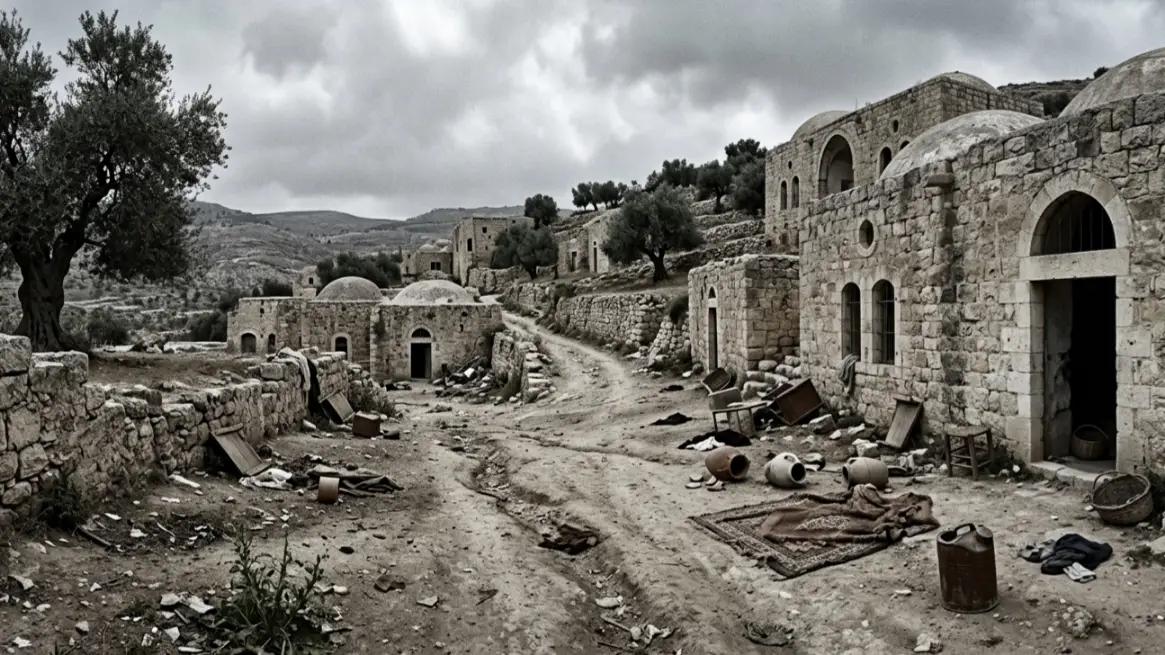
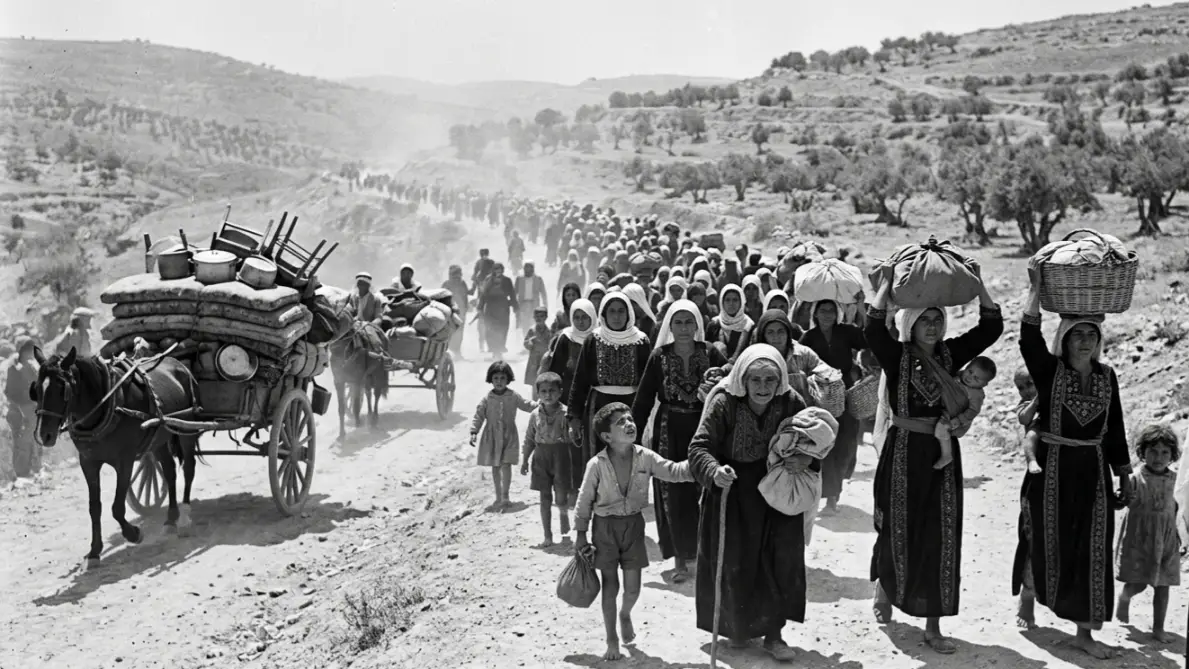
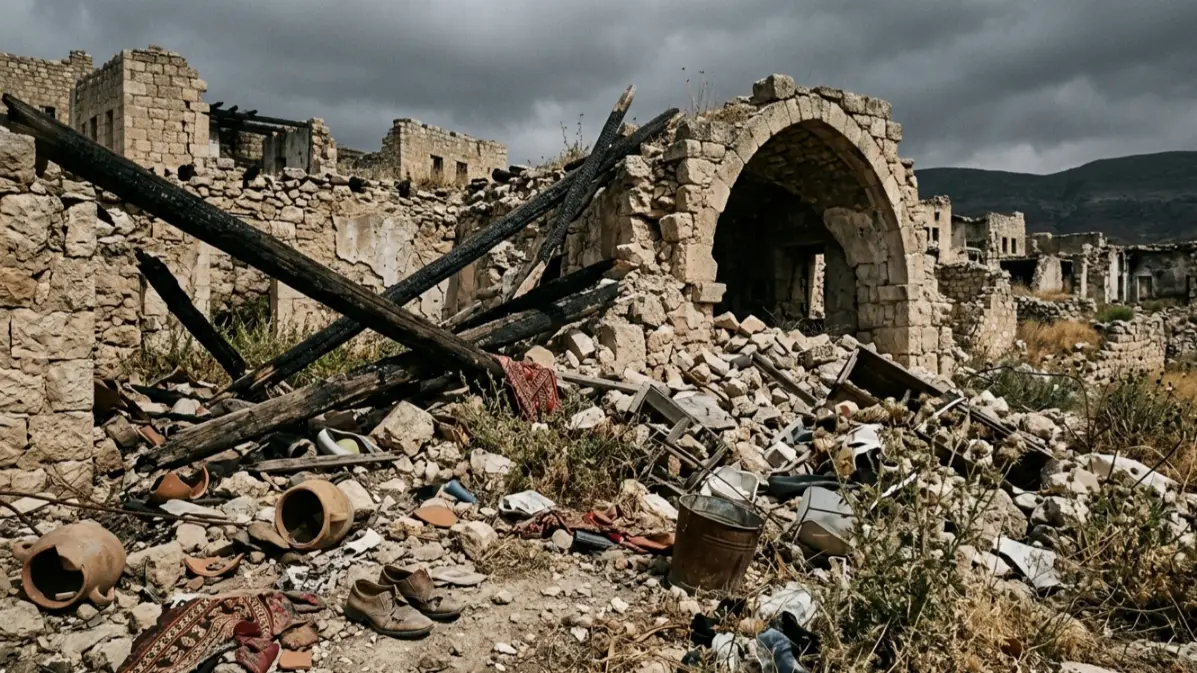
In a single year, more than 800,000 people were driven from their homes. Entire villages vanished from the map. Families fled under gunfire, leaving behind everything they had ever known.
The world called it Israel’s founding. Palestinians called it the Nakba — the Catastrophe.
But how did it happen? And what series of decisions, agreements, and acts of violence led to one of the twentieth century’s most devastating displacements?
The story begins not in 1948, but decades earlier — in the corridors of European power.
A Secret Deal That Changed Everything
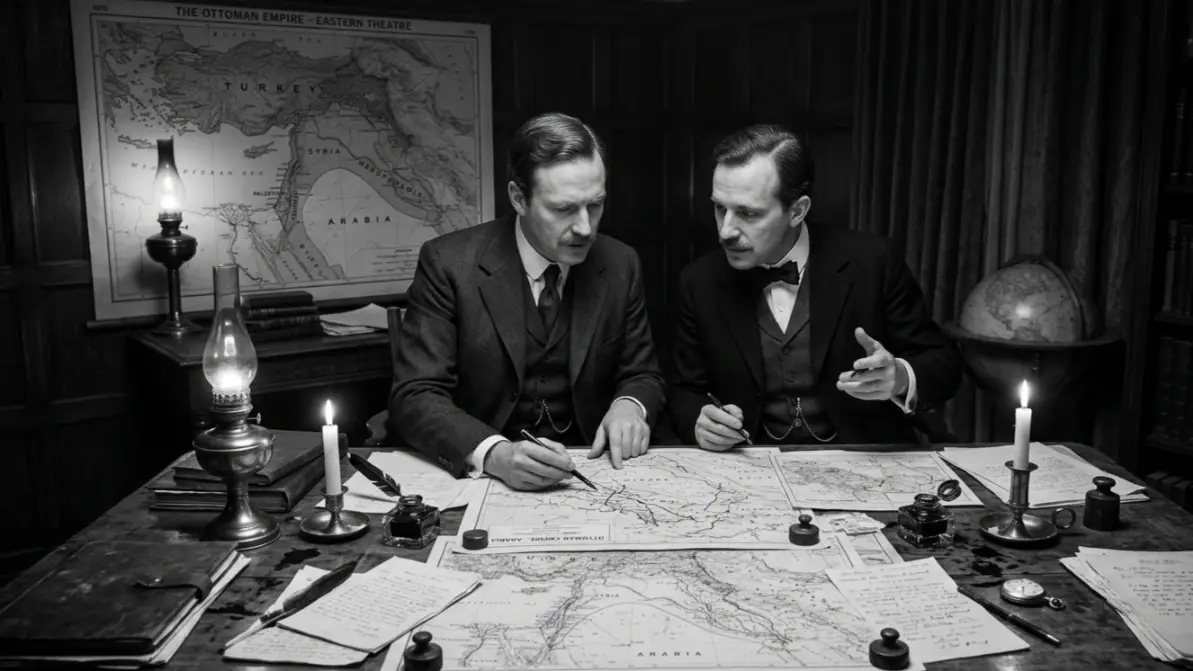
While World War I was still raging, two diplomats sat down to divide a region that was not theirs to divide.
On May 16, 1916, British and French representatives signed the Sykes-Picot Agreement — a secret pact that carved up the Middle East into spheres of influence. The Ottoman Empire had not yet fallen, but Britain and France were already planning what would come after.
Palestine was placed under British control.
This agreement set the stage for everything that followed. Within it lay the seeds of the Balfour Declaration — Britain’s promise to support a Jewish homeland in Palestine.
The British Mandate and the Birth of Modern Palestine
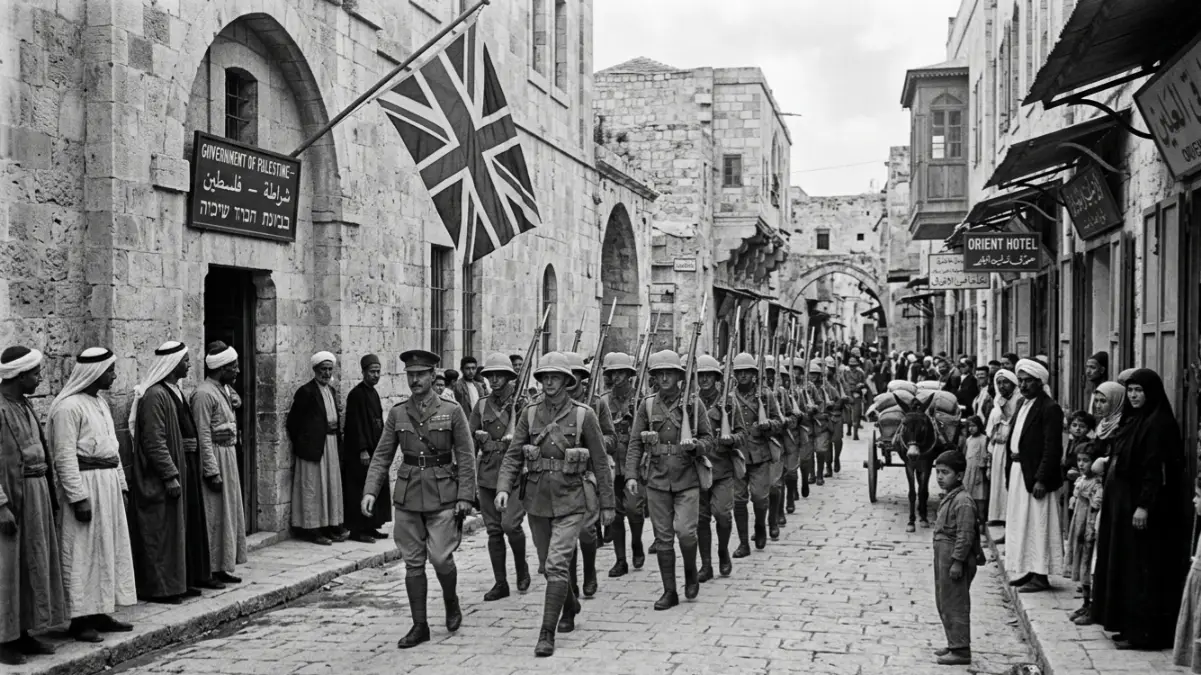
When General Edmund Allenby’s forces entered Jerusalem on December 9, 1917, the Balfour Declaration mandate went into immediate effect.
At the San Remo Conference in April 1920, the Allied powers formally declared Palestine an independent country. By August 10, 1920, the Treaty of Sèvres compelled Turkey to recognize this new reality.
On September 11, 1922, the League of Nations officially approved the establishment of Palestine and placed it under British administration.
The mandate document laid out its terms plainly. Article 2 assigned Britain the responsibility of creating conditions in Palestine that would support the establishment of a Jewish national home. Article 4 recognized the World Zionist Organization as an official public body, empowered to advise and work with the British administration on all issues related to Jewish settlement.
Article 22, which designated English, Arabic, and Hebrew as the three official languages of Palestine, mandated that any Arabic inscriptions on stamps or currency be duplicated in Hebrew.
The legal framework for displacement had been quietly constructed.
Jewish Immigration: Slower Than Expected
Britain launched aggressive promotional campaigns worldwide to encourage Jewish immigration to Palestine. Incentives were offered. Major Jewish figures lent their names to the effort.
Yet the response was underwhelming.
According to the League of Nations and British administrative records, only 33,304 Jewish immigrants arrived in Palestine between 1920 and 1945 — from Europe, Asia, Africa, and the Americas combined.
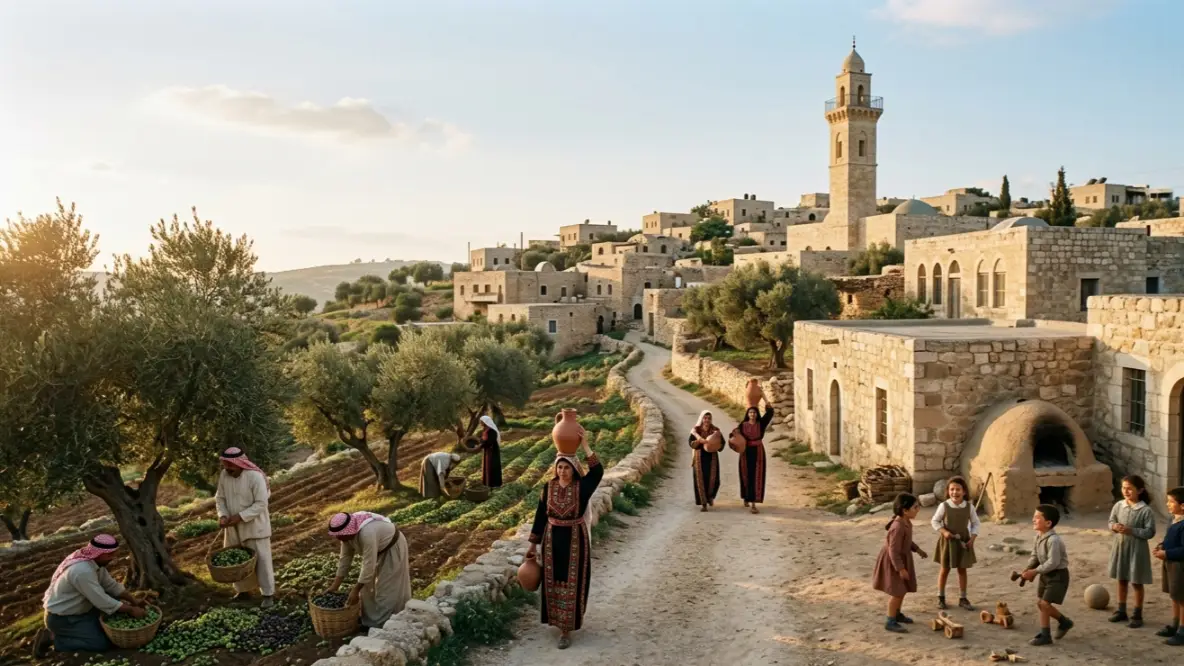
By the end of 1945, Jews represented only 16% of Palestine’s total population and owned just 3% of its land.
The demographic shift Britain had hoped to engineer had not materialized — at least not yet.
The Spark That Ignited the Conflict
On November 20, 1935, British forces killed Sheikh Izz ad-Din al-Qassam — a Syrian resistance leader — near Haifa. The Muslim population of Palestine erupted in grief and fury.
Zionist organizations responded by holding pro-British demonstrations, making inflammatory speeches that further inflamed tensions. For the first time, serious Muslim-Jewish clashes broke out in Palestine.
Britain used these clashes as justification to arm Jewish groups.
With British support and training, Zionist militias — including the Stern Gang and the Irgun — expanded rapidly across the region. According to the British administration’s own Royal Peel Commission, between 1936 and 1937 alone, attacks by Jewish militant groups killed 5,000 Palestinian Arabs and wounded 10,000 more.
World War II and the Arming of the Jewish Brigade
As World War II consumed Europe, Jewish immigration to Palestine accelerated dramatically — both legally and illegally.
Between 1939 and 1945, approximately 60,000 undocumented Jewish immigrants entered Palestine. An additional 100,000 were brought in by Allied forces as refugees.
Meanwhile, in 1939, Britain temporarily banned further Jewish immigration in an attempt to calm Arab anger in Egypt and Iraq, nations where British interests were threatened. Zionist organizations responded by declaring a rebellion against British administration, announcing they would target Muslim civilians, their families, and their property.
Thousands of Muslim Palestinians were killed between 1939 and 1945 as a result. British authorities made no serious effort to intervene.
Then came a pivotal moment.
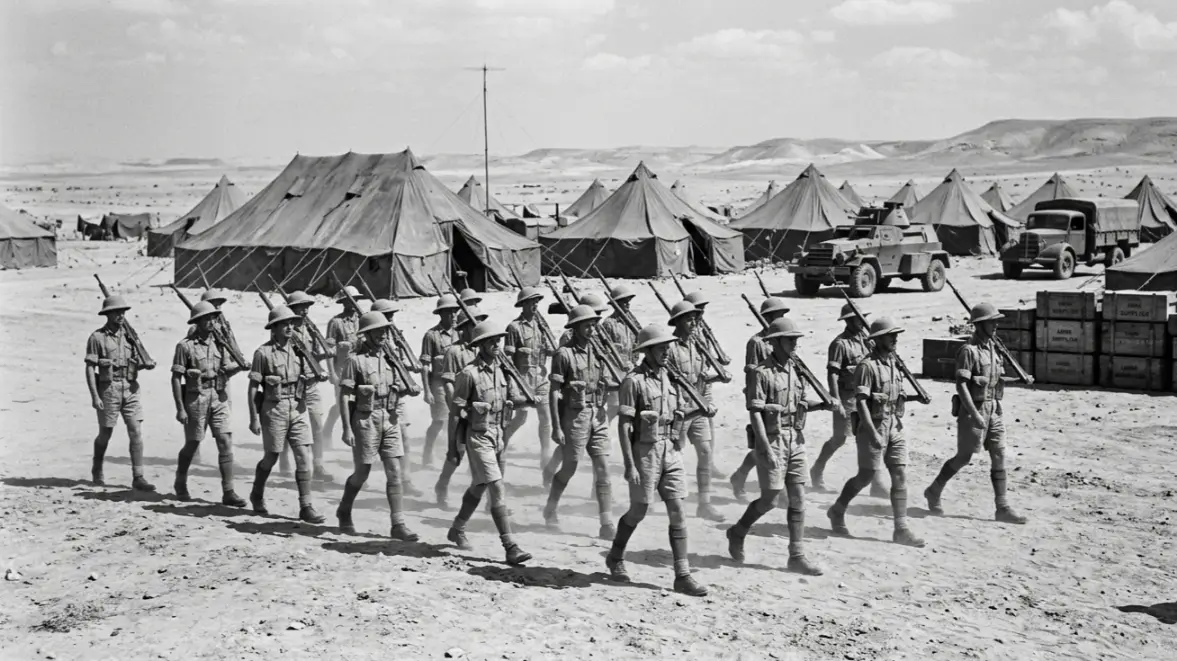
On July 3, 1944, Britain announced the formation of the Jewish Brigade within the Allied forces. Jewish men who pledged non-involvement in terrorism were recruited, given elite military training, and equipped with the most advanced weapons of the era.
Britain had, in effect, built an army for the Zionist movement.
Jordan Is Cut Away — and the Numbers Shift
In 1946, Britain separated a large section of Palestinian territory — one with no Jewish settlements and a dense Muslim population — and created the Kingdom of Jordan, handing it to the Hashemite family as a reward for their role in the Arab Revolt against the Ottomans.
The consequences were immediate and stark.
With Jordan carved out, the Jewish population’s share within the remaining Palestinian territory jumped from 16% to over 30%. The demographic balance had been artificially redrawn.
Muslim protests and strikes followed. In response, Zionist violence intensified — and the Jewish Brigade increasingly participated alongside militant organizations.
By February 1947, citing deteriorating conditions, the British Cabinet voted to withdraw from Palestine entirely and hand the matter to the United Nations.
In April 1948, as British forces prepared to leave Haifa, the commander of the Northern Sector, Major General Hugh Stockwell, transferred weapons, military installations, and equipment directly to the Jewish Brigade.
Operation: Nakba
What followed was systematic and deliberate.
The moment British withdrawal began, Zionist forces launched mass operations against the Muslim population. Israeli founding father and future Prime Minister David Ben-Gurion issued a stark public statement: Palestinian Muslims could become a “fifth column” — and therefore needed to be expelled on a massive scale.
Mordechai Maklef, commander of the Jewish Brigade and later Israel’s first Chief of Staff, launched an ethnic cleansing campaign in Haifa. His written orders to troops were chillingly direct: “Kill any Arab you encounter. Burn all flammable objects with explosives.“
The campaign was code-named “Operation Cancer.”
Zionist militias — the Haganah, Palmach, and Irgun — joined the Brigade in targeting city after city.
Tiberias became the first major city to be completely emptied of its Muslim population. Haifa fell next.
How Was Israel Created? The Story Most People Don’t Know
The Massacre at Deir Yassin
In April 1948, Jewish forces descended on the village of Deir Yassin.
Thousands of Muslims from surrounding villages were gathered in one place. Women were assaulted publicly. Children were separated and killed. Men were shot by machine gun fire.
The world only learned of these events decades later, through the published memoirs of a 12-year-old survivor named Fahim Zaidan, who had witnessed everything.
Deir Yassin was not an isolated incident. International organizations — despite their documented sympathy toward Israel — have confirmed 31 large-scale massacres of Palestinian civilians in 1948, each involving the systematic killing of women, children, and elderly people gathered in one place.
The Scale of the Catastrophe
By the end of 1948, the full scale of the Nakba had become undeniable.
- 531 Palestinian villages and towns were destroyed
- 80 major cities were ethnically cleansed of their Muslim populations
- 800,000 Palestinians were forced to flee their homes
- Over 100,000 were killed
- Zionist forces had seized control of more than 80% of Palestinian land
Ben-Gurion’s forces also deployed biological warfare agents — tools developed during World War II — against Palestinian civilian populations. A specialized incendiary weapon was used to burn Palestinian crops and homes.
In one year, a land that had been majority Muslim for centuries was fundamentally transformed.
The Wound That Never Closed
May 15 is now observed every year as Nakba Day — a commemoration of loss, displacement, and survival.
The Nakba of 1948 was not a spontaneous eruption of violence. It was the product of decades of deliberate policy — secret agreements, selective arming, manufactured demographic shifts, and finally, organized military campaigns against a civilian population.
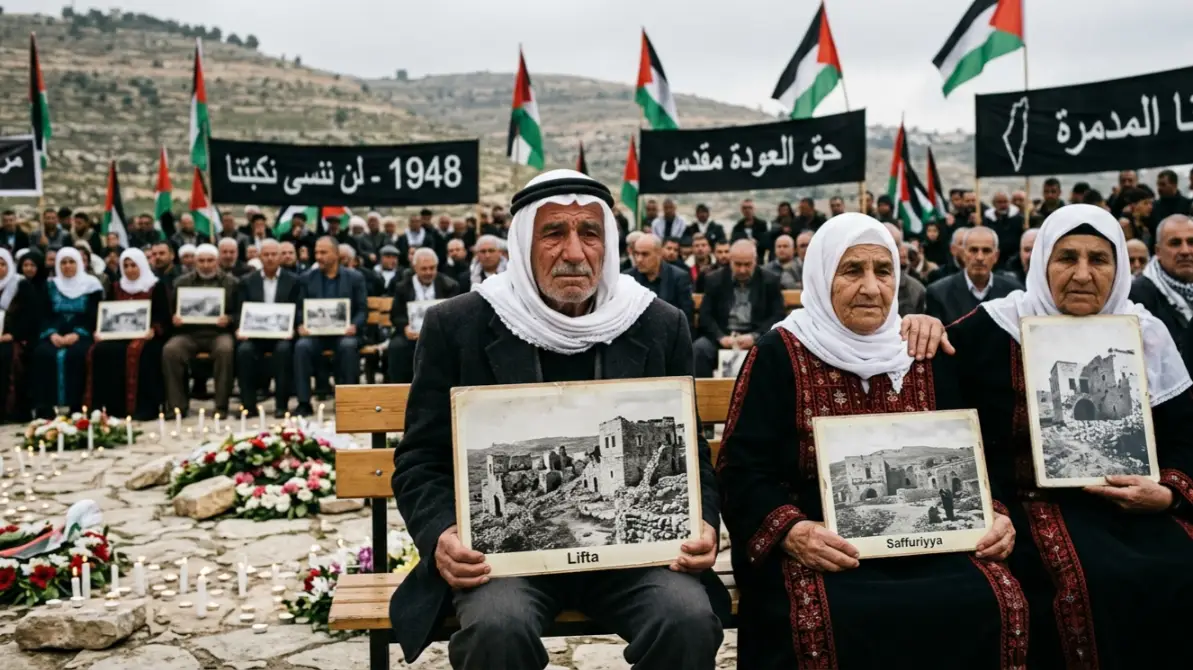
The descendants of those 800,000 displaced Palestinians now number in the millions, scattered across refugee camps in Gaza, the West Bank, Jordan, Lebanon, and beyond.
Seventy-eight years have passed. The catastrophe has never truly ended.