
The Door to Hell: The Fire That Has Been Burning for Over 50 Years
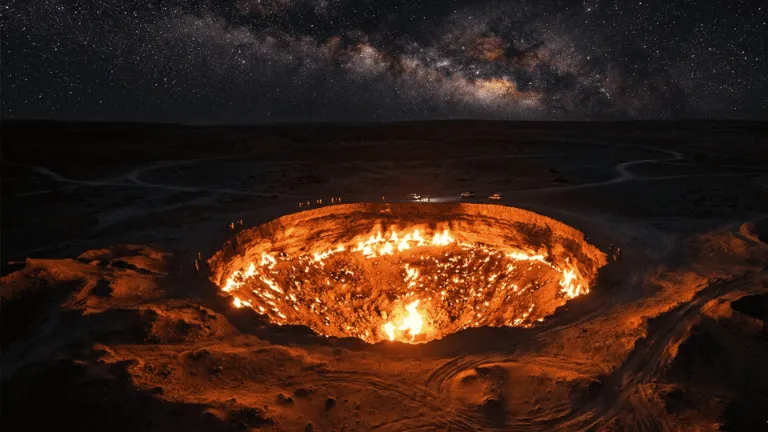
The Darvaza Gas Crater, known as the Door to Hell, is a continuous fire in Turkmenistan’s Karakum Desert. Formed during a 1971 Soviet drilling accident, the crater resulted from a ground collapse. Geologists ignited the escaping methane gas, expecting it to extinguish quickly, but the fire persists today.
The site has evolved from a local environmental hazard into a global tourist destination. Despite its popularity, the Turkmenistan government has repeatedly ordered scientists to find ways to extinguish the flames to preserve natural gas resources. However, the massive underground reservoir continues to fuel the fire after five decades.
Imagine standing in the middle of a dark desert. The ground around you is cold, the sky is black — and then, right in front of you, the earth itself is on fire. Thousands of orange flames pour out of a massive pit in the ground. The heat hits your face. The roar of burning gas fills your ears.
This is not a movie scene. This is real.
Welcome to the Door to Hell — a burning gas crater in Turkmenistan that has been on fire since 1971, with no end in sight.
How It All Started: The 1971 Drilling Accident
The story behind the Door to Hell begins during the Soviet era, deep in the Karakum Desert of Turkmenistan.
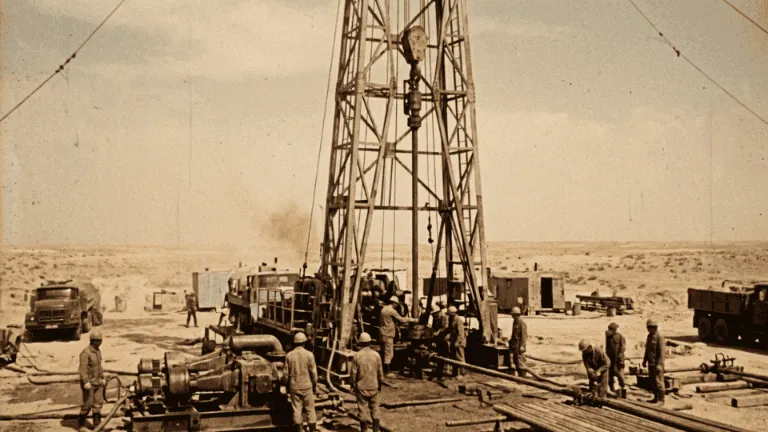
In 1971, Soviet geologists were drilling for natural gas in the area. They believed the region sat atop a rich underground gas field. However, something went terribly wrong during the excavation.
The ground suddenly collapsed beneath the drilling equipment. A massive sinkhole opened up — swallowing the machinery and leaving behind a gaping crater roughly 70 meters wide and 30 meters deep.
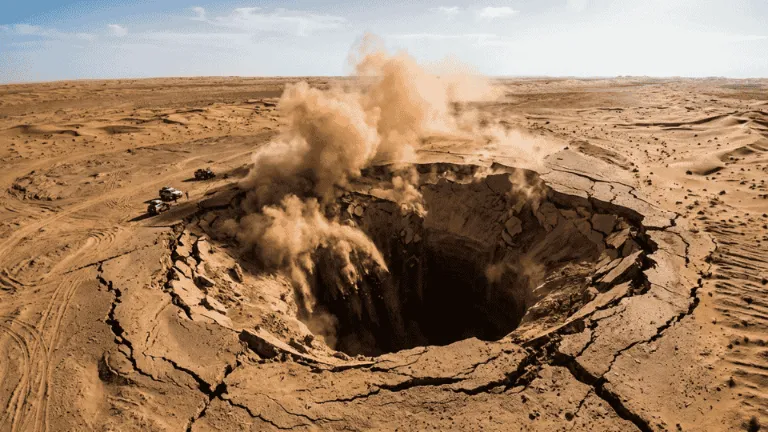
That alone would have been alarming enough. But the real problem had only just begun.
The Methane Problem No One Saw Coming
As the crater formed, dangerous methane gas began pouring out of the ground. This presented a serious environmental risk to the surrounding area and to the workers nearby.
The Soviet scientists quickly came up with what seemed like a smart, simple solution.
Set it on fire.
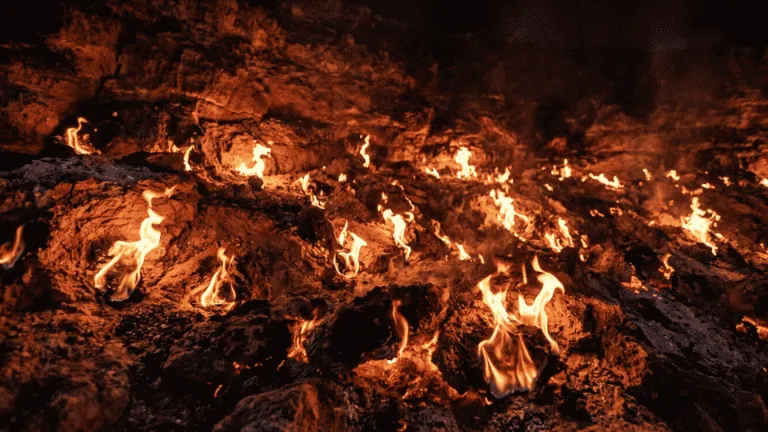
Their thinking made sense at the time. They believed the gas would burn off within a few days — maybe a week at most. Once the methane was gone, the problem would be over.
Meanwhile, they packed up and moved on, confident the fire would die out on its own.
It never did.
50+ Years Later — The Fire Still Burns
That temporary fix is now over five decades old.
The Door to Hell has been burning continuously since 1971, making it one of the longest-burning man-made fires on Earth. The flames show no signs of weakening. In fact, they remain just as fierce today as they were in those first days after the crater was lit.
At night, the sight is almost impossible to describe. Thousands of individual flames dance across the crater floor. The entire desert glows orange for miles around. Travelers approaching from a distance often stop in their tracks, stunned by what they see.
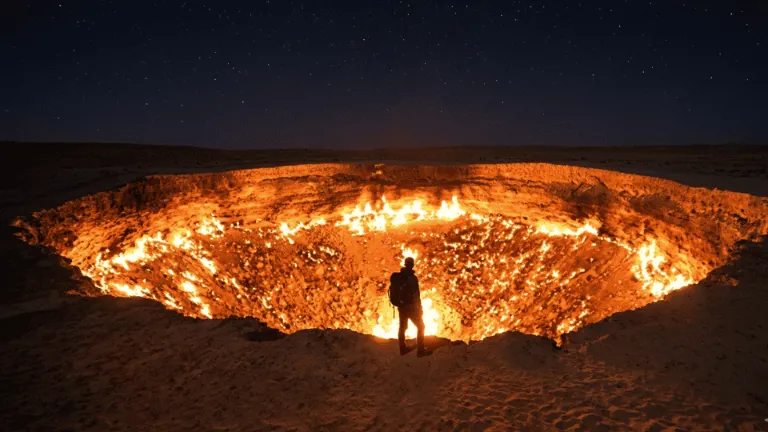
For good reason, locals and explorers started calling it the Door to Hell — and the name has stuck ever since.
What the Door to Hell Looks Like Today
Up close, the crater is both terrifying and mesmerizing. Here are a few key facts that put its scale into perspective:
- Width: Approximately 70 meters (230 feet) across
- Depth: Around 30 meters (98 feet) deep
- Flames: Hundreds to thousands of individual fire vents burning simultaneously
- Glow: Visible from several kilometers away at night
Because of this, the Darvaza Gas Crater — its official name — has become one of the most photographed natural spectacles in Central Asia.
From Feared to Famous: The Tourism Boom
Local people once avoided this place entirely. Many believed it was cursed. Stories spread about evil spirits and strange phenomena near the crater. For years, it was simply a place most people stayed far away from.
Eventually, that changed.
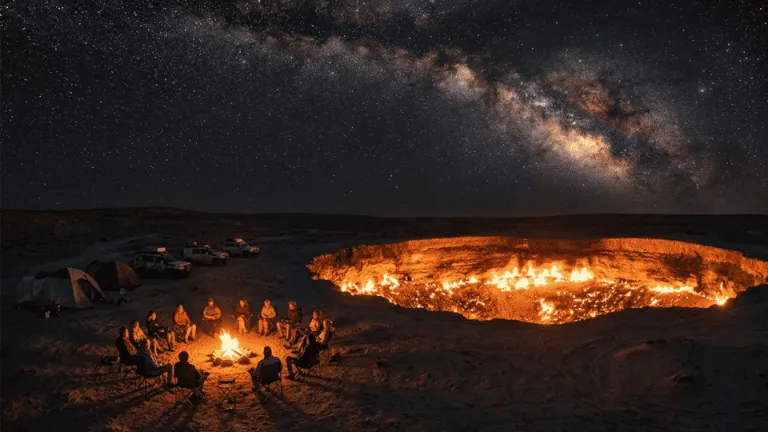
As word spread globally through travel blogs, documentaries, and social media, the Door to Hell transformed into a major tourist attraction. Today, thousands of visitors travel to the remote Karakum Desert every year just to witness this burning pit with their own eyes.
Some adventurous souls even camp overnight beside the crater, watching the flames against the backdrop of a star-filled desert sky.
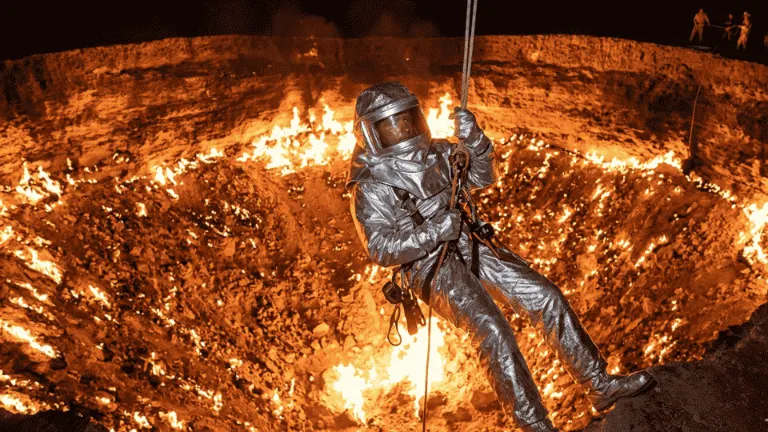
In 2013, Canadian explorer George Kourounis became the first person to descend into the crater itself. He collected soil samples from the bottom, searching for signs of microbial life in one of Earth’s most extreme environments. Remarkably, he found bacteria thriving in the heat — life, even in what looks like hell.
The Question Scientists Still Can’t Answer
Here is the most unsettling part of the entire story.
After more than 50 years, scientists still cannot say with certainty when the fire will go out.
The underground gas reservoir feeding the flames is larger than anyone originally estimated. As a result, early predictions about the fire burning out quickly turned out to be completely wrong.
The Turkmenistan government has made efforts to address the situation. In 2010, President Gurbanguly Berdimuhamedow ordered the crater to be extinguished, concerned about the ongoing loss of valuable natural gas resources. However, no action was taken at the time.
In 2022, he repeated the order, calling again for scientists to find a way to close it permanently. For example, proposals have included controlled filling and industrial capping methods. However, none have been implemented on a large scale.
The fire keeps burning.
A Powerful Reminder About Human Limits
The Door to Hell is more than just a dramatic tourist destination. It tells a deeper story.
A simple engineering decision made over half a century ago created a problem that no one has been able to fully solve since. It stands as a striking reminder that human actions — even well-intentioned ones — can have consequences far beyond what we expect.
Afterward, when we look at the glowing crater today, it is impossible not to feel a sense of humility. Nature does not always follow our timelines.
Conclusion: Will the Door to Hell Ever Close?
The Door to Hell remains one of the world’s most extraordinary and haunting places. What began as a quick fix to a drilling accident has turned into a 50-year fire that continues to burn in the heart of the Karakum Desert.
Scientists are still studying it. Governments have tried to close it. Tourists continue to flock to it. And the flames keep going.
Whether you see it as a geological curiosity, an environmental mistake, or a window into the raw power of the Earth, one thing is certain — the Door to Hell is unlike anything else on our planet.
Would you dare to stand at its edge at night?