
The Sikander Incident: The Day One Armed Man Paralyzed Pakistan’s Capital
On August 15, 2013, Muhammad Sikander paralyzed Islamabad by initiating a five-hour standoff on Jinnah Avenue. Accompanied by his wife and children, Sikander confronted security forces in a high-security zone. The event drew national attention as live television coverage broadcast the unfolding crisis to millions of viewers across Pakistan.
The standoff ended after a civilian intervention triggered a chaotic exchange of gunfire. Sikander was wounded and apprehended, while his family remained unharmed. This incident highlighted significant security vulnerabilities and sparked debates on managing public crises involving innocent bystanders and the complexities of televised law enforcement operations.
It was supposed to be an ordinary August evening in Islamabad.
Traffic moved through Blue Area. Government offices were closing. People were heading home after a long Thursday.
Then a white car stopped on Jinnah Avenue — and everything changed.
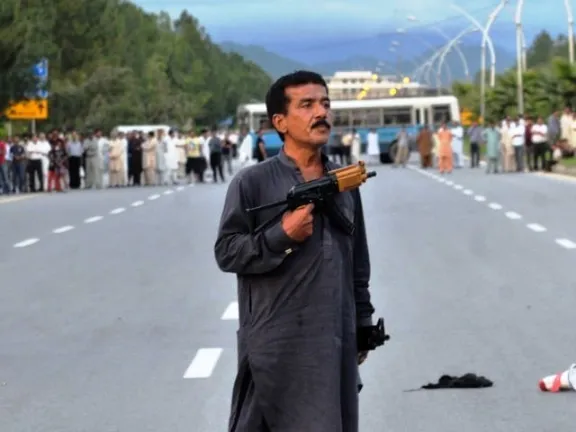
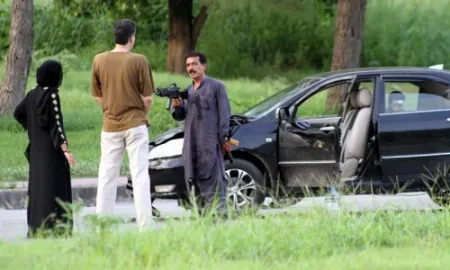
A thin man stepped out. He had an automatic rifle slung over his shoulder. His name was Muhammad Sikander. And standing beside him, in the middle of one of Pakistan’s most secure zones, were his wife and two young children.
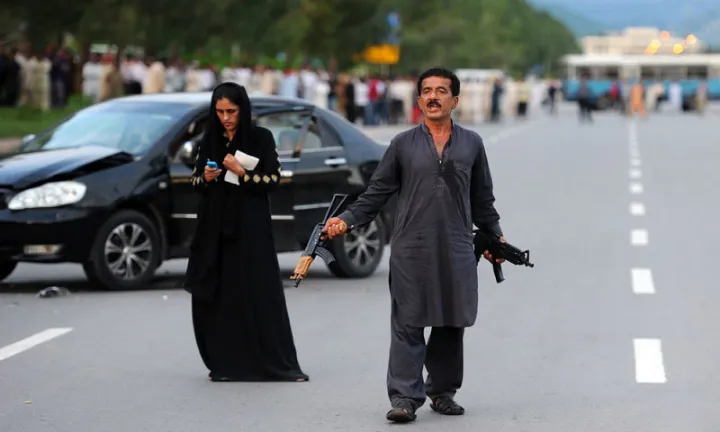
Moments later, he opened fire into the air.
What followed was one of the strangest, most televised security crises in Pakistan’s history — a standoff that would last hours, captivate an entire nation, and end in a moment no one saw coming.
A City Frozen in Disbelief
The date was 15 August 2013. The location — Jinnah Avenue, Islamabad — sits at the heart of Pakistan’s capital, surrounded by government buildings, security checkpoints, and law enforcement presence.
Yet here was an armed man, standing in the open, daring anyone to approach.
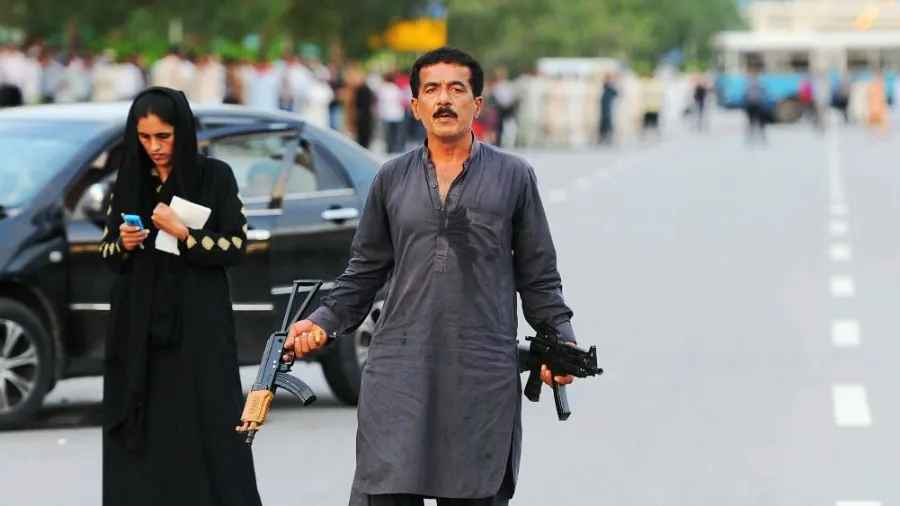
Police arrived quickly. Rangers followed. Security officials cordoned off the area. But Sikander didn’t retreat. He stood his ground, rifle in hand, his family disturbingly close to him.
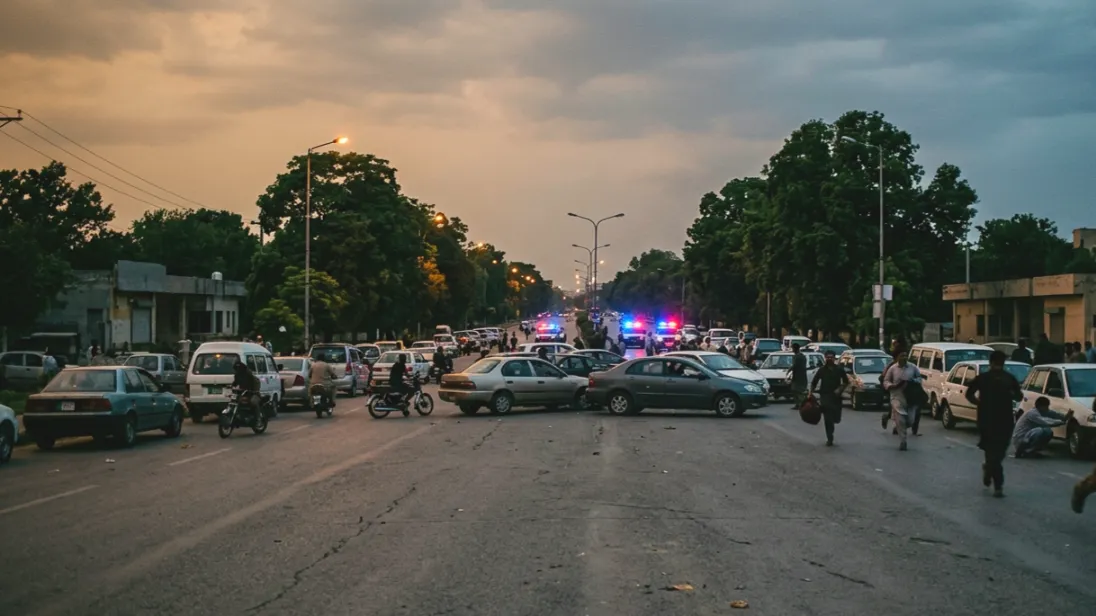
Traffic came to a complete stop. Bystanders scattered. And within minutes, television cameras were rolling.
Pakistan was watching.
Five Hours on Live Television
What made the Sikander Incident unlike almost any other security event in Pakistan’s history was how publicly it unfolded.
Every major news channel launched live coverage. Millions of viewers sat glued to their screens, watching in real time as police and Rangers formed a perimeter around one armed man on a public street.
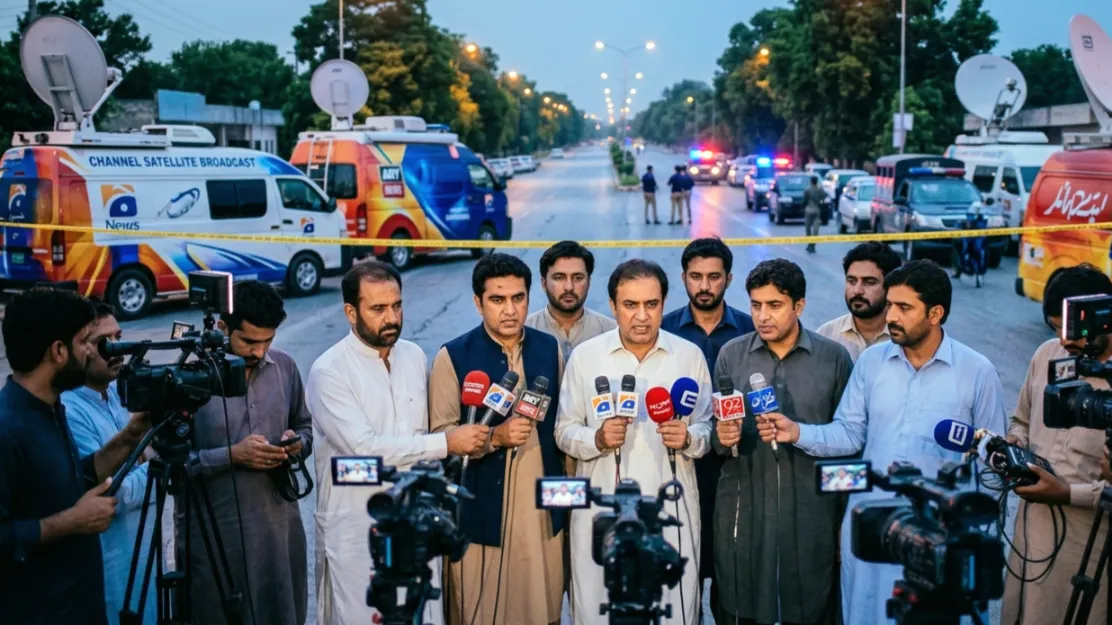
Hour after hour passed.
Officers attempted negotiations. Sikander’s wife could be seen speaking to him at various points — pleading, reasoning, trying to reach him. His children stood nearby, small figures in the middle of an unravelling situation.
One hour became two. Two became three. Three became four.
The standoff stretched on, and the tension only grew. Security forces, despite their numbers and training, found themselves in a delicate position. With children present and cameras broadcasting every move, the margin for error was razor-thin.
Meanwhile, across the country, a single question was building: how long could this possibly continue?

The Unexpected Negotiator
When the standoff approached the five-hour mark, an unlikely figure stepped into the frame.
Zamarud Khan — a PPP leader and former federal minister — had been watching the situation unfold on television like the rest of the country. Unlike the rest of the country, he decided to drive to the scene himself.
He approached carefully. First, he spoke with Sikander’s wife. Then he moved toward the children, shook their hands, and tried to calm them. His body language was measured, his movements slow and deliberate.
For a moment, it seemed as if a peaceful resolution might actually be within reach.
The nation held its breath.
The Moment Everything Broke
Then, in a split second, the situation exploded.
Zamarud Khan lunged forward and attempted to physically grab Sikander.
The attempt failed. Chaos erupted. Sikander fired. Security forces responded immediately. Within seconds, the composed standoff had collapsed into frantic movement and gunfire.
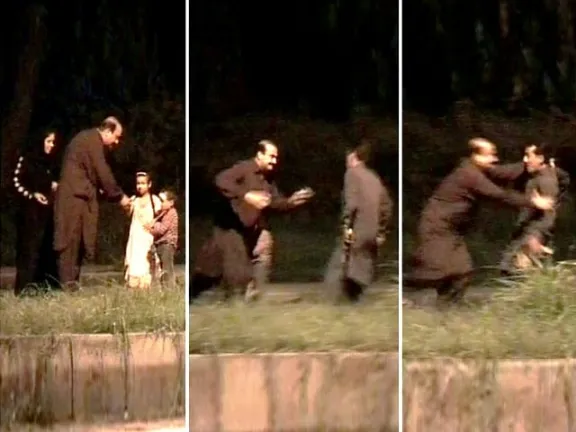
But in that chaos, law enforcement finally got the opening they had been waiting for.
Sikander was shot and wounded. He went down. Officers moved in and subdued him within moments.
Reports later described a heartbreaking detail from those final seconds — Sikander’s young son tried to run toward his fallen father, but was held back because of the ongoing danger.
His family, mercifully, was unharmed.
The Aftermath and the Questions That Followed
The immediate crisis was over. But the conversation it triggered was only beginning.
How had an armed man managed to hold his ground for nearly five hours in the most secure area of Pakistan’s capital? What did that say about the city’s security infrastructure? Who was responsible for letting the situation drag on so long?
These questions dominated headlines for days.
Muhammad Sikander was arrested and charged under terrorism laws and related offences. The case moved through the courts over the following years. In 2017, an Anti-Terrorism Court sentenced him to 16 years in prison.
As for Zamarud Khan’s dramatic intervention — it drew sharp criticism from many quarters. Some called it reckless. Others argued it was what ultimately broke the deadlock, even if not in the way he intended.
Why the Sikander Incident Still Matters
More than a decade later, the Sikander Incident remains one of the most discussed security episodes in Pakistan’s recent history.
Part of what makes it so memorable is its sheer strangeness — an armed man, a family, a crowded avenue, and a five-hour standoff broadcast live to millions. It had none of the anonymity of other crises. There were no closed doors, no back-channel negotiations happening off-camera.
It was all right there, visible to anyone with a television.
The incident also raised something more uncomfortable than questions about security gaps. It forced the public to watch, in real time, how difficult it is to resolve a crisis when human lives — especially those of children — are at the centre.
The Sikander Incident wasn’t ancient history or a story pieced together from old documents. An entire country witnessed it happening. That, perhaps, is why it has never quite faded from public memory.
Conclusion
The events of 15 August 2013 turned an ordinary evening into a defining moment in Pakistan’s capital. The Sikander Incident exposed real vulnerabilities in the country’s security response while also revealing something deeply human — the impossible complexity of confronting a crisis when innocent lives hang in the balance.
Muhammad Sikander was eventually stopped, tried, and sentenced. But the images from that evening — the white car, the rifle, the children, the live cameras — remain burned into the memory of everyone who watched.
Some incidents are studied in classrooms. Others are felt in the gut. This one was both.
Mukhtar Mai: The Woman Who Refused to Be Silenced