
The Untold Story of the Ottoman Dynasty’s Expulsion from Turkey
In 1924, the Turkish Republic abolished the Ottoman Caliphate, ending five centuries of dynastic rule. A legal decree stripped royal family members of their citizenship and assets, forcing them into immediate exile. This transition represented a definitive shift from an imperial past toward a new secular national identity.
Exiled family members faced poverty and statelessness across Europe and the Middle East. While women were permitted to return in 1952 and men in 1974, the expulsion effectively erased the dynasty’s political power. The state also confiscated all imperial properties, finalizing the collapse of the former empire.
Few moments in modern history carry as much weight as the night the Ottoman royal family quietly slipped out of Istanbul — not as rulers, but as exiles.
In 1924, when Mustafa Kemal Atatürk‘s new Turkish Republic officially abolished the Ottoman Caliphate, it didn’t just end a religious institution. It ended a dynasty that had ruled for five centuries. The Ottoman dynasty’s exile became one of history’s most dramatic royal expulsions — swift, ruthless, and deeply emotional.
This is the story of how it happened.
The Law That Erased a Dynasty
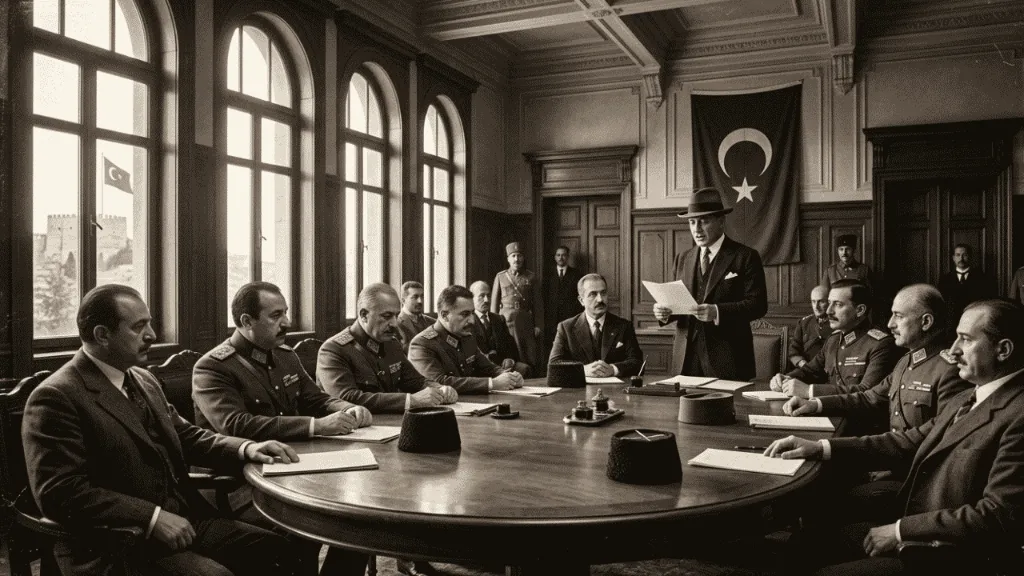
After the caliphate fell, the Turkish government wasted no time. Atatürk’s leadership pushed through a sweeping legal decree that directly targeted the Ottoman royal family.
The law stripped Ottoman family members of their Turkish citizenship. It also confiscated all their properties and assets. In addition, the government banned them from living on Turkish soil and ordered them into immediate exile.
Even in death, they found no mercy. The decree also prohibited burying family members in Turkish territory.
This wasn’t just a political decision — it was a complete erasure of an imperial legacy.
A Nation Divided Over Its Own Past
The exile law sparked fierce debate inside Turkey. Secular circles argued bitterly over exactly who should fall under its scope.
Some hard-liners pushed even further. They demanded that the tombs of deceased Ottoman sultans be relocated outside the country. That demand alone tells you how intense the identity struggle was in early Republican Turkey.
The new state wanted a clean break. However, not everyone agreed on how far that break should go.

The Last Caliph Gets His Orders
When the final blow came, it arrived without ceremony.
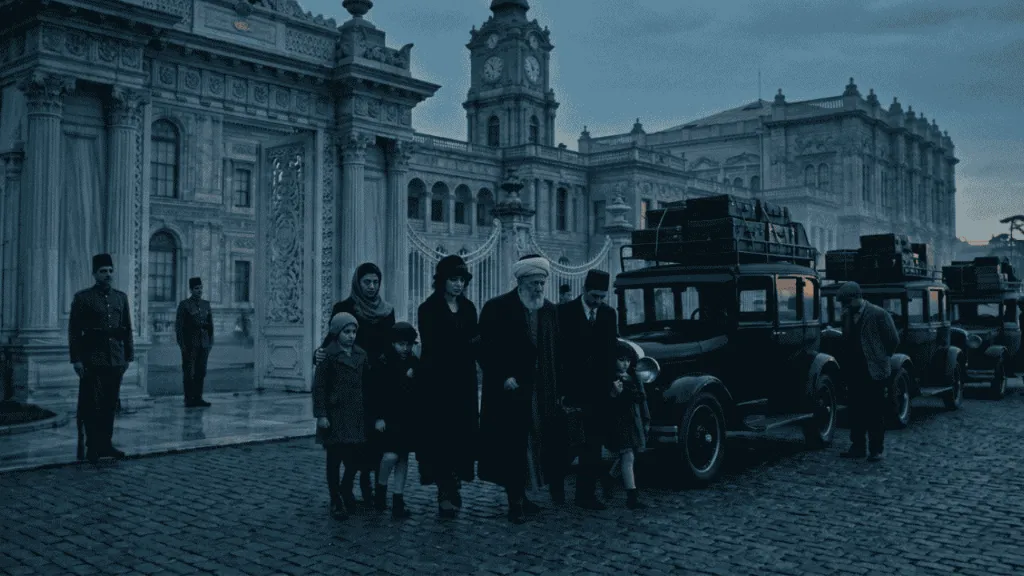
Abdülmecid II — the last Ottoman Caliph — was sitting in Dolmabahçe Palace, reading Montaigne’s essays, when Istanbul’s police chief Adnan Bey walked in. The message was blunt: pack your things and leave the city by the next morning.
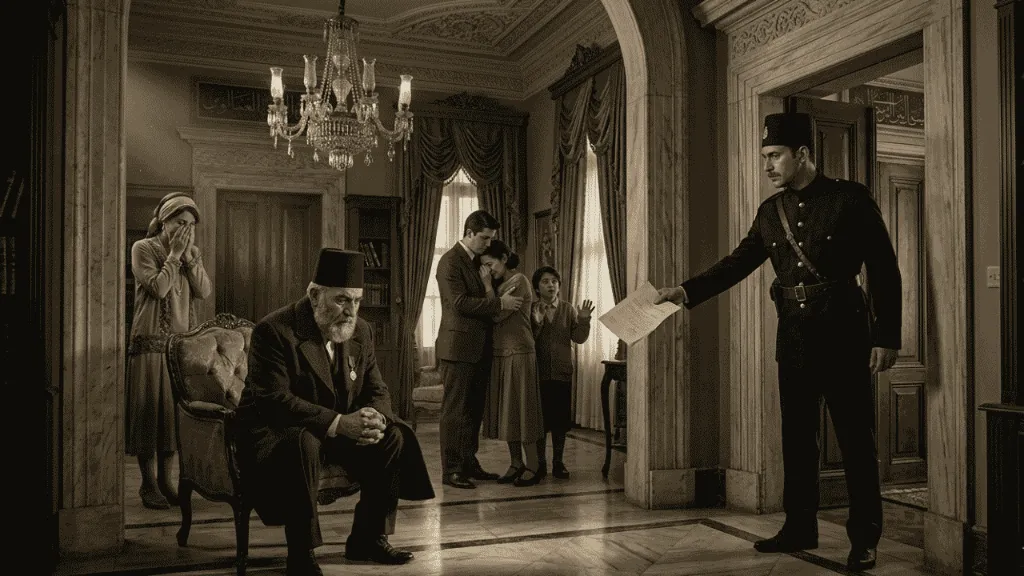
Meanwhile, inside the palace, the news spread fast. Family members and servants broke into tears. The grandeur of centuries collapsed into grief overnight.
The Morning They Left Istanbul
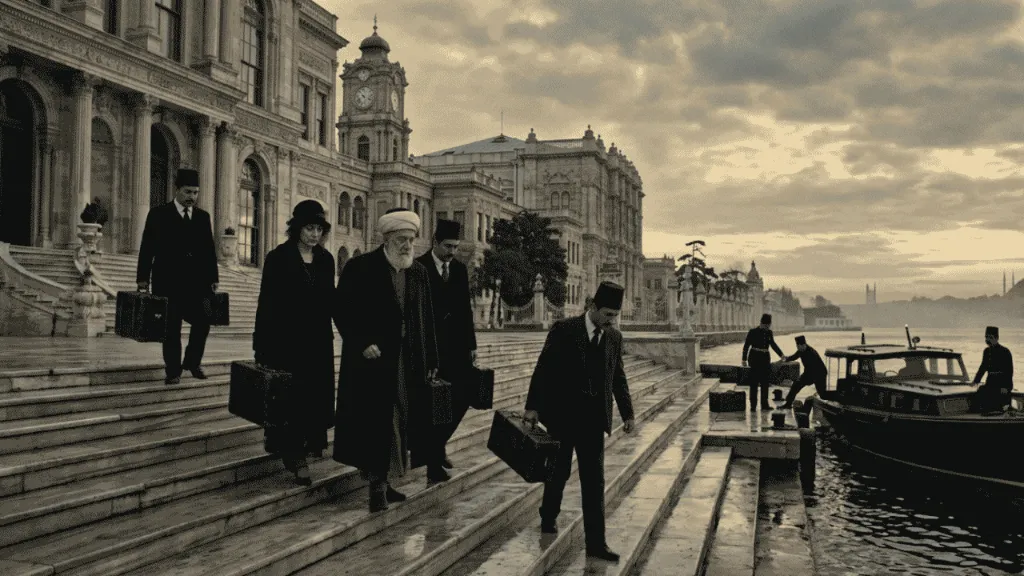
At around 5:30 in the morning, Abdülmecid II walked out of the palace with just five family members. Three cars loaded with luggage followed behind them.
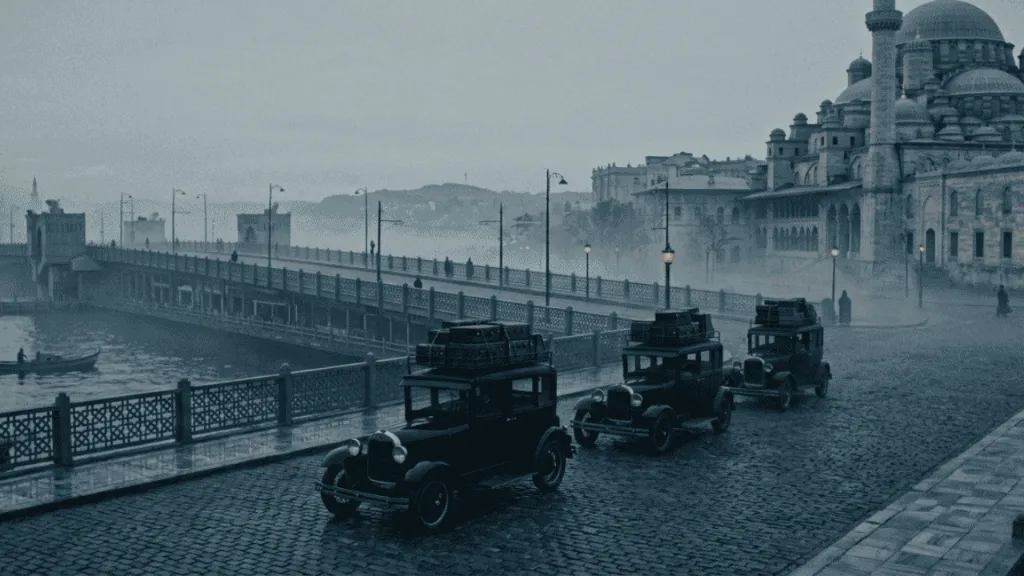
The small convoy moved through the streets of Istanbul — past Bayezid Mosque and over the Galata Bridge. By around 11 a.m., they reached Çatalca Railway Station.
By that point, the family was exhausted, hungry, and heartbroken. Everything familiar to them was disappearing with every mile they traveled.
The Orient Express Carries the Ottomans Into Exile
At midnight, the Orient Express rolled in. Two carriages had been reserved specifically for the Ottoman family.
And just like that, one of history’s most powerful dynasties boarded a train in silence.
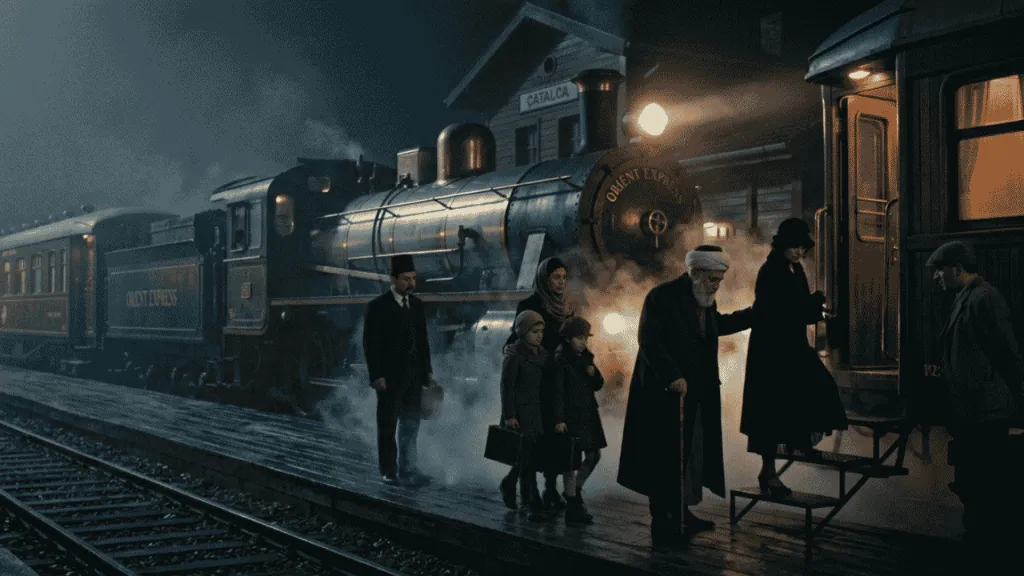
The train left Çatalca and eventually arrived in Nice, France. From there, the Ottoman dynasty’s exile scattered family members across the globe — France, Germany, Britain, Austria, the United States, and Arab countries, including Syria, Egypt, and Lebanon.
What They Left Behind
The confiscated properties weren’t small. The Turkish state seized Topkapı Palace, Dolmabahçe Palace, and Yıldız Palace — all iconic landmarks of Ottoman imperial power.
The royal treasury also fell into state hands. This included some of the rarest jewels of the era — rubies and emeralds that had no equivalent in the world at the time.
In a matter of hours, the family lost everything they had known.
Life in Exile: Poverty, Statelessness, and Survival
Life abroad hit the Ottoman family hard. They had no money, no passports, no diplomatic papers, and no social network to fall back on.
As a result, some members fell into severe poverty. Others depended entirely on the charity of strangers. A few couldn’t handle the psychological shock of losing everything so suddenly and suffered serious mental health struggles.
Afterward, the family faded completely from the political stage. They were no longer royals — just displaced people navigating a world that had moved on without them.
The Long Road Back to Turkey
Decades passed before Turkey reconsidered its position.
Women from the Ottoman family received permission to return in 1952, roughly 30 years after the exile began. Men had to wait even longer. They were only allowed back in 1974, nearly 50 years after they were forced to leave.

Eventually, the bitterness softened. But the damage to individual lives was already done.
Conclusion: A Five-Century Empire, One Train Ride Away from Oblivion
The Ottoman dynasty’s exile from Turkey stands as one of the most complete political erasures in modern history. Atatürk’s government didn’t just remove a royal family — it dismantled the idea of them.
Five centuries of rule ended at a railway station before dawn. An empire that once stretched across three continents boarded two train carriages and disappeared into the night.
History rarely closes a chapter so decisively. And yet, the human story of those who lived through it — the grief, the poverty, the long wait for return — remains just as powerful as the empire they left behind.