
How France’s Secret Nuclear Tests in Algeria’s Sahara Poisoned a Generation
France conducted seventeen nuclear tests in the Algerian Sahara between 1960 and 1966, continuing even after Algerian independence. Despite claims that the region was uninhabited, these detonations exposed thousands of local residents and workers to radioactive fallout without providing prior warnings or protective equipment.
The testing program caused long-term environmental contamination and severe health issues for nearby communities. Although France introduced a limited compensation law in 2010, survivors continue to seek full disclosure of records and comprehensive reparations for the enduring impacts of radioactive debris and buried waste.
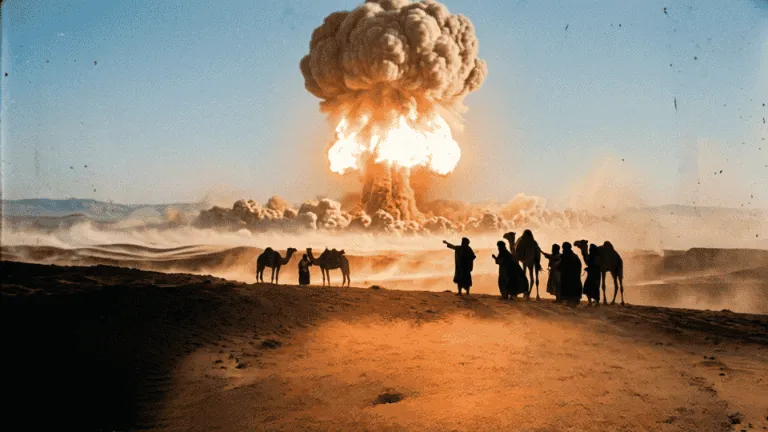
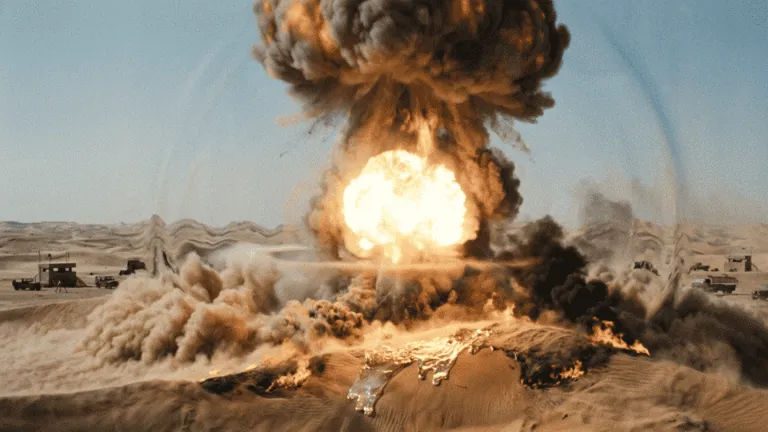
On February 13, 1960, a blinding flash tore open the sky above Algeria’s Sahara Desert. A massive mushroom cloud climbed into the atmosphere. The ground shook. Sand melted into black glass.
France had just detonated its first nuclear bomb — and it was four times more powerful than the one dropped on Hiroshima.
President Charles de Gaulle reportedly celebrated with the words, “Vive la France!“
But this was no empty desert. And this story — one of the darkest chapters of nuclear colonialism — deserves to be told in full.
“Uninhabited” Was a Lie
France’s official position was simple: the test site was uninhabited. No people. No risk. No problem.
That was a lie.
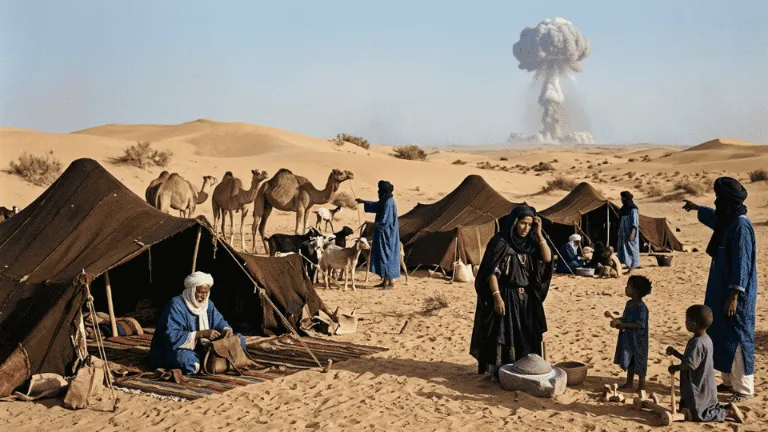
More than 30,000 people lived within range of that first explosion. Tuareg nomads, farmers, and villagers had called that land home for generations. Not one of them received a warning. Not one was evacuated.
Within hours of the blast, radioactive particles drifted silently across borders — reaching Algeria, Senegal, the Ivory Coast, and Sudan. The wind carried the fallout freely. Governments were never notified.
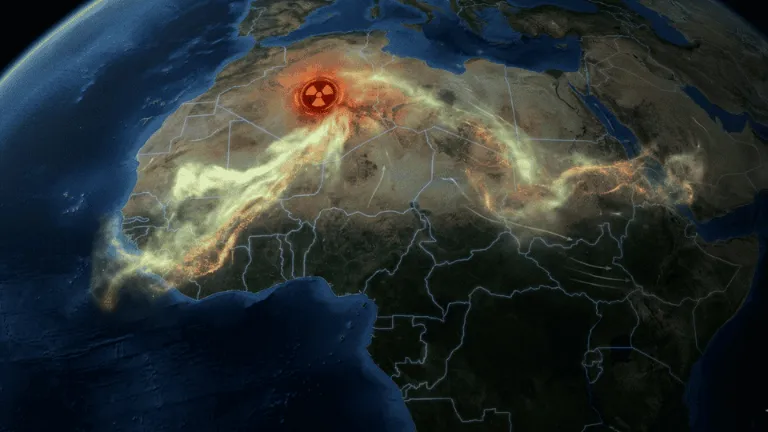
Meanwhile, France celebrated a new chapter in its military history.
17 Tests and a Desert Used as a Laboratory
France did not stop at one test. Between 1960 and 1966, it conducted 17 nuclear tests in the Algerian Sahara.
- 4 were atmospheric detonations — bombs exploded in open air, releasing radiation directly into the atmosphere.
- 13 were underground tests, though underground explosions can still contaminate soil and groundwater.
Even after Algeria gained independence in 1962, France continued testing. It carried out 11 more nuclear experiments on Algerian soil after the country was legally free. Algeria had no power to stop it.
France had forced a lease agreement over the Sahara as part of the independence negotiations. Algeria signed — or rather, had little choice but to sign.
Algerian Workers Left Without Protection or Truth
To run these tests, France needed labor. So it hired Algerian workers — men who had no idea what they were handling or what they were being exposed to.
There was no protective gear. No safety briefings. No medical monitoring. No explanation of any kind.
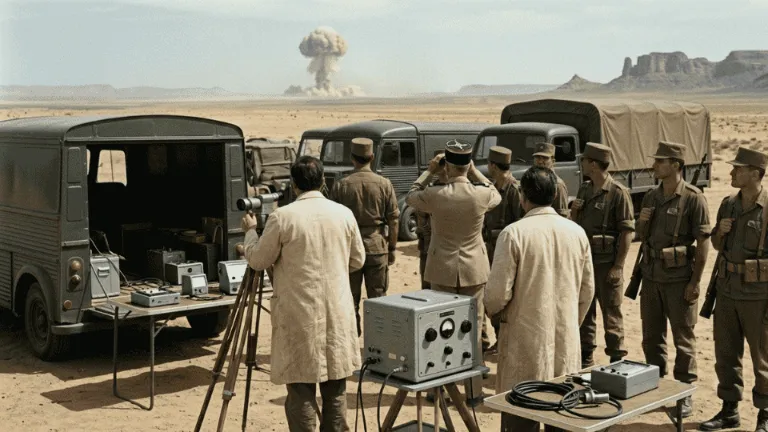
For example, workers were sent into contaminated zones shortly after detonations, carrying out manual tasks while radiation levels remained dangerously high. They went home to their families each evening, unknowingly carrying invisible danger with them.
As a result, many of these men later developed rare and unexplained illnesses. They died without ever knowing the cause. Their families were given no answers.
When a Test Went Wrong
In May 1962, one test went catastrophically off-script.
A nuclear device failed to detonate as planned. Instead of a controlled explosion, the detonation spread radioactive dust and debris across a wide area. The contamination was immediate and severe.
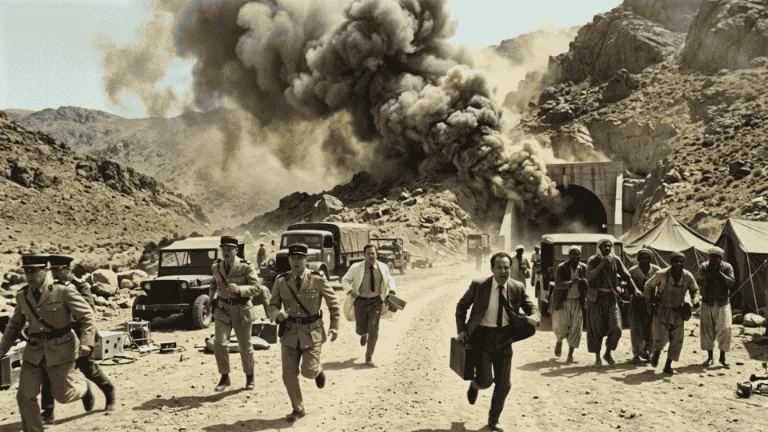
French officials made a decision: they evacuated themselves. The Algerian workers and nearby residents were left behind, with no protection and no evacuation order.
Afterward, French authorities quietly buried nuclear waste in the desert. They created internal maps marking contaminated zones. Then they refused to release those maps publicly for decades.
The Long Shadow: Cancer, Birth Defects, and Silence
The consequences did not arrive immediately. They crept in slowly, over years and decades.
Communities near the test sites began reporting unusual health patterns:
- Cancer rates far above normal levels
- Leukemia in both adults and children
- Thyroid cancer is a classic marker of radiation exposure
- Birth defects and children born with severe disabilities
- Entire villages are showing signs of long-term contamination
However, linking these outcomes to the tests was difficult because France never released the full data. Victims had no documentation to present. No maps. No radiation records. No official acknowledgment.
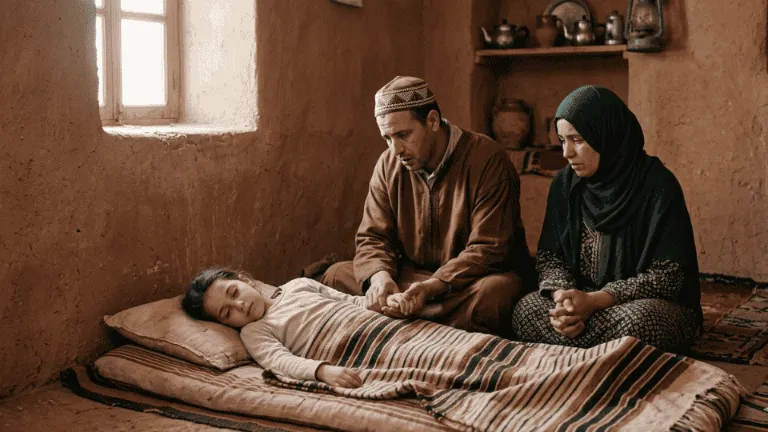
Because of this silence, generations of Algerians suffered without compensation, without explanation, and often without a diagnosis that matched their reality.
A Crime That Still Demands Justice
France’s nuclear tests in Algeria’s Sahara represent one of the most serious cases of colonial harm in the twentieth century.
It was not just a military program. It was a deliberate decision to treat African lives as acceptable collateral damage. France chose its testing sites not because they were truly empty, but because the people living there were considered expendable.
In addition, the continued testing after Algerian independence made a stark statement: colonial power does not automatically end with a signed treaty.
Eventually, after decades of pressure from survivors’ groups and Algerian officials, France passed a law in 2010 offering limited compensation to victims of its nuclear tests. However, critics widely condemned the law as insufficient. Many victims were excluded based on narrow eligibility criteria. The contaminated zone maps were released only partially and much later.
France’s Nuclear Tests in Algeria Still Echo Today
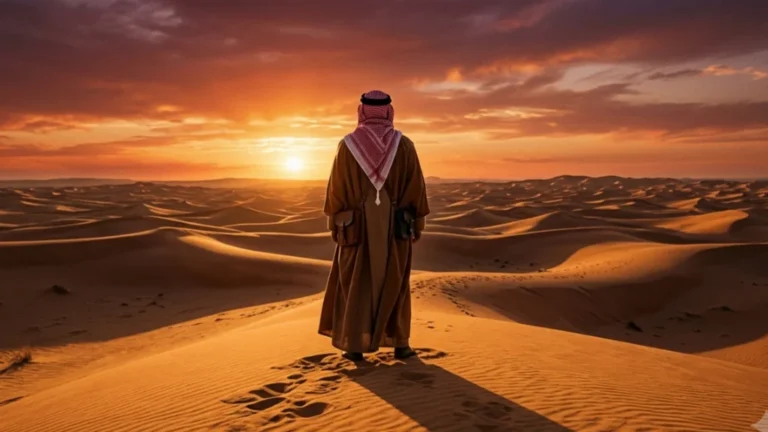
The physical landscape of the Sahara still carries the scars of those experiments. Studies have found elevated radiation levels in areas where tests took place more than sixty years ago.
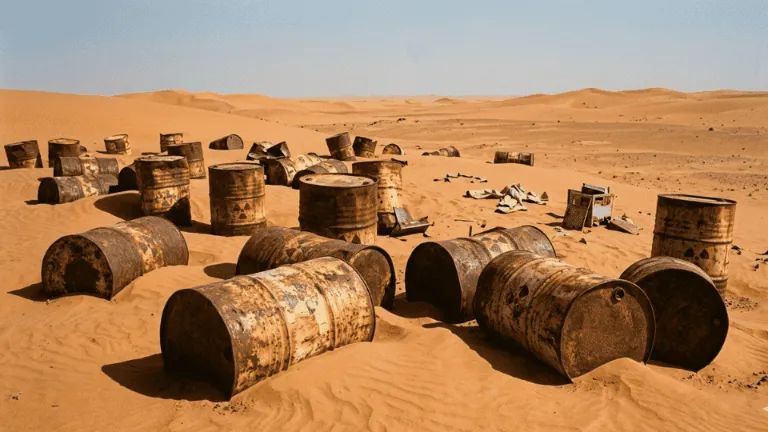
The survivors — and the children and grandchildren of those who were never warned — continue to push for full disclosure, complete maps of contaminated zones, fair compensation, and an official apology.
France has not issued one.
Conclusion: History Does Not Stay Buried
France’s nuclear tests in Algeria’s Sahara were not a footnote. They were a defining act of colonial arrogance — one that treated an entire people as invisible.
The mushroom cloud rose in 1960. The fallout never fully settled.
Understanding this history matters — not just for Algeria, but for every society that believes nuclear power should come without accountability. The people of the Sahara paid an enormous price for a weapon that was never theirs. The least the world can do is remember their story.