
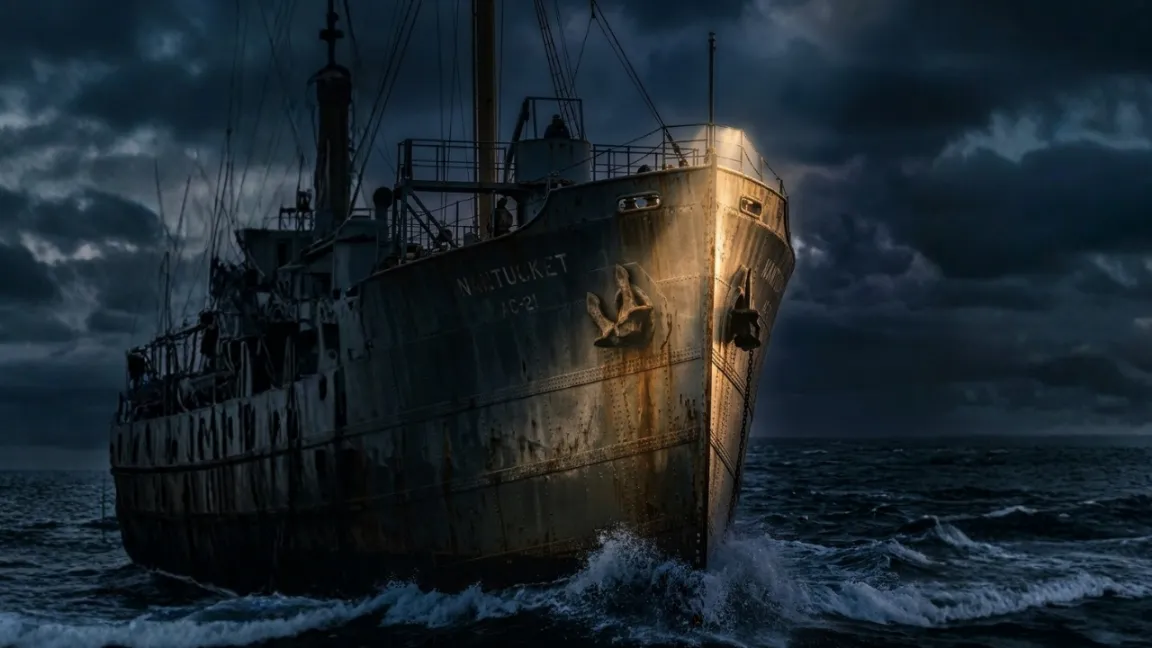
USS Cyclops Disappearance: Navy’s Greatest Unsolved Mystery
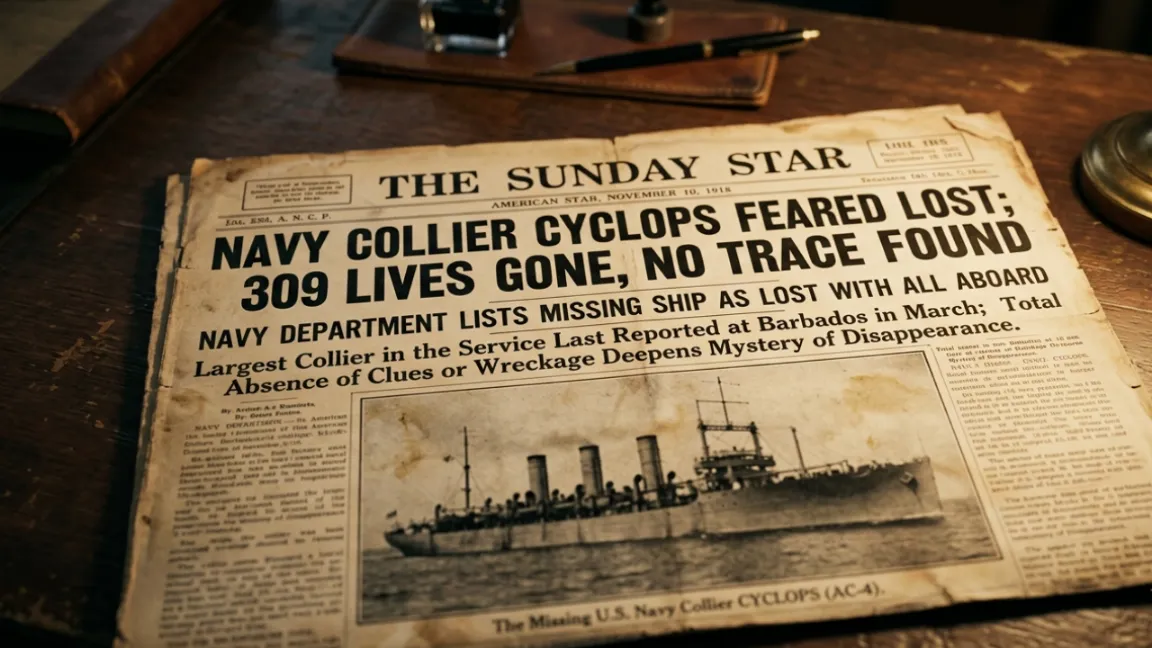
The USS Cyclops vanished in March 1918 while traveling from Barbados to Baltimore with 306 people on board. Despite its massive size and vital cargo of manganese ore, the ship disappeared without a distress signal or wreckage. It remains the largest non-combat loss of life in U.S. Navy history.
Investigators have proposed theories ranging from structural failure and severe storms to enemy action during World War I. Although the disappearance contributed to the legend of the Bermuda Triangle, modern searches have failed to locate the vessel. The fate of the ship and its crew remains an unsolved maritime mystery.
On March 4, 1918, a massive U.S. Navy ship steamed out of Barbados and stopped existing.
No SOS. No wreckage. No survivors. No bodies.
Three hundred and six men were aboard the USS Cyclops that day. Not one of them was ever seen again. Over a century later, the USS Cyclops’ disappearance remains one of the most baffling mysteries in American naval history — and the ocean still hasn’t given up its answer.
A Giant Built to Carry the Fleet
Launched in 1910, the USS Cyclops was no small vessel. She stretched 540 feet long and could haul over 12,000 tons of coal at a time.
Her job was unglamorous but essential. As a Proteus-class collier, she fed coal to the U.S. Navy’s warships, keeping the fleet moving during an era when ships still ran on fuel shoveled by hand.
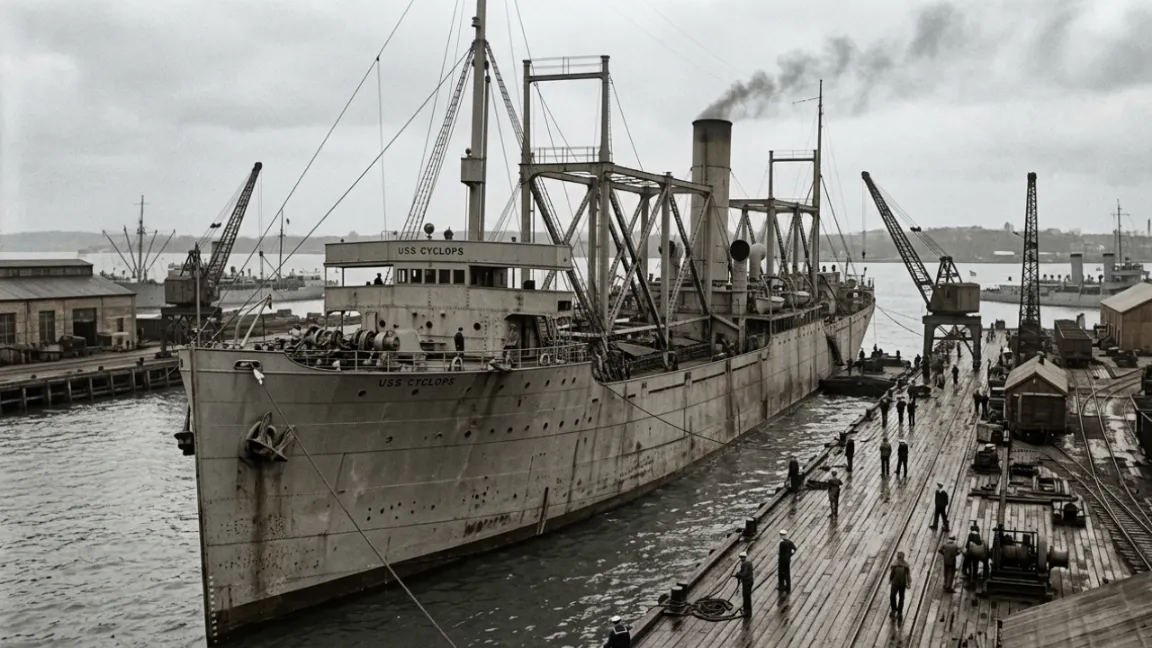
When America entered World War I in 1917, the Cyclops was pulled into military service. Her civilian crew became naval reservists overnight. And at the helm sat a man who would later become one of the mystery’s most debated figures: Lieutenant Commander George W. Worley.
The Final Voyage Begins
In January 1918, the Cyclops left Norfolk, Virginia, loaded with coal bound for Rio de Janeiro, Brazil. She delivered her cargo without incident.
But her return trip told a different story.
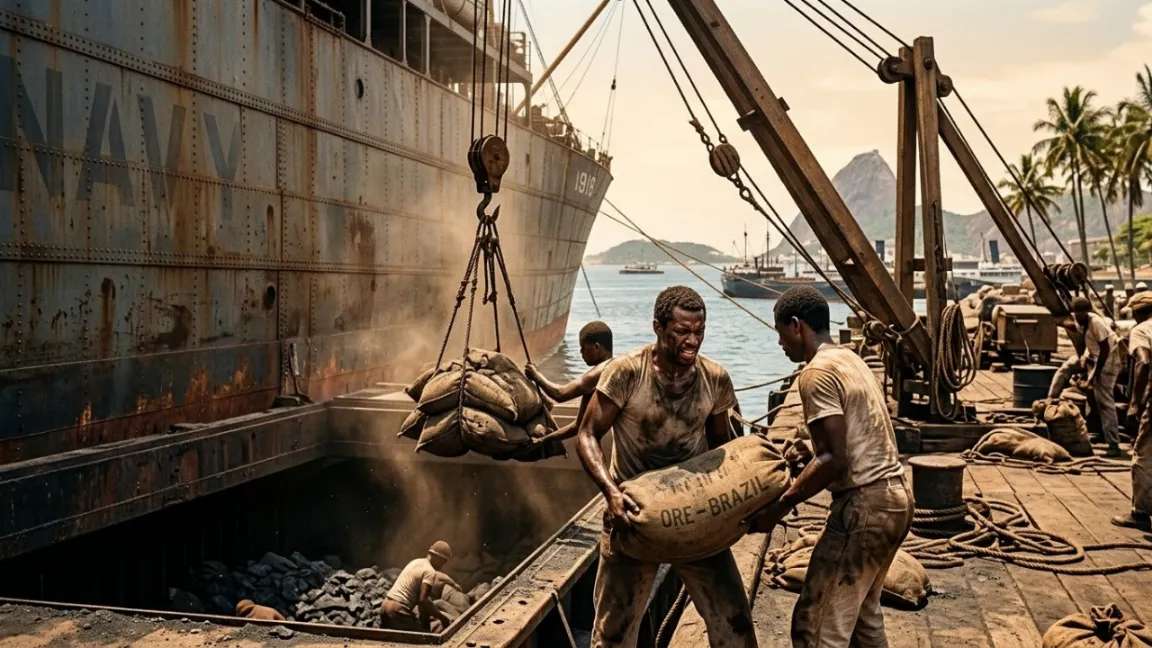
In Brazil, the crew loaded roughly 10,000 tons of manganese ore — a mineral vital to steel production for the war effort. The ship then made stops along the Brazilian coast before setting course for Baltimore, Maryland.
Everything, on paper, looked routine.

An Unscheduled Stop That Changed Everything
The Cyclops wasn’t supposed to stop again before reaching Baltimore. However, she pulled into Barbados on March 3, 1918, for reasons that still aren’t entirely clear.
Some records suggest the ship needed extra fuel or supplies. Others point to rumors about her overloaded cargo hold. Whatever the reason, she left Barbados on March 4 — and that’s where her trail goes cold.
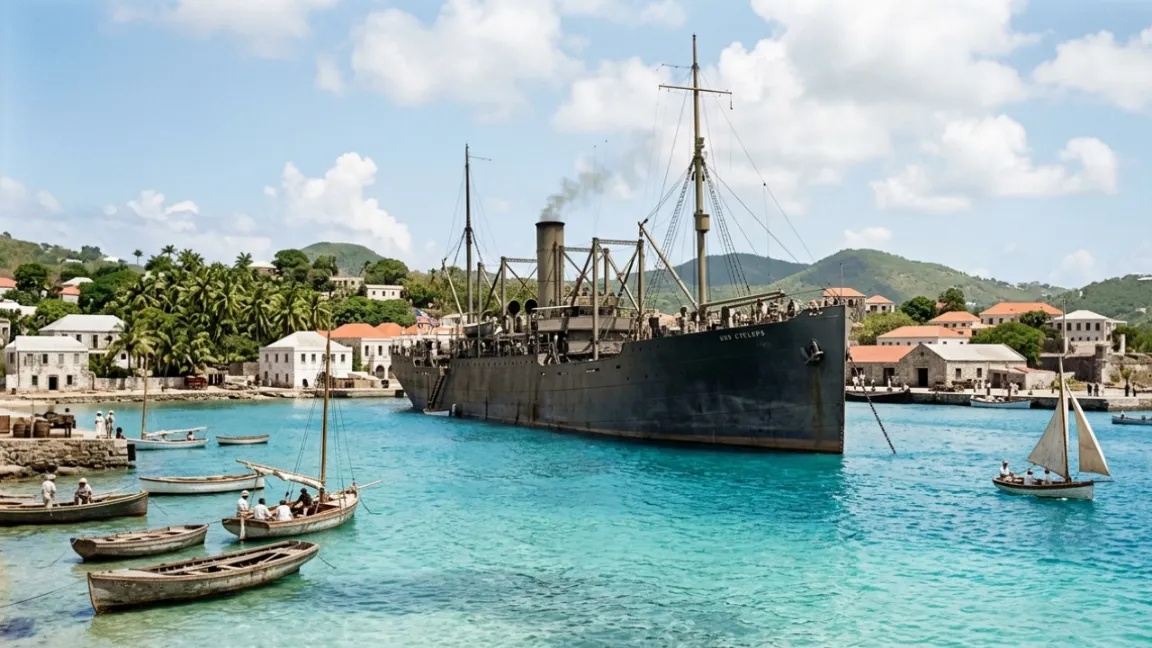
She was due in Baltimore on March 13. She never arrived.
No Distress Call, No Debris, No Clues
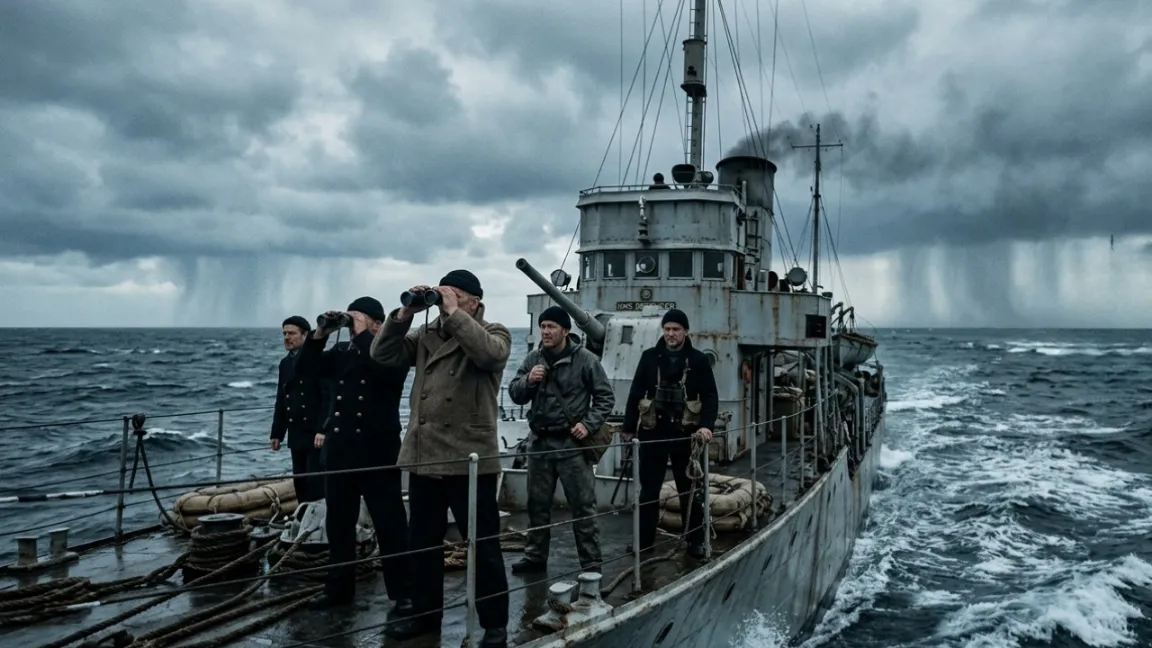
Because of this, the U.S. Navy launched a frantic search once the ship’s absence became impossible to ignore. Warships and merchant vessels combed the shipping lanes between Barbados and the American coast.
They found nothing.
Not a lifeboat, an oil slick, or a single splinter of wreckage. In an age before satellites, that kind of silence was chilling — but even by 1918 standards, a ship that size vanishing without a trace was almost unheard of.
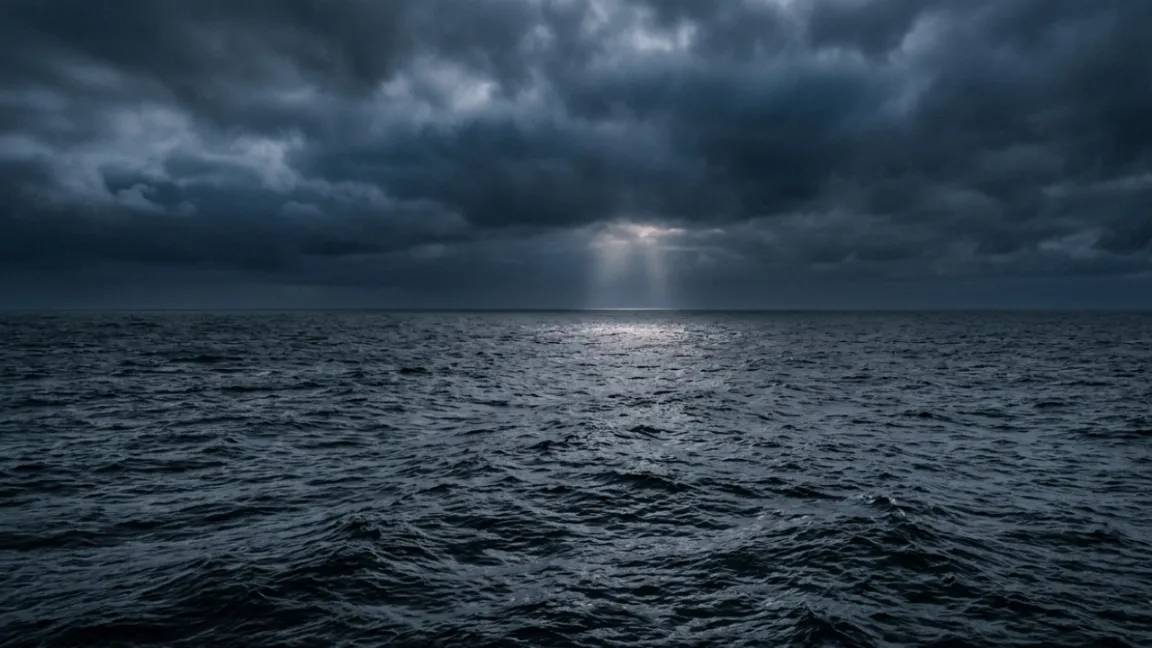
Eventually, on June 1, 1918, the Navy officially declared the Cyclops lost, with all hands presumed dead. It remains, to this day, the largest single loss of life in U.S. Naval history outside of direct combat.
So What Actually Happened?
This is where the USS Cyclops’ disappearance splits into competing theories, none of which has ever been proven.
German attack. Since the ship vanished during World War I, many assumed a U-boat had sunk her. German naval records, however, showed no submarines operating in that stretch of ocean at the time — and Germany denied any involvement, both during and after the war.
Structural failure. Some naval historians believe the manganese ore is the real culprit. This dense cargo can shift unpredictably if not secured properly, and it may have placed dangerous strain on the ship’s aging frame. Eerily, two of her sister ships — Proteus and Nereus — disappeared under nearly identical circumstances decades later, also while hauling heavy ore cargo.
A sudden storm. Naval investigators later noted that a violent storm swept through the Virginia Capes region shortly after the Cyclops was last reported. If she was already weakened by her cargo, a storm at the wrong moment could have finished her off fast — too fast for a radio call.
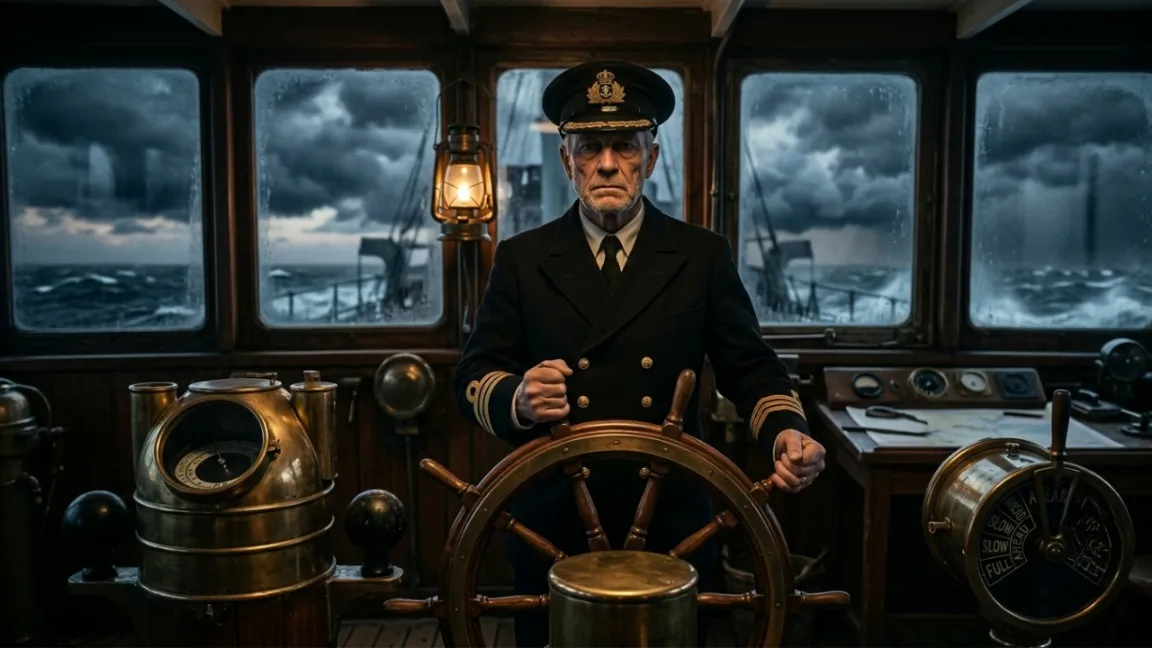
The captain himself. Worley was widely disliked by his crew. Some accounts describe him as erratic, harsh, and a poor navigator. A few surviving crew members who left the ship before her final voyage later suggested his leadership had left the vessel in a troubled state, though no evidence ever confirmed sabotage or mutiny.
The Bermuda Triangle. The Cyclops disappeared in waters that would later become infamous as the Bermuda Triangle, though that name didn’t exist yet in 1918. As a result, the ship became one of the founding legends of the Triangle myth, feeding decades of speculation about magnetic anomalies, rogue waves, and stranger things still.
Why the Wreck Has Never Been Found
Meanwhile, modern search technology has scoured much of the Atlantic seabed along her presumed route — and still, nothing conclusive has turned up.
Part of the problem is simple geography. The ocean floor between Barbados and the U.S. coast is vast, deep, and largely unmapped in fine detail. A steel ship broken apart by a storm could easily be buried under sediment or scattered across miles of seabed.
Without wreckage, investigators have never been able to rule any single theory in or out. That’s precisely what has kept the case alive for more than a hundred years.
World’s Youngest Mother: The Heartbreaking True Story of Lina Medina
A Mystery the Ocean Still Won’t Explain
The USS Cyclops’ disappearance isn’t just a spooky footnote in maritime folklore. It’s a real tragedy involving 306 real people — sailors, officers, and passengers who left port expecting to come home.
More than a century later, their fate remains unknown. No wreck, no black box, no final message beyond routine reports that gave no hint of danger ahead.
Whatever happened out there — a storm, a structural collapse, human error, or something the ocean refuses to explain — the Cyclops carried the truth down with her. And the Atlantic hasn’t said a word since.