
The Gohana Bank Heist: Five men pulled off a daring stunt inspired by the movie Dhoom
In 2014, five men executed a sophisticated robbery at a Punjab National Bank branch in Gohana, Haryana. Over forty days, they dug a 125-foot tunnel from a nearby vacant house into the bank vault. They bypassed security and looted 89 lockers containing jewelry and valuables worth millions of rupees.
Investigators traced the tunnel to the starting property, leading to the arrest of several accomplices and the recovery of most stolen items. The mastermind died by suicide before facing trial. The incident highlighted significant structural security failures and remains one of India’s most notable examples of patient, manual crime.
A bank manager unlocked the doors on a quiet Monday morning in Gohana, Haryana, and froze.
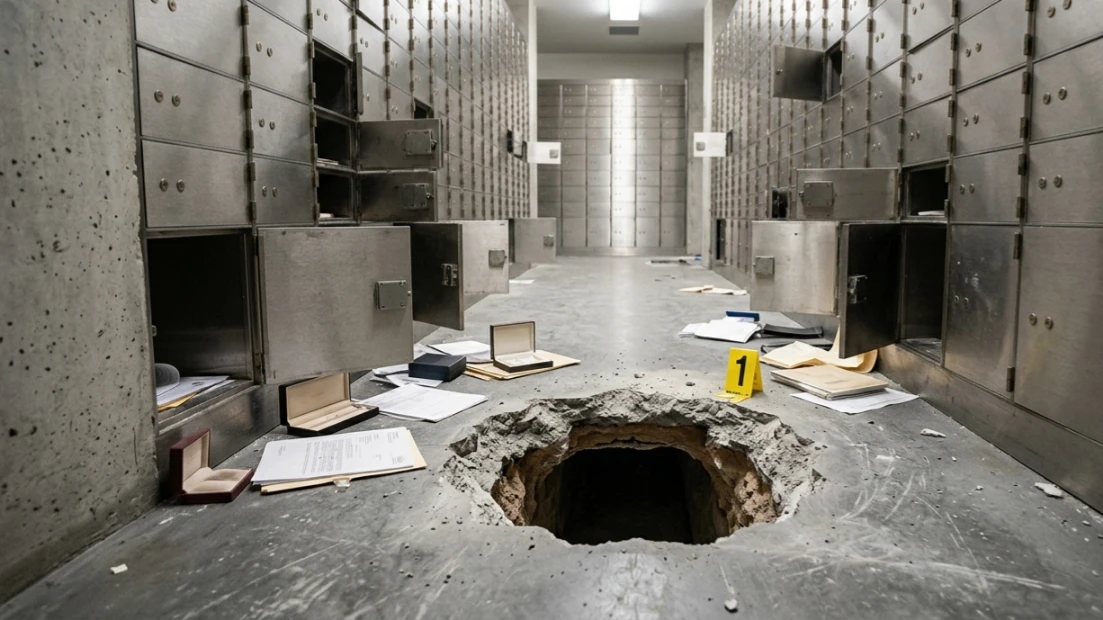
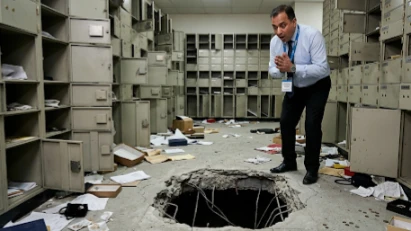
The floor of the strong room was gone. In its place was a gaping black hole leading straight into the earth.
No alarms had gone off. No locks had been forced from outside. Whatever happened here had happened from below, in total silence, over weeks, nobody in the town had noticed.
What investigators uncovered next became one of India’s most talked-about crimes — the Gohana bank heist, a robbery so patient and so precise that police openly admitted they had never seen anything like it.
A Bank Like Any Other
Before that Monday, the Punjab National Bank branch in Gohana looked completely unremarkable.
The doors were locked every evening. Guards did their rounds. CCTV cameras kept watch over the entrance and the counters.
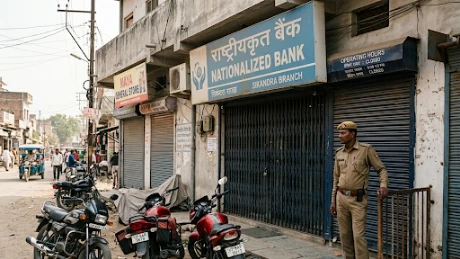
Inside the strong room sat more than 350 safety deposit lockers, packed with the savings, gold, and paperwork of ordinary families. As far as anyone could tell, it was as secure as any small-town bank branch in India.
Nobody was watching the ground underneath it.
The Empty House Next Door
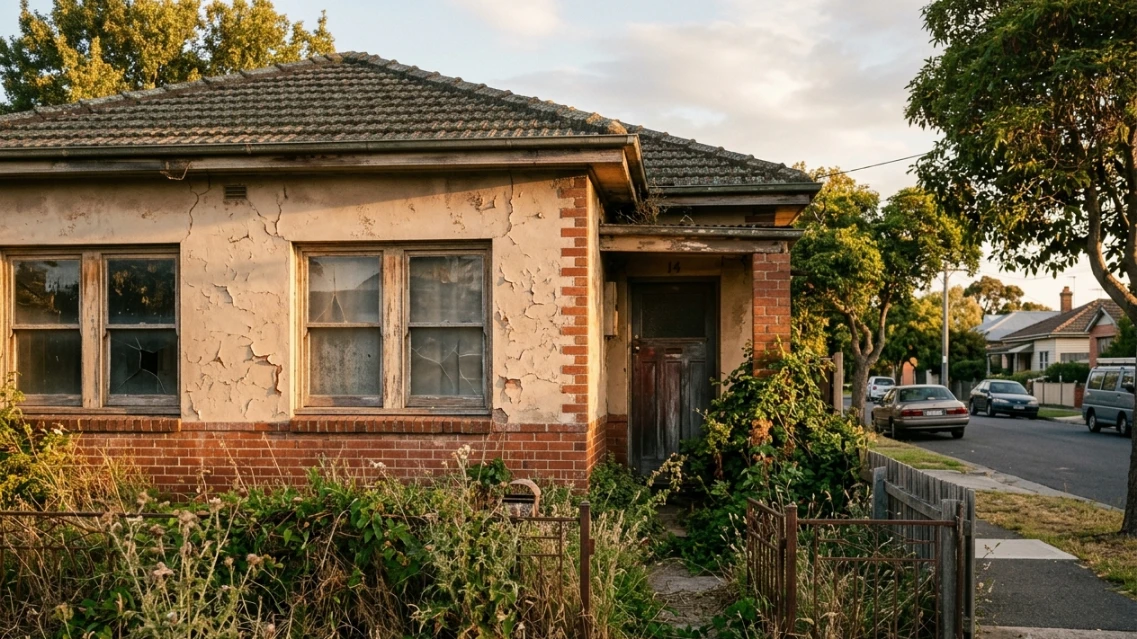
Not far from the bank stood a building that had sat vacant for years. Its owner was a local man named Mahipal.
Mahipal knew the town, knew the bank, and knew that an abandoned house so close to a PNB branch was more valuable than it looked. According to police, the entire idea was inspired by a Bollywood heist film, Dhoom, which follows a similar tunnel-based robbery.
He recruited four other men to help him pull it off: Surender, who ran a pathology lab; Satish, a property dealer; and Balraj and Rajesh, both farmers. None of them were engineers. None had any technical training in construction or security systems.
What they had instead was time, a rented starting point, and a plan nobody expected.

Digging Toward the Vault
The group spent over two months planning the job before they ever touched a shovel. Once digging began, it took roughly 40 days of steady work to finish the tunnel.
They worked only at night, digging for four to five hours at a stretch to avoid drawing attention. During the day, the house looked as quiet and empty as it always had.
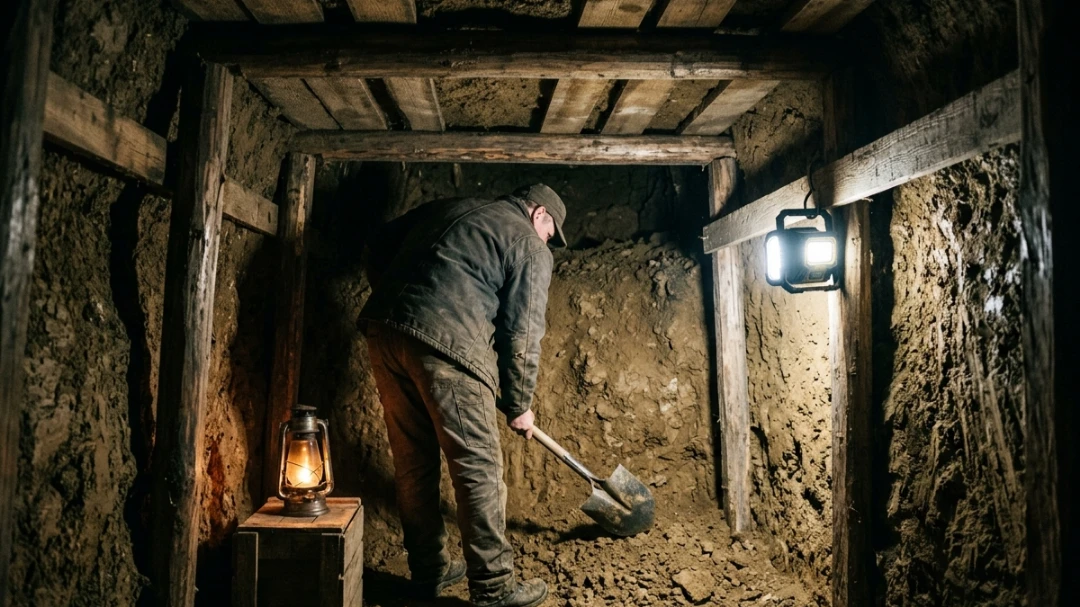
Reports on the tunnel’s exact length differ slightly — figures range from around 85 feet to 150 feet — but most accounts settle on roughly 125 feet, dug about two and a half feet wide. That’s nearly the length of a football field, carved out entirely by hand.
Digging underground for that long carries real danger. A single collapse could have buried the men alive. As a result, they had to work carefully and quietly, one small section at a time, night after night.
The Weekend Nobody Saw Coming
The final breakthrough happened on the weekend when the bank was closed. Under cover of darkness, the men tunnelled up through the strong room’s floor and climbed inside.
Investigators later found the floor was ordinary cement — not the reinforced concrete and steel plating that banking safety norms actually require. That single oversight made the entire break-in possible.
Using nothing more than iron rods and basic hand tools, the men forced open 89 of the more than 350 lockers in the room. They also tried to crack open an iron chest holding roughly 40 lakh rupees in cash, but failed to break it.
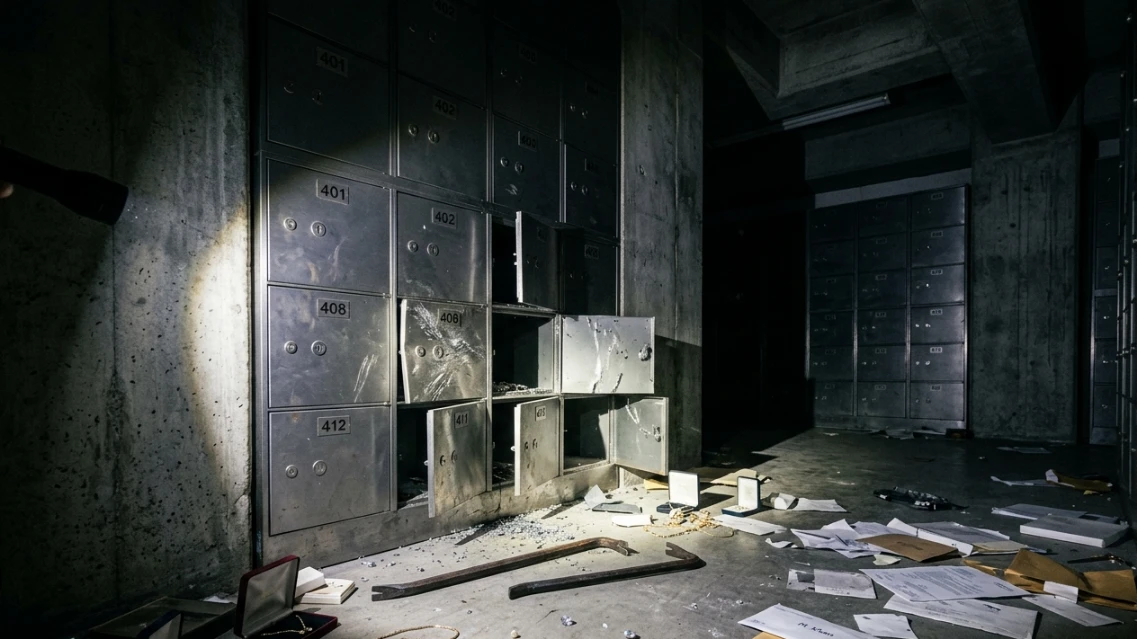
By the time they climbed back through the tunnel and vanished, they had made off with jewellery, gold, and valuables that some locker owners later estimated at close to 14 crore rupees combined.

Monday Morning, and a Town in Shock
When the branch manager, Devender Malik, opened the bank that Monday, he found the hole in the floor and the empty lockers.
Word spread through Gohana within hours. Furious customers gathered outside the branch, demanding compensation for jewellery and savings that, in some cases, represented their entire life’s worth.
The case moved quickly up the chain. Bank staff were formally booked for negligence, and the Prime Minister’s Office sent a senior security officer to Gohana to support the investigation — a sign of just how seriously the robbery was being taken.
When a BBC reporter later crawled through the same tunnel, he described the space as barely large enough to move through on hands and knees, running under the street and directly into the vault next door.
Tracing the Tunnel Back
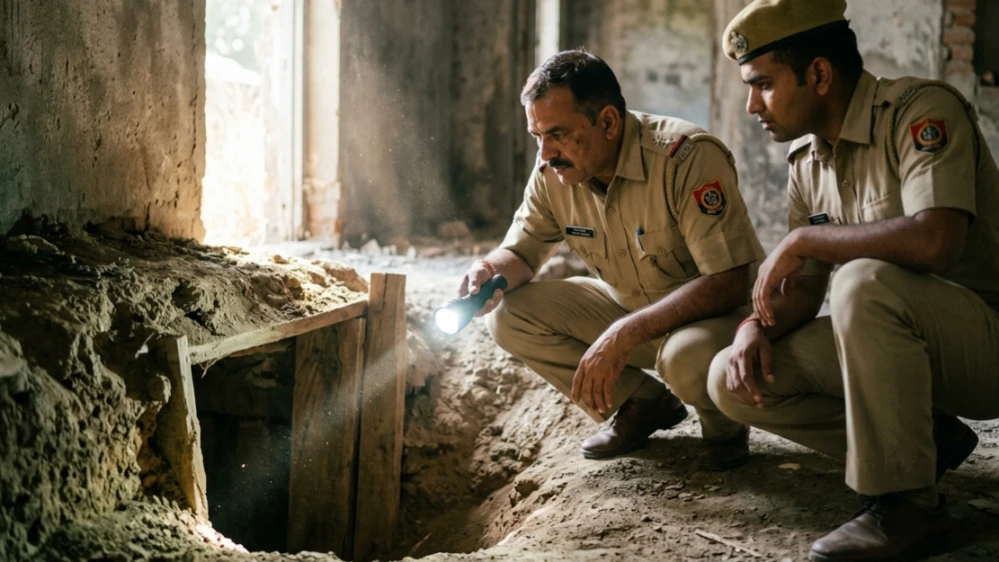
Investigators didn’t need long to find where the tunnel started. It led directly back to the vacant house — and to its owner, Mahipal.
As police dug into his background, phone activity, and connections, a clearer picture of the plot began to emerge: a mastermind who owned the perfect hideout and four accomplices willing to do the digging.
But before the police could catch up with him, the case took a darker turn.
The Mastermind’s End
Days after the robbery came to light, Mahipal was found dead inside his car on the Panipat-Gohana highway. Police said the cause appeared to be suicide by poisoning.
Officers named him the mastermind of the heist — the man who had given the other four the idea and the location to make it happen. His death meant he would never face trial for the robbery he had planned.
Meanwhile, the search for his accomplices continued.
Arrests and What Was Recovered
Police tracked down the men one by one. In the first breakthrough, they arrested several of the accomplices and recovered close to 39 kilograms of jewellery along with a smaller amount of cash.
Later, two more suspects, Balraj and Surinder, were arrested, leading police to a bag hidden in a brick kiln in a nearby village. Inside were roughly 10 kilograms of gold and silver ornaments.
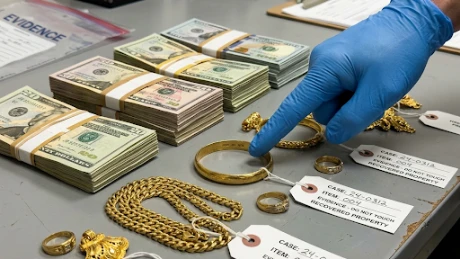
Piece by piece, much of the stolen wealth made its way back — though for many locker owners staging protests outside the bank, the recovery came far too late to undo the damage.
The Jacob Diamond: The Priceless Gem That Sat Forgotten for 37 Years
Why the Gohana Bank Heist Still Gets Talked About
More than a decade later, the Gohana bank heist is still cited as one of India’s most audacious robberies — not because of violence or weapons, but because of sheer patience.
Five ordinary men, with no criminal expertise and no fortune to invest, managed to outsmart a nationalised bank using little more than shovels, timing, and silence. In addition, the case exposed a basic but serious security failure: a strong room floor that was never built to the standard it should have been.
The tunnel in Gohana has long since been sealed. But the story of how it was dug — quietly, patiently, one night at a time — remains a reminder that the most dangerous threats aren’t always the ones you can see from the front door.