
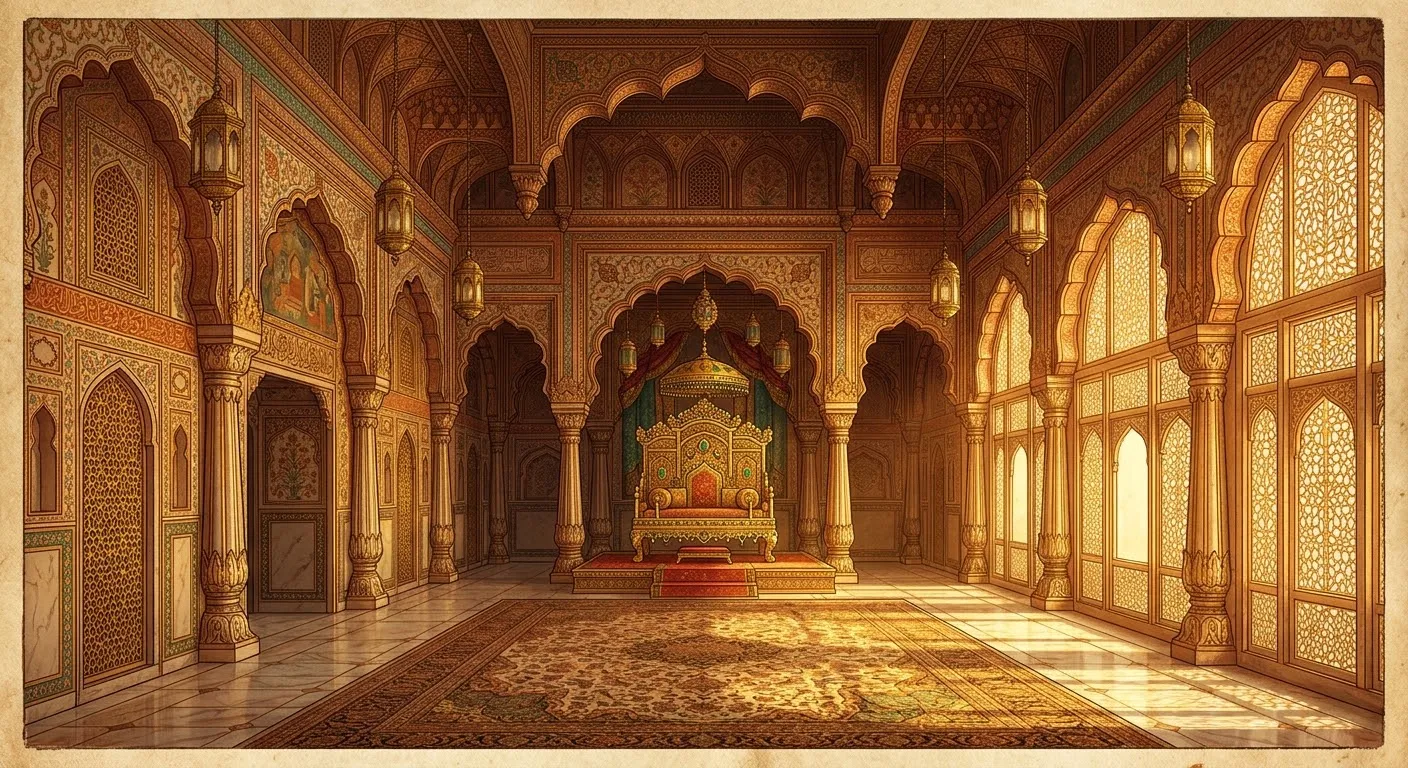
How the Mughal Wars of Succession Destroyed a Royal Family
The Mughal Empire was characterized by recurring violent successions where brothers, fathers, and sons fought for the throne. Despite traditions of primogeniture, every transition of power typically involved civil war. These internal conflicts often resulted in the execution, blinding, or imprisonment of royal family members competing for control.
Brutal power struggles persisted from the reign of Babur through Aurangzeb and his successors. While the empire expanded geographically and culturally, these constant internal feuds depleted resources and military strength. Ultimately, the inability to manage peaceful leadership transitions contributed significantly to the eventual decline of the Mughal dynasty.
The Taj Mahal gets all the postcards. The peacock throne gets all the legends.
But strip away the marble and the gold, and the Mughal dynasty tells a much darker story. Almost every time a Mughal emperor died, his own sons picked up swords against each other before his body was even buried.
This is the story of the Mughal wars of succession — the blood feuds that decided who would rule an empire, and the brothers, fathers, and sons who never made it out alive.
A Royal Rule the Mughals Could Never Keep
The Timurids, the dynasty Babur descended from, had a simple rule. When a king died, his eldest son inherited the throne. No debate, no bloodshed.
In theory.
In practice, greed for the throne crushed that tradition almost immediately. Every time a Mughal ruler died, his sons and relatives turned on each other. Whoever crushed his rivals first got to sit on the throne. The rest usually didn’t survive to see it.

Babur’s Bloody Road to the Throne
Even before he founded the Mughal Empire, Babur was fighting his own family.
He clashed with his uncles for control of Central Asian territory. His own half-brother, Jahangir Mirza, worked against him at nearly every turn.

Babur survived it all and built an empire. But the pattern he lived through would repeat itself for the next two hundred years.
Humayun’s Empire, Torn Apart by His Own Brothers
When Babur died, his son Humayun inherited the throne — and inherited enemies along with it.
His brothers Kamran, Askari, and Hindal opposed him openly. They worked against him on nearly every front, and their disloyalty came at the worst possible moment.
A Kingdom Lost, A Family That Wouldn’t Help
The Afghan commander Sher Shah Suri dealt Humayun a crushing defeat and forced him out of Delhi. Humayun fled to Lahore. The enemy followed him there too.
He kept running — to Multan, then toward Sindh. Along the way, his own brother Kamran plotted against him. As Humayun crossed the Indus with a broken, starving army, Kamran tried to have him captured and sent back to Kabul to be executed.
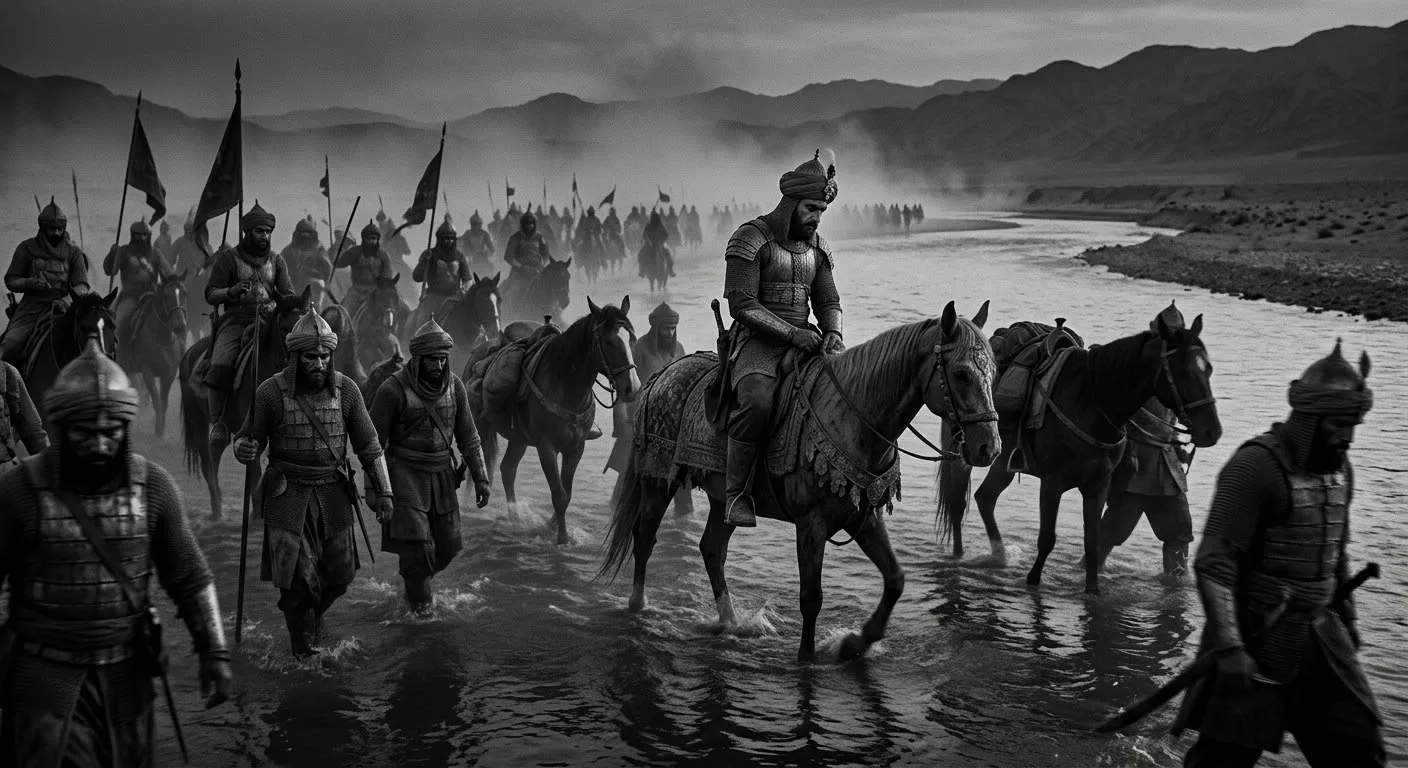
Humayun escaped. Eventually, he crossed into Persia and lived there in exile, a king without a kingdom.
For fifteen years, he waited. In 1555, Humayun finally reclaimed the Mughal throne. He died less than a year later.
Akbar’s Only Real Rival
Akbar’s reign looked calm compared to what came before it — almost. His half-brother, Mirza Hakim, ruler of Kabul, was egged on by disloyal nobles and marched on Lahore with an army.
Akbar’s forces crushed the invasion and drove Mirza Hakim back to Kabul. Akbar later reconciled with him, and Mirza Hakim continued ruling Kabul until his death in 1585.

Compared to the bloodshed on either side of him, Akbar got off easy.
Jahangir and the Son Who Rebelled Against Him
Peace never lasted long in the Mughal family. After Akbar, his son Jahangir took the throne — and faced a rebellion from his own son, Prince Khusrau.
Jahangir crushed the revolt. He had the rebel soldiers publicly hanged as a warning to anyone else who thought about challenging him.
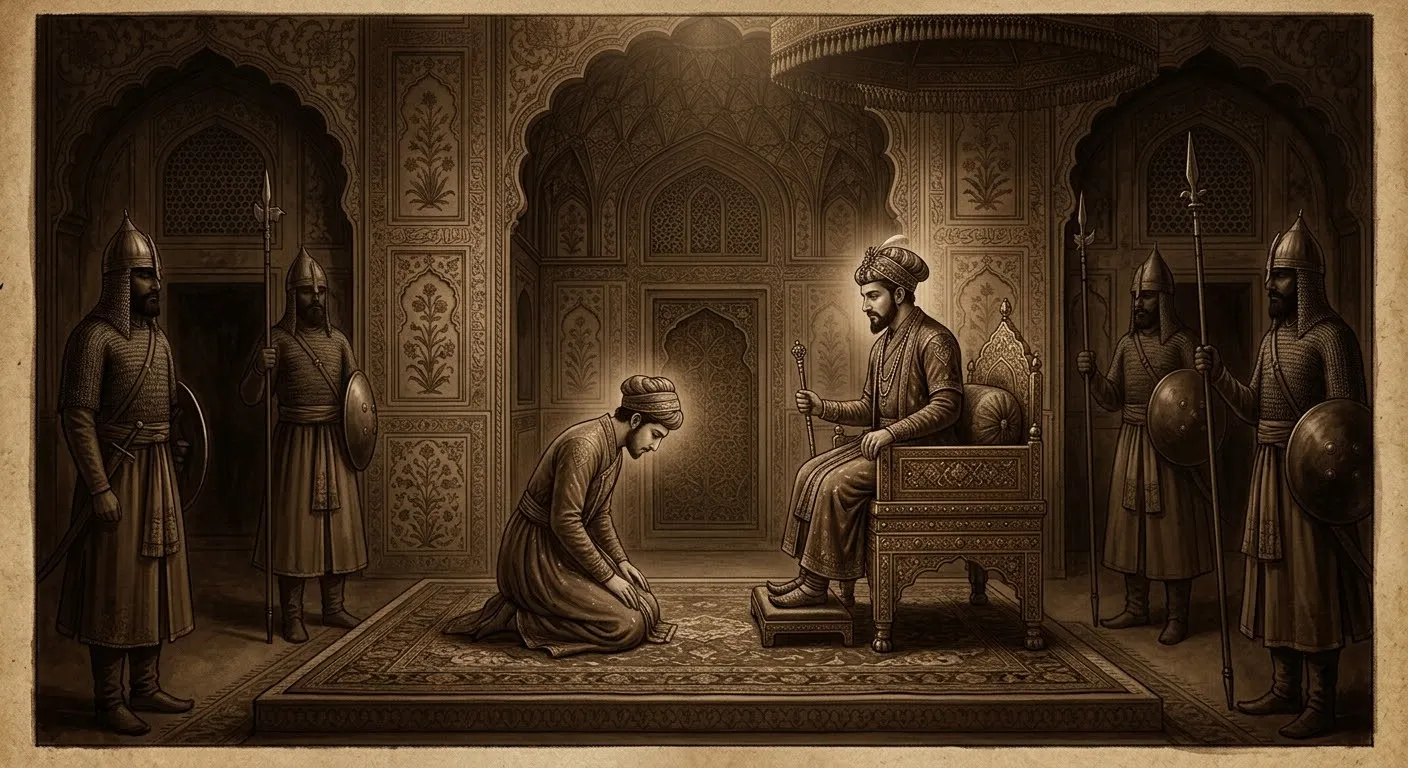
Khusrau’s punishment was worse. Jahangir had him blinded and kept him in captivity for the rest of his life.
Shah Jahan’s Rise Through Bloodshed
When Jahangir died, his son Khurram took the throne as Shah Jahan. But two rivals stood in his way: his brother Shahryar and his nephew Dawar Bakhsh.
Shah Jahan’s loyalists defeated and captured both of them. Shahryar was blinded. Dawar Bakhsh was put to death.
Shah Jahan had cleared his path to power the same brutal way his ancestors had.
The War That Shocked the Empire
Nothing compares to what happened in 1658.
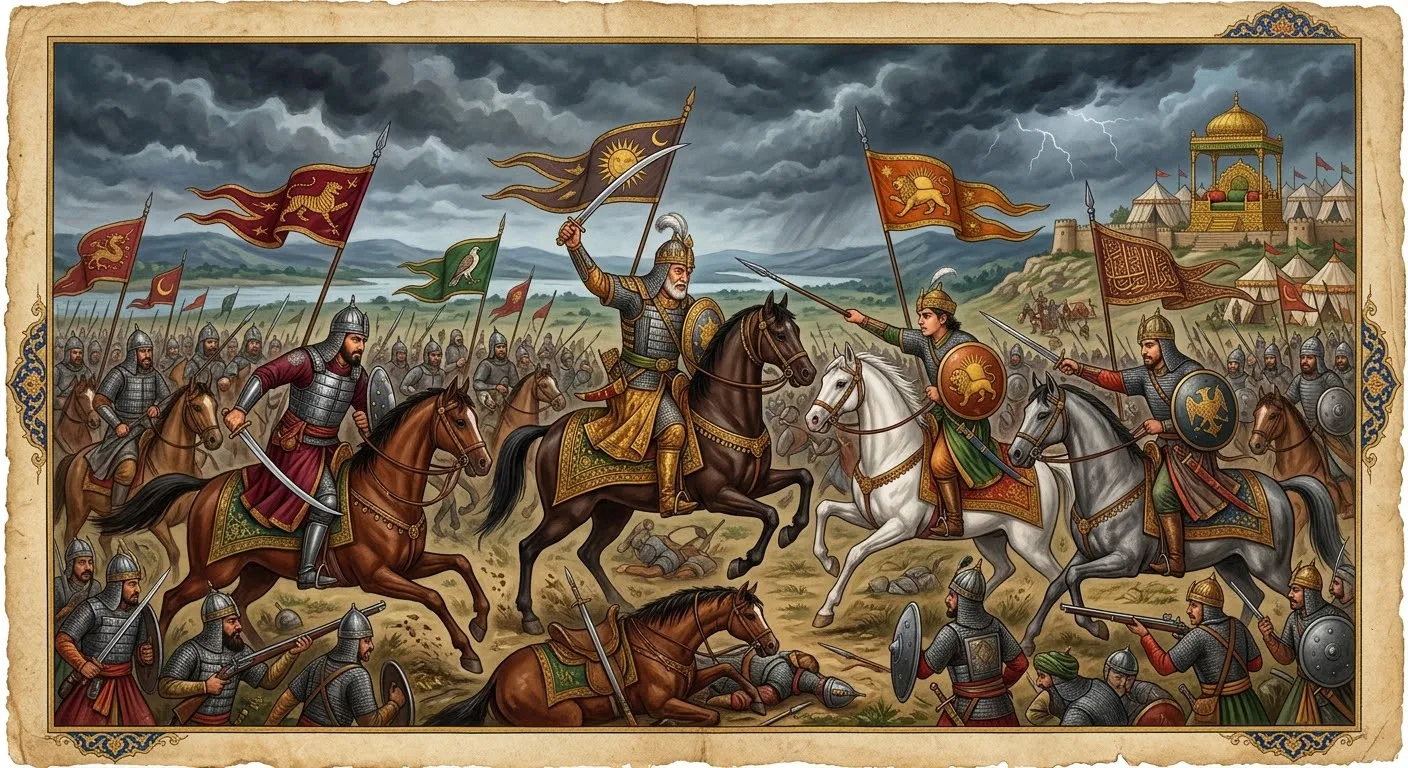
Shah Jahan was still alive when his four sons — Dara Shikoh, Aurangzeb, Shuja, and Murad — went to war against each other for the throne. It was the bloodiest succession fight the empire had ever seen.
Aurangzeb won. His three brothers all met violent ends.
Then Aurangzeb did something even more shocking. He imprisoned his own father inside Agra Fort, where Shah Jahan spent his final eight years staring out at the Taj Mahal, the monument he’d built for his late wife. Aurangzeb declared himself emperor while his father was still alive, locked away within sight of his own greatest creation.
The Decade That Broke the Mughal Empire
Aurangzeb died in 1707. What followed was chaos.
Three of his sons — Azam, Muazzam, and Kam Bakhsh — fought for the throne. Muazzam won and became emperor. His brothers died in the fighting.
That, however, was just the beginning. In the decade after Aurangzeb’s death, the empire lurched through one bloody succession crisis after another. Generals, soldiers, and skilled commanders died by the thousands, fighting wars that had nothing to do with defending the empire and everything to do with who got to sit on its throne.

By the time the dust settled, the Mughal Empire was never the same. It had won every war against outsiders it needed to win. What broke it was three hundred years of fighting itself.
The Last Mughal Emperor’s Final, Forgotten Years
Why the Mughal Wars of Succession Still Matter
The Mughal wars of succession reveal something uncomfortable about power: the same family that built the Taj Mahal, commissioned breathtaking art, and ruled one of history’s wealthiest empires also blinded its own princes, imprisoned its own kings, and buried its own brothers.
Every generation promised it would be different. Every generation broke that promise before the last emperor was even in his grave.
That’s the real legacy behind the marble and the myth — an empire that conquered half a continent but could never make peace with itself.