
Wine Bricks and the Loophole That Fooled America
During the American Prohibition era, grape farmers avoided financial ruin by selling Wine Bricks, which were blocks of concentrated grape juice. While legally sold as food products, these bricks featured packaging with warning labels that explicitly detailed how to ferment the concentrate into wine at home.
This legal loophole allowed winemaking to continue privately, as the government could not easily prosecute consumers for following instructions framed as warnings. The Wine Brick serves as a historical example of how creative ingenuity can bypass restrictive legislation through the use of clever marketing and technicalities.
America thought it had solved its alcohol problem. In 1920, the government passed Prohibition — a nationwide ban that made producing, selling, and buying alcohol completely illegal. Lawmakers believed they had shut the door on liquor for good. What they didn’t count on was the Wine Brick — a product so brilliantly deceptive that its very warning label became the best set of instructions a drinker could ask for.
When the Law Hit the Vineyards Hard
Prohibition didn’t just hurt saloons and breweries. It devastated the grape farming industry almost overnight.
California’s wine country had built an entire economy around the vine. Farmers who had spent generations cultivating their vineyards suddenly found themselves with a product nobody could legally buy. As a result, thousands of grape growers faced financial ruin.
However, a few clever minds refused to go quietly.
The Invention That Changed Everything
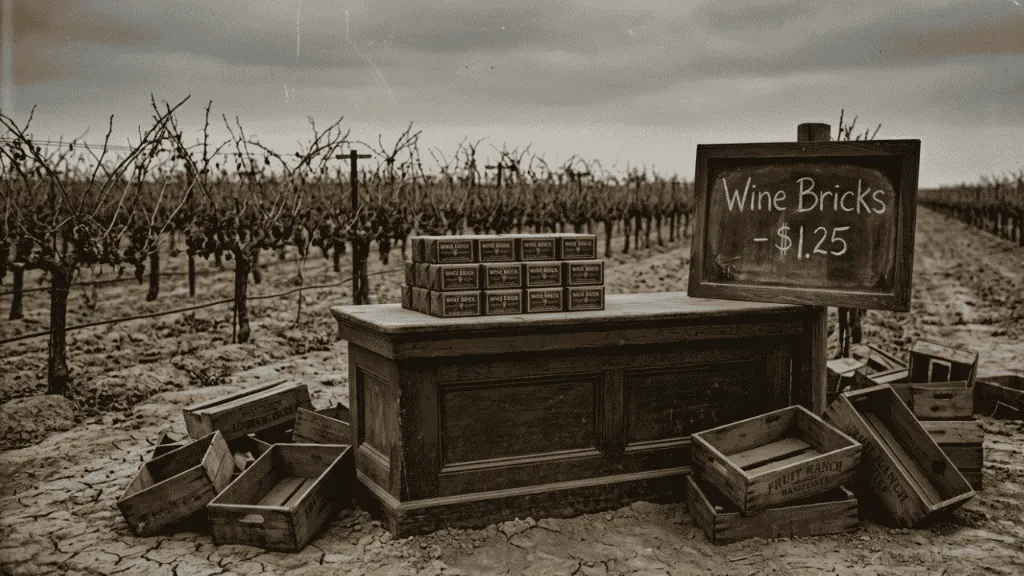
Faced with collapse, grape farmers came up with an idea that was equal parts brilliant and audacious. They began pressing their grapes into a dense, semi-solid block — a concentrated form of grape juice that could be sold legally as a food product.
They called it the Wine Brick.
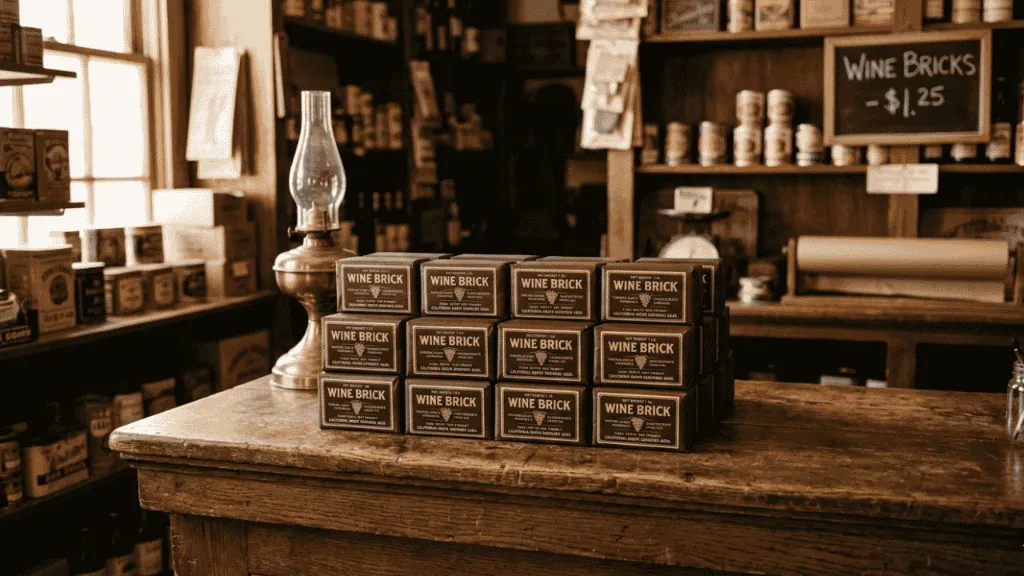
On the surface, it looked perfectly innocent. A customer could walk into a store, buy a Wine Brick, take it home, and dissolve it in water to make grape juice. Completely legal. No questions asked.
But it was the packaging that made history.

The Warning Label That Was Actually an Instruction Manual
Printed right on the box was a bold, official-looking warning. It read something like:
“Caution: Do not dissolve this block in a gallon of water, add sugar, and leave it in a cool place for twenty days — as it will turn into wine.”
In an era before the internet, this single sentence did the job of a thousand tutorials.
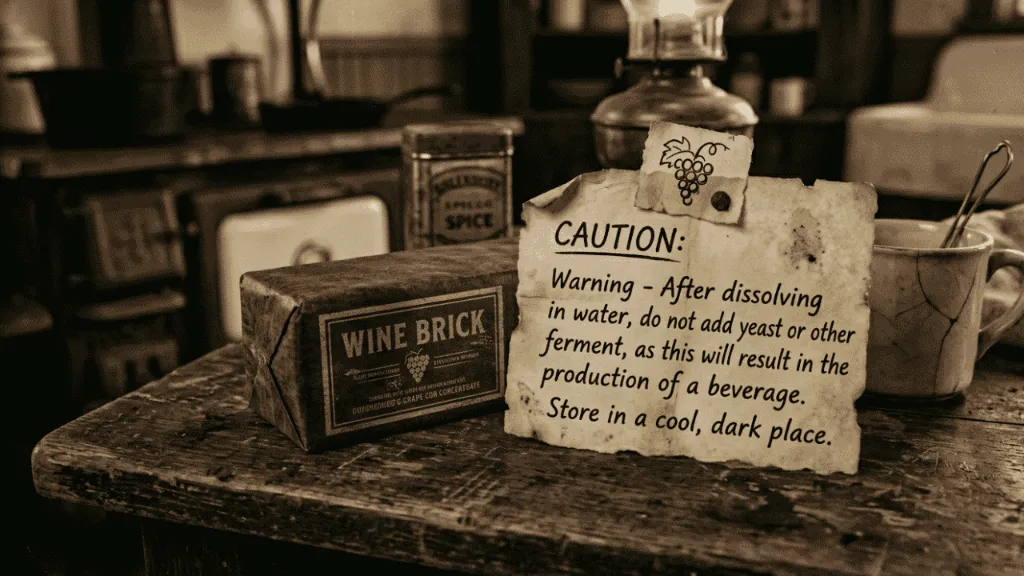
Meanwhile, ordinary Americans caught on immediately. The “warning” told them exactly what they needed to know — the right amount of water, the right amount of time, and the right conditions to turn a perfectly legal grocery item into something very much illegal.
People didn’t need a second invitation.
Wine Bricks Flew Off the Shelves
Sales exploded. The thousands across the country sell Wine Bricks. Families quietly followed the “instructions” printed right on the packaging, and home winemaking became a silent, widespread practice hidden behind closed kitchen doors.
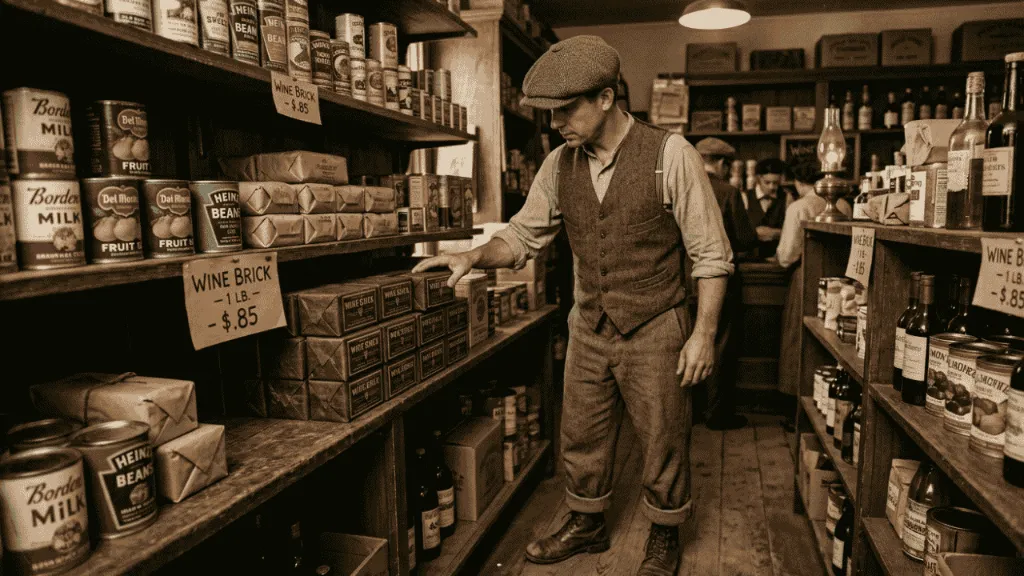
Because of this, the government found itself in an embarrassing position. The product was legal. The warning label was legal. And technically, no law said a citizen couldn’t read a warning and then choose to ignore it — even if ignoring it meant making wine in their basement.
Prohibition agents had no easy way to stop it.

The Perfect Crime Hidden in Plain Sight
What makes the Wine Brick story so remarkable is how openly it operated. This wasn’t a secret whispered in back alleys or a scheme run by gangsters. It happened in grocery stores, on printed packaging, and in millions of American homes.
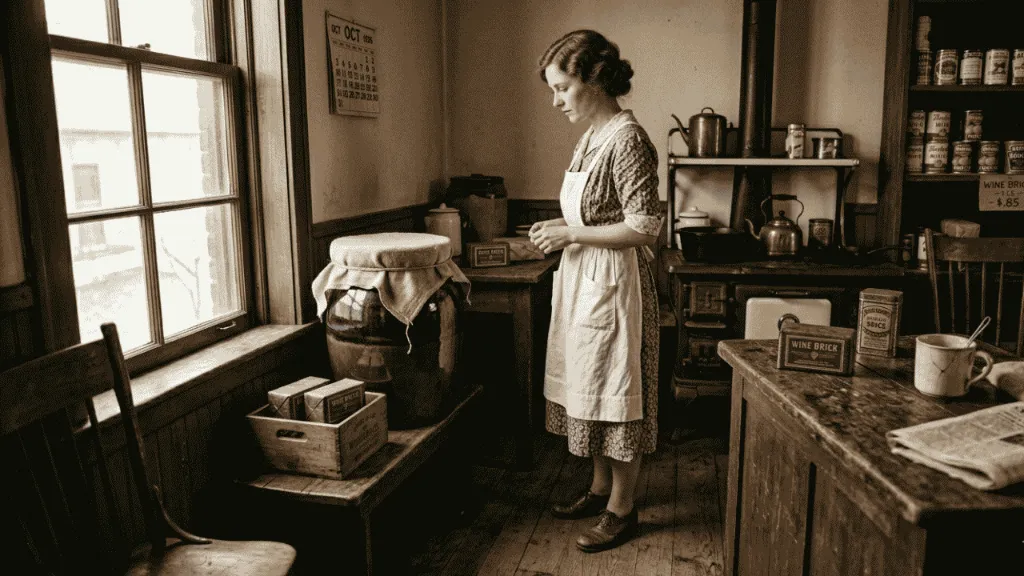
Eventually, the government realized that Prohibition had far more loopholes than it had doors. Wine Bricks were just one of many creative workarounds citizens invented to keep alcohol flowing through the dry years.
For example, pharmacists could legally sell “medicinal whiskey.” Religious institutions could legally use wine for communion. And grape farmers could legally sell concentrated grape bricks — along with very helpful warnings about what not to do with them.
What the Wine Brick Tells Us About Human Nature
The story of the Wine Brick isn’t just a funny footnote in history. It says something profound about how people respond to laws they consider unjust or unnecessary.
When governments ban something in response to genuine popular demand, people don’t simply stop wanting it. Instead, they find creative, often ingenious ways around the restrictions. The Wine Brick era proved that you can legislate behavior — but you can’t always legislate ingenuity.
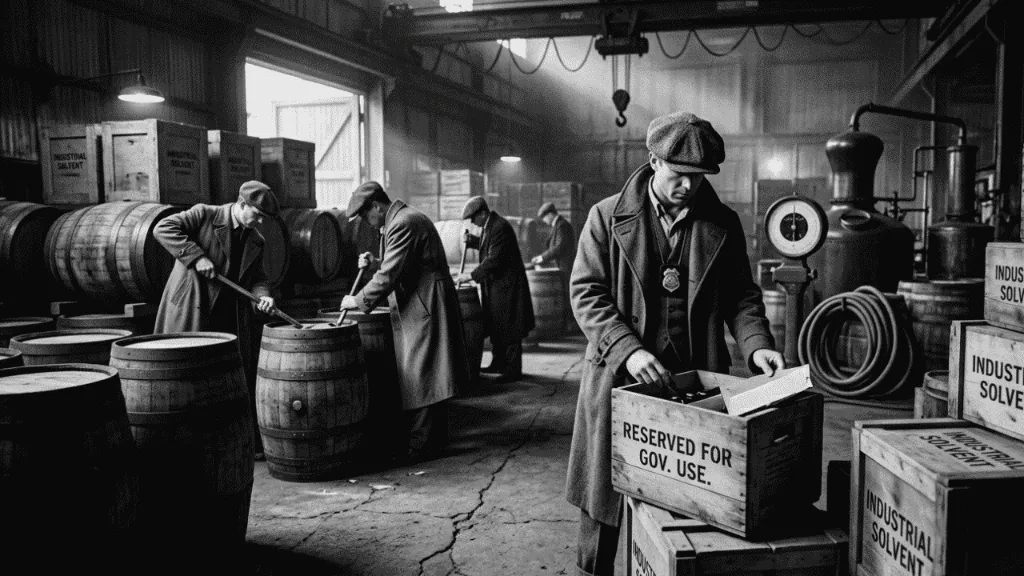
In addition, it showed that sometimes the most powerful form of resistance isn’t protest or defiance. Sometimes, it’s a warning label written with a wink.
The Pig War: How a Hungry Hog Almost Started a War Between Two Superpowers
Prohibition Ends — But the Legend Lives On
Prohibition officially collapsed in 1933, when the 21st Amendment repealed the 18th. Afterward, Americans were finally free to drink openly again, and the wine industry slowly rebuilt itself.
But the Wine Brick remains one of the most delightful stories from that turbulent era. It stands as proof that when bureaucracy overreaches, ordinary people will always find a way to adapt — legally, creatively, and with a sense of humor.
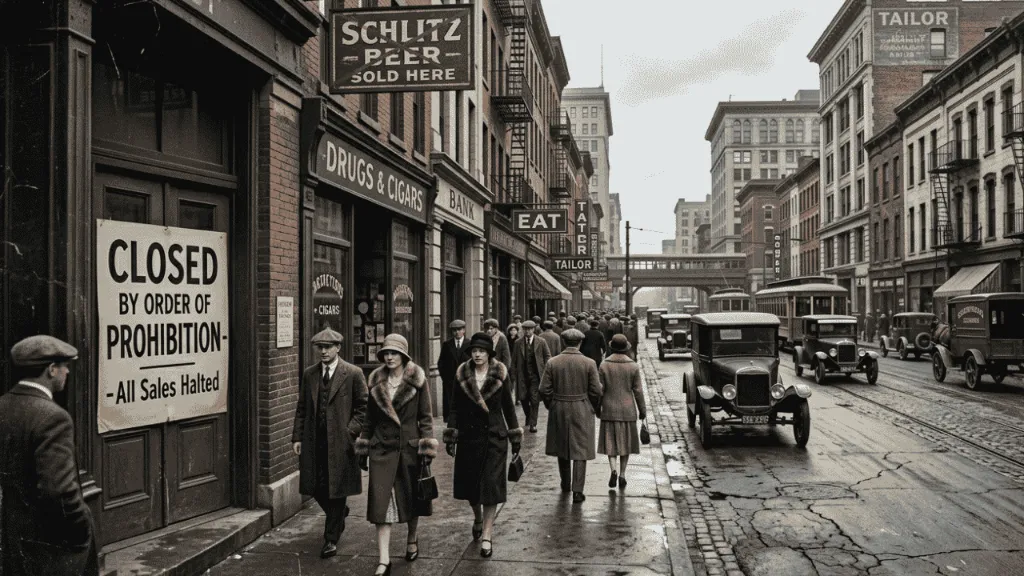
The farmers who invented the Wine Brick didn’t just save their businesses. They wrote a small, mischievous chapter into American history that people still smile at a century later.
Conclusion
The Wine Brick is more than a clever workaround — it’s a symbol of how ordinary people respond to extraordinary restrictions. During Prohibition, when the law banned alcohol across an entire nation, grape farmers found a way to keep their industry alive while technically staying within the law. Their famous warning label, which told people exactly what not to do, became one of history’s most creative loopholes. It’s a reminder that human ingenuity — and a good sense of humor — can outlast almost any law.