
Pompeii: The Day Time Stopped and an Entire Civilization Vanished
Pompeii was a thriving Roman center of culture and commerce until the catastrophic eruption of Mount Vesuvius in 79 AD. The volcanic event buried the city under deep layers of ash and debris, instantly ending thousands of lives and concealing the site from the world for nearly 1,700 years.
Since its accidental rediscovery in 1748, excavations have revealed a remarkably preserved snapshot of daily Roman life. Plaster casts and artifacts provide a unique historical record. Today, the site serves as a vital archaeological park and a warning about the persistent dangers of the active volcano to modern residents.
Imagine waking up on a perfectly normal morning — going about your day, visiting the market, chatting with neighbors — only for everything to end within hours.
That is exactly what happened in Pompeii on August 24, 79 AD.
In just a few terrifying hours, one of the Roman Empire’s most vibrant cities disappeared beneath a suffocating blanket of volcanic ash. Thousands of lives froze in their final moments. And for nearly 1,700 years, the world simply forgot this city existed.
This is the story of Pompeii — a lost city that still speaks to us across two millennia.
A City That Had Everything
Before we talk about destruction, let’s talk about life.
In 79 AD, the Roman Empire ruled most of the known world — stretching across Europe, North Africa, and the Middle East. Within this mighty empire sat a jewel of a city along the southern coast of Italy, near the Bay of Naples.
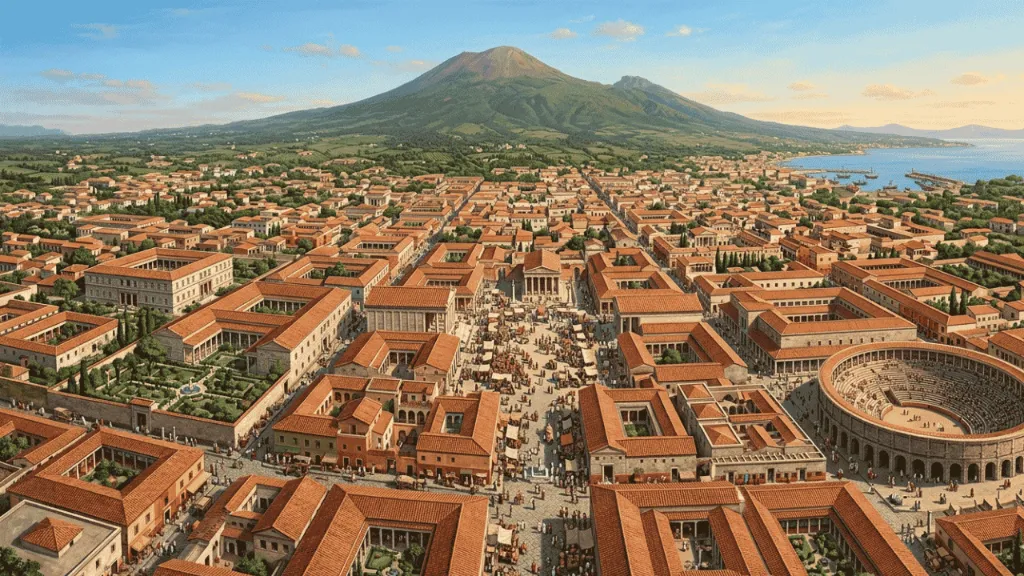
Pompeii was not just another town. It was a place of luxury, culture, and commerce.
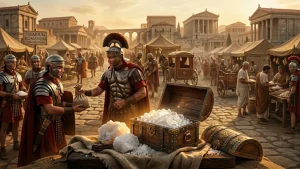
The city attracted wealthy Roman aristocrats who built grand mansions with private gardens, marble bathhouses, and painted walls. Merchants traded wine and olive oil across the Mediterranean. Gladiatorial games drew massive crowds. Public baths served not only as places to wash but also as social clubs where politics and gossip flowed freely.
Historians estimate that between 11,000 and 15,000 people called Pompeii home.
The streets were paved with stone — cleverly designed so rainwater would drain away. Water reached homes through a sophisticated pipeline system. Bakeries, wine shops, theaters, and election campaign posters lined the busy streets.
However, not everyone lived equally. The wealthy elite enjoyed spacious homes with sculptures and private baths. Meanwhile, enslaved people lived in cramped quarters and had little freedom.
Pompeii had originally grown under Greek and local Italian influence, but eventually became part of the Roman Republic and later the Roman Empire. Because of its busy port and fertile agricultural land, the city thrived economically for centuries.
The Silent Giant Watching Over the City
Just a few miles from Pompeii stood Mount Vesuvius.
To the people living there, it looked like nothing more than a scenic backdrop. Nobody suspected the truth — that the mountain had been storing molten rock and poisonous gas for centuries beneath its calm surface.
Small earthquakes had rattled the region before. In fact, a powerful earthquake struck in 62 AD, damaging much of the city. However, the Romans simply rebuilt and moved on. Nobody connected the tremors to a deeper, more dangerous force brewing underground.
That turned out to be a catastrophic mistake.
August 24, 79 AD — The Day Everything Changed
The morning of August 24 started like any other in Pompeii.
Then, in the early afternoon, the ground shook violently.
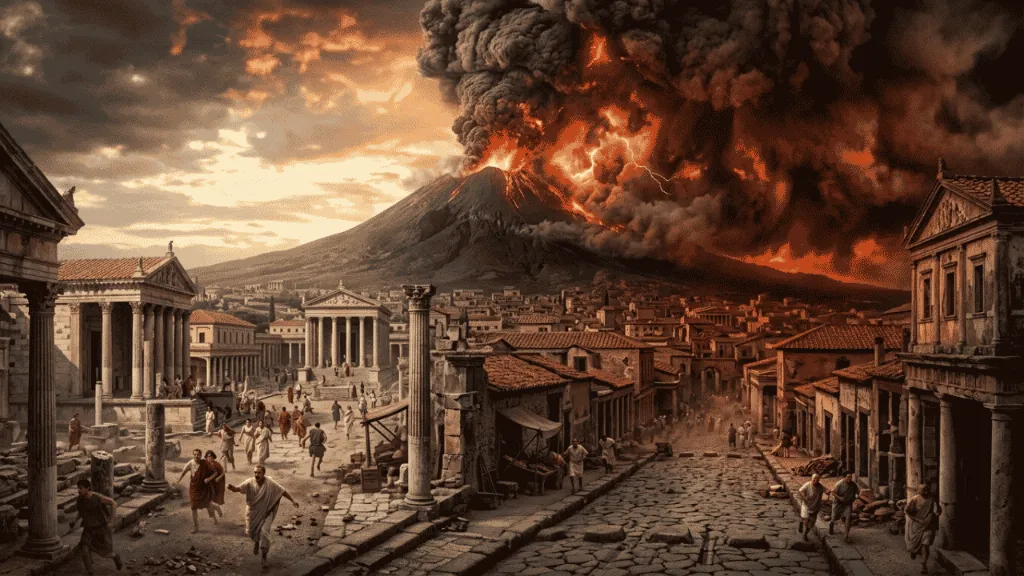
Suddenly, a massive explosion ripped through the air. Mount Vesuvius had erupted.
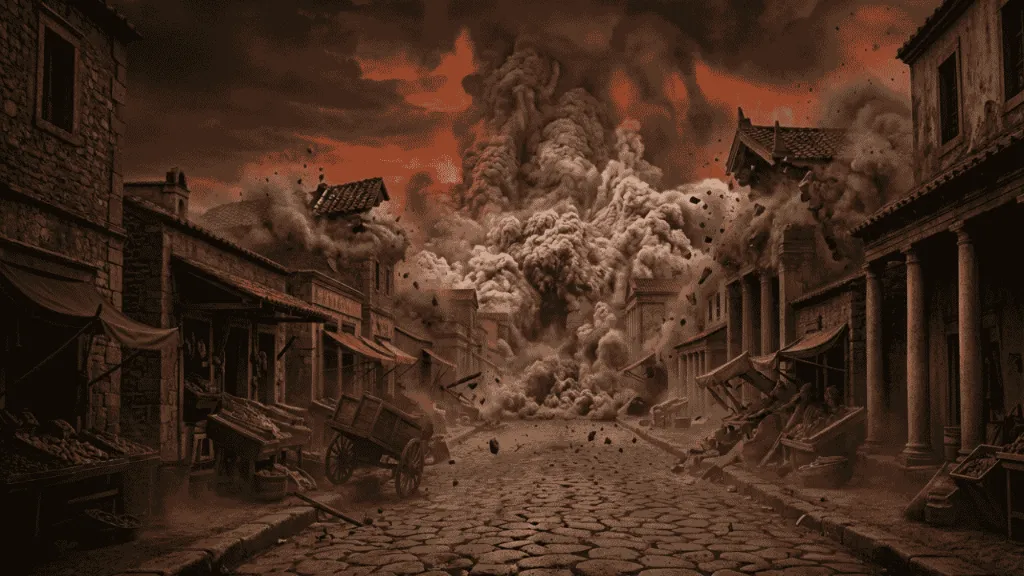
Roman historian Pliny the Younger witnessed the disaster from across the bay and later described what he saw. He wrote about an enormous cloud rising into the sky — shaped like a towering pine tree — blotting out the sun completely.
Within minutes, the sky turned black.
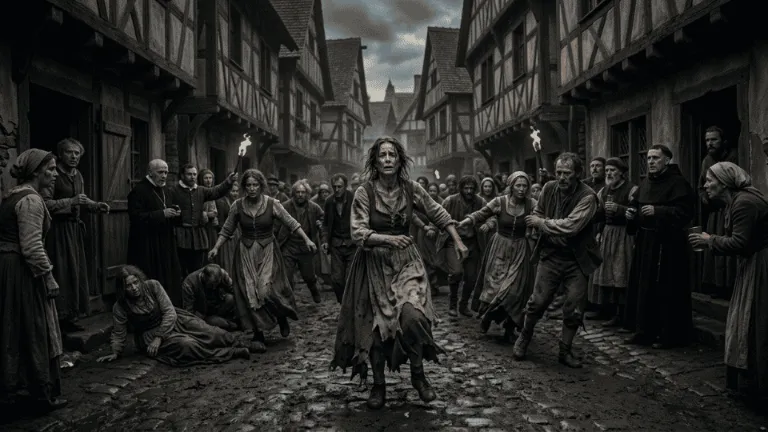
Burning ash and pumice stones rained down on the city like a deadly storm. Rooftops collapsed under the weight. People ran screaming into the streets. Some fled toward the harbor. Others rushed to temples, hoping the gods would protect them. A few tried to gather their valuables before escaping.
But death moved faster than any of them.
The Pyroclastic Flow — A Wall of Instant Death
As the night fell, the worst was yet to come.
Vesuvius unleashed what scientists today call a pyroclastic flow — a superheated surge of ash, gas, and rock fragments traveling at hundreds of kilometers per hour. The temperature reached levels so extreme that a human being could die within seconds of contact.
There was no escaping it.
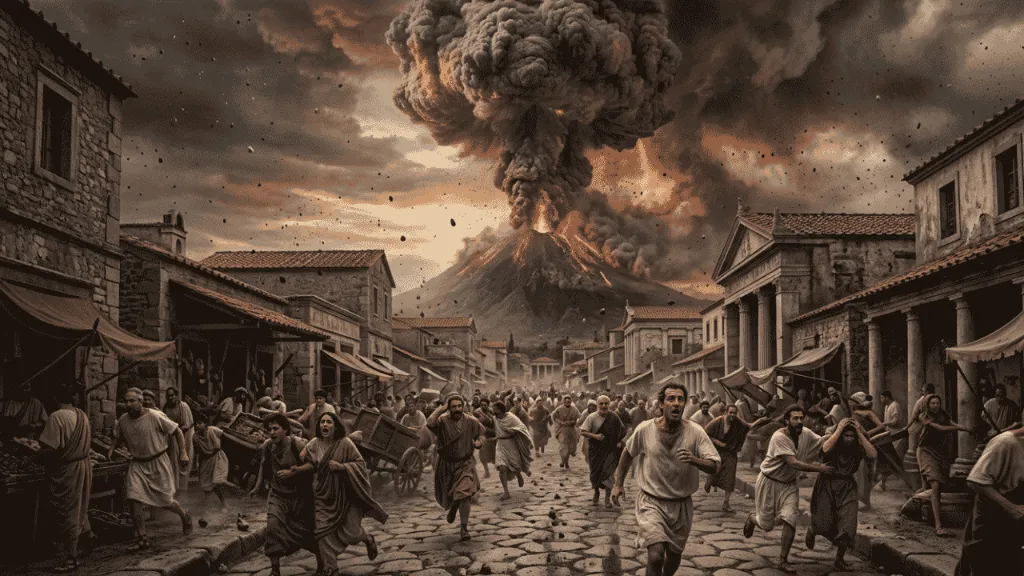
People died exactly where they stood.
Archaeologists later discovered harrowing evidence of those final moments:
- A man clutching gold coins in his hand
- A family huddled together, arms wrapped around each other
- A dog chained to a post, unable to flee, was buried alive under the ash
In addition, entire neighborhoods were swallowed whole. Within hours, Pompeii lay buried under 25 to 30 feet of volcanic ash and debris.
The nearby city of Herculaneum met a similar fate. However, there, a flow of lava mud buried buildings even deeper, which ironically helped preserve structures more completely.
The World Forgets — And Then Remembers
Centuries passed. Empires rose and fell.
Eventually, people forgot Pompeii even existed. The city’s exact location faded from memory, buried beneath the Italian countryside.
Then, in 1748, during the reign of Charles III of Spain, workers stumbled upon the ruins by accident while excavating the area. What they uncovered stunned the world.
Pompeii was not a field of rubble. It was a frozen snapshot of Roman life, perfectly preserved under layers of volcanic ash.
What the Ash Preserved — A Time Capsule of Roman Life
The discoveries were extraordinary.
- Political slogans are still written on walls
- Loaves of bread still sitting in bakery ovens
- Wine jars, jewelry, and children’s toys
- Campaign advertisements for local elections
For example, one wall inscription essentially reads like an ancient social media post — a neighbor endorsing a candidate for public office. These details brought the ancient city back to life in a way no textbook ever could.
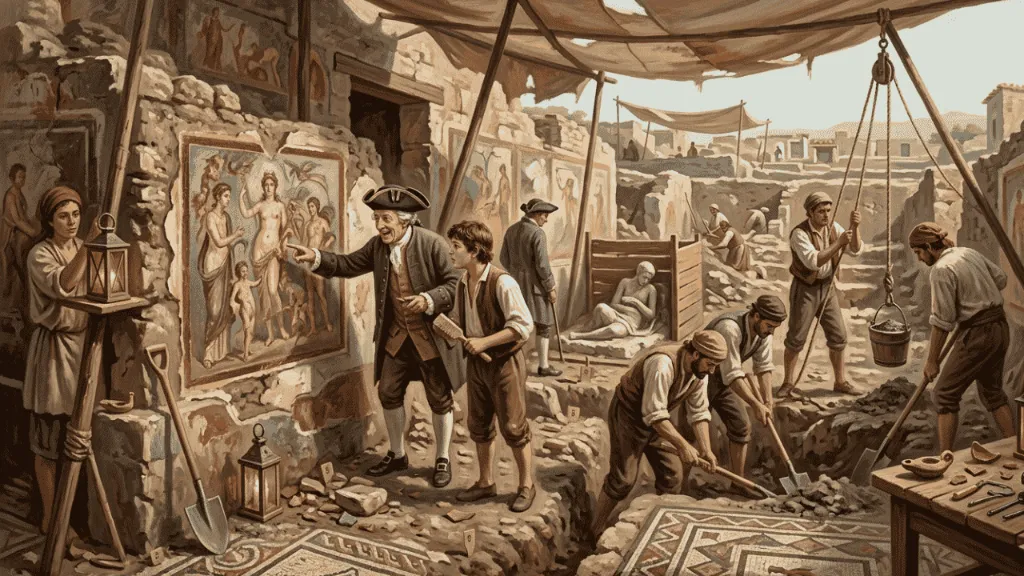
However, the most powerful — and heartbreaking — discoveries were yet to come.
The Plaster Casts — Faces Frozen in Terror
Over the centuries, the organic material in the human remains decayed. But the hardened ash around them held their exact shape, creating hollow molds in the ground.
In the 1860s, Italian archaeologist Giuseppe Fiorelli had a brilliant idea. He poured liquid plaster into these hollow spaces. As it hardened, the shape of a human body emerged — complete with facial expressions, clothing folds, and body posture.
The results were devastating in their emotional power:
- A woman shielding her face with her hands
- A child clinging to its mother
- People frozen mid-prayer, looking toward the sky
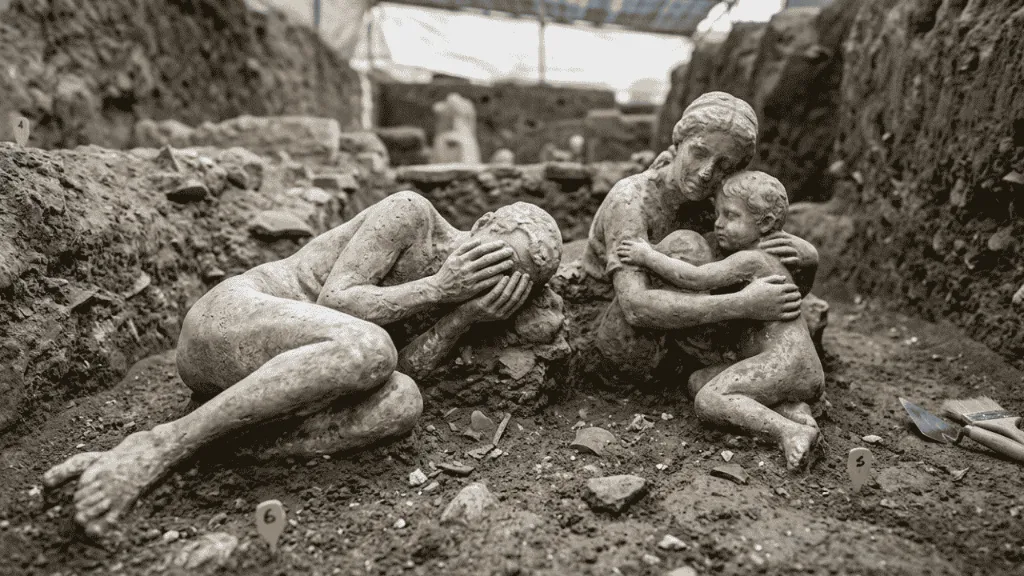
These figures do not feel like ancient history. They feel like yesterday.
Pompeii Today — A Living Museum
Today, Pompeii Archaeological Park ranks among the most important historical sites on earth.
Every year, millions of visitors walk its ancient stone streets, peer into preserved homes, and stand in the same spots where Romans once lived, laughed, and loved.
UNESCO designated Pompeii as a World Heritage Site, recognizing its irreplaceable cultural value. Archaeologists are still actively excavating sections of the city, and new discoveries continue to emerge regularly — including recent findings of ancient frescoes, food stalls, and even fast-food counters that served street food 2,000 years ago.
As a result, our understanding of ancient Roman daily life grows richer every year.
The Volcano Is Still Alive — And So Is the Danger
Here lies the most unsettling truth of all.
Mount Vesuvius is still an active volcano.
And today, roughly 3 million people live within its danger zone — making it one of the most densely populated volcanic regions on the planet.
Scientists monitor the volcano constantly. Emergency evacuation plans exist. However, experts acknowledge that a major eruption could unfold faster than any evacuation effort could handle.
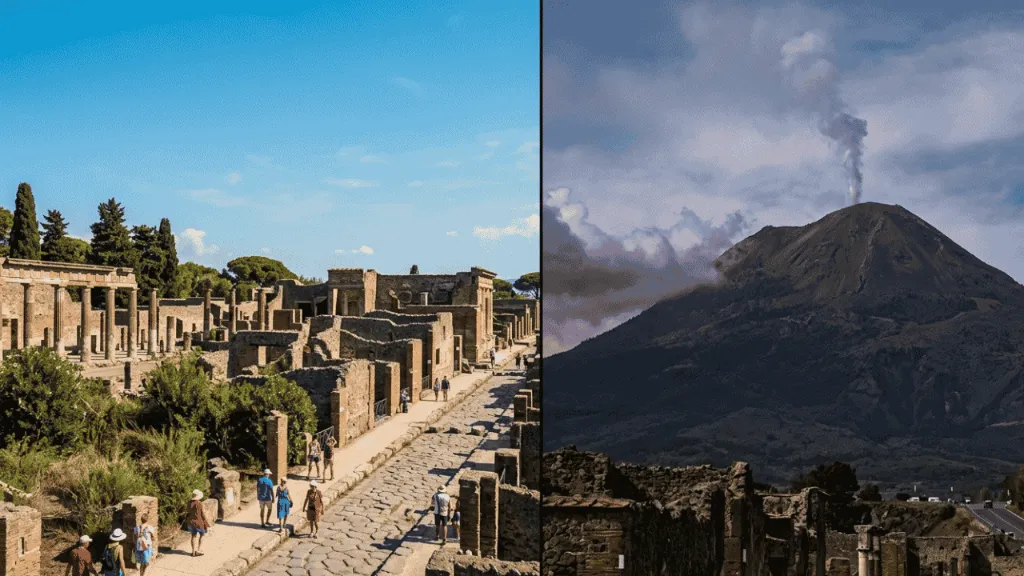
History gave us a warning once before. Pompeii is proof of what happens when that warning goes unheeded.
Conclusion — When the Past Becomes a Warning
Pompeii is more than an archaeological site. It is a mirror.
It shows us how quickly life can change; a thriving city full of laughter and commerce can vanish in an afternoon. It reminds us that nature operates on timescales we barely understand, and that complacency can be fatal.
Every plaster cast in Pompeii was once a living person — someone with hopes, worries, a family, and a future. Their frozen expressions carry a message that still echoes across two thousand years:
Pay attention. Take the warnings seriously. Time does not always give a second chance.
Pompeii did not die in vain. It continues to teach us — if only we are willing to listen.