
The Salt Man of Iran: A 1,700-Year-Old Face Frozen in Time
In 1993, miners in Iran discovered the naturally preserved remains of a man who died approximately 1,700 years ago. Located in the Chehrabad salt mine, the body was mummified by salt desiccation and low oxygen levels. This process kept his features, hair, and clothing remarkably intact over centuries.
Archaeologists later found multiple sets of remains and artifacts representing various historical periods. These discoveries provide physical evidence of ancient Persian mining practices, diet, and daily life. The collection is now studied at the National Museum of Iran to uncover further details about these ancient communities.
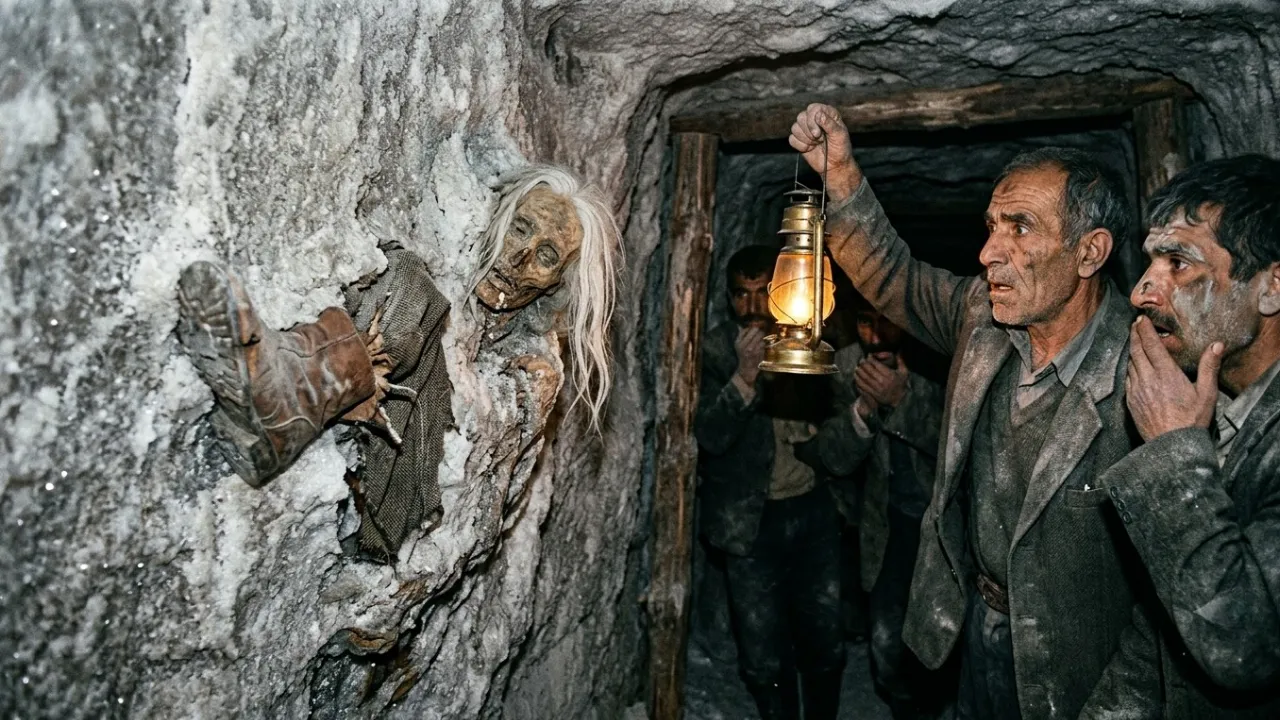
In 1993, miners working deep inside a salt mine in northwestern Iran made a discovery that stopped them cold.
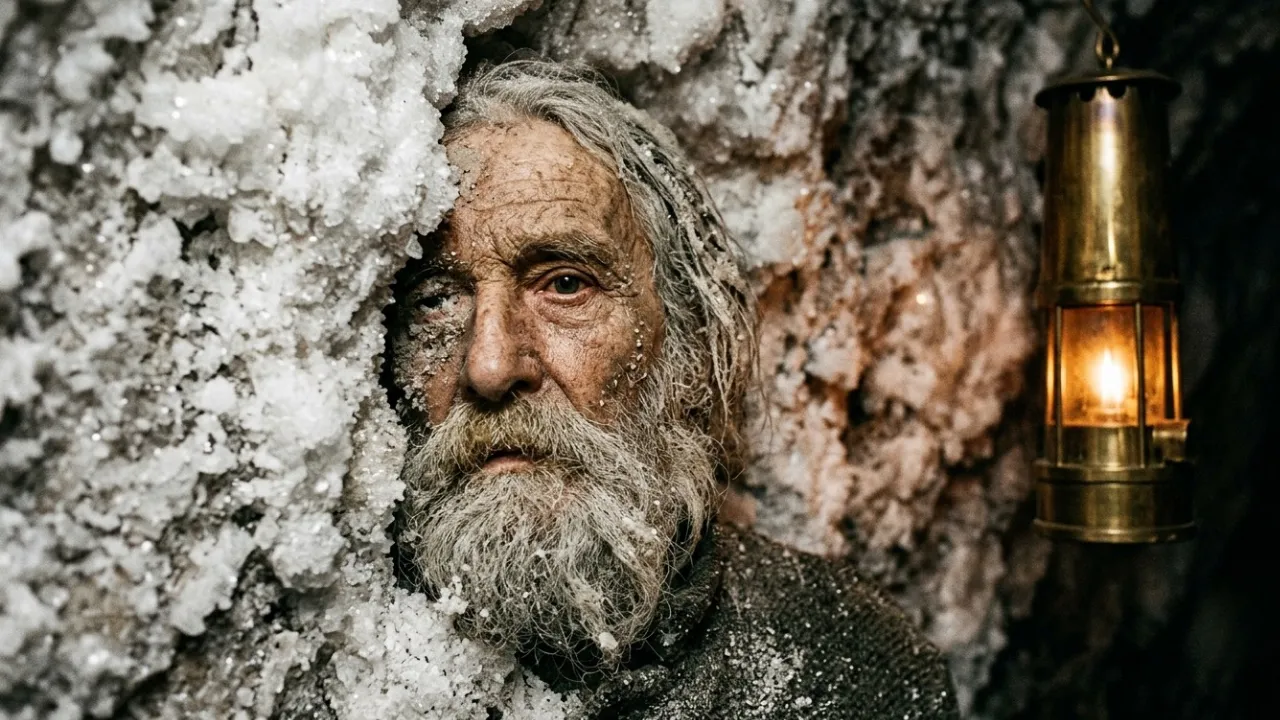
Staring back at them from the rock was a human face — remarkably intact, almost lifelike. For a brief moment, it looked as though the man had died only days earlier. His long hair was still visible. His white beard remained in place. He was even wearing a leather boot.
But this man had been dead for roughly 1,700 years.
What the miners had stumbled upon inside the Chehrabad salt mine in Iran’s Zanjan province would become one of the most extraordinary archaeological finds of the modern era. The world would come to know him simply as the Salt Man — and his story raises questions that historians are still working to answer.
A Mine That Became a Time Capsule
The Chehrabad salt mine sits in a remote stretch of northwestern Iran, a region that has been mined for its salt deposits for thousands of years.
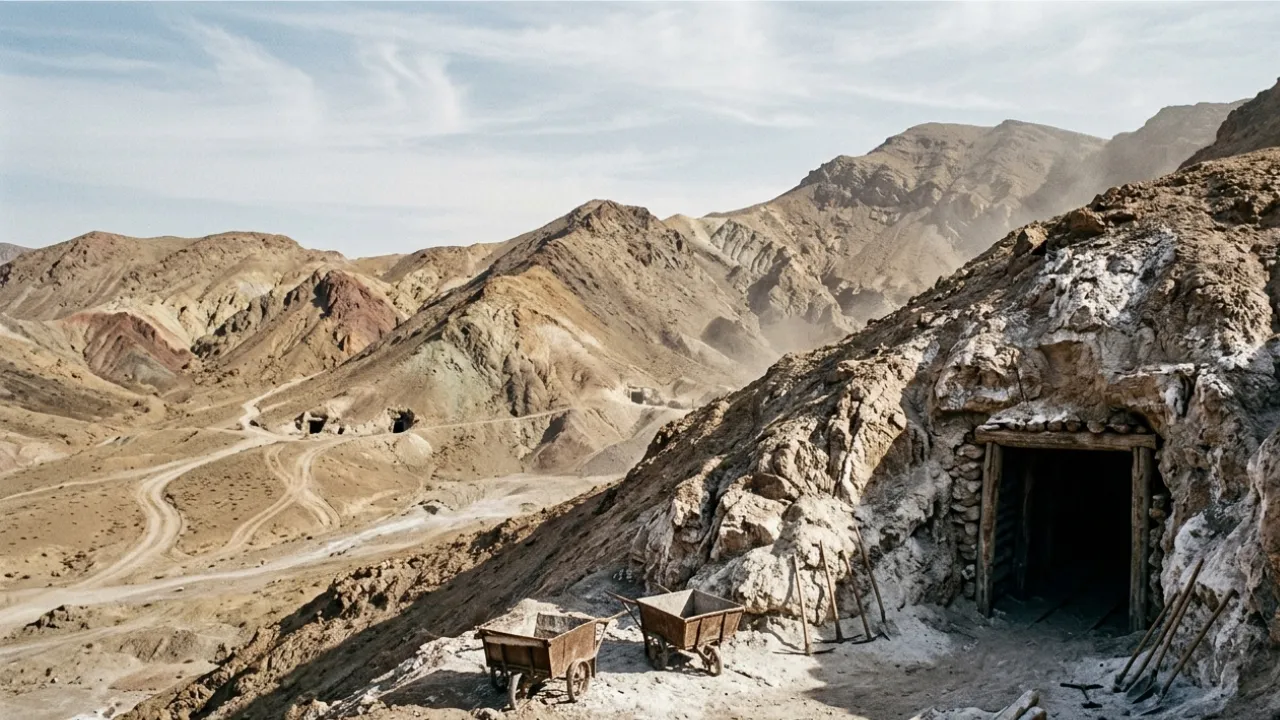
Salt mining is brutal, dangerous work. Ancient miners carved tunnels deep into the earth with basic tools, working in cramped and unstable conditions. Cave-ins were common. Accidents were frequent.
When disaster struck inside Chehrabad, it appears that some miners never made it out.
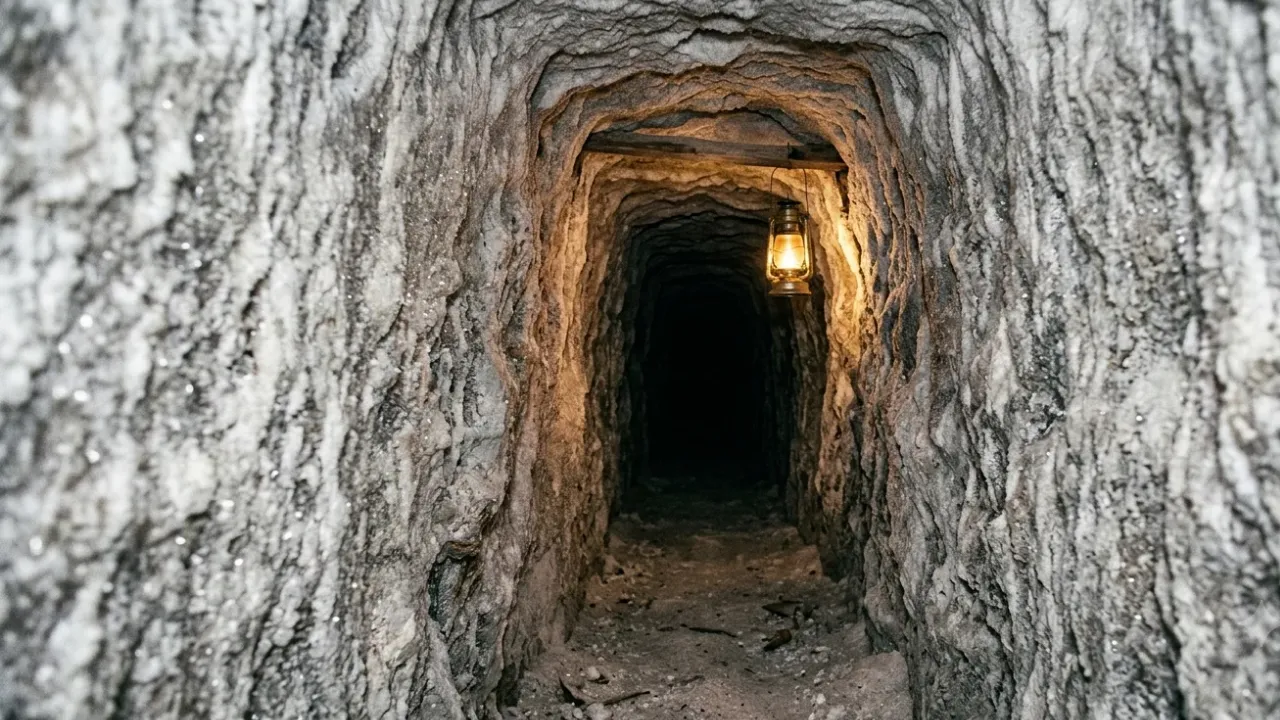
The salt, however, preserved everything it claimed to preserve.
How Nature Preserved What Time Should Have Destroyed
No one mummified the Salt Man. There were no rituals, no priests, no elaborate burial preparations.
Nature did this alone.
Salt is a powerful desiccant — it draws moisture out of organic material with remarkable efficiency. The moment the man was buried under salt deposits, the drying process began. Combined with the mine’s dry atmosphere and severely limited oxygen supply, the biological processes that cause decomposition were essentially halted.
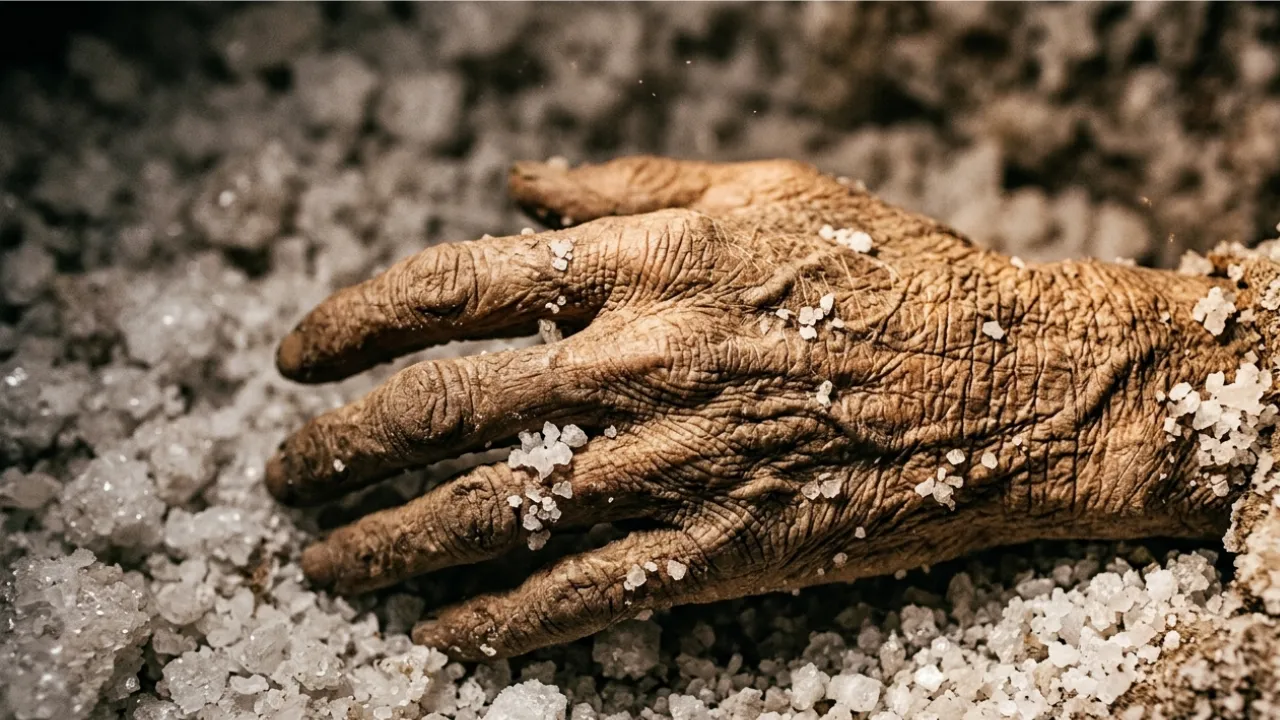
The result was extraordinary. Centuries passed, then hundreds more. Empires rose and fell across the ancient world. Yet inside that dark, airless chamber, a man’s face — his hair, his skin, his clothing — remained almost perfectly intact.
When scientists finally examined him, they found details that no written record could have preserved as vividly.
What the Salt Man Revealed
The preservation was stunning in its detail.
He had long hair and a white beard. He wore a leather boot — still on his foot. Fragments of clothing survived around him. Among his personal belongings was a gold earring in his left ear, which led some researchers to speculate that he may have held a position of status or distinction within his community.
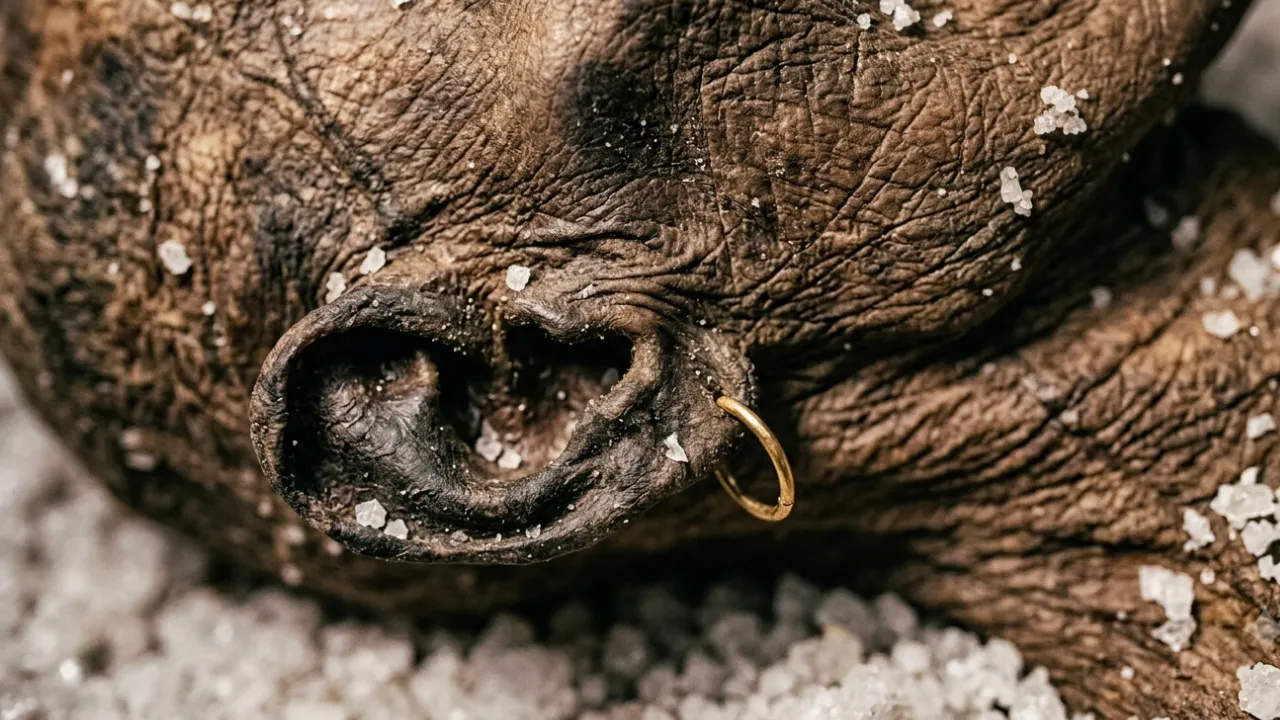
That conclusion remains unconfirmed. But the earring, like everything else found with him, offered a rare and intimate glimpse into a life lived in ancient Persia.
His physical remains told a story too. Scientists estimated he was older — possibly in his mid-forties — which was considered quite advanced for a manual laborer in that era. The toll of hard physical work was written into his bones.
More Salt Men Emerge
The first Salt Man was not the last.
Continued excavations at Chehrabad revealed additional preserved remains over the following years and decades. In total, researchers identified several individuals at the site — a group of ancient miners, most of whom are believed to have perished in separate tunnel collapses or mining accidents across different historical periods.
Carbon dating placed the men in different eras, suggesting that Chehrabad was an active mining site across a very long stretch of ancient and early medieval history.
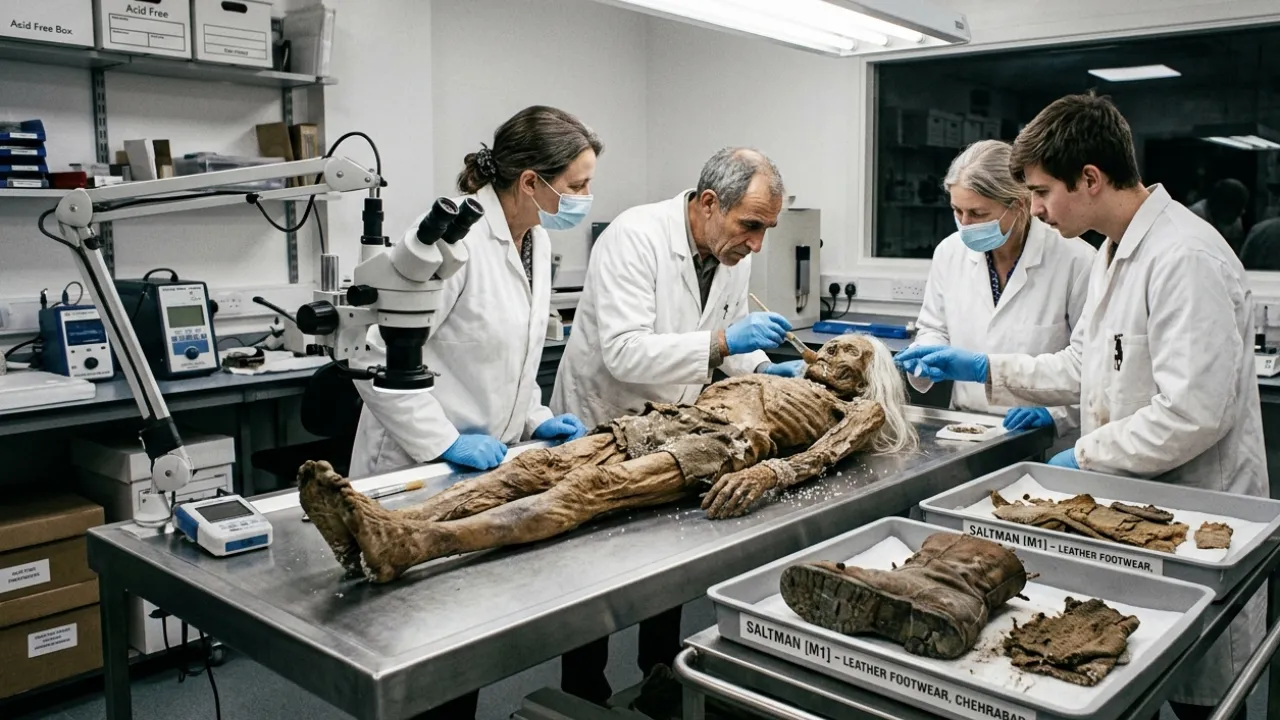
Each discovery added another layer to the picture. Researchers found tools, food remnants, rope, textiles, and other everyday objects — all preserved alongside the men who had once used them.
What These Discoveries Mean for History
The Salt Men of Chehrabad are not simply curiosities. They are primary sources — physical evidence of ancient life that no amount of written documentation can fully replicate.
Through careful analysis of the remains and artifacts, researchers have reconstructed aspects of ancient Persian daily life with unusual precision. The textiles revealed weaving techniques. The food remains pointed toward diet and agriculture. The tools showed how mining was conducted long before modern engineering existed.
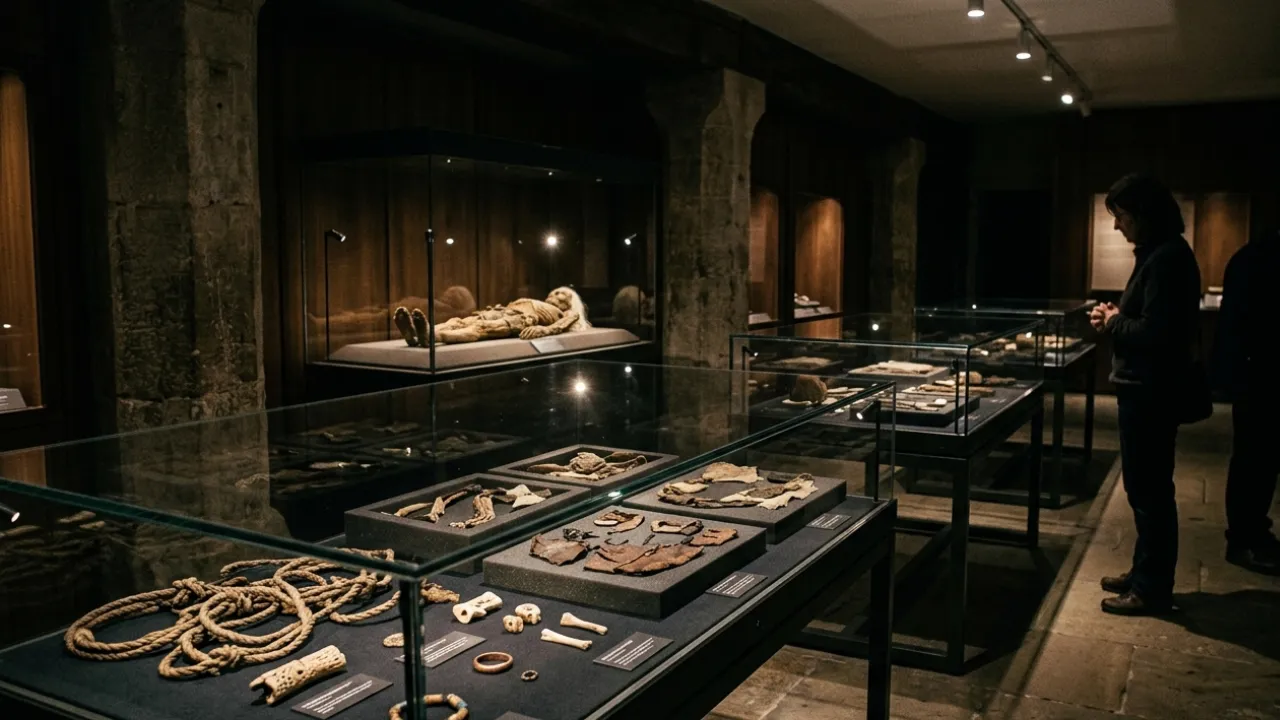
Today, the remains are housed at the National Museum of Iran in Tehran, where they continue to be studied by scientists from institutions including the University of Zurich and Oxford University.
The research is ongoing. Each new analysis, each advanced imaging technique applied to the preserved tissues, has the potential to reveal something that wasn’t visible before.
Lost Railroad Payroll Stagecoach Found in Utah Canyon After 100+ Years
A Legacy Frozen in Salt
The Salt Man of Iran survived 1,700 years not because anyone planned it, but because of a quiet and accidental chemistry between a human body and the mineral world around it.
He was likely an ordinary man — a miner doing dangerous work in a remote corner of the ancient world. He had no monument. No tomb. No written record bearing his name.
Yet here he is, still.
The discovery at Chehrabad reminds us that history doesn’t always survive in libraries and royal inscriptions. Sometimes it survives in the dark, in the earth, in the salt — waiting for someone to find it and ask the right questions.
The Salt Man of Iran is one of the most compelling examples of accidental preservation ever recorded. And in a strange way, the mine that likely claimed his life is also the reason the world still knows he existed.