

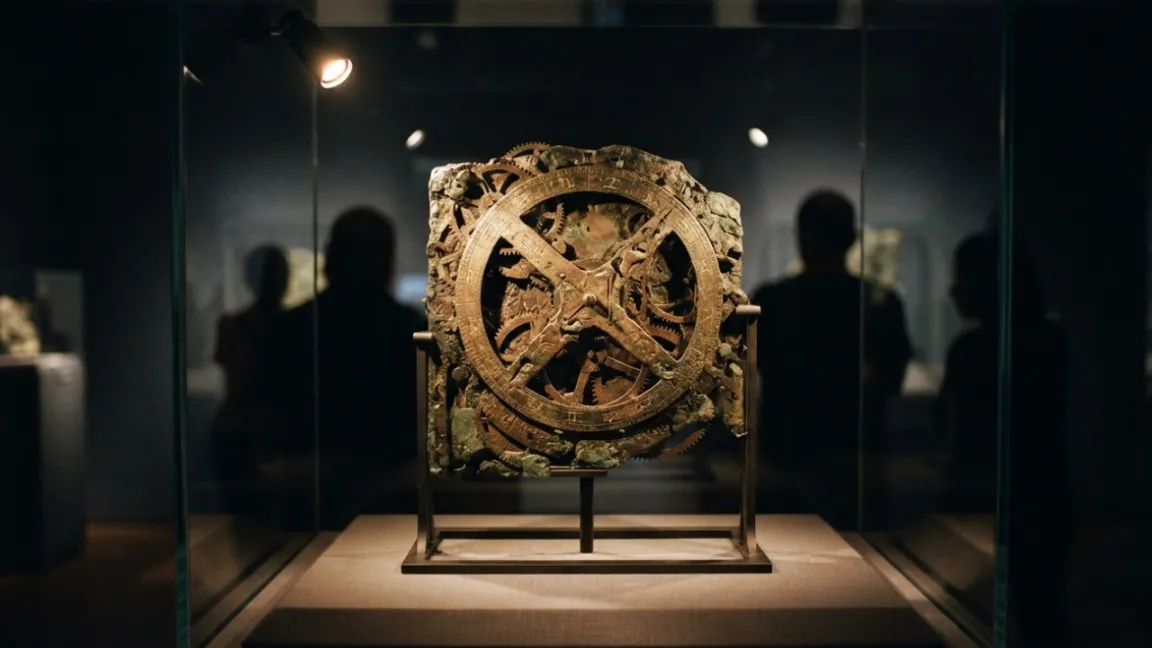
How a Shipwreck Revealed an Ancient 2000-Year-Old Analog Computer
Found in a 1901 shipwreck near Greece, the Antikythera mechanism is a bronze device dating back to 100 BC. Initially overlooked, modern scans revealed a complex system of over thirty precision gears. It represents a level of engineering previously unknown to historians for that era of human history.
The device functioned as an analog computer, tracking celestial movements and predicting eclipses with remarkable accuracy. It also calculated the cycles of major athletic competitions. This discovery suggests ancient Greek technology was far more advanced than once believed, as similar mechanical complexity did not reappear for another millennium.
In 1901, sponge divers off the Greek island of Antikythera found something odd tangled in an ancient shipwreck. It looked like a corroded chunk of bronze. Nobody guessed it would rewrite the history of technology.

That lump of metal is now known as the Antikythera mechanism, and it remains one of archaeology’s strangest puzzles. How did people living around 100 BC build something this advanced?
A Shipwreck Full of Secrets
The wreck near Antikythera held statues, jewelry, and pottery. Most divers focused on the treasures.
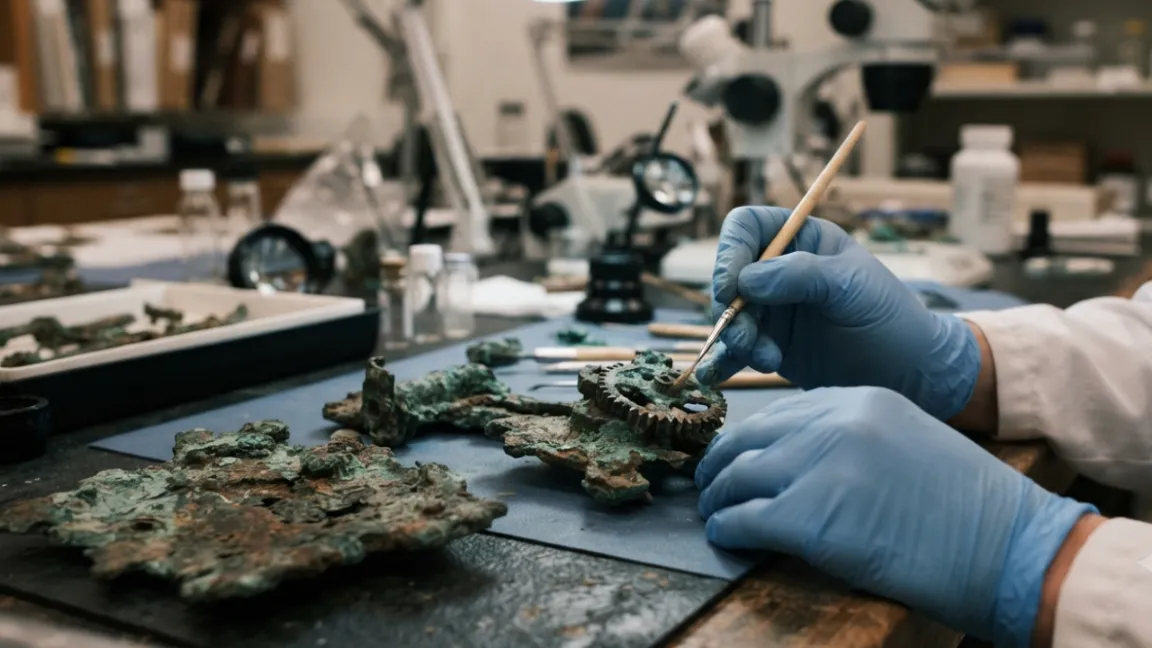
The bronze fragments seemed unremarkable at first. They sat in a museum, largely ignored, for years.

Eventually, researchers took a closer look. What they found changed everything.
Inside the Antikythera Mechanism
Modern X-ray and scanning technology revealed something astonishing. The device contained more than 30 intricately cut bronze gears, fitted together with remarkable precision.
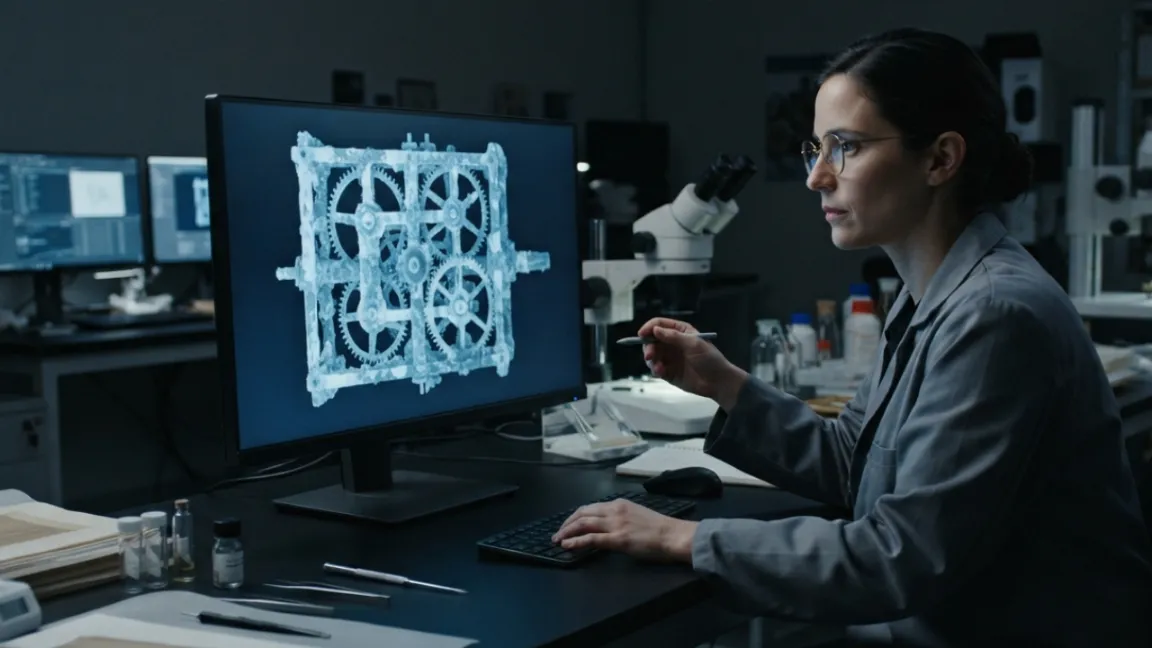
No one had ever seen gear technology this advanced from the ancient world. As a result, many experts initially doubted the findings.
However, repeated testing confirmed it. The Antikythera mechanism was real, and it was unlike anything else from its era.

What This Ancient Machine Actually Did
This wasn’t a decorative object or a simple tool. It functioned as an analog computer.
Turning its hand crank set the internal gears in motion. In turn, this lets users track:
- The positions of the sun, moon, and several planets
- Solar and lunar eclipse predictions
- The cycles of lunar months
- The scheduling of ancient Greek athletic games, including the Olympics

For its time, this level of calculation was extraordinary. Nothing else like it appears in the historical record for roughly another thousand years.
Why the Antikythera Mechanism Still Puzzles Historians
Because of this thousand-year gap, historians face a genuine mystery. Ancient Greek engineering and astronomy were clearly more advanced than most people assumed.
Meanwhile, basic questions remain unanswered. Who actually built the Antikythera mechanism? Was it the work of one brilliant inventor, or a workshop tradition lost to time?
And perhaps the most haunting question of all: why did this knowledge simply vanish? No comparable device surfaces again until centuries later.

The World’s First Known Analog Computer
Today, scholars widely describe the Antikythera mechanism as the world’s first known analog computer. That title alone makes it one of the most important archaeological finds in history.
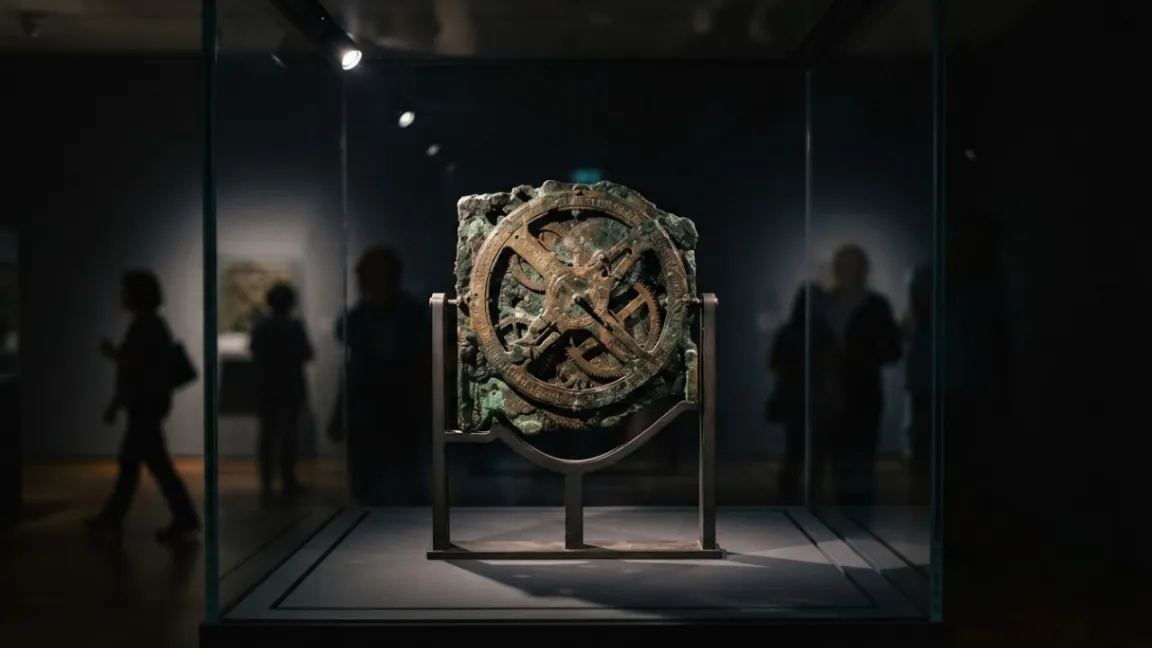
In addition, it forces us to reconsider what ancient civilizations were capable of. Bronze Age and Hellenistic engineers weren’t just building temples and statues. They were modeling the movements of the heavens with gears.
Tutankhamun’s Tomb: The Legendary Discovery That Shocked the World in 1922
Final Thoughts
The Antikythera mechanism proves that human ingenuity has never followed a straight line. Sometimes, brilliance appears centuries ahead of its time, only to fade into obscurity.
More than two thousand years later, this small bronze device still asks us a simple question: what else has history forgotten?