


The Sweet Track: England’s 6,000-Year-Old Road Through a Deadly Marsh
In 1970, a peat digger named Ray Sweet sliced into the black mud of a Somerset marsh and hit something that shouldn’t have been there.
Wood. Shaped wood. Laid out in a straight line, running for over a mile through ground that had swallowed footsteps for thousands of years.
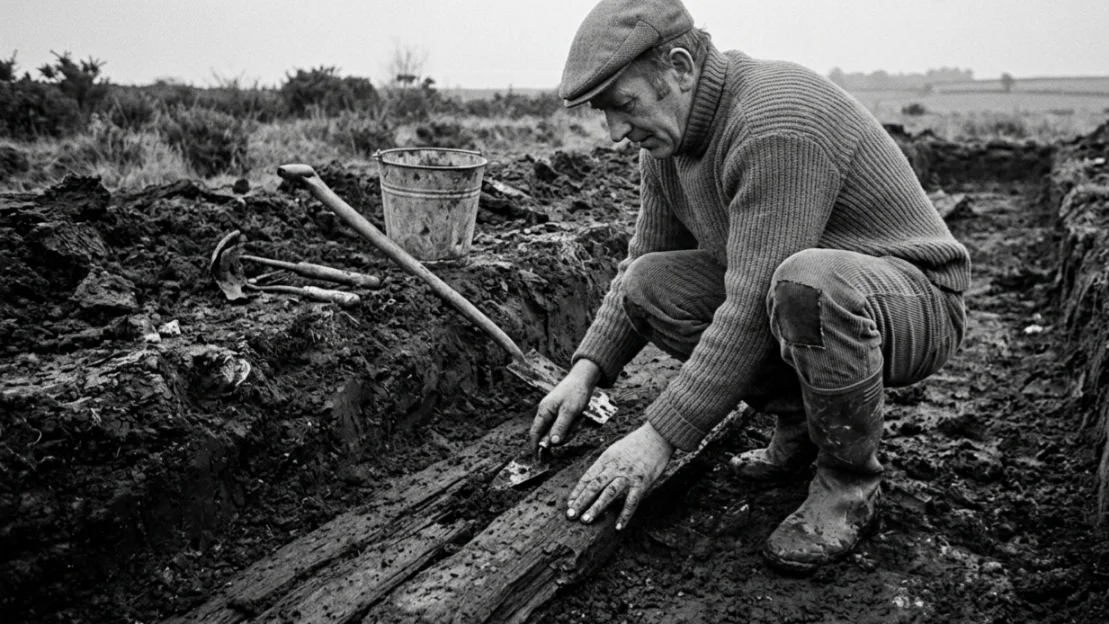
He had just stumbled onto the Sweet Track, a wooden path built by Neolithic hands nearly 6,000 years ago. What makes it remarkable isn’t only its age. It’s the fact that it survived at all.
A Marsh That Swallowed Every Step
Long before England had roads, bridges, or any modern tools, the Somerset Levels were a different kind of landscape entirely.
Water, mud, and soft peat stretched for miles. Walking across it was slow and dangerous, especially for anyone who needed to make the same crossing again and again.

For the Neolithic communities living nearby, that was a real problem. Hunting grounds, timber, and neighboring settlements all lay on the other side of the marsh.
So they solved it the only way they could: with wood.
Neolithic Builders Turn to Timber
The people of this era had no metal tools, no wheels, and no draft animals to help. What they had was patience, skill, and a deep understanding of their environment.
They felled oak trees and split them into long planks. They cut ash, oak, and lime into sturdy pegs.
Then they drove the pegs into the soft marsh in a crossed pattern and rested the planks on top, raising a narrow walkway just above the waterlogged ground. Because of this simple but clever design, people could finally cross the marsh without sinking.

The result stretched close to 1.8 kilometers, connecting the higher ground near the Polden Hills to what was then an island at Westhay.

A Discovery With a Name
The path Ray Sweet found that day eventually took his name. Today, it’s known simply as the Sweet Track.
Archaeologists didn’t just want to know that it was old. They wanted to know exactly how old.
Dated to the Season It Was Built
Using dendrochronology, the science of reading tree rings, researchers traced the timber back to a startlingly precise window: the winter of 3807 to 3806 BC.
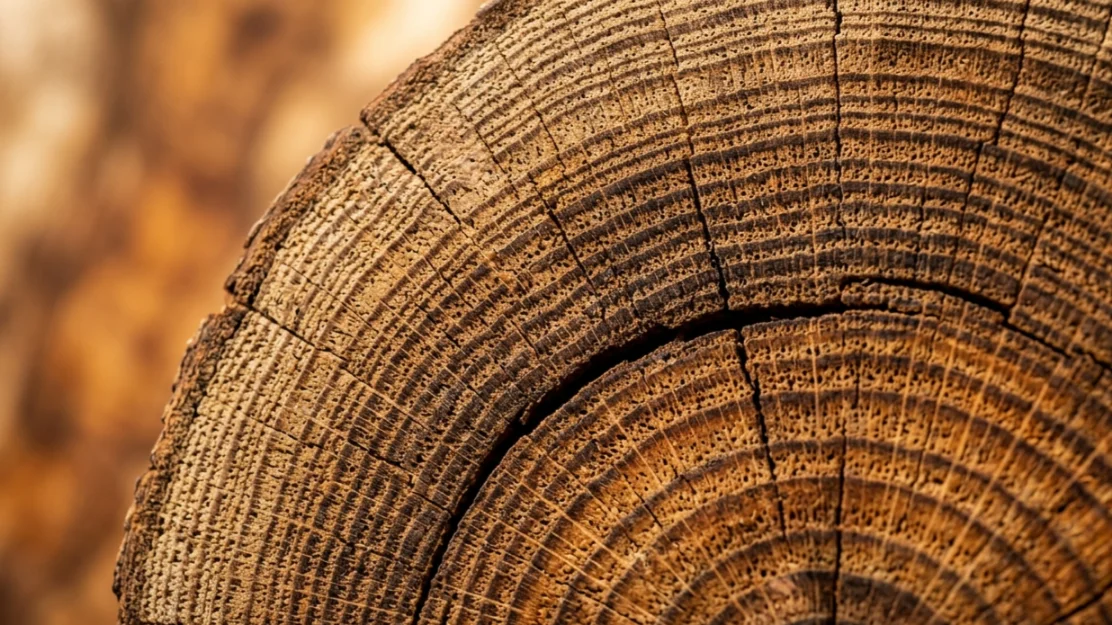
That means experts can date the Sweet Track almost to the season it was felled and built, a level of precision archaeologists rarely get from anything this ancient. For decades, it was celebrated as one of the oldest engineered trackways ever found in Britain, until an even older path turned up near London in 2009.
The Real Mystery Wasn’t the Building. It Was the Surviving.
Here’s where the story gets strange.
Wood rots. Left exposed to air and weather, timber usually breaks down within a few decades, maybe a couple of centuries at most.
The Sweet Track should have vanished long ago. Instead, it lasted nearly six millennia.
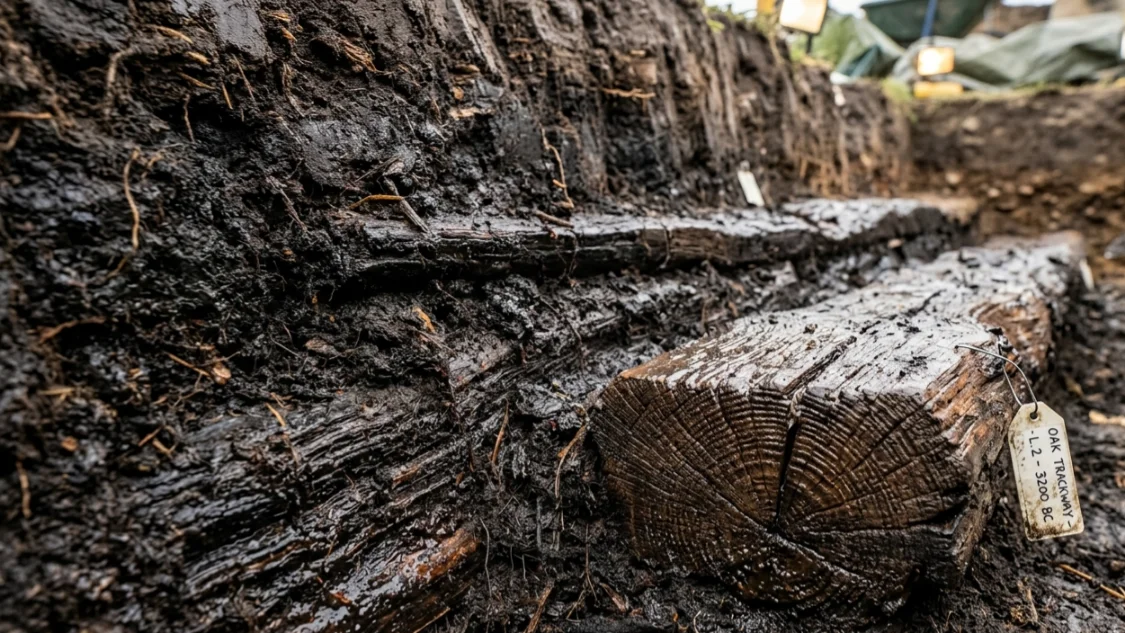
The answer lies underground. The waterlogged peat of the Somerset Levels starved the buried timber of oxygen, the very thing that decay depends on. As a result, entire sections of ancient oak survived almost intact, sealed inside the bog like a time capsule.

What the Sweet Track Reveals About Neolithic Life
This wasn’t just a convenient shortcut. It was a genuine engineering decision.
Rather than trying to drain or fill the marsh, the builders worked with the landscape instead of against it. They raised their path above the problem entirely.
Archaeologists have also found pottery, flint tools, and even a polished jadeite axe from the Alps near the trackway, hinting that people may have left offerings there. In addition, the route likely connected communities to hunting grounds, food, and timber, making it a genuine artery of daily life rather than an isolated project.

That combination of planning, environmental awareness, and resourcefulness says a great deal about the people who built it.
A Path Buried by Time
Eventually, the communities that used the Sweet Track moved on. Settlements shifted, the landscape changed, and the path fell out of use.
Slowly, the marsh reclaimed it.
Centuries passed. Then thousands of years. The peat kept building up, layer by layer, sealing the timber away from the world above.
Rediscovering an Ancient World Beneath the Mud
When modern excavation finally reached those buried planks in the 20th century, archaeologists weren’t just uncovering wood. They were uncovering a direct, physical link to Neolithic daily life, preserved almost exactly as it had been left.
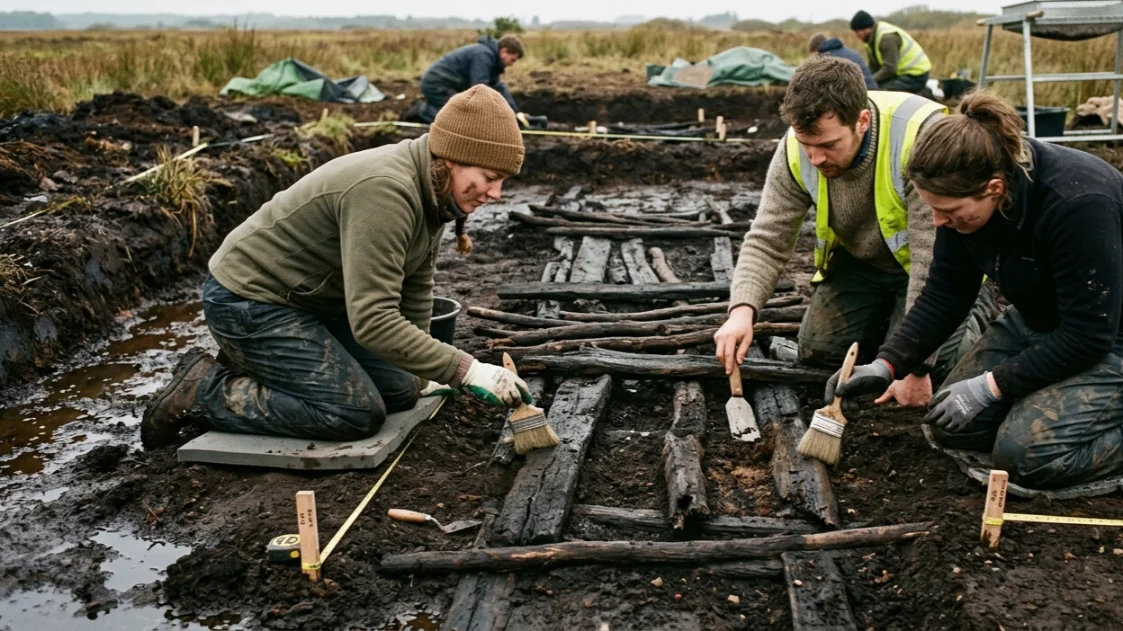
Tree rings from the timber also gave researchers a window into the climate and environment of that distant era, information that written records could never have provided.
Tutankhamun’s Tomb: The Legendary Discovery That Shocked the World in 1922
Why the Sweet Track Still Matters Today
We build roads today with concrete, steel, and heavy machinery. Nearly 6,000 years ago, a community crossed the same kind of obstacle using oak, rope-tied pegs, and hard-won experience.
The Sweet Track stands as proof that resourcefulness isn’t a modern invention. Neolithic people read their environment, solved a real problem, and left behind a structure precise enough to date to a single season, thousands of years later.
Time buries almost everything eventually. But every so often, the ground gives something back, and a single hidden path reminds us that ancient people were far more capable than we tend to assume.