
The Fake Doctor Who Saved 7,000 Babies
Martin Couney saved over 7,000 premature infants during the early twentieth century despite lacking a verified medical degree. At a time when hospitals often abandoned fragile newborns, Couney established incubator exhibitions at Coney Island. These public sideshows provided specialized, life-saving care funded entirely by visitor admission fees.
Couney’s work demonstrated the effectiveness of incubator technology, eventually influencing the medical establishment to adopt neonatal care. While his methods raised ethical concerns regarding the public display of infants, his success laid the foundation for modern neonatal medicine and significantly improved survival rates for premature births globally.
In the early 1900s, if your baby was born too soon, the medical establishment had a quiet, devastating answer: let nature take its course.
Premature infants were considered too fragile to save. Hospitals turned them away. Doctors offered grieving parents little more than sympathy and silence.
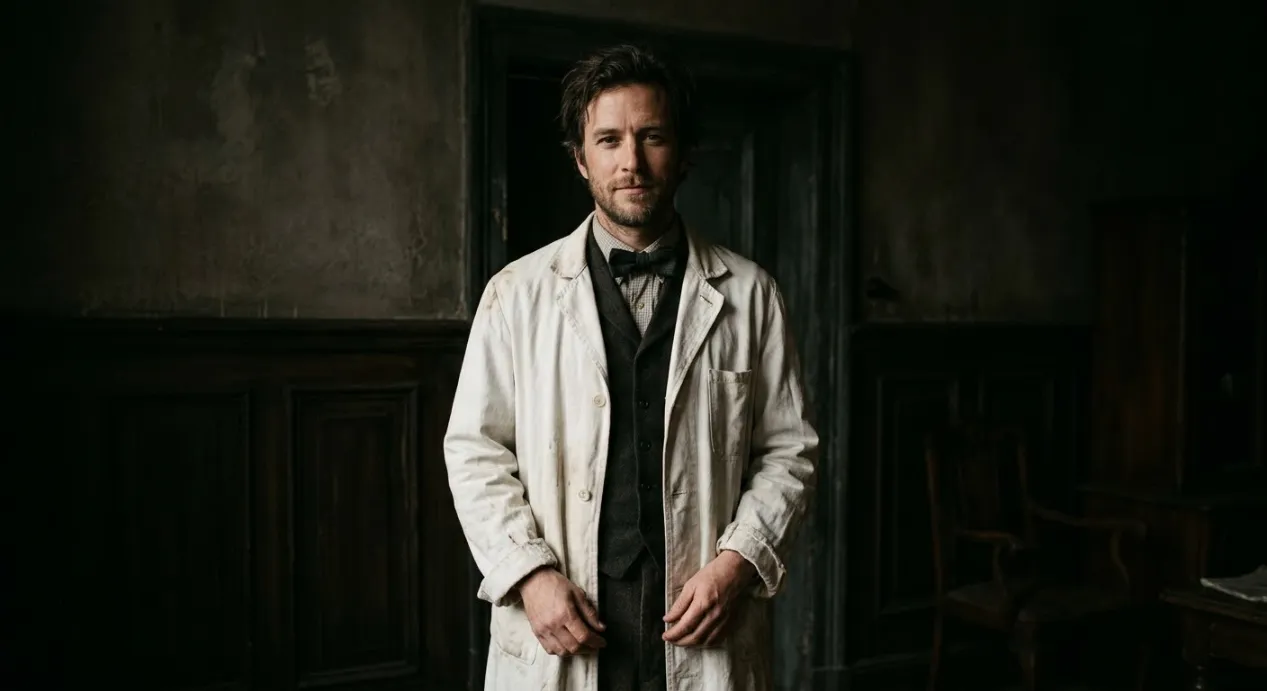
Then came a man named Martin Couney — with no medical degree, no hospital affiliation, and no official license to practice medicine.
What he did next would save over 7,000 lives. And he did it at a carnival.
When Medicine Gave Up, He Didn’t
At the turn of the twentieth century, premature birth was effectively a death sentence.
Medical science had not yet developed reliable methods to keep these tiny infants alive. Most hospitals lacked the equipment, the knowledge, and frankly, the willingness to try. A baby born weeks or months early was often left in a back room, away from the mother, until the inevitable happened.
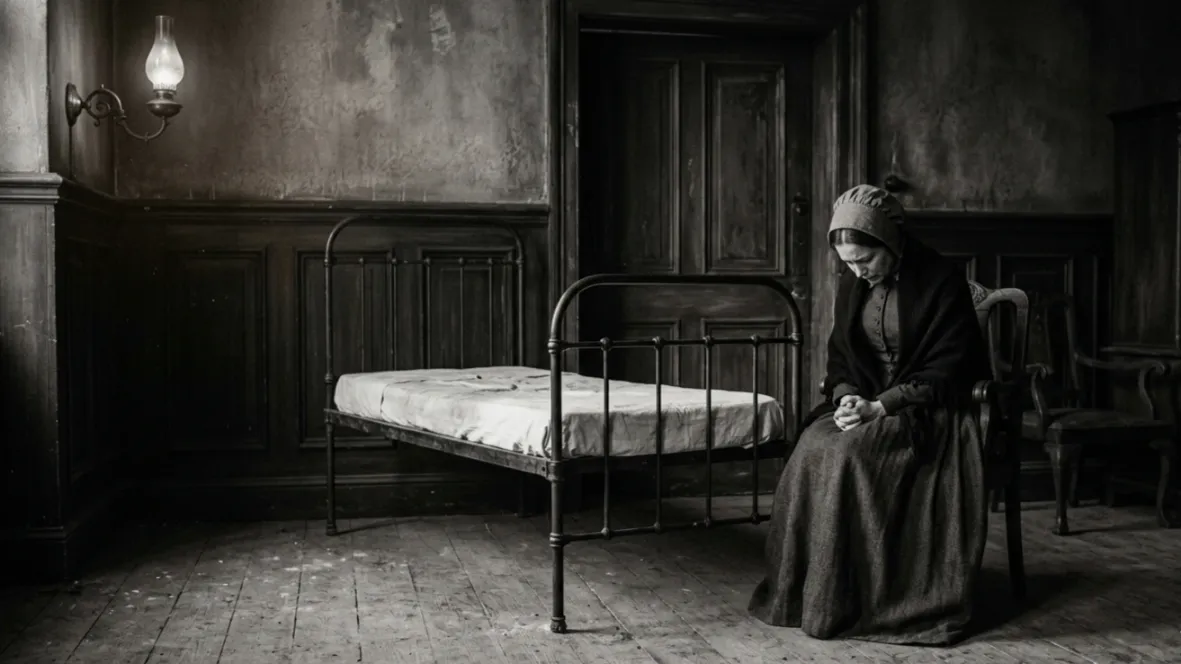
The medical world had quietly agreed: some lives were simply not worth fighting for.
Martin Couney disagreed.
A Fair, a Chicken Incubator, and a Radical Idea
Couney’s story begins in 1896 at the World’s Fair in Berlin, where he encountered a French obstetrician named Pierre Budin — a pioneer in the care of premature infants. Budin had been experimenting with incubators adapted from devices originally used to hatch chicken eggs.
The idea was almost laughably simple: keep the baby warm, feed it regularly, and protect it from infection.
Yet the medical community largely ignored it.
Couney, however, was transfixed. He saw something the experts had dismissed — a genuine chance to save lives. He began staging incubator exhibitions at world’s fairs and expositions across Europe, displaying premature infants receiving round-the-clock care from trained nurses.
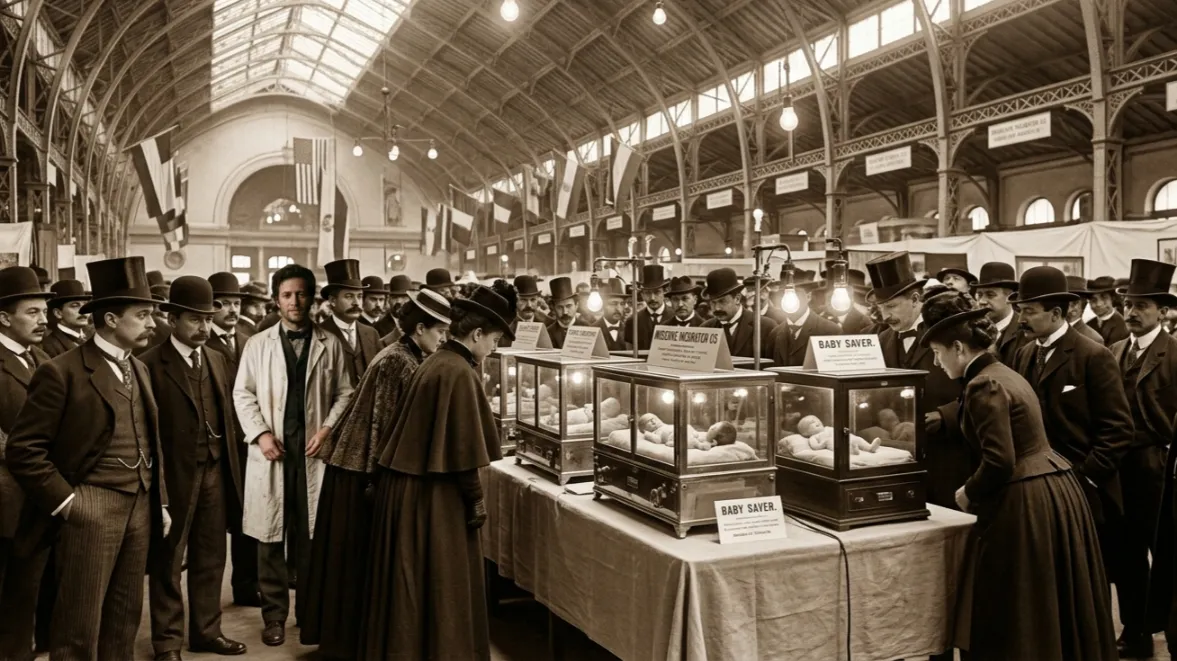
The crowds came to see a curiosity. What they witnessed was something far more profound.

Coney Island: Where a Sideshow Became a Lifeline
In 1903, Martin Couney set up what would become his most famous operation — a permanent exhibition on the boardwalk at Coney Island, New York.
He called it “Infant Incubators with Living Infants.”
Visitors paid twenty-five cents to enter. Inside, they found rows of glass-and-steel incubators, each housing a premature baby fighting for survival. Skilled nurses monitored every infant around the clock. The environment was clean, controlled, and carefully managed.
Meanwhile, the hospitals nearby continued to turn these same babies away.
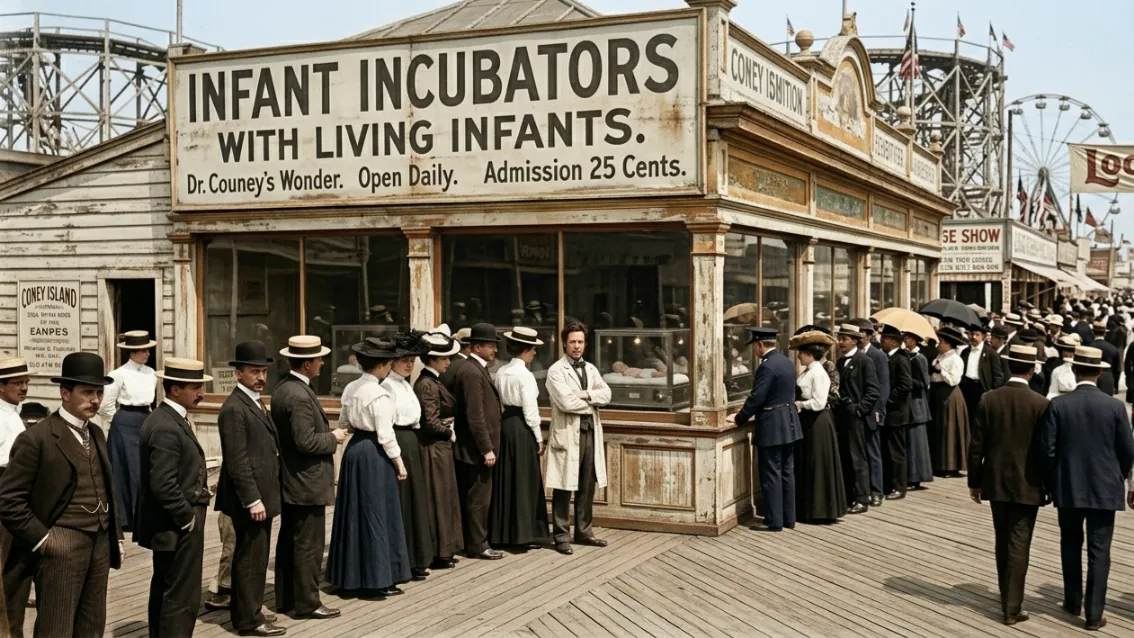
Couney charged no fees to the families. The admission money from paying visitors funded everything — the equipment, the nurses, the medical supplies, the food. Parents handed their desperately ill newborns to a carnival showman because the alternative was watching them die at home.
And remarkably, the babies survived.
The Man Behind the Miracle
Who exactly was Martin Couney? That question has fascinated historians for decades.
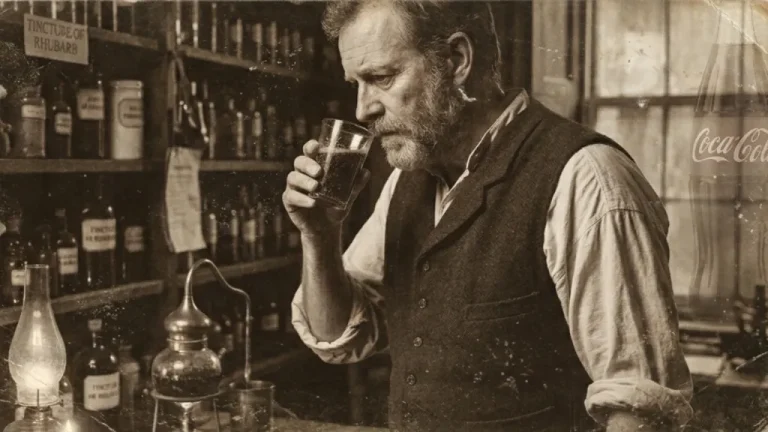
He claimed to be a physician trained in Europe under Pierre Budin himself. However, no verified medical degree or license has ever been found. Researchers have uncovered significant inconsistencies in the biographical details he offered throughout his life.
What is certain is this: he possessed extraordinary practical knowledge of premature infant care. He hired qualified nurses. He maintained rigorous hygiene standards. He kept detailed records. His survival rates were, by any measure, remarkable for the era.
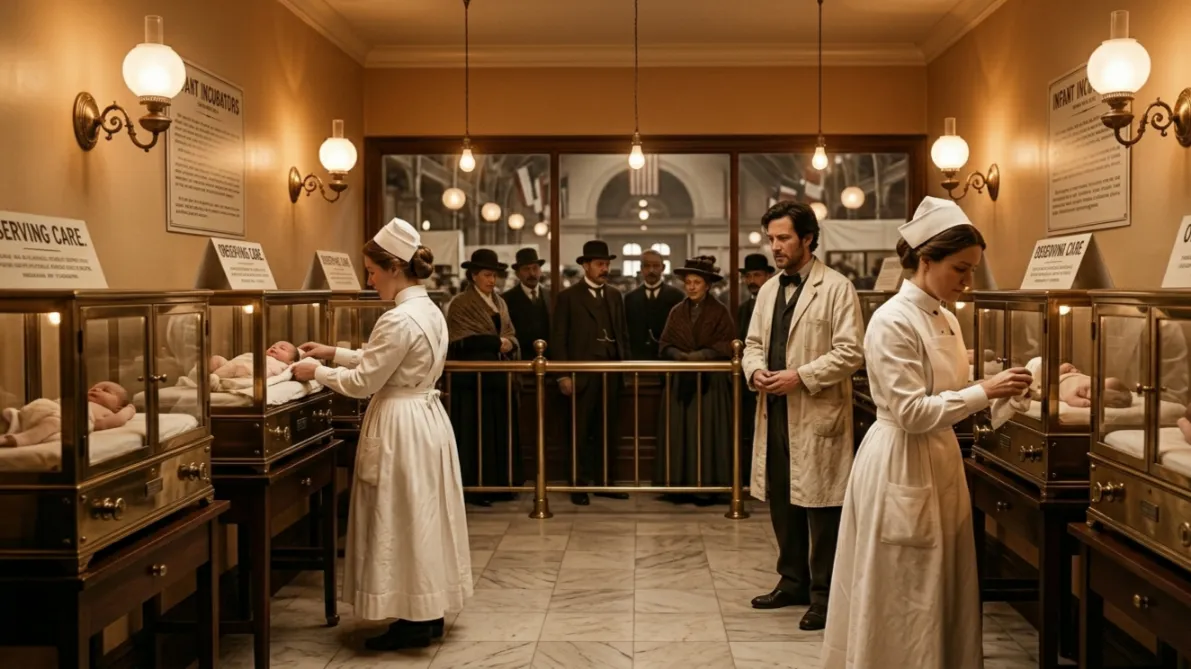
Whether he was a genuine physician operating without documentation, a brilliant self-taught practitioner, or something more complicated, the results spoke for themselves.
Over the course of his career, Couney is credited with saving more than 7,000 premature infants, with a survival rate estimated at around 85 percent. For context, most hospitals that did attempt to care for premature babies at the time saw far lower rates of survival.
The Ethical Shadow
It would be dishonest to tell Couney’s story without acknowledging its uncomfortable dimensions.
These were real infants — many from poor or immigrant families who had no other options — displayed behind glass for the entertainment of paying crowds. Couney positioned them as a spectacle. He was, without question, profiting from their vulnerability, even as he was saving their lives.
Some parents later expressed unease about what their children had been put through. Historians continue to debate where the line falls between exploitation and genuine humanitarian work.
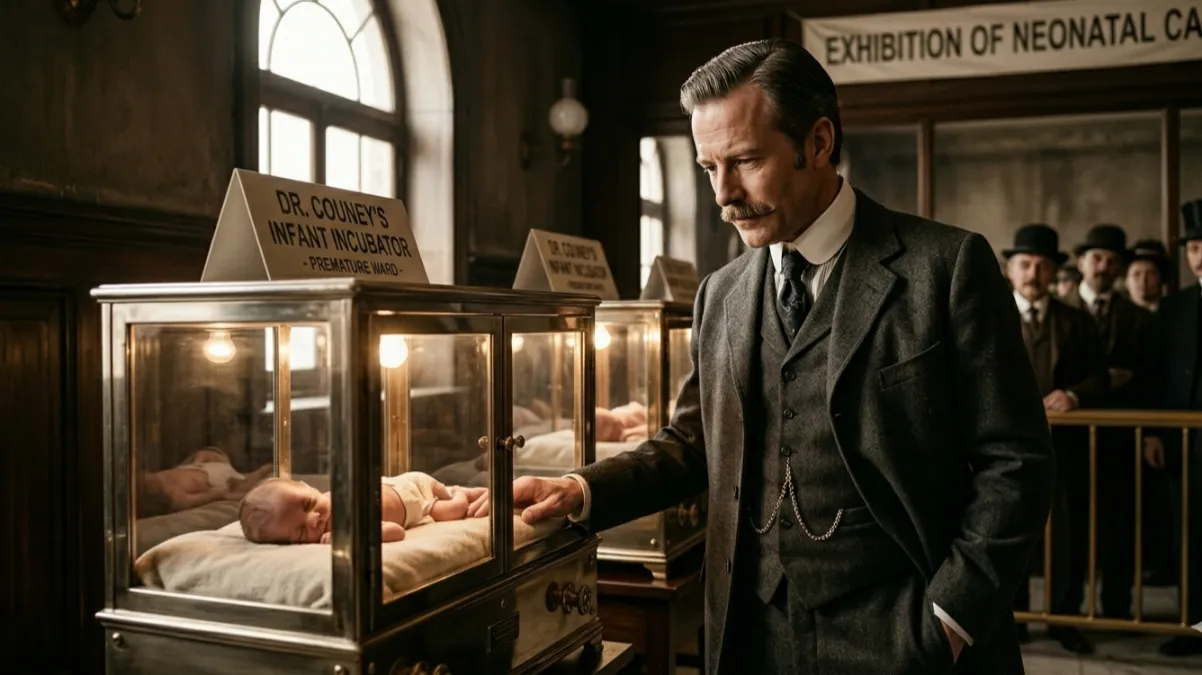
Because of this tension, Couney remains a genuinely complicated figure. He was not a saint operating purely from altruism. He was a showman who found a way to do real good — but on his own terms, for his own reasons, in a setting that raised serious questions about dignity and consent.
The Shift He Helped Create
For all the ethical complexity, the impact of Couney’s work on modern medicine is difficult to overstate.
By the time his Coney Island exhibition closed in 1943, the medical landscape had shifted dramatically. American hospitals had begun adopting incubator technology and developing dedicated neonatal care units. Premature infants were no longer automatically abandoned.
The public, having seen thousands of tiny babies survive against the odds, demanded better care. The spectacle had created awareness. The awareness created pressure. The pressure created a change.
In addition, Couney’s work helped demonstrate something the medical establishment had refused to believe: with the right support, premature infants could and would survive. That insight sits at the very foundation of modern neonatal medicine.
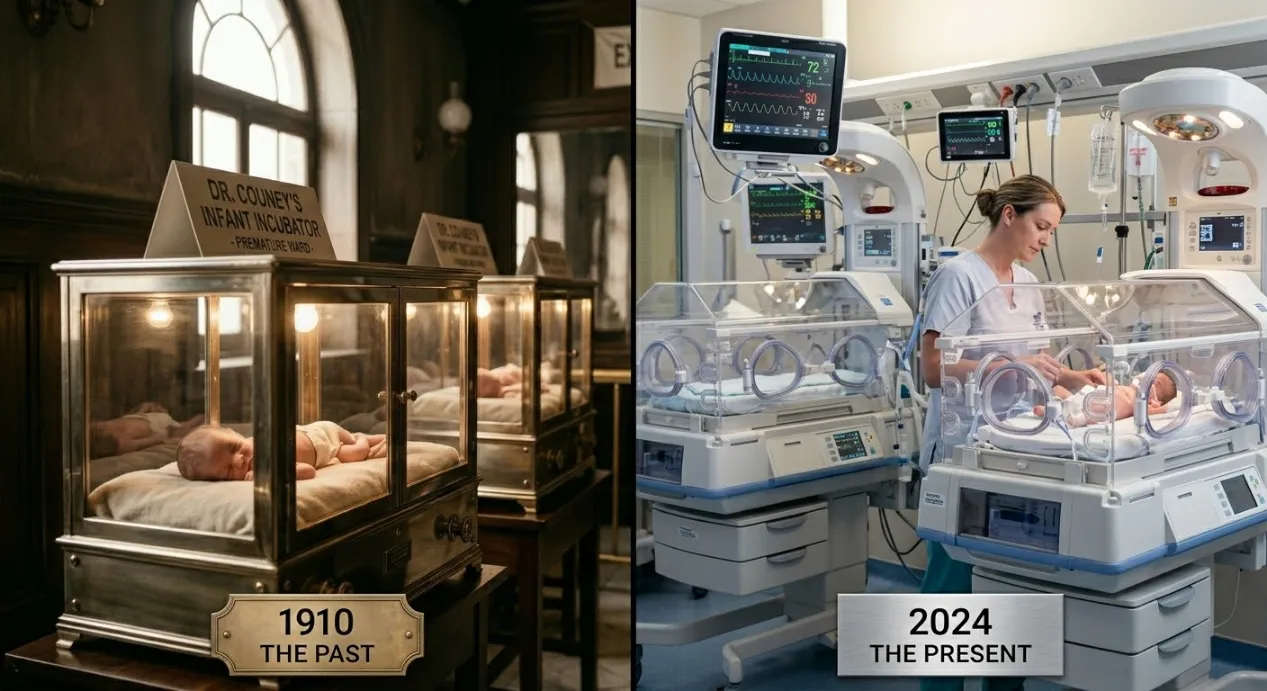
Today, neonatal intensive care units save infants born as early as twenty-two weeks. Millions of people alive today owe their existence, directly or indirectly, to the gradual development of incubator technology that Couney championed at a time when no one else would.
Toy in the Lung: A 40-Year Secret Nobody Knew About
A Legacy Written in Living People
Martin Couney died in 1950, largely forgotten by the medical profession that had once scorned him.
He left behind no hospital named in his honor. No medical school carries his name. The official history of neonatal medicine rarely makes room for a carnival showman without a verified degree.
And yet, some of the babies he saved lived long enough to attend his funeral.
Some of them became parents and grandparents. Some of them, no doubt, had children who went on to become doctors — the kind who work in neonatal units, surrounded by the humming machinery that Couney once displayed beside the rides and cotton candy of Coney Island.
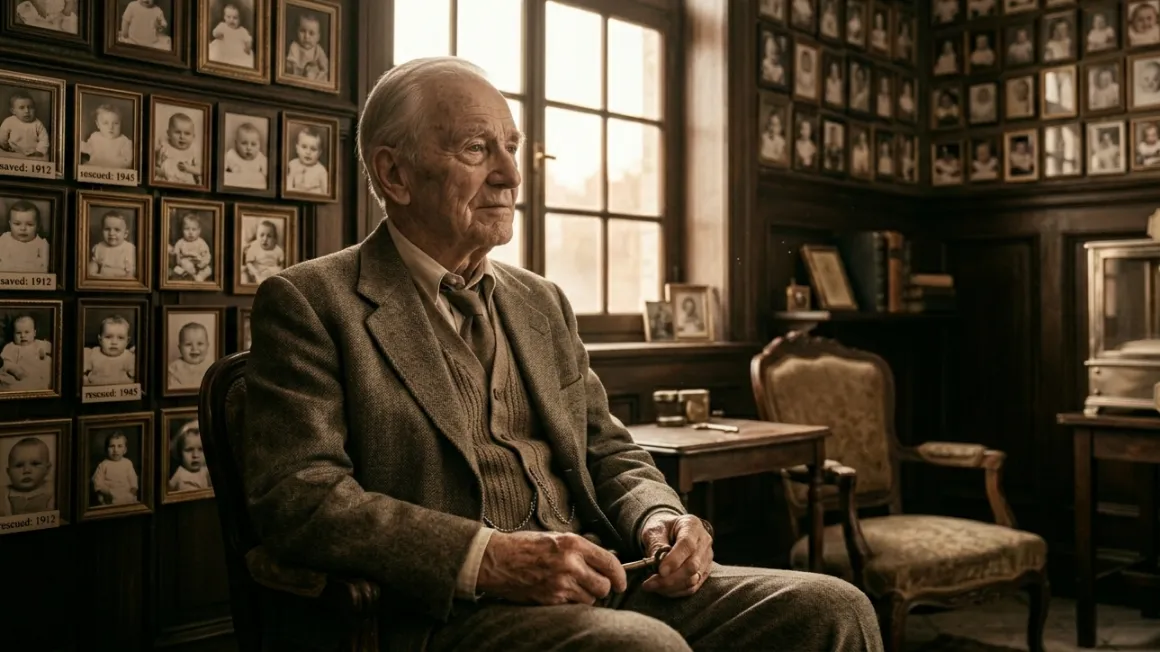
The fake doctor who saved 7,000 babies didn’t need a license to understand something the licensed world had missed: that every premature infant, no matter how small, deserved a fighting chance.
He simply refused to look away.
Conclusion
Martin Couney’s story defies easy categorization. He was not a certified physician, and the ethical questions surrounding his methods deserve honest examination. But his impact on the history of premature infant care — and on the development of modern neonatal medicine — is undeniable.
The fake doctor who saved 7,000 babies showed the world that compassion, persistence, and practical knowledge could accomplish what official medicine had given up on. He turned a sideshow into a lifeline, and a carnival ticket into a chance at life.
In the end, history remembers people not only for their credentials, but for what they actually did.
Martin Couney did something extraordinary.