
Lost Railroad Payroll Stagecoach Found in Utah Canyon After 100+ Years
Tourists hiking in a Utah canyon discovered a well-preserved stagecoach wedged between rock walls for over a century. Experts believe the vehicle transported a missing railroad payroll from the late 1800s. The arid environment and sheltered location naturally preserved the wooden frame, iron axles, and leather contents.
Inside the coach, investigators found gold coins and documentation linked to railroad workers. Researchers suggest a broken axle and subsequent flash flood trapped the vehicle in the narrow passage. The find is now undergoing analysis at a preservation facility to uncover more details about the era’s frontier history.
Deep in the rugged, red-walled canyons of Utah, a discovery emerged that left historians, archaeologists, and curious minds speechless. A group of tourists stumbled upon something extraordinary — an ancient stagecoach, wedged tightly between towering canyon walls, hidden from the world for well over a century.
This wasn’t just any old wagon. Experts believe it carries the answer to one of the American West’s most enduring mysteries: a missing railroad payroll.
How Tourists Uncovered a Century-Old Secret
It started like any other canyon hike. Visitors were exploring the rocky, sun-baked terrain of southern Utah when they spotted something unusual lodged between the stone walls above them.
At first, nobody believed their eyes.
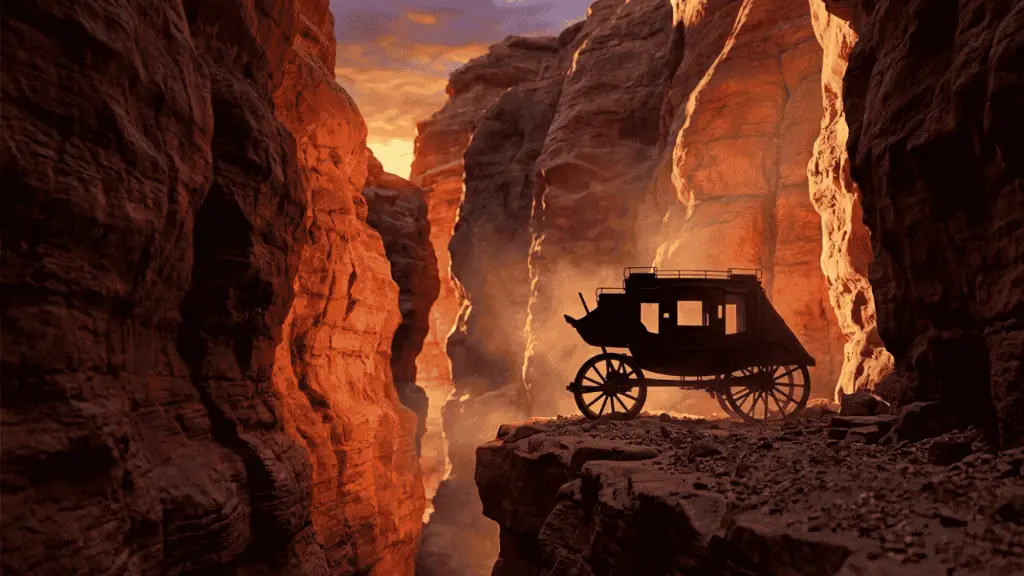
A wooden stagecoach, visibly aged and caked in dust, sat perfectly wedged between two canyon walls — suspended as if time had stopped around it. The sheer weight of the moment hit everyone at once.
How did it get there? And more importantly, what was inside?
Rangers and Experts Rappel Down to Reach the Coach
Word spread fast. Soon, a team of park rangers, historians, and preservation specialists arrived at the site.
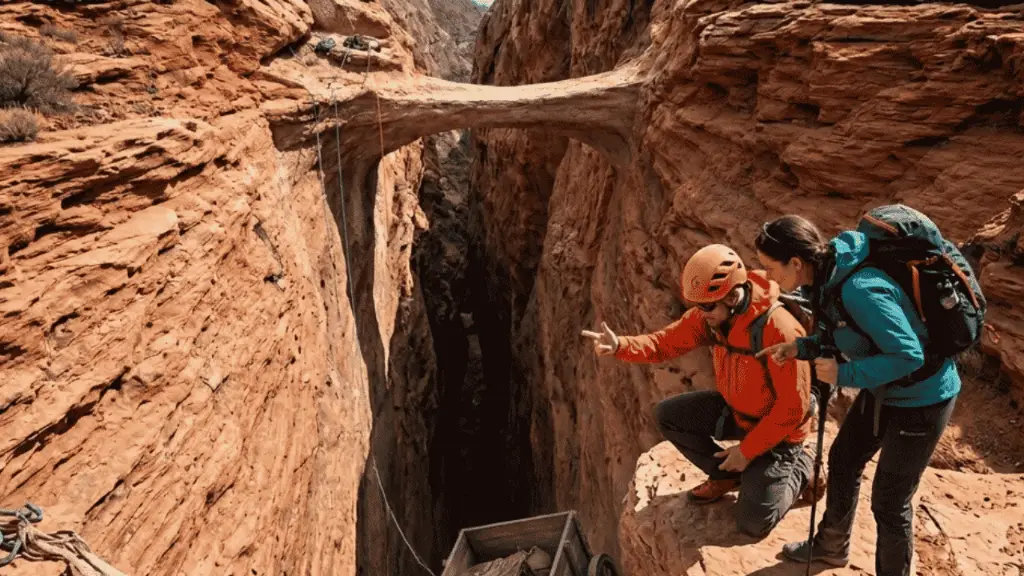
Because of the extreme terrain, reaching the coach was no easy task. The team rappelled down the canyon walls using ropes and harnesses, carefully navigating the narrow passage to get close enough for a proper inspection.
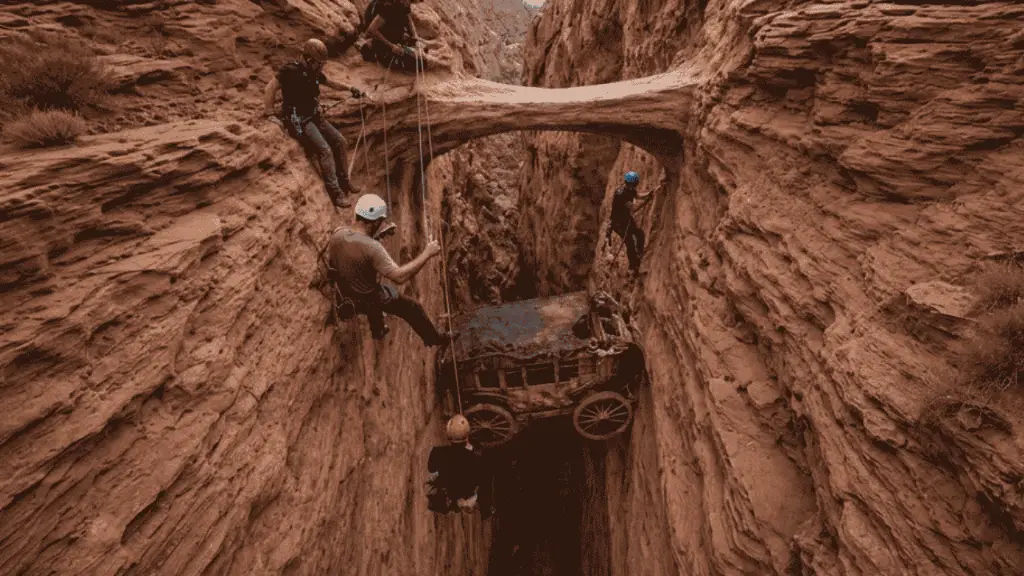
What they found when they arrived was remarkable.
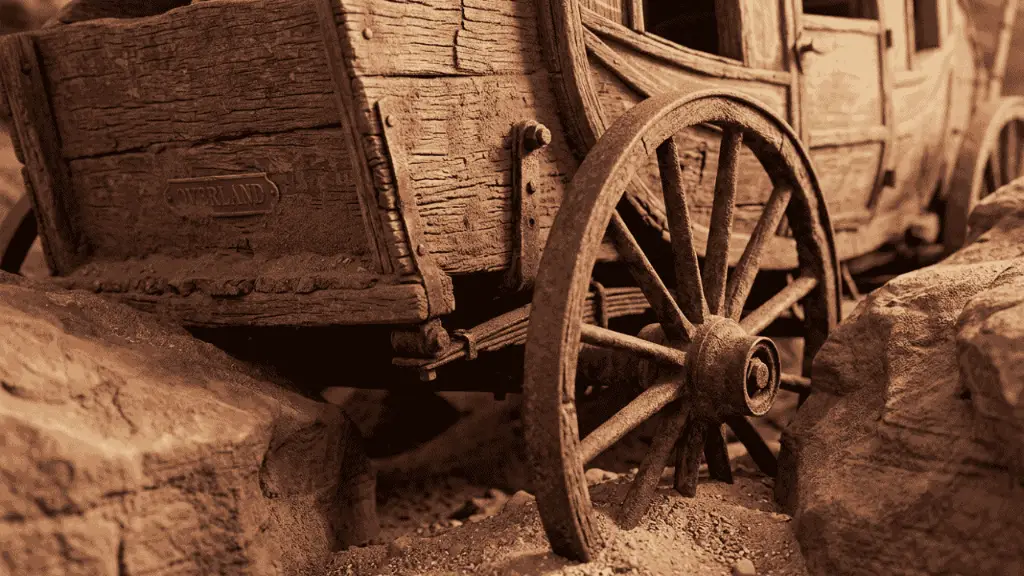
Despite sitting untouched for an estimated 100 to 130 years, the wooden stagecoach was in surprisingly good condition. The desert air, the sheltered position between the rock faces — these factors had essentially acted as a natural preservation chamber.
Meanwhile, the wooden planks, iron axles, and spoked wheels were all still largely intact.

Inside the Coach: Gold Coins and a Forgotten Payroll
When the team finally pried open the stagecoach door, they found a collection of old leather saddlebags stacked inside.
This is where the story gets truly fascinating.
The bags reportedly contained thousands of gold coins, antique bank tokens, and what appeared to be official payroll records tied to railroad workers. Historians immediately began connecting the dots.
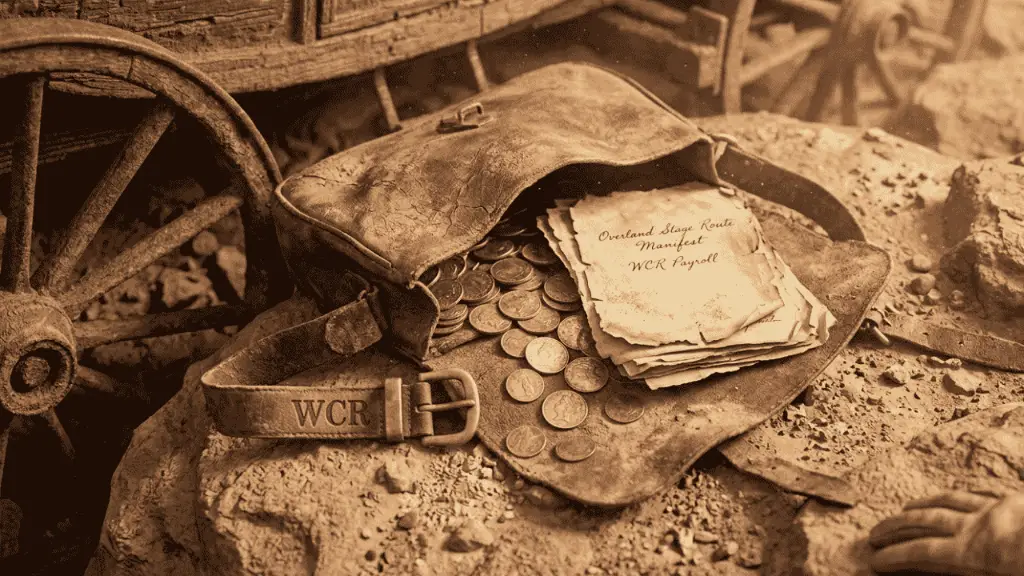
As a result, this discovery quickly became linked to a long-lost “Railroad Payroll” — a missing shipment that had puzzled researchers for decades.
Read How a man hid 100k in an old TV and completely forgot about the money for decades
What Was the Lost Railroad Payroll?
Life on the American Frontier Was Dangerous
To understand why this payroll went missing, you have to understand what life was like in the late-1800s American West.
Back then, thousands of laborers worked on massive railroad expansion projects across remote stretches of the country. They lived far from towns, far from banks, and far from civilization.
Because of this, stagecoaches were the primary method for delivering wages to these workers. Companies loaded payroll payments — gold coins, paper currency, and signed records — onto coaches and sent them across long, lonely desert routes.
However, those routes were anything but safe.
Bandits, Floods, and Broken Axles
The dangers were constant. Outlaw attacks were common. Flash floods could sweep through narrow canyons without warning. Rough terrain regularly damaged wheels and axles, leaving coaches stranded miles from help.
Experts who examined this particular stagecoach believe a broken axle first immobilized the vehicle. Then, a sudden flash flood pushed it sideways into the canyon, wedging it tightly between the rock walls.
Eventually, the floodwaters receded. The coach stayed behind — stuck, sealed, and completely invisible to anyone passing by above.
For over a century, nobody knew it was there.

Why This Stagecoach Discovery Matters to Historians
A Perfectly Preserved Snapshot of the Past
Discoveries like this one are extraordinarily rare. In most cases, wooden vehicles from that era have long since rotted away or been stripped for parts.
However, the natural conditions inside this Utah canyon acted like a time capsule. The arid climate, shade, and tight rock enclosure kept moisture and direct sunlight away from the wood and metal.
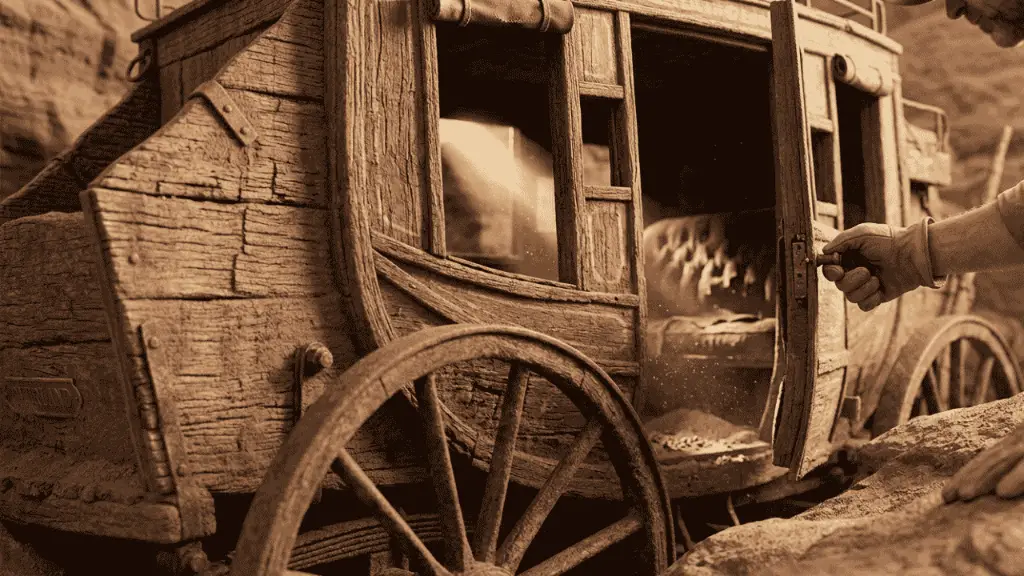
For historians, this is a dream find.
What It Tells Us About the Old West
In addition to the gold and records, the physical condition of the coach itself offers valuable clues. Researchers can study:
- The construction techniques used by craftsmen of the era
- The types of materials commonly used in stagecoach manufacturing.
- The payroll documentation system that companies use to track worker wages
- The routes that coaches likely traveled through this part of Utah
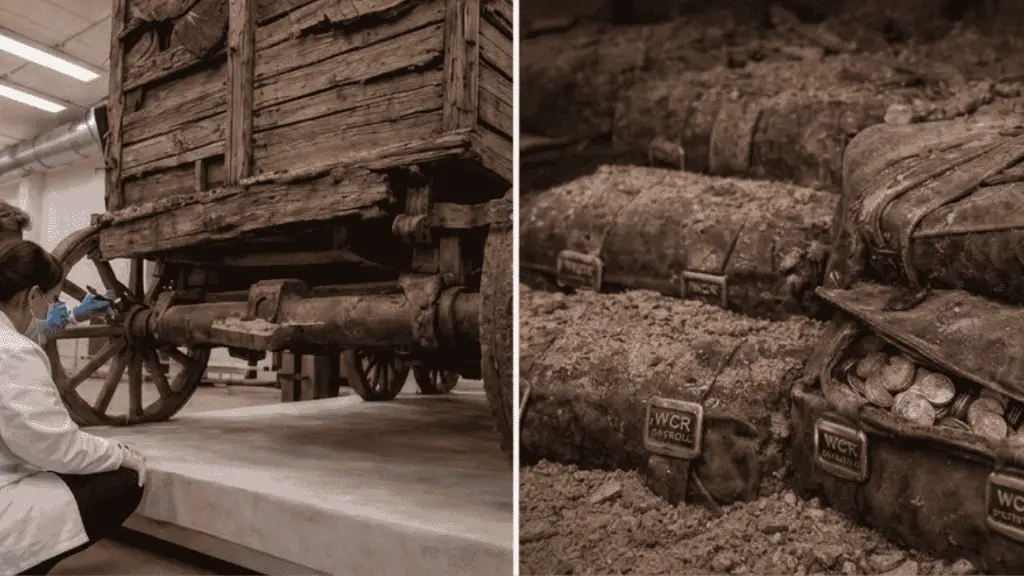
For example, the initials “WCR” stamped on the leather payroll bags may help historians trace exactly which railroad company or contractor this shipment belonged to.
The Mystery That Still Lingers
Not every question has been answered.
Who is the crew escape the flood, or did they perish? Were there ever search parties sent out to recover the missing payroll?
Meanwhile, local historians are already digging through old newspaper archives and railroad company records from the 1880s and 1890s, hoping to find a match.
Afterward, the stagecoach was carefully transported to a preservation facility, where scientists in white lab coats began the painstaking work of documenting every detail — from the rust on the wheel hubs to the faded ink on the payroll records.
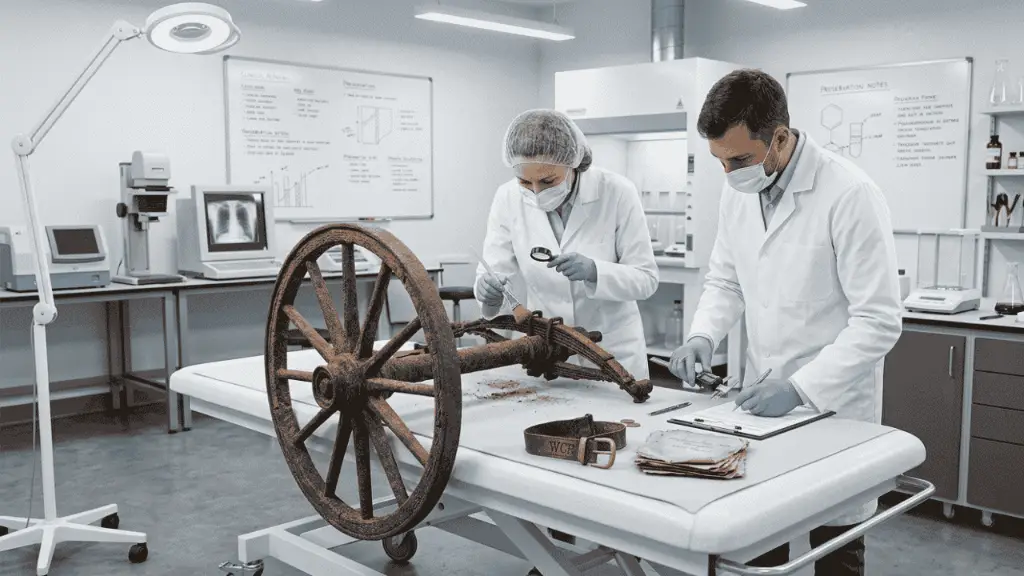
The work is slow. But every detail matters.
A Discovery That Freezes Time
There is something deeply moving about finding an object that has sat untouched for over a century.
When you look at the photographs — the weathered wood, the aged leather, the gleam of gold coins still sitting inside those bags — it feels like the stagecoach is waiting to tell its story.
History doesn’t always announce itself with fanfare. Sometimes, it sits quietly in a canyon, wedged between two walls of red rock, waiting for the right pair of eyes to look up and notice.
Conclusion: The Lost Railroad Payroll Stagecoach Is More Than a Discovery
This lost railroad payroll stagecoach found in Utah canyon is far more than a viral curiosity. It is a direct window into the daily struggles, dangers, and systems of the American frontier era.
It reminds us that history is still out there — buried, wedged, hidden — just waiting to be found.
As researchers continue to analyze the contents and trace the coach’s origins, one thing is certain: the American West still has secrets left to share. And discoveries like this one make sure they are never forgotten.