

Operation PLUTO: The Hidden Pipeline That Escaped Hitler’s Detection
Operation PLUTO was a secret World War II engineering project that established underwater fuel pipelines across the English Channel. Utilizing adapted undersea cable technology, the system provided Allied forces with a steady petrol supply that remained protected from enemy detection and the logistical dangers of surface tanker transport.
Engineers used massive floating drums to unspool miles of flexible pipe while disguising onshore pumping stations as civilian buildings. By 1945, the network had delivered over 170 million gallons of fuel, ensuring the Allied advance into occupied Europe was never stalled by a lack of critical resources.
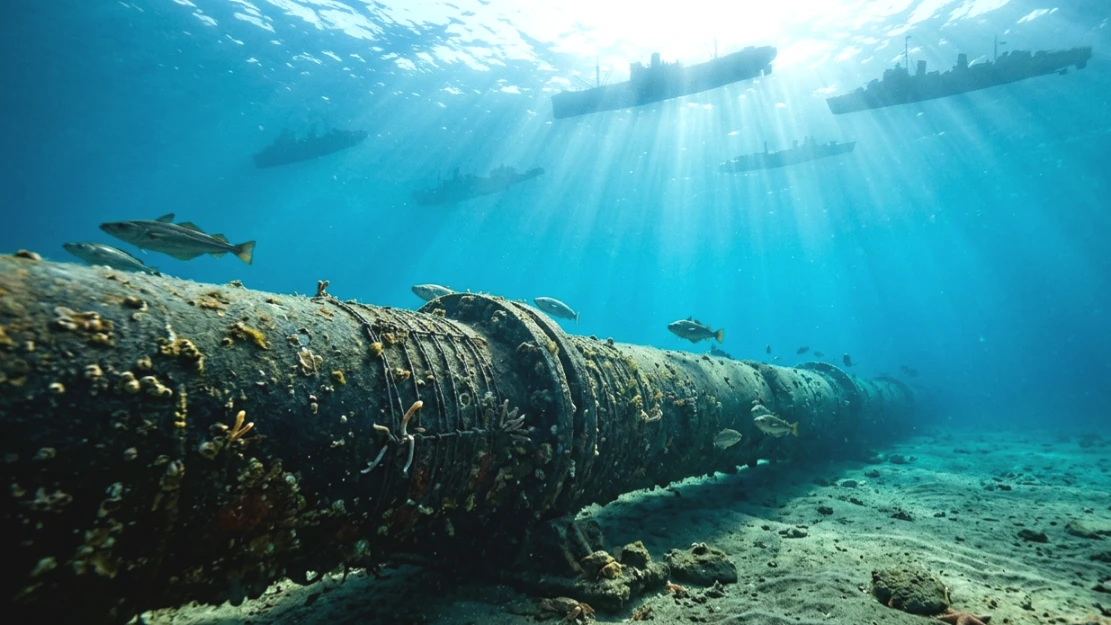
In the summer of 1944, something strange sat on the seabed of the English Channel. It was not a shipwreck or a mine.
It was a pipe.
A pipe carrying enough fuel, day after day, to keep an entire invasion force moving. And almost no one outside a small circle of engineers and commanders knew it existed.
This was Operation PLUTO, one of the most quietly brilliant schemes of the Second World War. It never fired a shot. It never made headlines at the time. But without it, the Allied breakout from Normandy could have stalled in its tracks.
A Problem That Could Have Stopped an Army
By June 1944, the Allies had pulled off the impossible. D-Day landed thousands of troops on the beaches of Normandy.
But landing an army is only the beginning. Keeping it moving is the harder part.
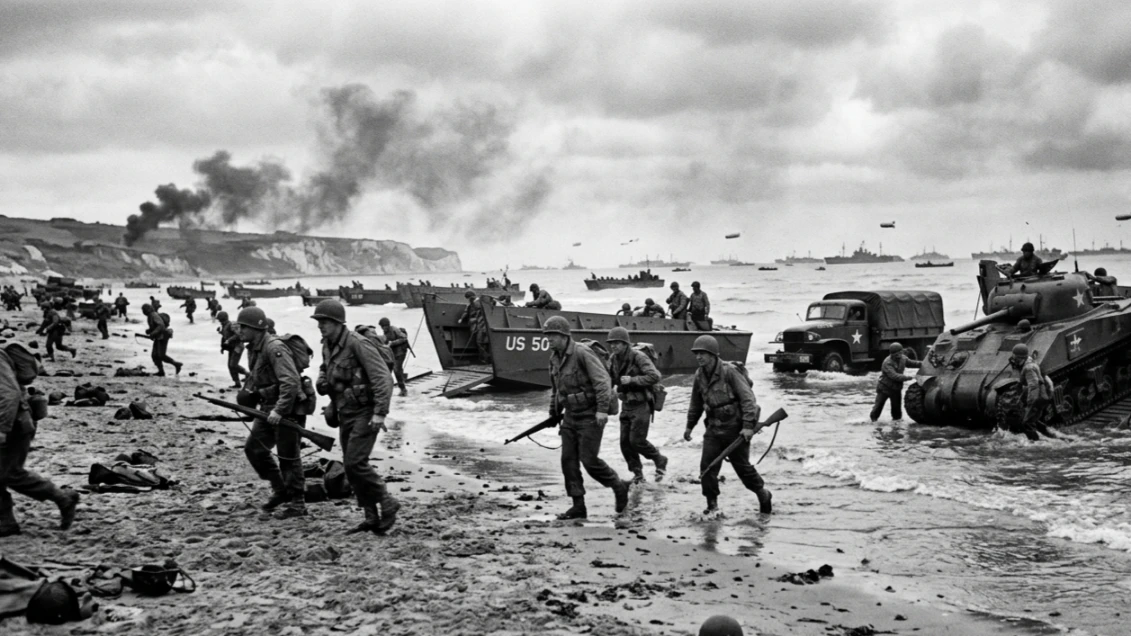
Tanks need fuel. Trucks need fuel. Jeeps, artillery tractors, and generators all need fuel. Without a steady flow of petrol, the entire advance into occupied Europe would simply grind to a halt.
And that was exactly the danger military planners feared most.
Why Tankers Alone Weren’t Enough
The obvious solution was to ship fuel across the Channel in tankers, the way oil had always moved.
However, that plan had serious holes in it.
German U-boats prowled the Channel. Luftwaffe aircraft patrolled the skies above the beaches. Storms could scatter a fleet in hours. Every tanker crossing was a gamble, and every barrel unloaded on an open beach was a target.
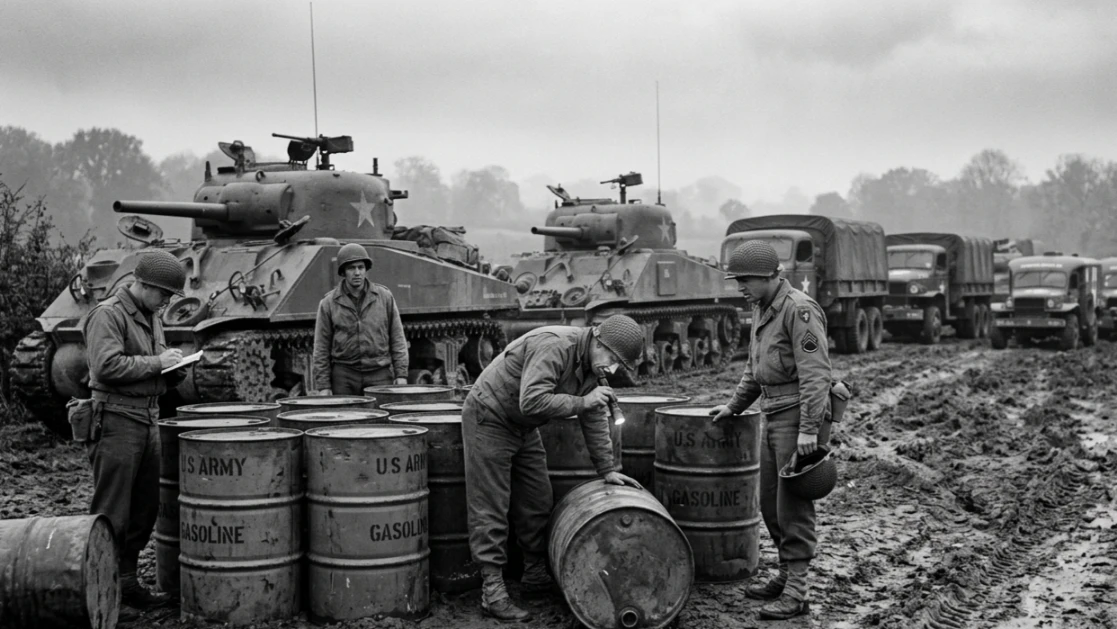
Allied commanders needed something the enemy couldn’t easily see and couldn’t easily sink.

The Idea Nobody Expected: A Pipeline Under the Sea
The answer came from an unlikely direction: undersea telephone cables.
British engineers realized that the same technology used to lay cables across ocean floors could be adapted to carry oil instead of electrical signals. If a cable could survive on the Channel bed, so could a pipe.
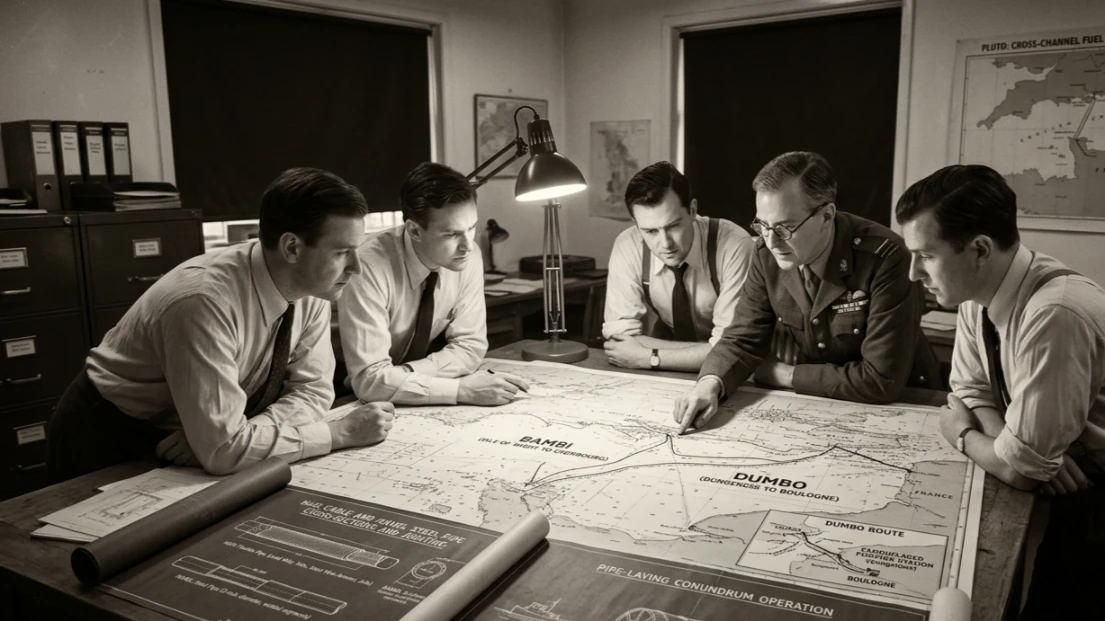
The project was codenamed PLUTO, short for “Pipe-Line Under The Ocean.” Work on the concept began as early as 1942, long before anyone knew when or where the invasion would actually happen.
It sounded almost too simple. In practice, it was one of the hardest engineering puzzles of the war.
Building a Pipe Strong Enough for the Ocean Floor
A normal pipe would never survive the crossing. It needed to bend around obstacles, resist the crushing pressure of the sea, and withstand being uncoiled at speed without cracking.
Engineers developed two competing designs. One used a flexible lead core wrapped in layers of paper, cotton tape, steel tape, and armored wire. The other used a more rigid steel pipe suited for calmer, shorter stretches.
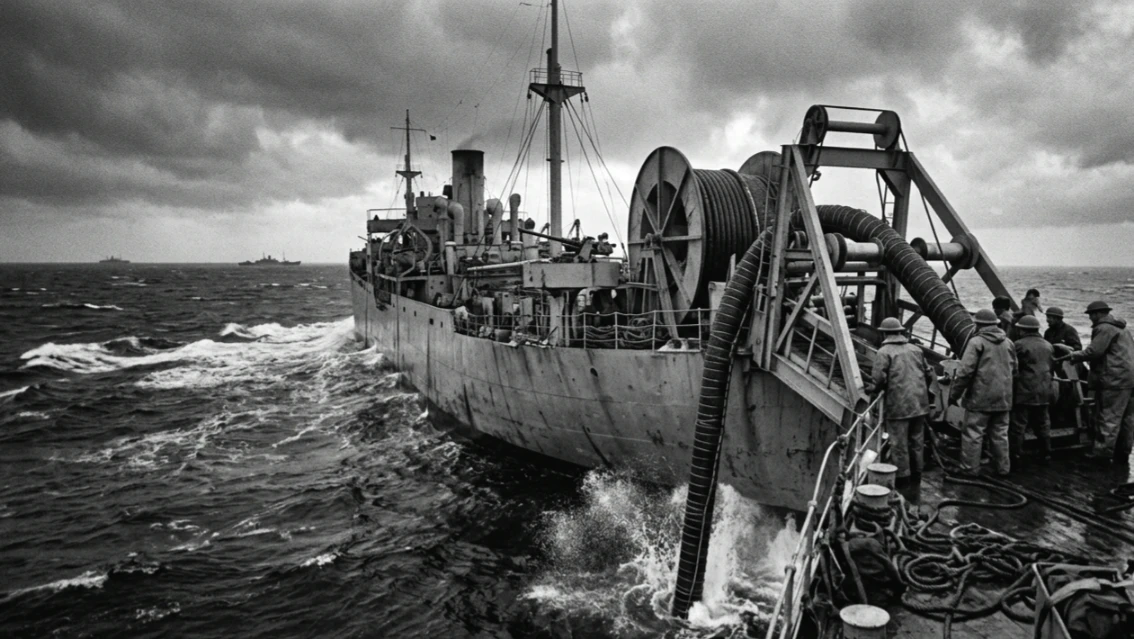
Both were tested first in rivers, then in rougher coastal waters, before anyone dared trust them to the open Channel.
The Giant Spools Called “Conundrums”
Laying the pipe required a piece of engineering nearly as strange as the idea itself.
Miles of pipe were wound onto massive floating drums, nicknamed “conundrums,” each one taller than a house. Ships towed these drums out to sea, unspooling the pipe onto the seabed as they went.
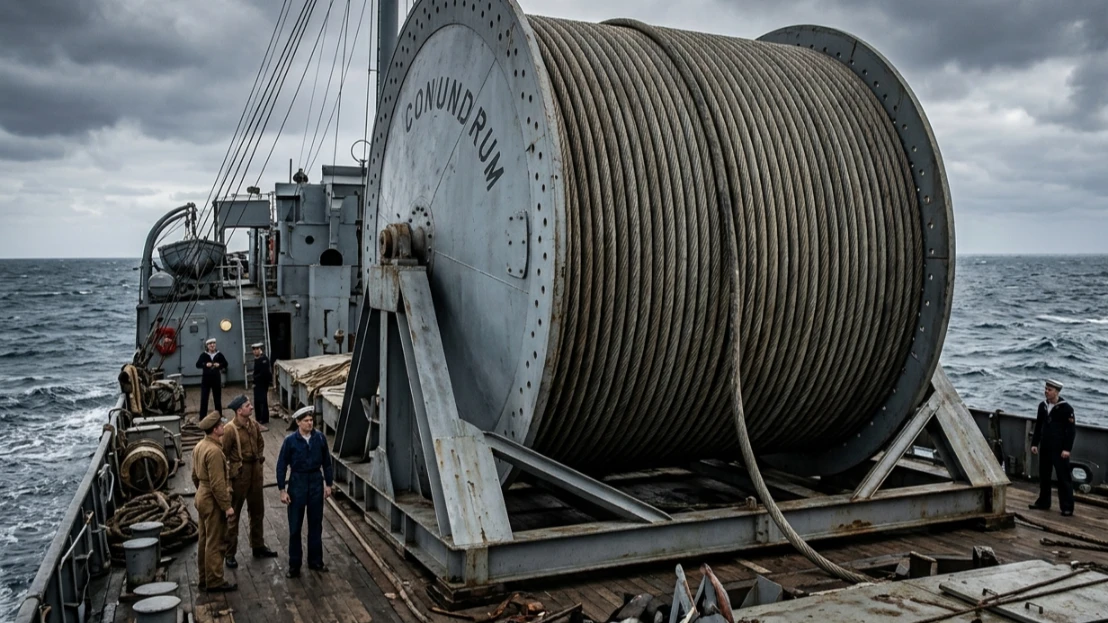
It was slow, exposed, delicate work, carried out in waters the enemy still controlled the skies above.
Keeping a Giant Secret From the Germans
Here is the part that made Operation PLUTO remarkable: it worked in plain sight, and the enemy never noticed.
Pumping stations on the English coast were disguised as ordinary buildings. Some looked like bungalows. Others were hidden inside barns, garages, and gravel pits. One was even built to resemble a small ice cream shop.
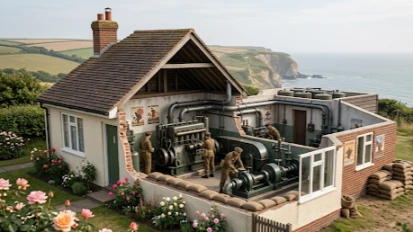
Because of this secrecy, German intelligence never targeted the pipeline directly. Had they identified and destroyed it, the fuel shortage that followed could have crippled the Allied advance across France.

From Isle of Wight to the Front Lines
Progress was not instant. Early attempts faced delays, and the pipeline network wasn’t fully operational until mid-August 1944, weeks after D-Day itself.
Eventually, though, fuel began flowing in earnest. Pipelines ran from the Isle of Wight to Cherbourg, and later from Dungeness to Boulogne, as the front line pushed further into France.

As a result, the Allies gained something they desperately needed: a fuel supply that didn’t depend on the weather, the Luftwaffe, or a vulnerable string of tankers.
The Numbers Behind the Secret
By the time Germany surrendered in May 1945, Operation PLUTO had pumped an extraordinary amount of fuel across the Channel and into Europe.
Estimates put the total at over 170 million gallons of petrol delivered through the pipeline network. At its peak, the system was moving thousands of tons of fuel every single day, feeding an army that never stopped advancing.
Meanwhile, on the surface, the war looked like tanks, infantry, and air raids. Underneath it, a quiet pipeline kept the whole machine running.
Why Operation PLUTO Still Matters
After the war ended, details of the project became public, and people were astonished. An engineering feat this large, this complex, had operated beneath the waves for months without German forces ever discovering it.
Operation PLUTO is remembered today as proof that wars are not won by combat alone. Behind every advancing army stands a supply line, and behind every supply line stand the engineers who built it, often without recognition.
Conclusion: The War Won Below the Surface
Operation PLUTO never appeared in wartime newsreels. No medals were handed out for laying pipe on the Channel floor. Yet this hidden project quite literally kept the Allied war machine moving after D-Day.
It stands as a reminder that history’s biggest turning points are not always loud. Sometimes they run silently, beneath the surface, carrying the fuel that carries everything else.
USS Cyclops Disappearance: Navy’s Greatest Unsolved Mystery