

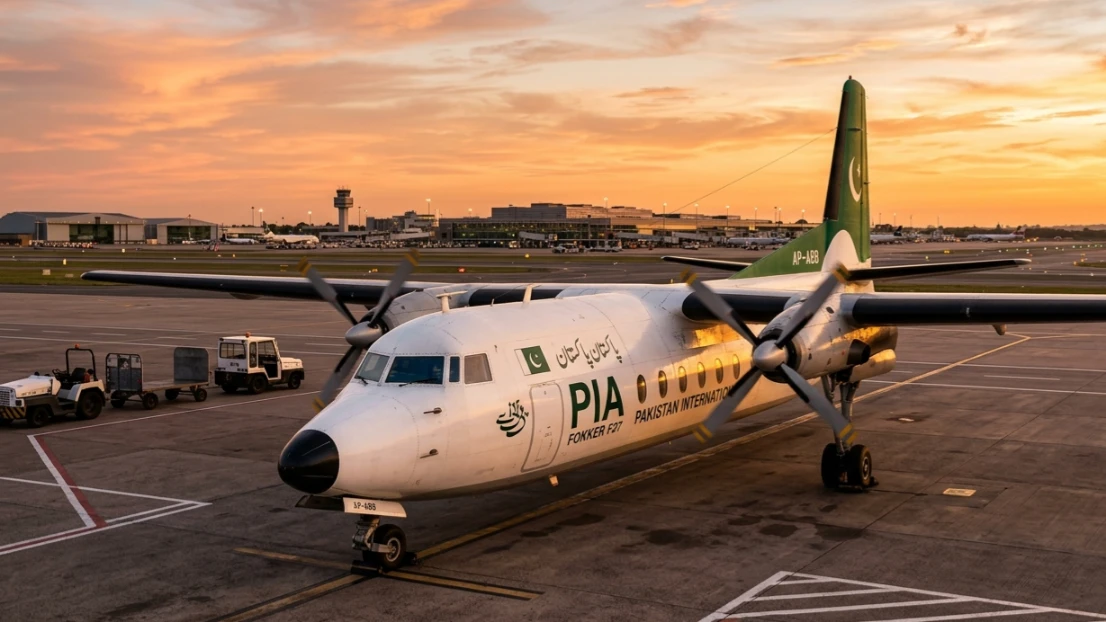
The PIA Flight PK-554 Hijacking Story No One Forgets
In 1998, three armed men hijacked Pakistan International Airlines Flight PK-554, demanding transport to India. The pilot convinced them to land in Hyderabad, Pakistan, by claiming a need for fuel. Local authorities maintained the deception by speaking Hindi and posing as Indian airport officials to manage the standoff safely.
Security forces eventually stormed the aircraft, rescuing all thirty-eight passengers and crew members without any casualties. The hijackers were apprehended and executed in 2015 following a lengthy legal process. The incident remains a significant example of using composure and psychological tactics to resolve a violent aviation crisis successfully.
The passengers had no idea they had just landed in the wrong country. At least, that’s what three-armed hijackers believed as the cabin door swung open.
In reality, the Fokker F-27 hadn’t crossed into India at all. It had barely left Pakistani soil.
This is the story of the PIA Flight PK-554 hijacking, one of the most audacious deceptions in the history of Pakistani aviation. A calm pilot, a team of officers speaking fluent Hindi, and a plot built entirely on lies would decide whether 38 people lived or died that night.
A Routine Flight That Turned Into a Nightmare
On the evening of May 24, 1998, Pakistan International Airlines Flight PK-554 left Turbat, bound for Karachi with a stopover in Gwadar.
The aircraft was a small Fokker F-27, carrying more than 30 passengers and five crew members. Nothing about the journey suggested danger.

Shortly after leaving Gwadar, everything changed. Three armed men rose from their seats and stormed the cockpit.
They ordered Captain Uzair Khan to divert the plane to India. The hijacking of PK-554 had begun.
“Take Us to India” — A Demand the Pilot Couldn’t Refuse
The hijackers weren’t bluffing. They carried weapons, and they had a map spread out, tracing a route toward Indian airspace.
Captain Khan understood the danger immediately. However, panicking would only make things worse.
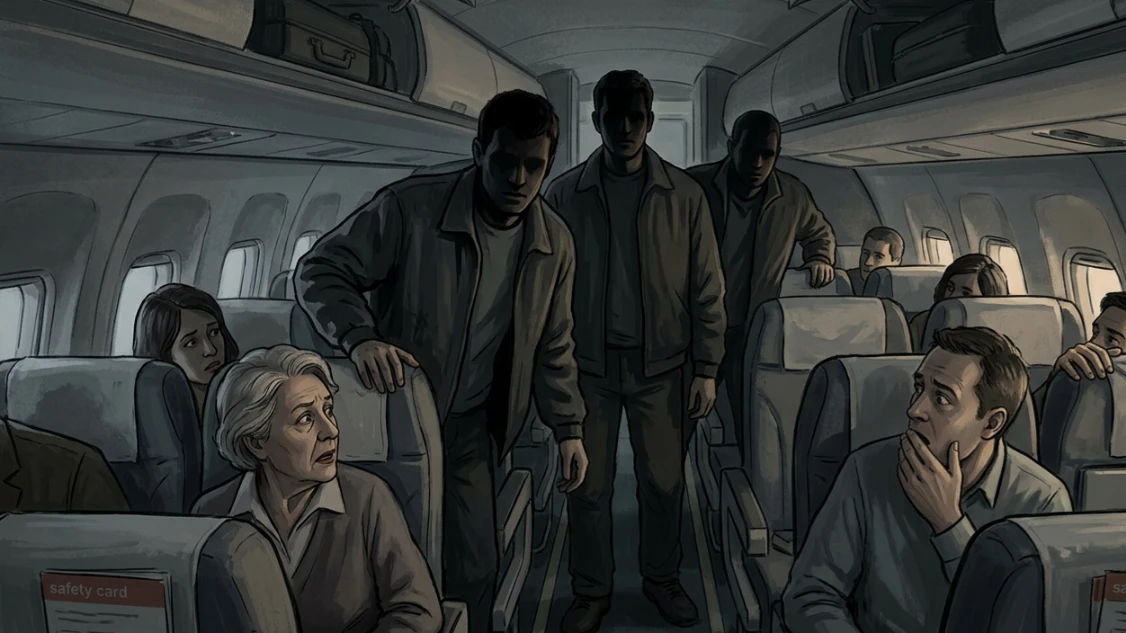
Instead, he chose a different weapon: his voice, and his ability to stay calm under pressure.

The Fuel Excuse That Changed Everything
Khan told the hijackers something they had no way of verifying. The aircraft, he said, didn’t carry enough fuel to reach New Delhi directly.
Because of this, he explained, they would first need to refuel at Bhuj, a city just across the border in India’s Gujarat state.
The hijackers agreed. It was a small concession that would unravel their entire plan.
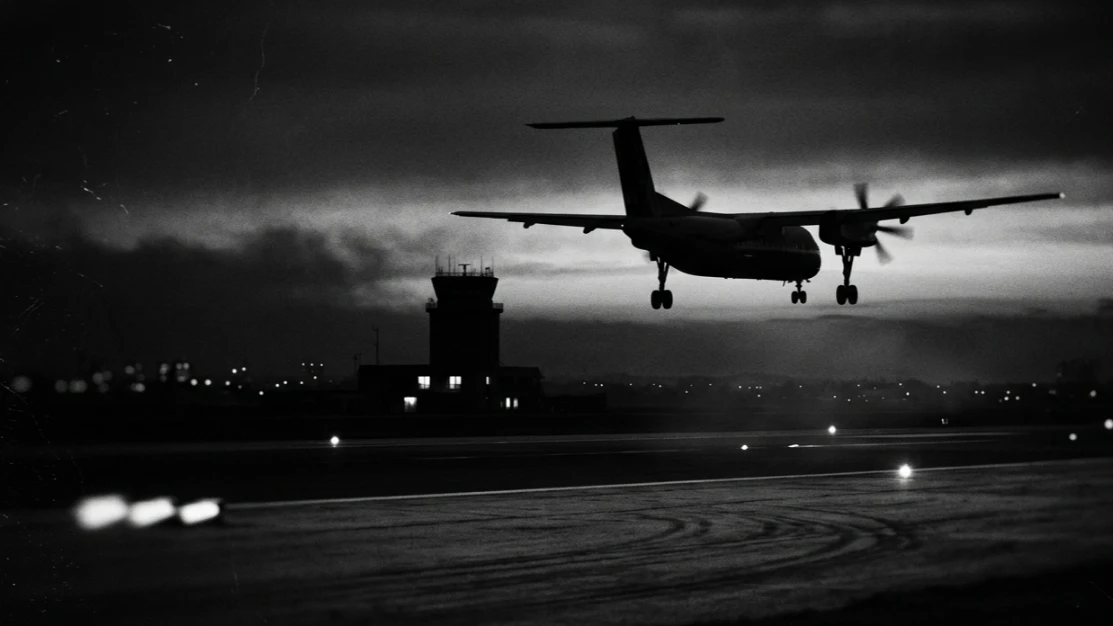
This single decision became the turning point of the PIA Flight PK-554 hijacking. Khan wasn’t heading to India at all — he was flying straight toward Hyderabad, Sindh.
Landing in the Dark, Deep Inside Pakistan
As the plane approached Hyderabad, Khan radioed air traffic control and deliberately referenced Bhuj airport in his transmissions.
Ground staff in Pakistan understood the situation instantly. Officials had already learned the flight was hijacked, so they played along, answering as though they were Indian airport authorities.
The hijackers, listening closely, became convinced they had crossed into Indian territory.
Eventually, the aircraft touched down in total darkness at Hyderabad. Authorities switched off runway lights and airport signage that might reveal the plane’s true location.
According to several accounts, even the loudspeakers at nearby mosques were temporarily silenced, so that no call to prayer would give away where they really were.

Three Officers Who Became Strangers Overnight
With the plane grounded, Pakistani officials faced their hardest task yet: convincing three desperate hijackers that they were standing on Indian soil.
SSP Akhtar Gorchani, ASP Dr. Usman Anwar, and Deputy Commissioner Sohail Akbar Shah stepped forward to negotiate. None of them spoke as themselves.
Manoj Kumar, Ram Chandar, and Gopi Chand
Gorchani introduced himself as airport manager Manoj Kumar. Anwar became Ram Chandar, his assistant. Shah played the part of Gopi Chand, an official from Bhuj.
They spoke Hindi throughout the negotiation, careful never to slip.
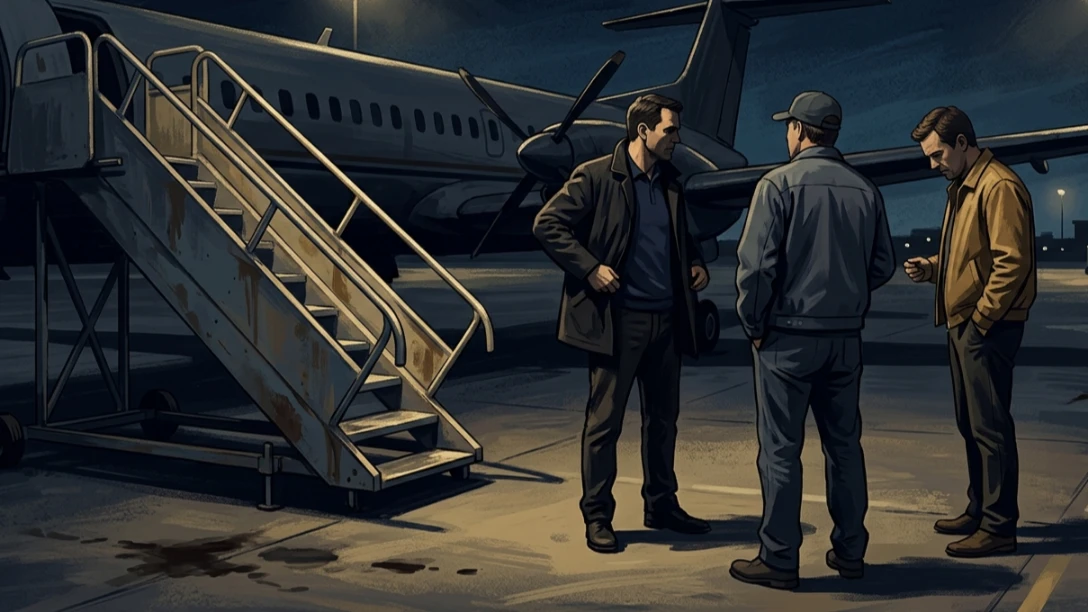
Meanwhile, the hijackers demanded fuel, food, and water — ordinary requests that gave the officers exactly what they needed most: time.
Seven Hours of Make-Believe
The standoff stretched on for hours. Every request, every reassurance, was designed to keep the hijackers calm while security forces quietly tightened their circle around the aircraft.
As a result, the hijackers never suspected that Pakistani commandos were positioning themselves nearby, waiting for the right moment to act.
The Final Assault
When that moment came, it happened fast. Security personnel stormed the aircraft and overpowered all three hijackers before they could react.
Every passenger and crew member walked away unharmed. No shots were fired at anyone aboard, and no lives were lost.
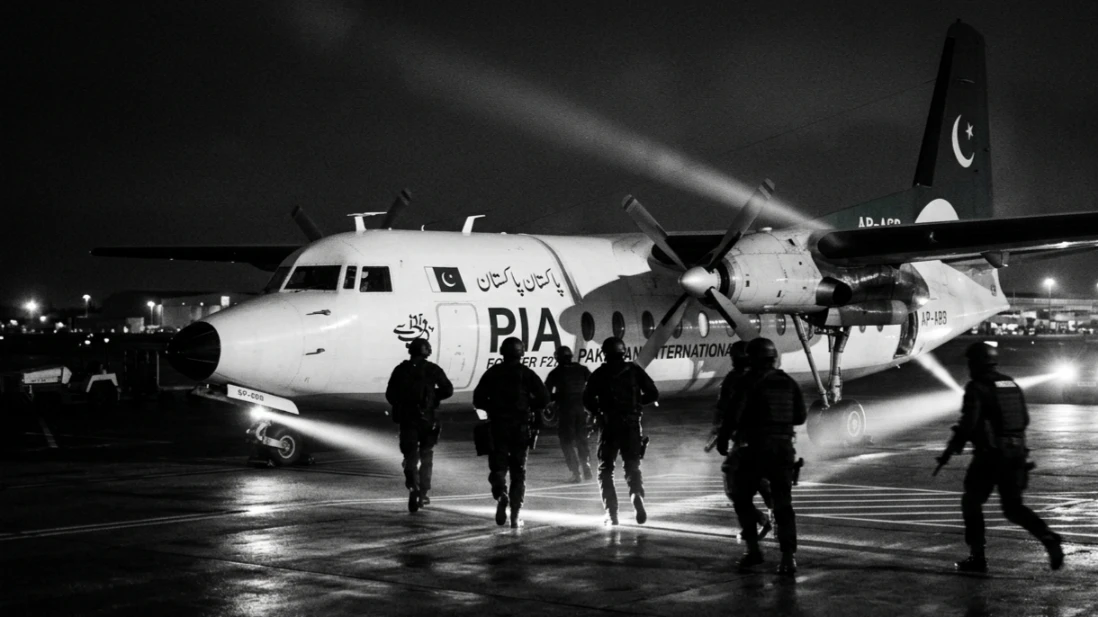
Only then did the hijackers realize the truth. They had never left Pakistan at all.
Justice, Seventeen Years Later
An anti-terrorism court sentenced the three hijackers to death for their role in the hijacking. But their case dragged through appeals for nearly two decades.

Eventually, on May 28, 2015, the sentences were carried out, closing a chapter that had stayed open for 17 years.
Why the PIA Flight PK-554 Hijacking Still Matters
The PIA Flight PK-554 hijacking remains a striking example of how composure can outmatch weapons. Captain Uzair Khan never fired a shot or fought back physically.
Instead, he bought time with a lie about fuel, and Pakistani officials finished the job with a performance worthy of a stage play.
In the end, every single person aboard that Fokker F-27 made it home safely — proof that sometimes the sharpest weapon in a crisis is a quick, believable story.
The Sikander Incident: The Day One Armed Man Paralyzed Pakistan’s Capital