
The Baboon Who Ran a Railway Station And Never Made a Single Mistake
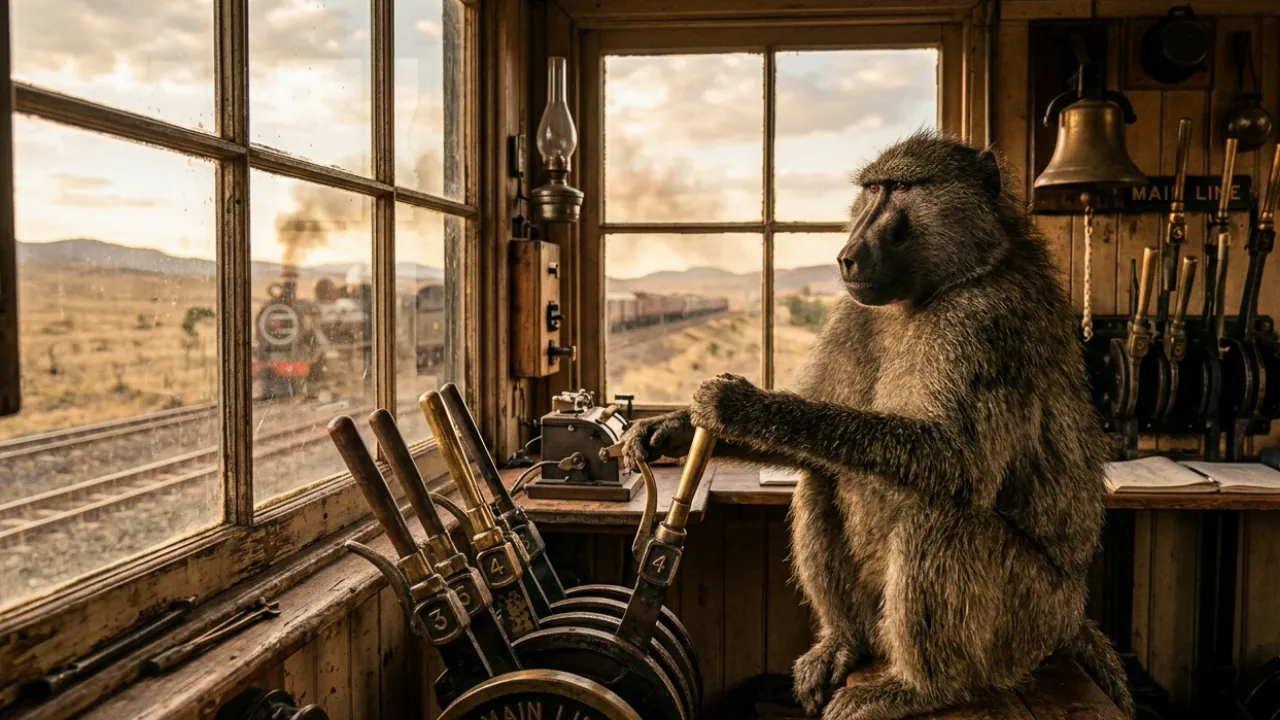
In the 1880s, a disabled railway signalman in South Africa trained a chacma baboon named Jack to assist with his duties. Jack learned to operate signal levers by responding to locomotive whistle patterns. He eventually performed these tasks independently, managing the movement of trains at the Uitenhage station.
After a formal investigation proved his competence, the Cape Government Railways officially employed Jack as a signal operator. He worked for nine years without committing a single recorded error before his death in 1890. His career remains a documented historical example of animal intelligence and reliability in a professional role.
In the 1880s, passengers arriving at a small South African railway station sometimes noticed something that stopped them cold.
There, working the signal levers with practiced precision, was a baboon.
Not a human. Not a machine. A baboon — on the official payroll of a railway company, earning a wage, and doing the job better than most people expected any animal could.
This is the true story of Jack the Signalman, and it is stranger than anything fiction could produce.
A Signalman Who Refused to Quit
Before Jack, there was James Wide.
James — nicknamed “Jumper” for his habit of leaping between moving rail cars — was a signalman who loved his work. But in a single catastrophic moment, that life changed forever. He slipped during one of his trademark jumps, fell beneath the wheels of a moving train, and lost both legs.
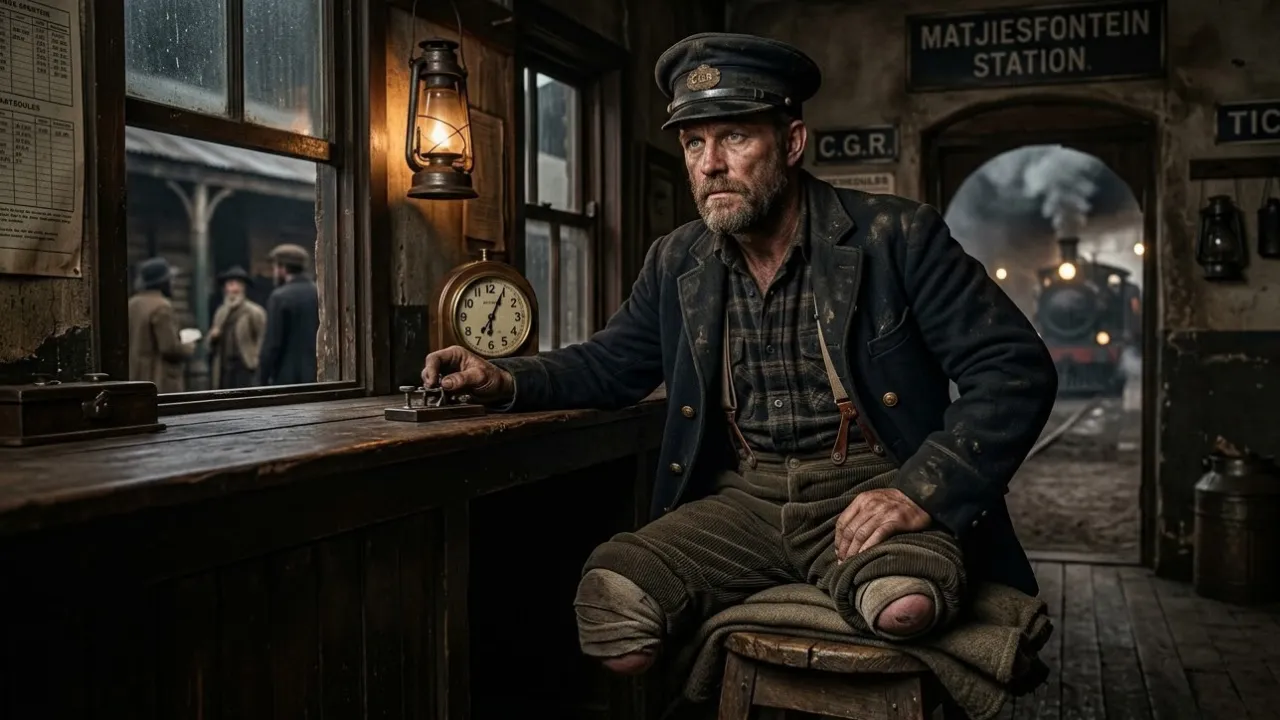
Most men in his position would have accepted the end of their railway career. James Wide was not like most men.
He learned to walk on wooden stumps. He returned to work at Uitenhage station in the Cape Colony. And in 1881, he found a solution to his daily struggles that nobody saw coming — a chacma baboon named Jack.
Jack Enters the Picture
James spotted Jack at a market, sitting on an ox wagon and watching the world with the calm, calculating eyes that baboons are known for. Something about the animal’s intelligence caught his attention immediately.
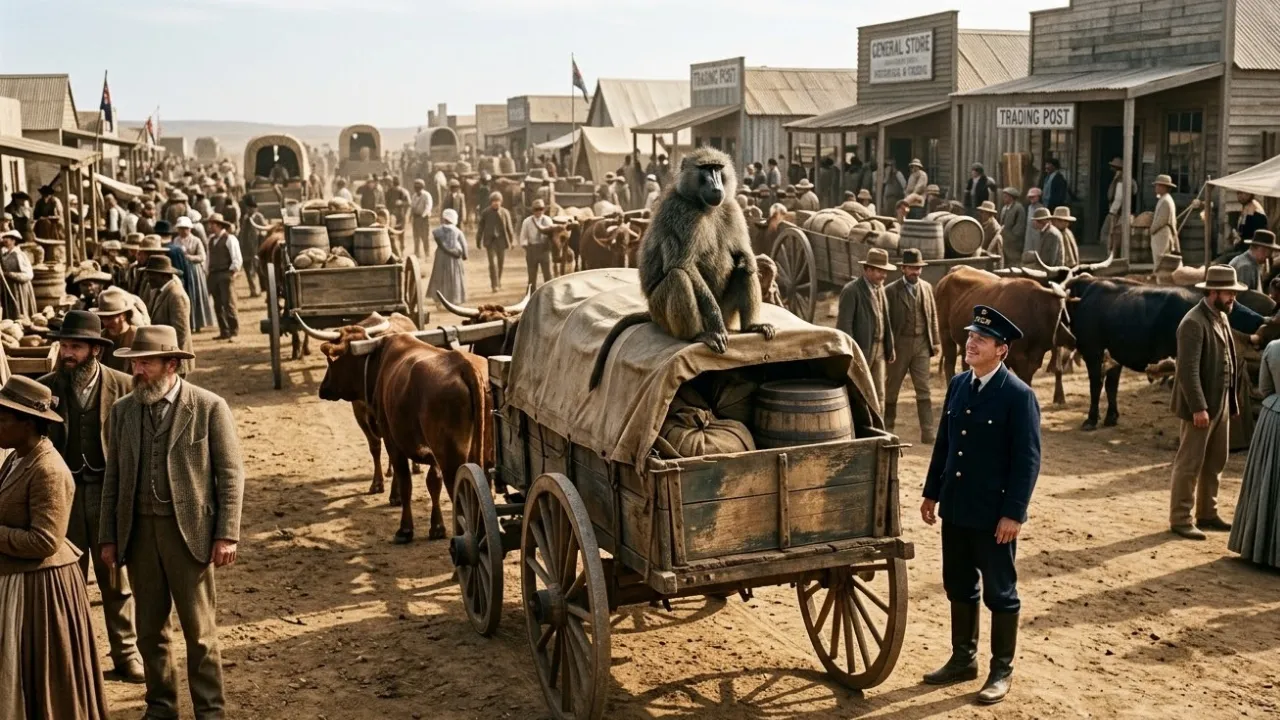
He bought Jack and brought him home.
What started as basic companionship quickly turned into something far more purposeful. James began teaching Jack to push his trolley around the yard, fetch tools, and help with household tasks. Jack learned fast — faster than anyone expected.
Meanwhile, James began to wonder just how far that intelligence could go.

Learning the Language of the Rails
Railway signalling in the 1880s was a system built on sound. Locomotive engineers communicated their needs through specific whistle patterns — one blast for this, two blasts for that. Each pattern told the signalman which levers to pull and which tracks to direct the train toward.
James taught Jack to listen.
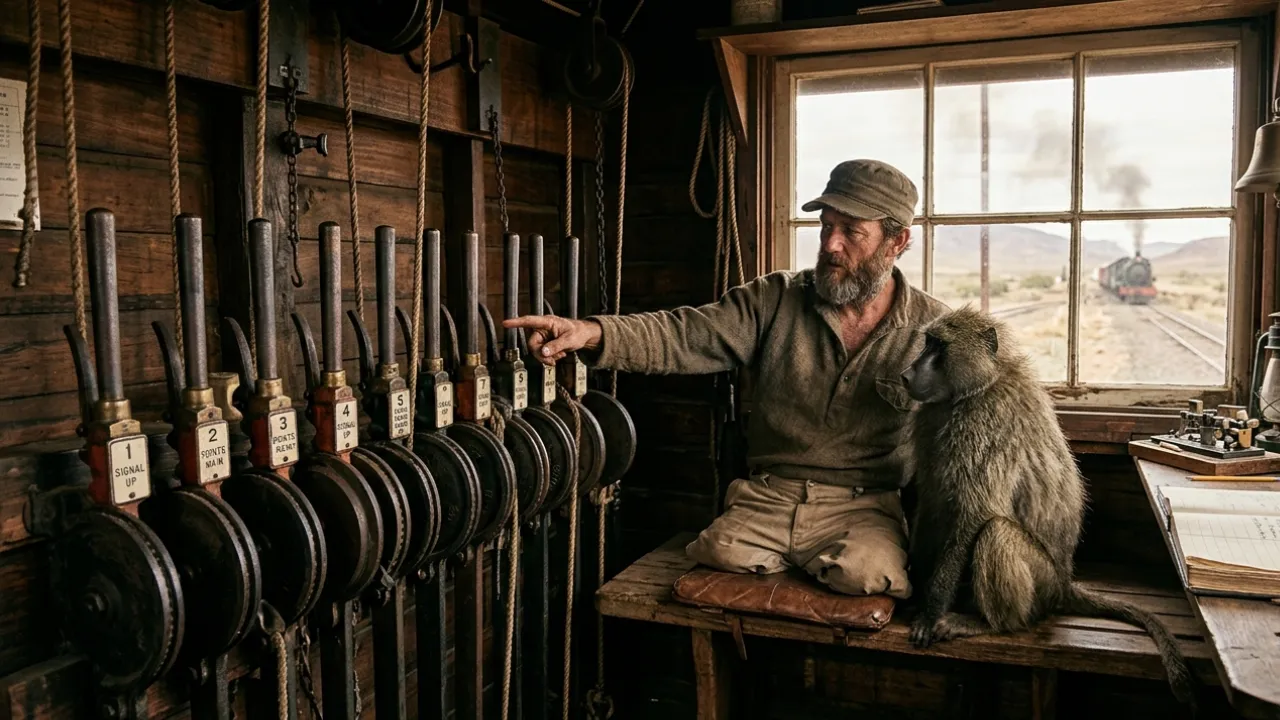
Over weeks and months of patient training, Jack learned to distinguish between different whistle signals and respond to each one correctly. He learned which levers controlled which points. He understood the sequence, the timing, and the consequences.
Eventually, James trusted him enough to let him operate the signals independently.
For a time, nobody outside the station knew.
The Day Jack Was Discovered
It was a passenger who blew the whistle — figuratively speaking.
Sitting on an arriving train, the passenger watched through the window as the station’s signal levers moved. When the train pulled in and he got a clear look at who was operating it, he could not believe what he saw.
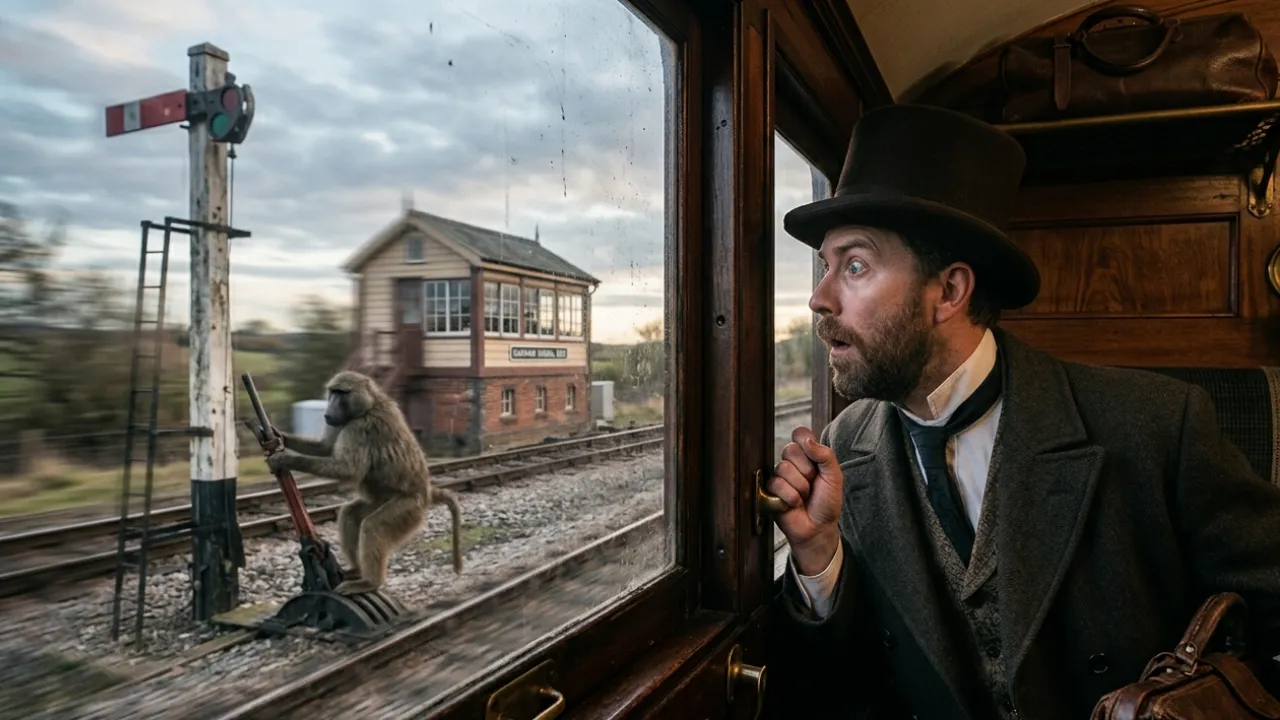
He reported it immediately to the railway authorities.
Officials descended on Uitenhage expecting a scandal. What they found instead made them pause. Rather than dismissing James on the spot, they decided to test the baboon properly.
They put Jack through his paces. Signal whistle after signal whistle. Lever after lever. Track routing decision after decision.
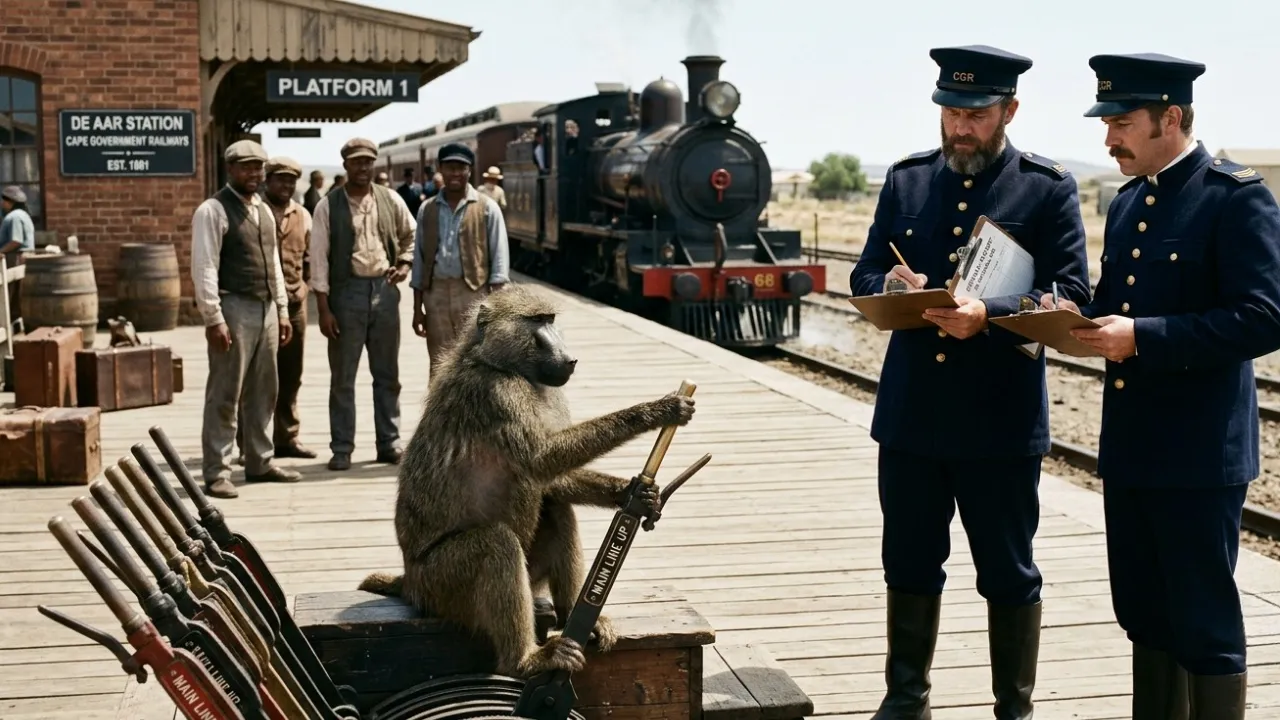
Jack did not make a single error.

Officially Employed: Salary, Benefits, and a Beer Ration
The result of that investigation was something nobody in railway history had ever done before — or has done since.
The Cape Government Railways officially employed Jack as a signal operator.
He received a salary of twenty cents per day and was also given half a bottle of beer each week, a benefit that Jack apparently considered non-negotiable.
He was issued an employee number and was a legitimate, documented member of the railway workforce.
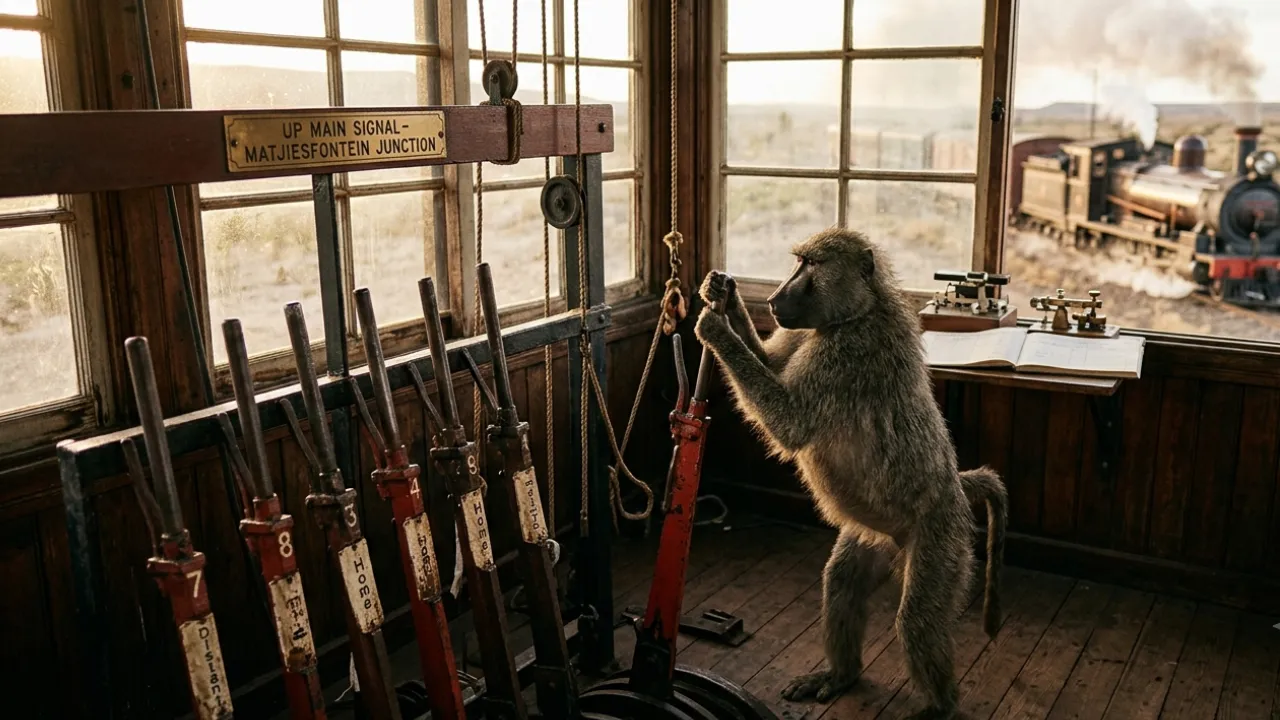
For nine years, Jack reported for work at Uitenhage station. For nine years, he responded to whistle signals and operated the levers that directed trains safely through the junction. In nine years, railway records show no documented mistake attributed to him.
In a profession where a single error could send two trains onto a collision course, that record was extraordinary.
The End of a Remarkable Career
Jack died in 1890, most likely from tuberculosis — the same disease that claimed many human workers of that era.
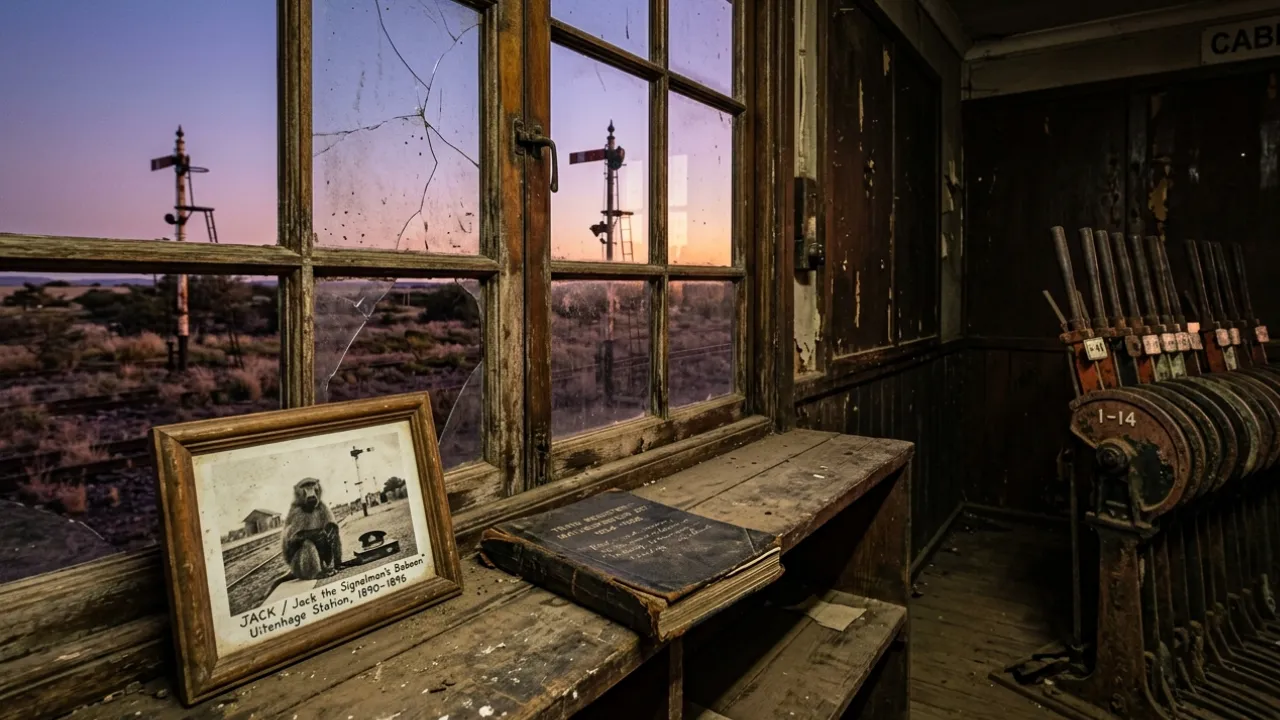
By the time he died, he had become something of a local legend. The railway staff who worked alongside him spoke of his reliability with genuine respect. James Wide, the man who had trained him, outlived him by many years and never stopped talking about what Jack had been capable of.
Today, Jack’s skull is preserved at the Albany Museum in Grahamstown, South Africa. It is one of the more unusual exhibits in the country’s natural history collection — the physical remains of an animal that once held a government job.
The Pig War: How a Hungry Hog Almost Started a War Between Two Superpowers
Why Jack’s Story Still Matters
Jack the Signalman sits at a strange intersection of animal intelligence, human resilience, and railway history.
His story is remarkable not just because a baboon learned to operate signals, but because he did it reliably, consistently, and under conditions where mistakes had real consequences. He was not a trick performer or a curiosity. He was a working professional — tested, certified, and trusted.
More than a century later, Jack remains one of the most unusual workers in the history of South African railways. His record stands untarnished. His reputation never wavered.
In a job that demanded precision and consistency, Jack the baboon delivered both — every single day.
What do you think — does Jack the Signalman deserve a place among history’s most remarkable workers? Let us know in the comments.