

Who Invented the 7-Day Week? The Full Story
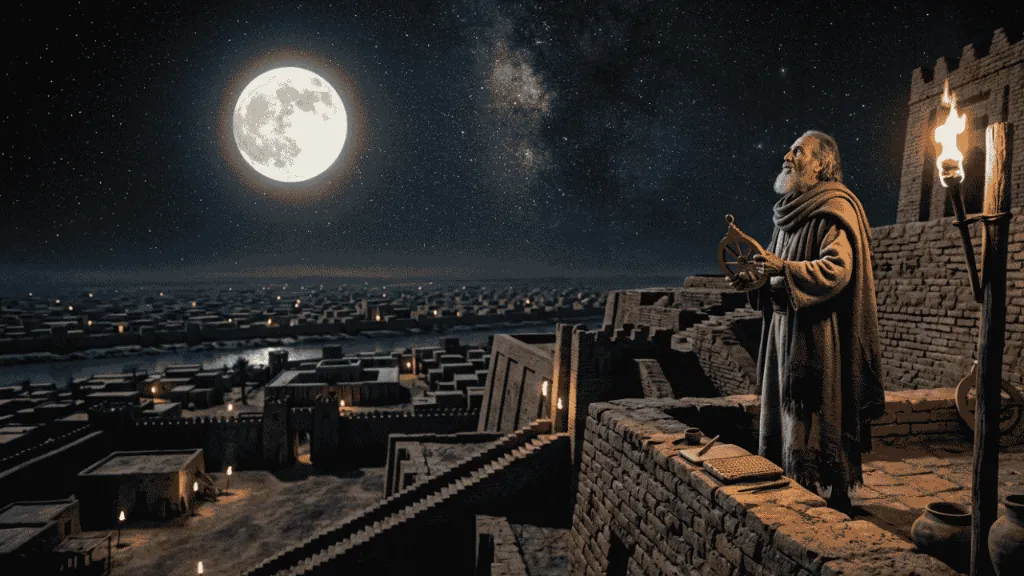
The seven-day week originated in ancient Mesopotamia roughly 4,000 years ago. Babylonian astronomers developed the unit by observing the moon’s lunar cycle and its four distinct phases. They further reinforced this timeframe by associating each day with seven visible celestial bodies, including the sun, moon, and five planets.
This system spread through Roman trade and administrative networks, eventually becoming integrated into religious practices. While other cultures attempted different calendar structures, the seven-day rhythm persisted. Unlike days or years, the week is a human invention based on astronomical observation rather than a physical law of nature.
Have you ever stopped mid-week and wondered — why seven days? Not six, not eight, but exactly seven? It feels like a law of nature, as fixed as gravity. However, the truth is far more fascinating. The seven-day week was not discovered. It was invented by ancient stargazers who looked up at the night sky and started counting.
The Moon: Humanity’s First Calendar
Around 4,000 years ago, the people of Babylon and Nineveh — great cities of ancient Mesopotamia in modern-day Iraq — had no clocks, no apps, and no calendars. What they did have was a clear night sky and sharp, patient eyes.
They noticed the moon was never the same two nights in a row. Sometimes it disappeared completely. Sometimes it glowed full and bright. Other nights it appeared as a thin crescent, slowly growing wider.
So they started watching — night after night, season after season.
Eventually, they mapped out a pattern. The moon completes one full cycle in roughly 29 days. Today, we call this the lunar cycle. Back then, it was nothing short of a revelation.
Dividing the Moon: Where Seven Came From
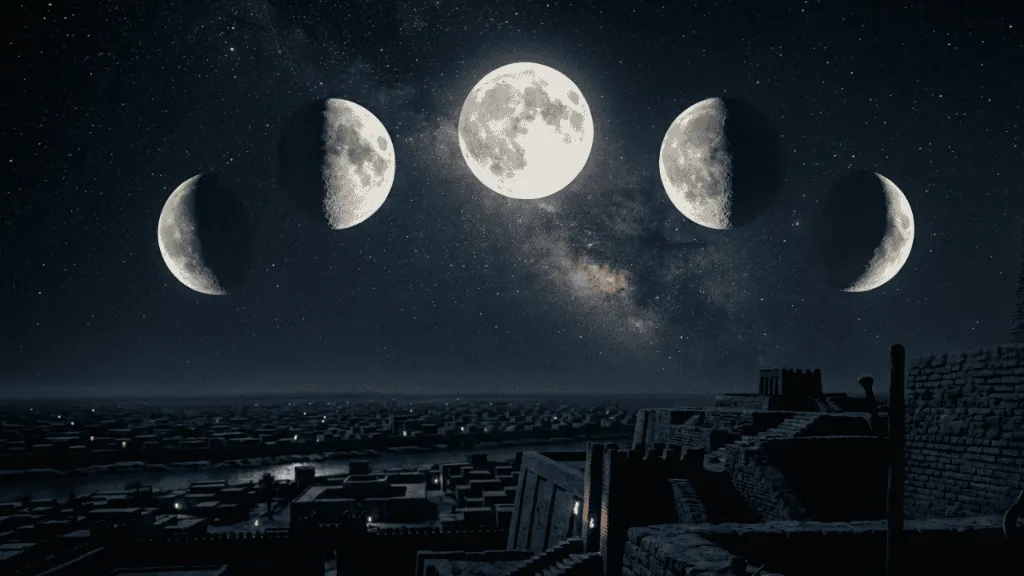
The moon’s cycle had four distinct phases:
- New moon — completely invisible
- First quarter — half lit, growing
- Full moon — completely visible
- Last quarter — half lit, fading
The Babylonians divided 29 days into four phases. Each section came out to roughly 7 days. So they rounded it — four phases, seven days each, equaling 28 days. The remaining day or two was quietly absorbed into the month.
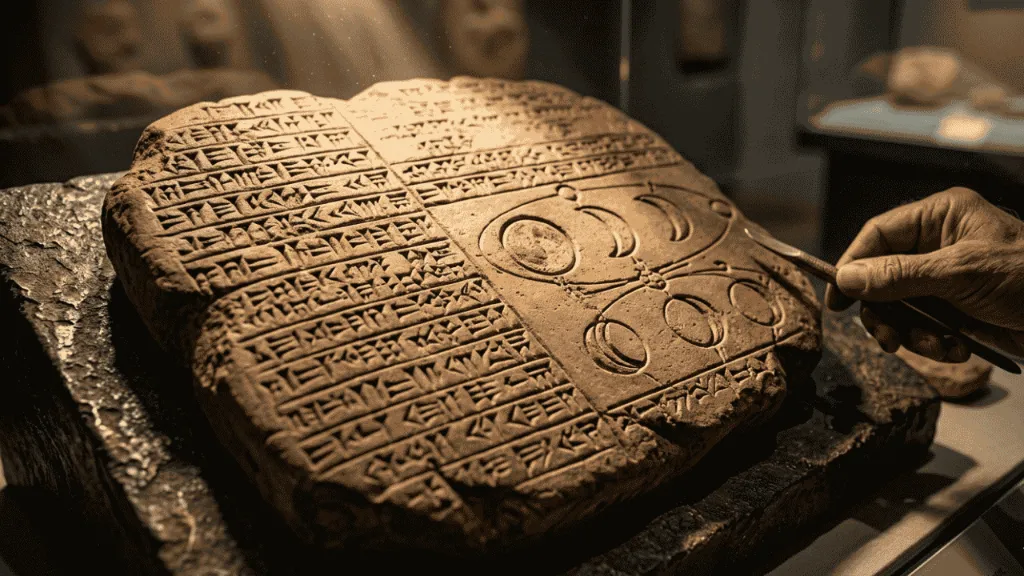
For the first time in human history, seven days became a meaningful unit of time — not because of religion or tradition, but because of repeated, careful observation of the sky.

Seven Planets, Seven Days: The Celestial Connection
Here is where things get even more interesting.
The ancient Mesopotamians did not just watch the moon. They also tracked seven distinct moving objects in the sky — objects that behaved differently from the fixed stars. These were:
The Sun, the Moon, Mars, Mercury, Venus, Jupiter, and Saturn.
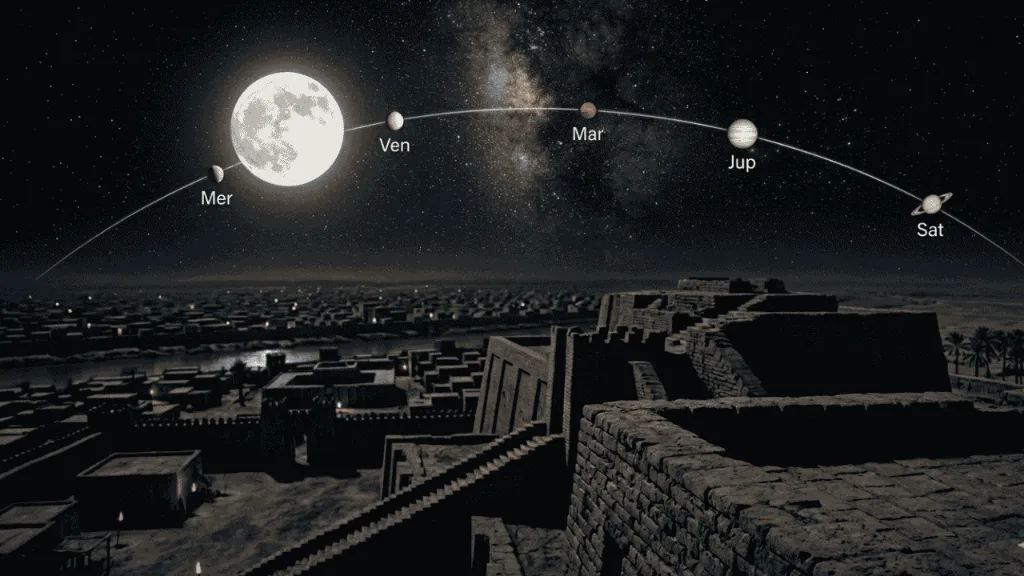
In their worldview, these seven objects were sacred and unique. They moved, changed, and seemed to govern the world below.
As a result, the number seven already felt cosmically special. When the Babylonians settled on seven days for their week, they also linked each day to one of these celestial bodies. The system was elegant and deeply symbolic.
This is where our modern weekday names still come from. Saturday comes from Saturn. Sunday and Monday trace back to the Sun and Moon. Tuesday through Friday echo Mars, Mercury, Jupiter, and Venus — filtered through Norse mythology and Old English over centuries.
How the Seven-Day Week Spread Across the World
The idea did not stay in Mesopotamia for long.
Meanwhile, trade routes and conquests carried Babylonian knowledge westward. Eventually, it reached the Roman Empire, which adopted the seven-day week and spread it across Europe through its vast administrative network.
When Christianity became the dominant religion of the Roman world, religious leaders incorporated the seven-day week into sacred texts and practice. For example, the story of creation in Genesis follows a seven-day structure, which many scholars believe was shaped partly by the existing Babylonian framework already familiar to the region.

Because of this blend of astronomy, administration, and religion, the seven-day week became deeply embedded across cultures. By the medieval period, almost every major civilization on earth used some version of it.

Was Seven Always the Only Option?
Here is something most people never learn: no, it was not.
The Roman calendar itself used an eight-day market week called the nundinae for centuries before switching to seven. During the French Revolution, France tried a radical experiment — a ten-day week called the décade, as part of the new Republican Calendar introduced in 1793.
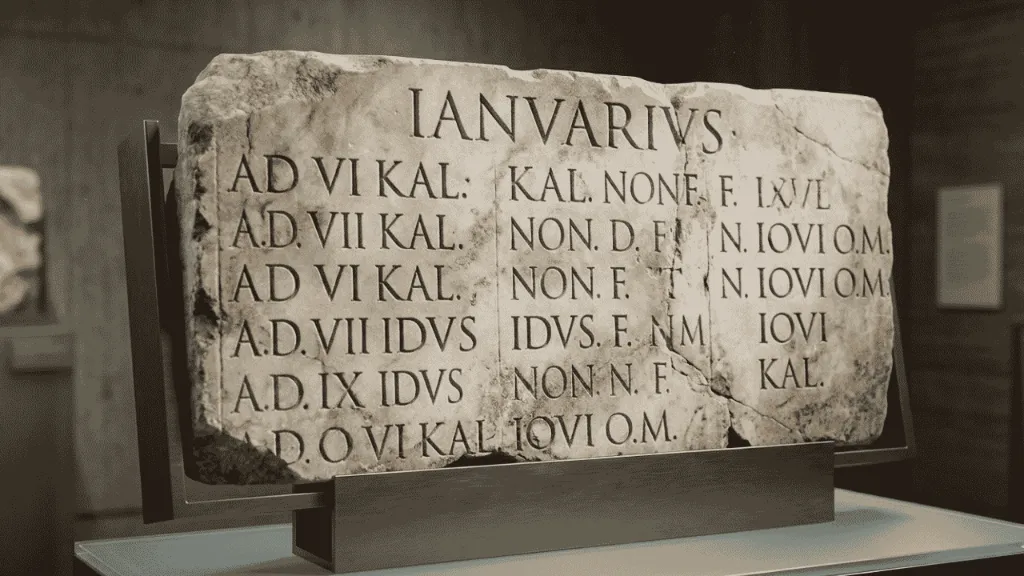
It failed within a decade. People resisted it. The seven-day rhythm was too deeply rooted in daily life to be replaced.
However, the experiment proved an important point. Seven days is the best available choice — not the only possible one. And recognizing that difference is what separates good thinking from blind assumption.
What Modern Science Says About the Seven-Day Week
Here is a surprising fact: modern physics has nothing to say about the seven-day week.
Newton’s laws explain planetary motion. Einstein’s equations describe space and time. But not one equation in physics demands that a week contain seven days.
Days exist because the Earth rotates on its axis. Years exist because the Earth orbits the Sun. Both have physical causes rooted in celestial mechanics.
The week, however, has no physical basis whatsoever. It does not arise from any natural force or orbital pattern. It is entirely a human creation — a social and administrative technology built on top of astronomical observation.
In other words, the week is real, it’s useful, but it is not a law of nature.
The Real Lesson Hidden in the Calendar
The story of the seven-day week is really a story about how humans think.
Ancient Babylonians did not have laboratories. They did not have telescopes or computers. But they had curiosity and patience. They observed the sky, recognized a pattern, built a model, and created a system. Then — crucially — they refined it.
That process is exactly what modern science still follows today:
- Observe
- Identify a pattern
- Build a model
- Ask questions about it
The seven-day week is a living example of that process. Every time you say “another week gone by”, you are unknowingly echoing 4,000 years of human observation, ingenuity, and sky-watching.
Conclusion: Seven Days, Four Thousand Years, One Great Idea
The seven-day week did not fall from the sky fully formed. It grew out of patient human observation of the moon’s phases, reinforced by the mystique of seven visible celestial bodies, and carried forward by empires, religions, and daily habit.
It is not a divine command, nor a scientific constant. But it is something more impressive than either — it is one of humanity’s oldest working inventions, still running perfectly after four millennia.
So the next time your Monday feels long or your Friday feels slow, remember: the week you are living through was designed by ancient astronomers staring at the moon from the banks of the Euphrates.
Pretty remarkable, honestly.