
Lois Royce and the Schoolhouse Blizzard: A Story of Courage, Sacrifice, and Survival
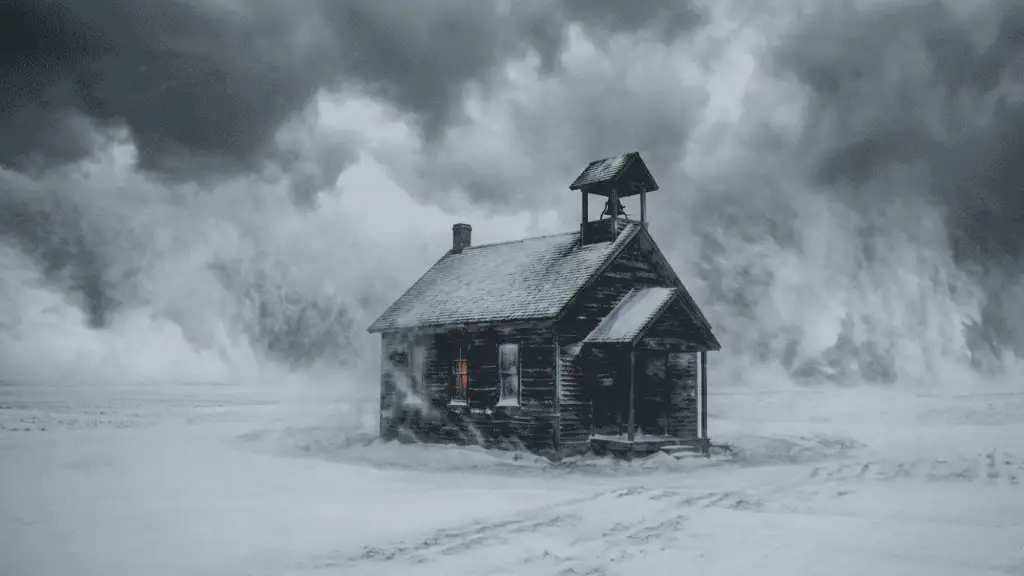
The Schoolhouse Blizzard of 1888 was a catastrophic Arctic storm that struck the Great Plains, causing temperatures to plummet and killing hundreds. Many victims were students and teachers caught unprepared. The disaster is remembered for its extreme weather conditions and the devastating impact on rural communities across the region.
Teacher Lois Royce saved several students by sheltering them in a snow cave for eighteen hours. Despite severe frostbite resulting in the amputation of her feet, her quick thinking and leadership ensured the survival of seven children. Her actions remain a notable example of courage during the 1888 disaster.
The sky looked ordinary that morning. Children laughed on their way to school. Farmers tended their land without worry.
Then, without warning, the world turned white.
On January 12, 1888, one of the deadliest storms in American history tore across the Great Plains. History remembers it as the Schoolhouse Blizzard of 1888 — and it changed everything in a matter of hours.
A Monster Storm Arrives Without Warning
The morning of January 12 started mild. For many families across Nebraska, Dakota Territory, and Minnesota, it felt like a regular winter day.
However, by early afternoon, a brutal Arctic air mass came crashing south. The temperature plummeted nearly 100 degrees Fahrenheit in just a few hours.
Blinding snow and hurricane-force winds swallowed entire towns whole. Farmers froze to death in their own fields — just steps from their front doors. Children walking home from school never made it back.
Because of this sudden and catastrophic drop in temperature, hundreds of people lost their lives that day. Many were students and teachers caught in the open with nowhere to run.
Lois Royce: The 19-Year-Old Teacher Who Refused to Give Up
In a small Nebraska schoolhouse, 19-year-old teacher Lois Royce watched the horizon shift. Something felt wrong.
She trusted her instincts.
Before the full force of the storm arrived, she made a decision — she would send her 13 students home early. She hoped they could reach their families in time.
They couldn’t.
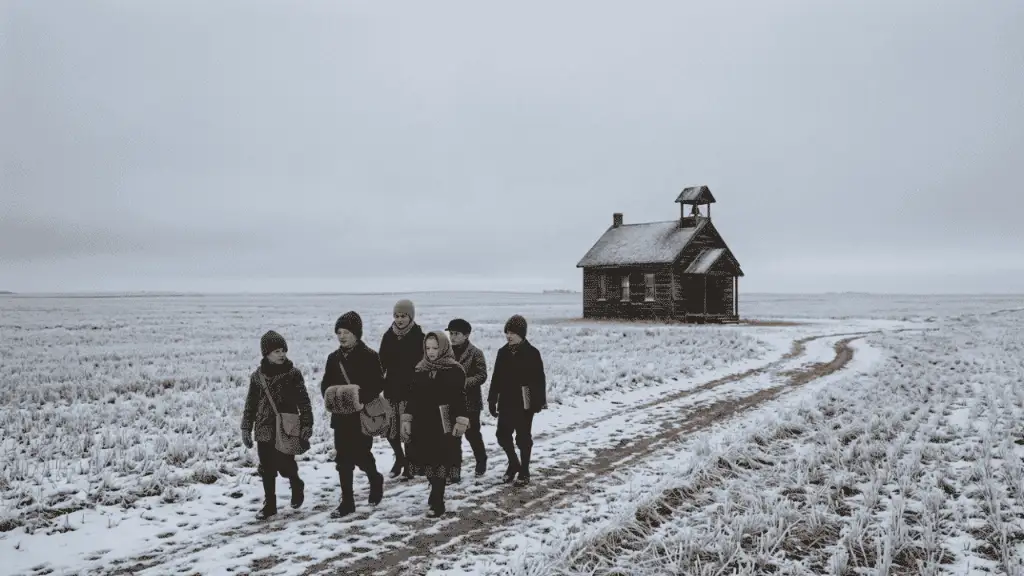
The blizzard hit while the children were still on the road. Within minutes, the world around them disappeared. Snow came in sideways. The wind screamed. The trail home vanished completely.
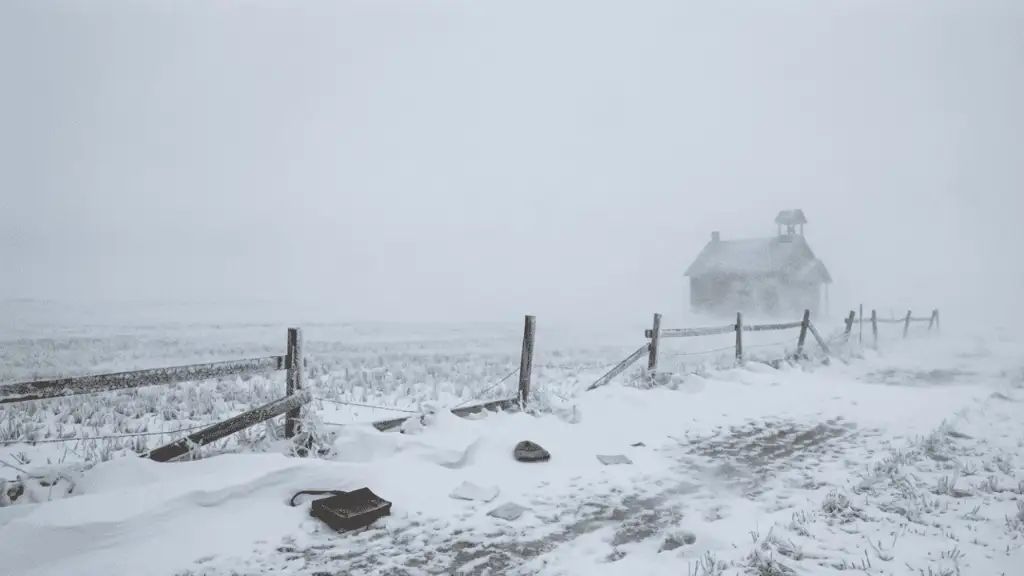
Meanwhile, three of the youngest children collapsed. The cold had taken them before anyone could help.
A Rope, a Petticoat, and a Desperate Plan
Lois did not panic. She acted.
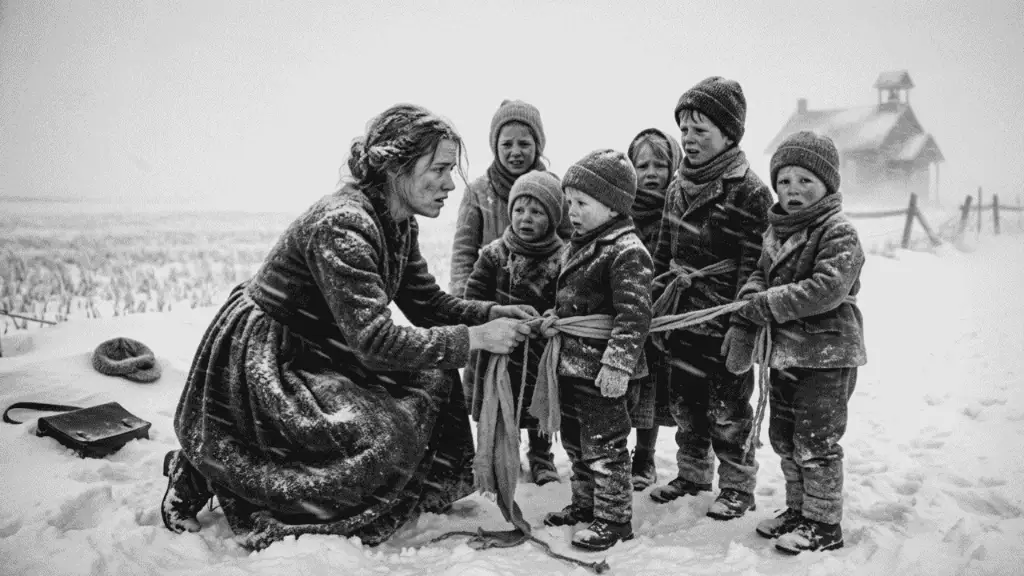
She tore off her petticoat and used it — along with a rope — to tie the remaining 10 children together. No one would drift away. No one would get lost in the white wall of snow.
They crawled forward together through the blizzard, inch by inch, fighting the wind with every move.
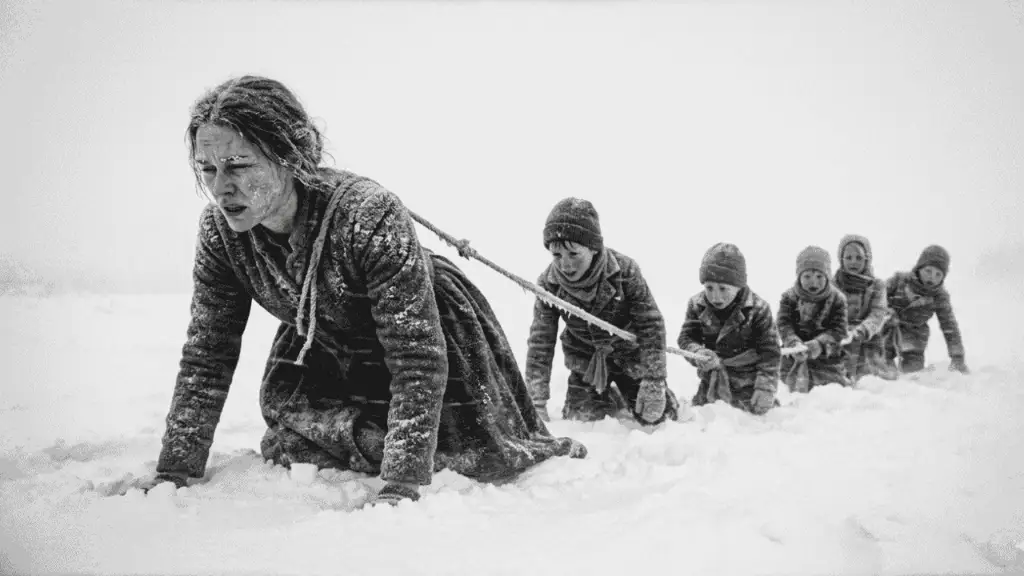
Eventually, the trail disappeared entirely. Even Lois had no idea which direction to go. The situation looked hopeless.
Then a small, shaking voice broke through the howling wind.
“My Father Digs Tunnels in the Snow…”
Nine-year-old Ernest Schmidt spoke up. His voice trembled, but his words were clear.
“My father digs tunnels in the snow for the livestock when it gets bad like this.”
That one sentence changed everything.
Lois grabbed the idea immediately. With frozen hands, she and the children began clawing at a massive snowdrift nearby. They dug and scraped and pushed until they had carved out a small cave — just big enough for all of them.
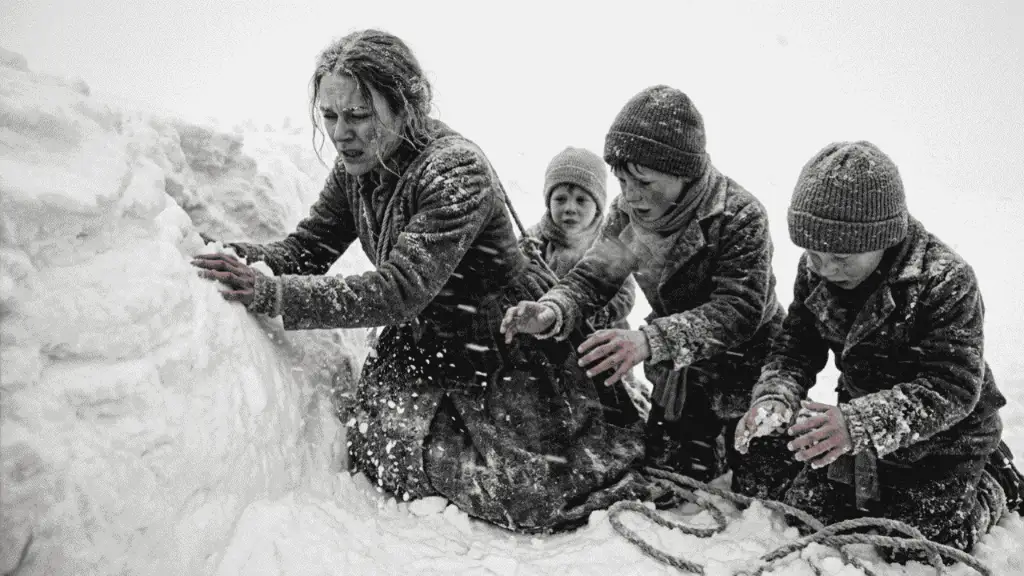
They crawled inside and huddled together for warmth.
Eighteen Hours in the Snow
Inside their tiny snow shelter, Lois kept everyone moving. She knew that falling asleep in the cold could be fatal.
So she led the children in songs. They sang, and they sang, and they kept singing — through the night, through the darkness, through the endless howl of the storm outside.
For 18 straight hours, they held on.
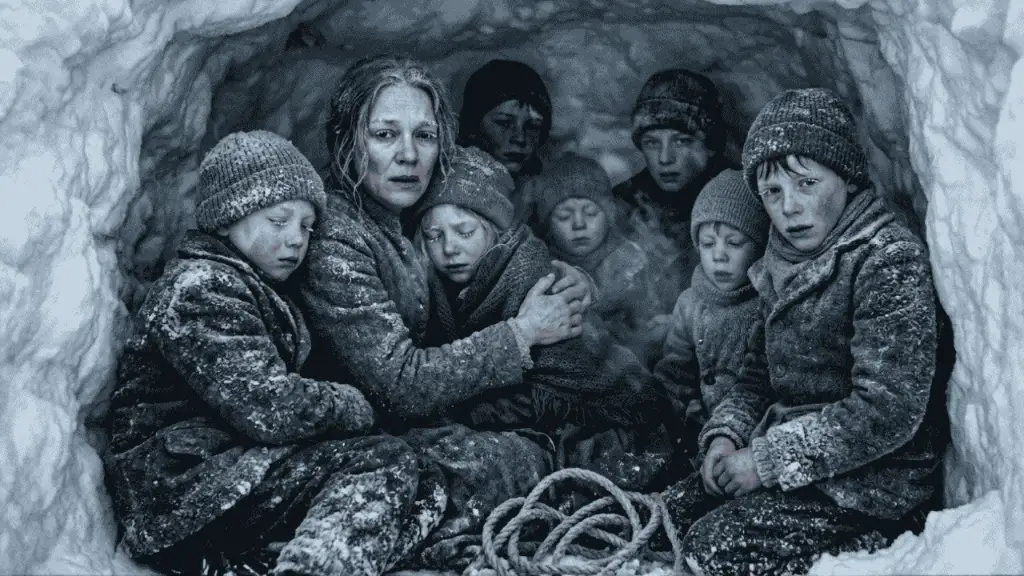
In addition to keeping spirits up, the shelter did its job. Snow is a natural insulator. The cave trapped their body heat and kept the wind out. It was far from comfortable — but it was alive.
The Scarf That Saved Them
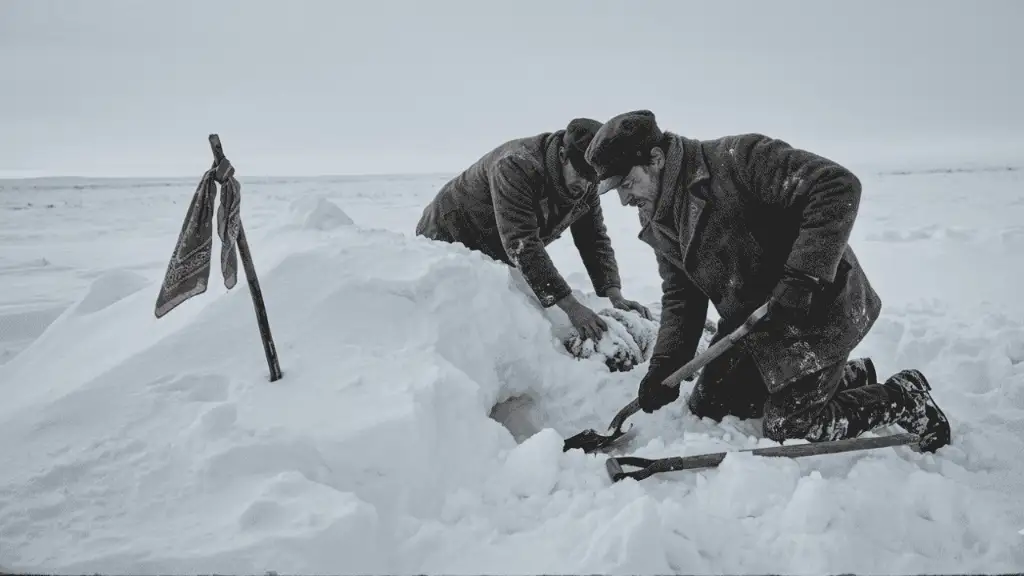
When rescue teams finally set out after the storm began to ease, they searched through mountains of fresh snow.
Afterward, one searcher spotted something strange — a small scarf tied to a stick, poking just barely above the snowline.
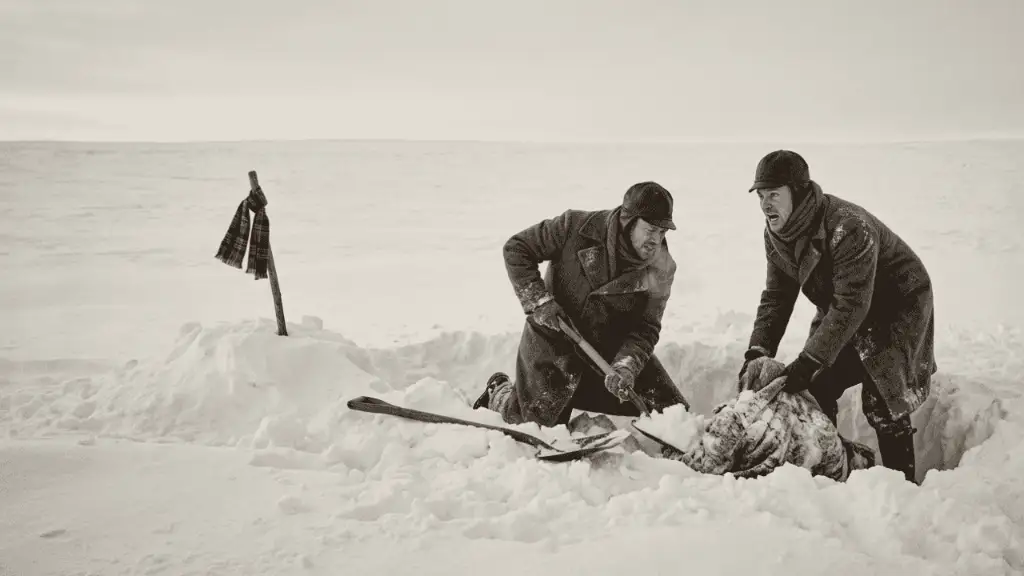
That scarf was Lois’s signal.
The rescuers dug down and found the children — cold, exhausted, frostbitten, but breathing.
Of the 13 students who had left the schoolhouse that day, 7 survived.
The Price Lois Paid
Lois Royce had not left a single surviving child’s side during those 18 hours. She gave everything she had.
For example, she had sacrificed her own clothing to bind the children together. She had used her body heat to keep them warm. She had refused to sleep so she could watch over every one of them.
As a result of severe frostbite, Lois lost both of her feet.
She was 19 years old.
“We Made a Home in the Snow”
When people later asked Lois about that terrible night, she kept her answer simple.
She said:
“I couldn’t bring them home… so we made a home in the snow.”
Those words capture everything — the grief, the courage, and the quiet love of a teacher for her students.
Also Read: The Dancing Plague of 1518: When an Entire City Lost Control of Its Own Body
Why the Schoolhouse Blizzard of 1888 Still Matters
The Schoolhouse Blizzard of 1888 killed an estimated 235 people across the northern Great Plains in a single afternoon. Many were children.
However, the storm also produced heroes. Teachers like Lois Royce — young, underpaid, and undertrained for disasters — stepped forward when it mattered most.
Lois never sought fame. She simply did what she believed a teacher must do: protect the children in her care until there was nothing left to give.
Her story is a reminder that real courage does not look like strength. It looks like a 19-year-old woman with frozen hands, singing songs in the dark, refusing to let anyone give up.
Conclusion: A Lesson That Lives On
The Schoolhouse Blizzard of 1888 is more than a weather event in an old history book. It is a human story — raw, heartbreaking, and deeply inspiring.
Lois Royce lost her feet. She never fully recovered physically. But she kept every surviving child alive through sheer will, quick thinking, and extraordinary love.
The next time you hear about a teacher going above and beyond for their students, think of Lois. Because long before anyone used the phrase “no child left behind,” she lived it — in a snowdrift in Nebraska, on the coldest night of 1888.