
The Surprising Origin Story of the Air Conditioner
Willis Carrier invented modern air conditioning in 1902 to solve humidity problems at a New York printing factory. Initially a massive industrial system designed to protect paper, the technology transitioned into public spaces like movie theaters before becoming a standard household appliance following advancements after World War II.
The technology evolved from room-sized machinery into efficient window units and modern smart systems. Beyond personal comfort, air conditioning influenced urban development and architecture. It remains essential for critical infrastructure like data centers and hospitals, fundamentally reshaping how humans live, work, and build cities across various climates.
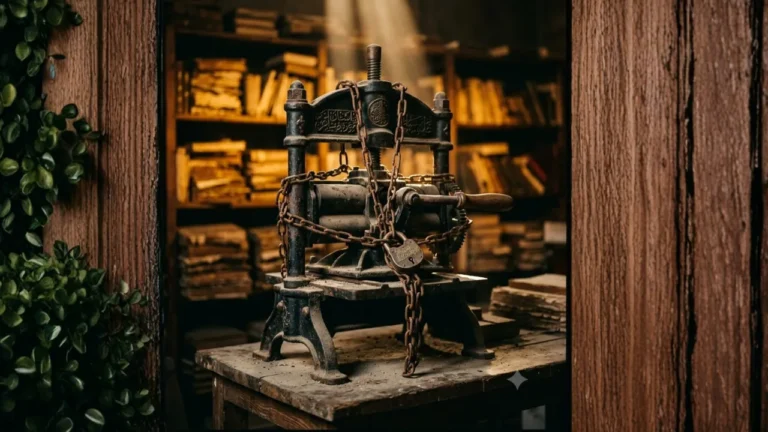
In 1902, when Willis Carrier unveiled his revolutionary invention, no one called it an “air conditioner.” There was no marketing campaign, no glossy brochure, and certainly no promise of a comfortable summer afternoon. The machine existed for one unglamorous reason — to stop paper from wrinkling.
Yet that single industrial solution would go on to change the way humans live, work, sleep, and build cities. What started as a fix for a printing press problem eventually reshaped the entire modern world.
But before it reached your bedroom wall, this invention had to survive decades of skepticism, sky-high price tags, and a size that could swallow an entire room.
A Hot Summer and a Stubborn Problem
The summer of 1902 in Brooklyn, New York, was brutal. Inside the Sackett & Wilhelms Lithographing and Printing Company, workers weren’t just sweating — they were watching their product fall apart.
Humidity was the enemy. As temperatures rose and fell throughout the day, the air inside the factory absorbed and released moisture. That moisture caused the printing paper to expand and contract. Colors shifted. Ink misaligned. The final prints were a disaster.
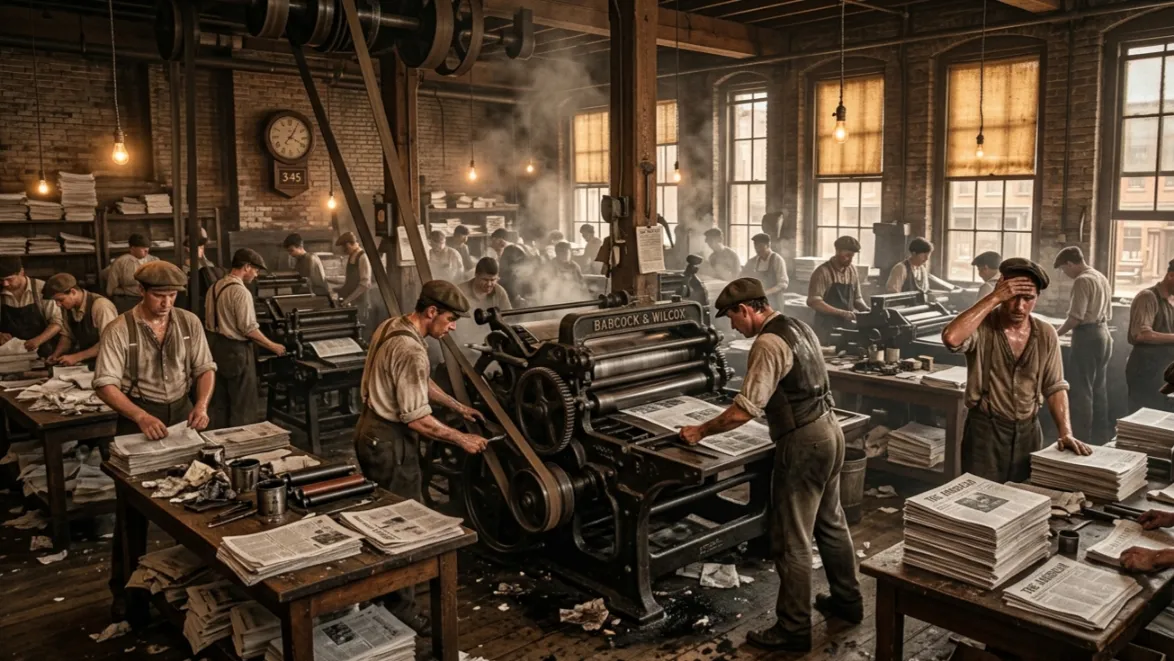
The company needed a solution — and fast. So they hired a young mechanical engineer fresh out of Cornell University.
His name was Willis Haviland Carrier.
The Engineer Who Changed Everything
Carrier was 25 years old when he took on the job. He wasn’t trying to invent something world-changing. He was simply trying to solve a humidity problem in a printing factory.

After months of calculations and experimentation, he developed a system that circulated air over coils filled with cold water. As air passed over the coils, moisture condensed and dropped away — just like water beads on a cold glass on a humid day.
The result? Controlled air, humidity, and temperature.
On July 17, 1902, the system was installed. It worked. The paper stayed flat. Ink stayed aligned. The prints came out perfect.
That date is now considered the birthday of modern air conditioning.

This Was No Ordinary Machine
Don’t picture a sleek white unit mounted on your wall. Carrier’s original invention was nothing like that.
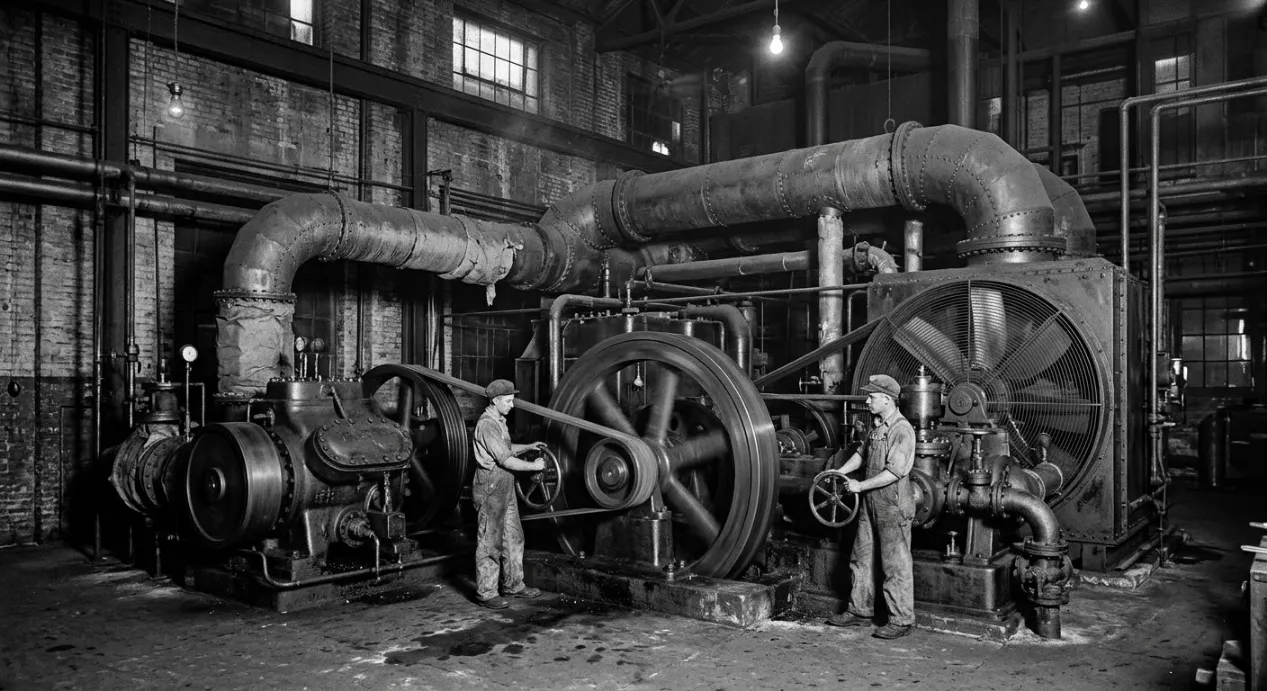
It was a massive industrial system — a tangle of fans, pipes, compressors, and cooling coils that occupied an entire room. It consumed enormous amounts of electricity, required trained engineers to operate, and produced a low, relentless hum that filled the factory floor.
In other words, this was a machine built for industry, not comfort.
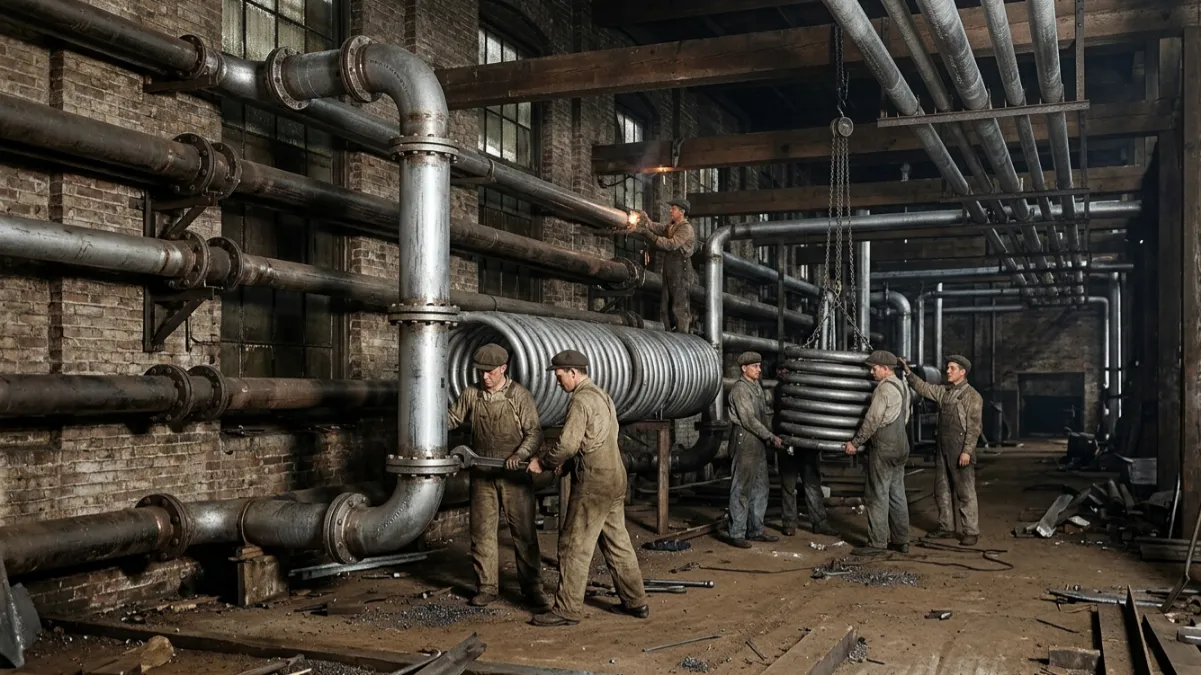
But the principles Carrier established — controlling temperature and humidity simultaneously through mechanical refrigeration — were the foundation on which everything else was built.
The Patent and the Rise of a New Industry
In 1906, Carrier filed a patent for his “Apparatus for Treating Air.” It was the first formal recognition of air conditioning as a technology.
Industries quickly took notice. Textile mills, pharmaceutical companies, and food processing plants all adopted the system. Humidity control wasn’t just a luxury for printers — it was critical for manufacturing precision products of all kinds.
Then, in 1915, Carrier co-founded the Carrier Engineering Corporation. What started as a solution to one factory’s problem was now a full-blown industry.

When the Movie Theaters Got Cold
The 1920s marked the moment air conditioning stepped out of the factory and into public life — and the public went wild for it.
Theater owners began installing cooling systems in their cinemas. During the hot summer months, people didn’t just go to the movies for entertainment. They went for the cold air.
For many Americans, it was the first time they had ever experienced mechanically cooled air indoors. It felt like magic.
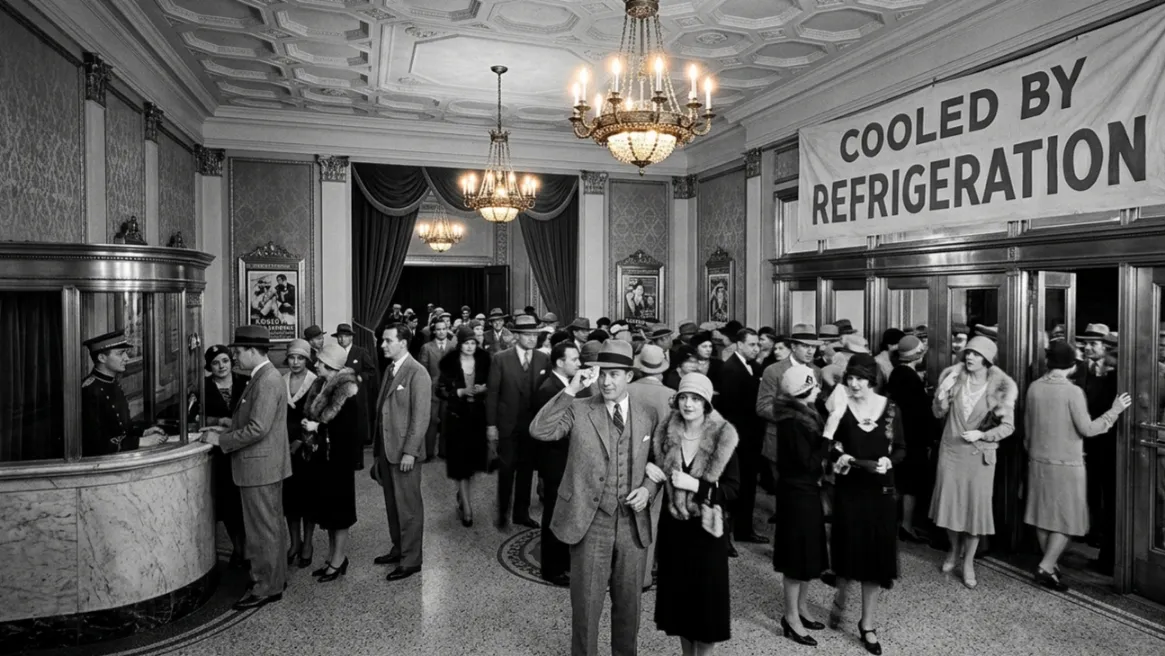
The phrase “summer blockbuster” has its roots in this era. Studios timed their biggest releases to the summer because that’s when crowds flocked to air-conditioned theaters, desperate for relief from the heat.
The Window Unit — A Revolution With a Price Tag
By 1931, the technology had shrunk enough to fit inside a window frame.
The first residential window air conditioners hit the market — and they caused a sensation. Here, finally, was a machine that could cool a single room in an ordinary home.
There was just one problem.
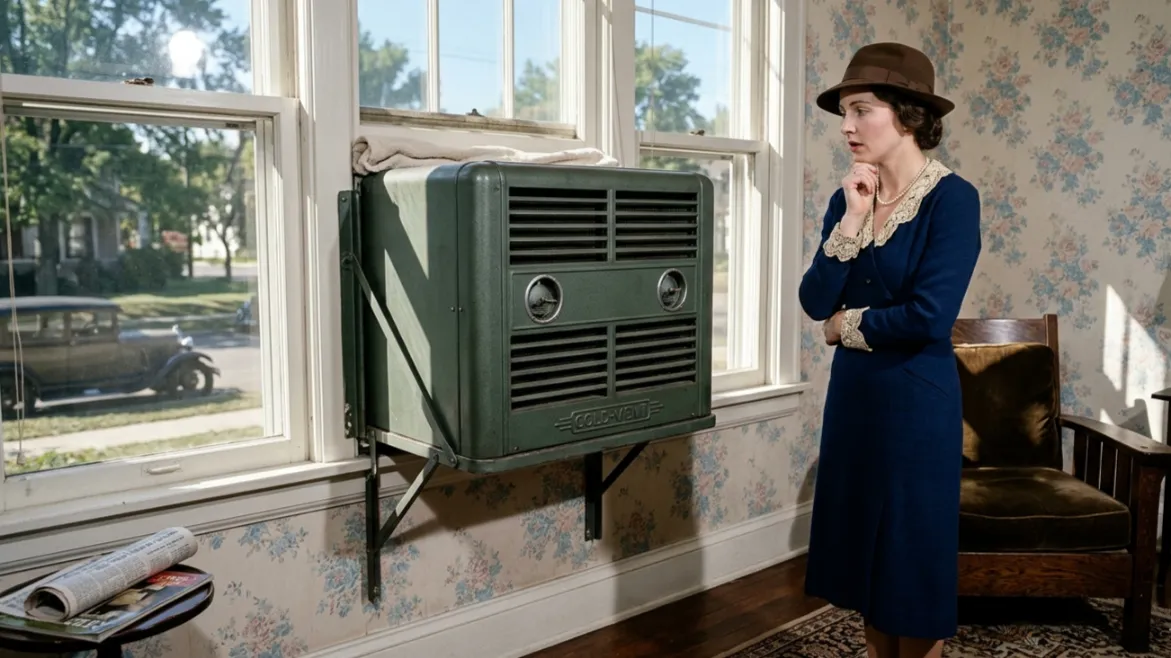
The price was staggering. A single window unit costs between $10,000 and $50,000 in today’s money. For most working families in Depression-era America, it was simply out of reach. Air conditioning remained a symbol of wealth and privilege for decades.
Only hotels, department stores, and the homes of the very rich could afford the luxury.
World War II Changed Everything
The war years accelerated technology in ways no one anticipated. Manufacturing processes improved rapidly. Materials became lighter and more efficient. Engineers learned how to build smaller, more powerful machines.
After the war ended, those advances flooded the consumer market.
Throughout the 1950s and 1960s, air conditioner sales in the United States exploded. Millions of middle-class families installed units in their homes for the first time. What had once been an industrial giant and then a rich man’s luxury was now becoming a standard household appliance.

Meanwhile, the American South — long considered too hot for comfortable urban living — began its dramatic population boom. Cities like Houston, Phoenix, and Miami grew rapidly, largely because air conditioning made them livable year-round.
From Window Units to Split Systems
As demand grew, innovation kept pace.
Window units gave way to split air conditioners — systems with an indoor unit and an outdoor compressor connected by refrigerant lines. Split ACs were quieter, more efficient, and could cool larger spaces without entirely blocking a window.
Eventually, inverter technology arrived and changed the economics of cooling. Traditional AC units ran at full power until the room reached the desired temperature, then shut off completely. Inverter systems modulate their speed continuously, maintaining temperature without cycling on and off.
The result was dramatically lower electricity consumption — a major selling point as energy costs rose worldwide.
The Untold Story of Coca-Cola: A Man Who Just Wanted to Escape Pain
The Smart Air Conditioner
Today’s air conditioners bear almost no resemblance to the room-sized machine Carrier installed in 1902.
Modern units filter airborne particles, balance humidity levels, and can be controlled from a smartphone anywhere in the world. Some models use artificial intelligence to learn a household’s schedule and preferences, adjusting cooling patterns automatically to maximize comfort and minimize energy use.
Certain high-end systems integrate with smart home platforms, responding to voice commands or syncing with weather forecasts to anticipate temperature changes before they happen.
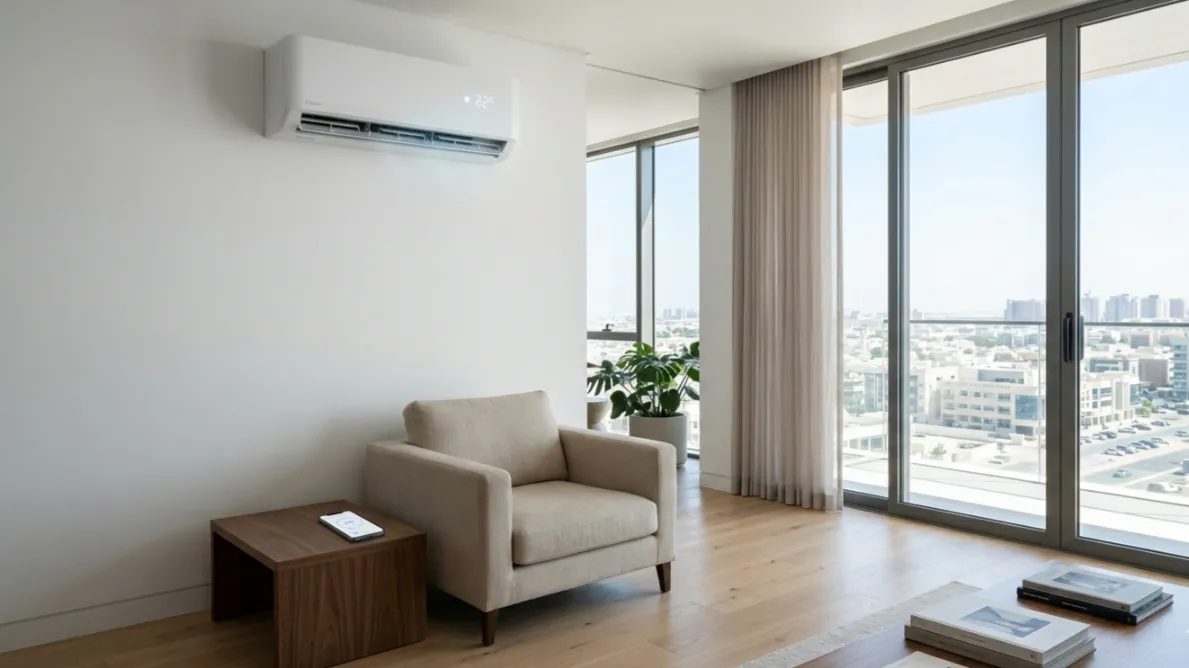
From a single room-sized industrial machine consuming vast amounts of electricity, the air conditioner has evolved into a precise, intelligent, and increasingly efficient tool.
A Legacy That Reshaped the World
Willis Carrier set out to solve a paper-and-ink problem in a Brooklyn printing factory. What he built instead was one of the most consequential inventions in human history.
Today, air conditioning is essential to hospitals, where precise temperature control protects patients and medicines. It keeps data centers from overheating — the digital infrastructure that runs the modern internet. It makes skyscrapers in tropical climates habitable and enables deep-underground mining operations to function safely.
The history of the air conditioner is not just the story of a machine. It’s the story of how one engineer’s creative problem-solving reshaped architecture, urban planning, global migration, industrial production, and daily human life.
The next time you reach for the remote and feel that first wave of cool air wash over you, remember: it all started with a humidity problem, a determined young engineer, and a machine the size of a room.