
The Strange Afterlife of Elmer McCurdy
Elmer McCurdy was an unsuccessful outlaw killed in a 1911 shootout. After his death, his unclaimed, mummified remains spent 66 years as a traveling carnival attraction and funhouse prop. His identity was eventually forgotten, and he was mistaken for a wax mannequin by various owners and audiences.
In 1976, a television crew discovered McCurdy’s true nature when his remains were damaged during filming. Forensic investigators identified the body, leading to his burial in Oklahoma in 1977. His grave was covered in concrete to ensure he would never be used as a public spectacle again.
He was a failed outlaw who died in a shootout nobody remembered. But for the next 66 years, his body kept traveling — through carnivals, sideshows, and amusement parks — while the world forgot he had ever been a real person.
This is the story of Elmer McCurdy, and it is stranger than any fiction.
A Dream Borrowed from a Dying Era
Elmer McCurdy was born in 1880, at the tail end of the American Old West. The era of outlaws and open frontier was fading fast, but for a young man with no clear direction, the romanticized stories of bank robbers and train bandits held a powerful pull.
He wanted that life — the thrill, the money, the legend.
What he got instead was a string of failures.
His criminal career was disorganized from the start. Small jobs, poor planning, and even worse execution defined his years as an outlaw. He never pulled off anything that made headlines. He never became the legend he imagined.
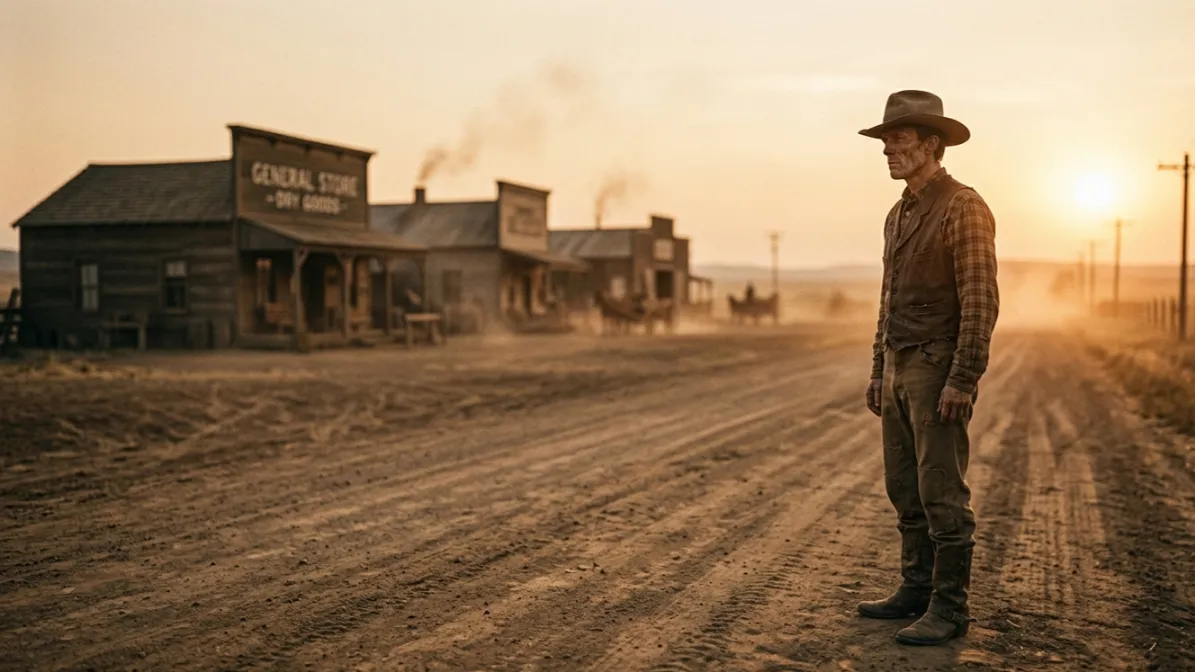
In October 1911, it all came to an end in Oklahoma. During a botched robbery, McCurdy was cornered by a posse and killed in a shootout. He was 31 years old, broke, and entirely unknown.
No family came to claim the body.
The Undertaker’s Unusual Decision
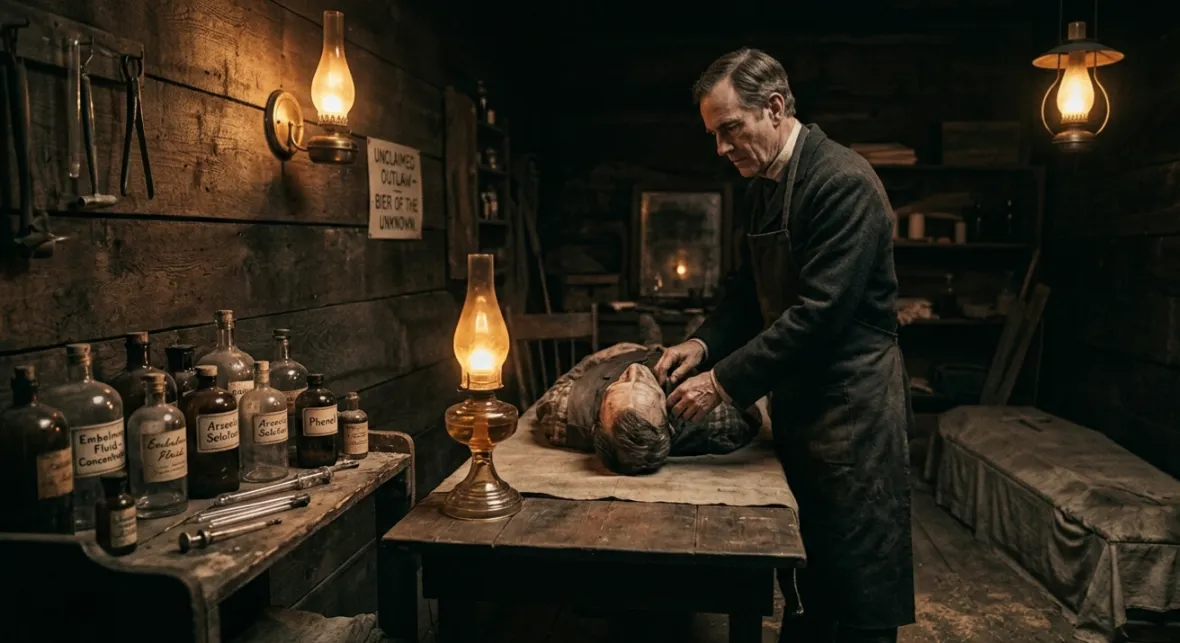
With no next of kin and no burial funds, a local undertaker in Pawhuska, Oklahoma, took possession of McCurdy’s body. Using arsenic-based embalming techniques common at the time, he preserved the corpse remarkably well.
Then he made a decision that would set the next six decades in motion.
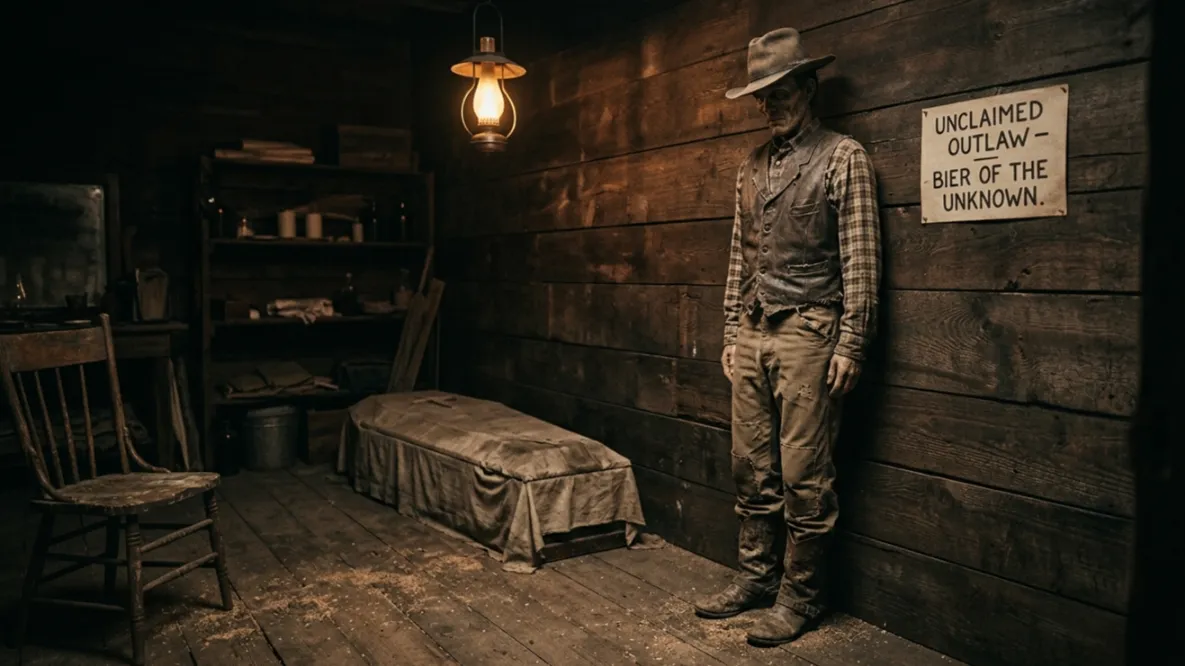
Rather than bury an unclaimed body at public expense, the undertaker put McCurdy on display. Visitors could pay a small fee to see the outlaw who wouldn’t give up. The body was propped upright, a rifle placed in its hands, and the legend — such as it was — began.
It sounds absurd. But it worked.
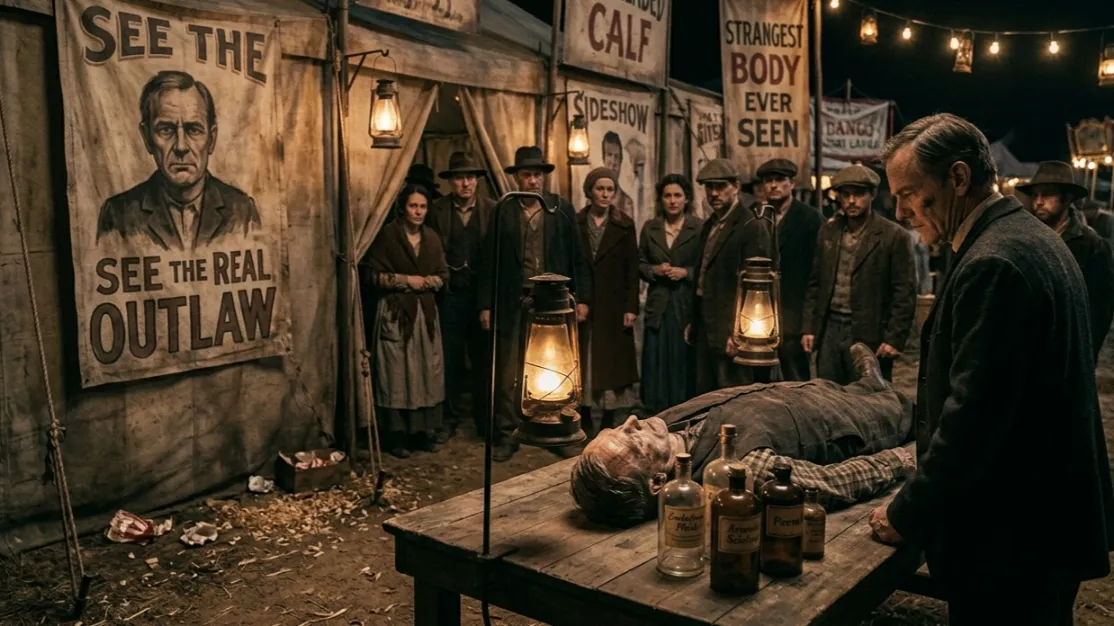
People paid. People stared. And Elmer McCurdy, who had never succeeded at anything in life, was finally drawing a crowd.

Sold, Passed On, and Forgotten
About five years after his death, two men arrived claiming to be McCurdy’s long-lost brothers. The undertaker, believing the family had finally come to give him a proper burial, released the body.
They were not his brothers.
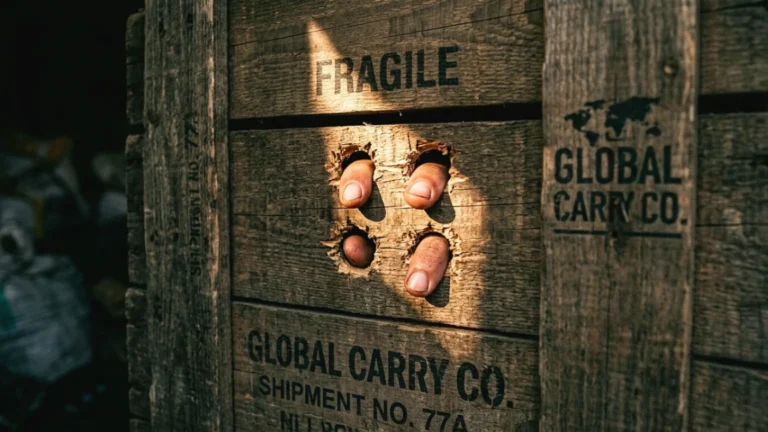
The men were carnival promoters. They quietly sold McCurdy’s mummified body into the traveling sideshow circuit, where it passed from show to show across the country. He became a prop — billed under various names, displayed alongside bearded ladies and two-headed animals, dragged from state to state with no record of where he came from or who he had been.
Over the years, the truth of his identity faded completely. To the people who displayed him, he was just an exhibit. To the crowds who saw him, he was just a curiosity.
Elmer McCurdy had become an object.
Decades of Drifting
Through the 1920s, 1930s, and beyond, McCurdy’s body kept moving. It passed through wax museums, haunted house attractions, and low-budget carnivals. At various points, it was painted, dressed in costumes, and hung from props to look more dramatic.
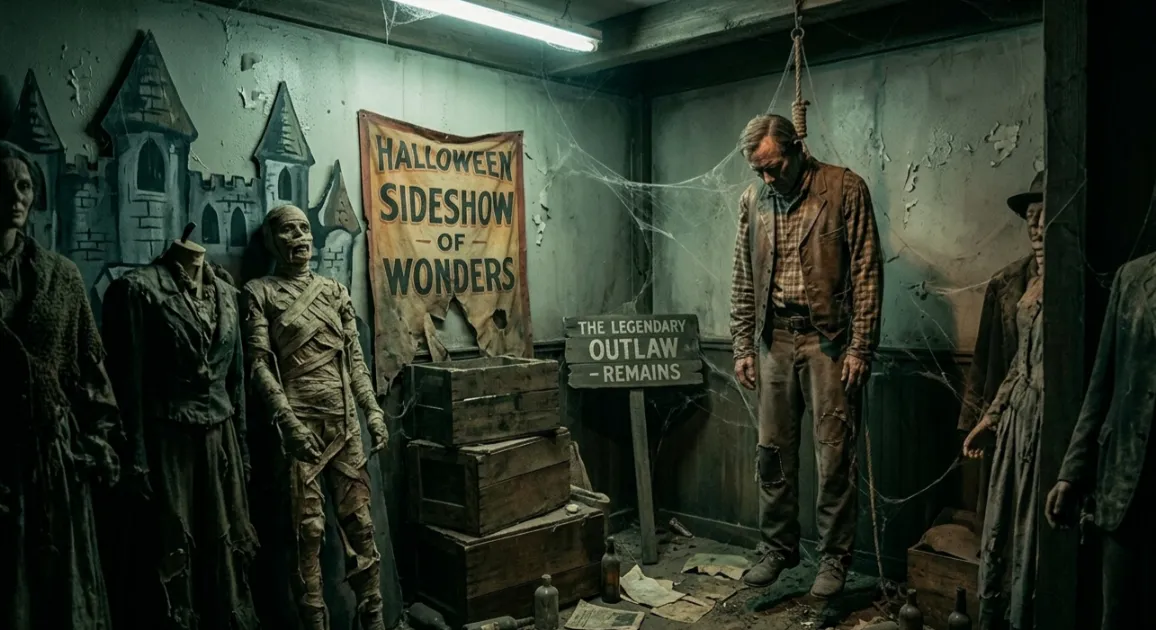
No one asked too many questions. In the world of traveling shows, unusual attractions rarely came with paperwork.
Meanwhile, the real Elmer McCurdy — the person, the history, the name — disappeared entirely from public memory. He had no grave, no obituary anyone remembered, and no family to carry his story forward.
He existed only as a thing to be looked at.

The Moment Everything Changed
In December 1976, a film crew arrived at the Nu-Pike Amusement Park in Long Beach, California, to shoot an episode of The Six Million Dollar Man. While setting up on the funhouse set, a crew member reached out to move what appeared to be a painted mannequin hanging from the wall.
The arm snapped off.
Inside was a human bone.
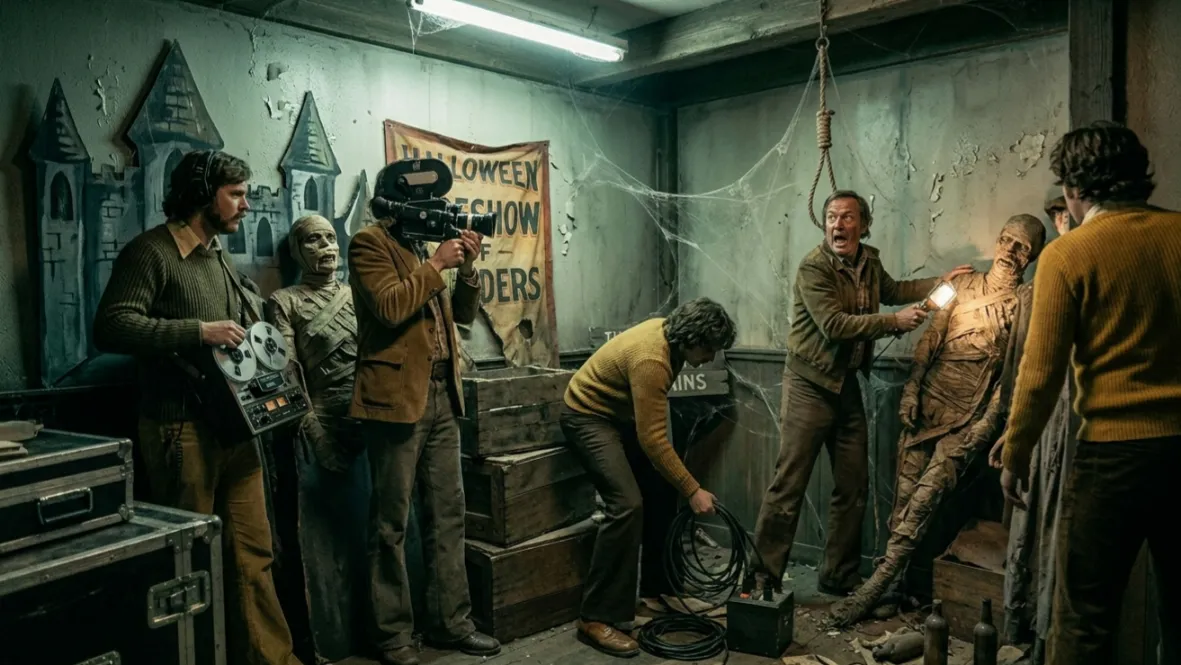
What followed was a full investigation by the Los Angeles County Coroner’s office. The “prop” was not a prop at all. It was a real, preserved human body — one that had been circulating through American entertainment for over six decades.
Forensic examination and historical detective work eventually led investigators to a single name: Elmer McCurdy.
Half-Hangit Maggie: The Scottish Woman Who Survived Her Own Hanging
A Burial, Finally
In April 1977 — 66 years after his death — Elmer McCurdy was buried at the Summit View Cemetery in Guthrie, Oklahoma, not far from where he had died.
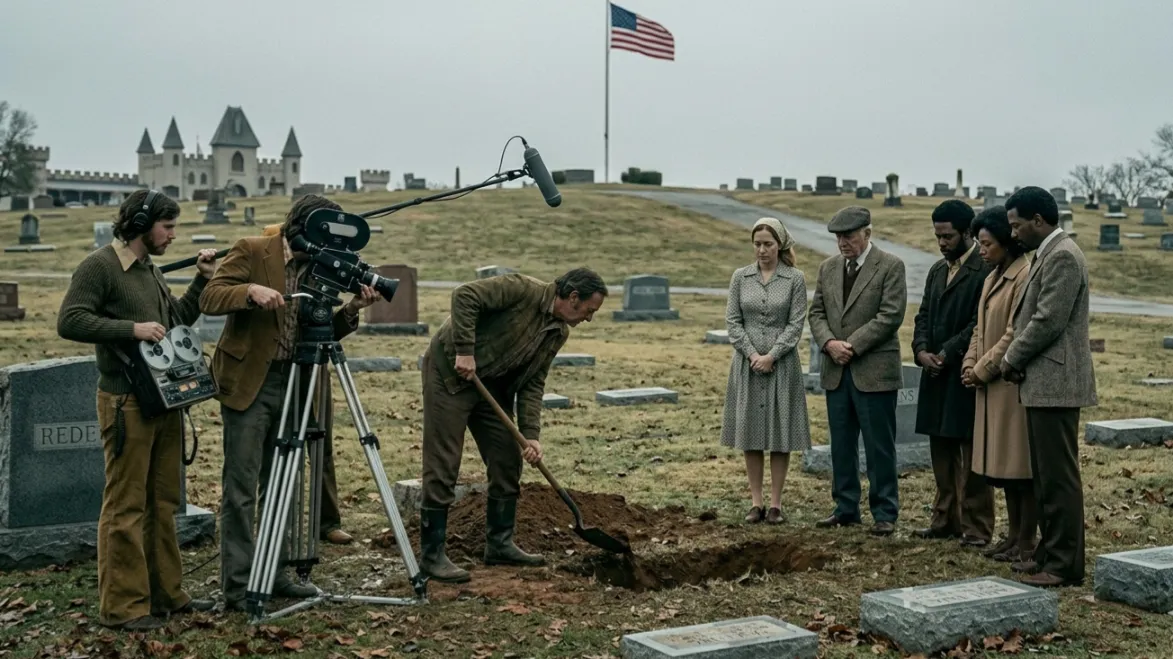
The funeral was attended by a small group of historians and officials who felt he deserved, at the very least, a proper ending.
And because the world had learned its lesson, there was one final precaution.
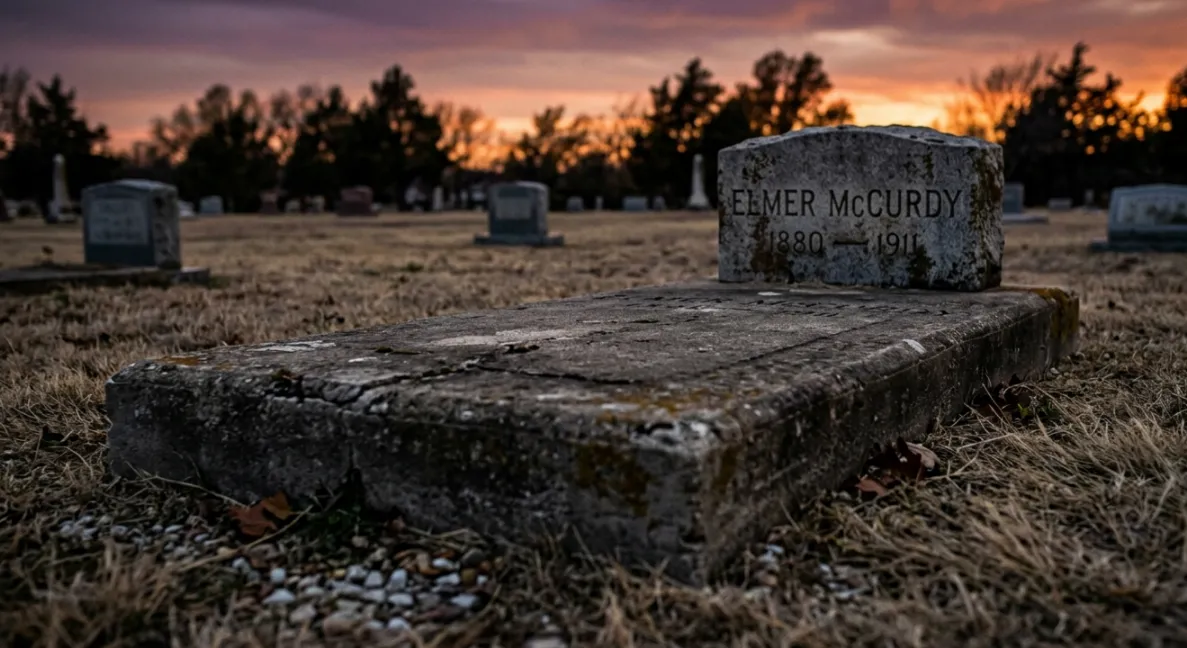
Two feet of concrete were poured over the coffin to make sure that Elmer McCurdy, outlaw and accidental exhibit, would never be put on display again.
Conclusion
The story of Elmer McCurdy is one of the most bizarre chapters in American history — a failed outlaw whose death turned into a decades-long spectacle. He spent his life chasing a legend he never achieved, and then spent 66 years as an unwitting exhibit, forgotten as a human being while his body traveled the country.
His story raises uncomfortable questions about dignity, identity, and what we owe the dead.
In the end, McCurdy got the one thing that had eluded him in life and for most of his strange, extended afterlife: a quiet place to rest, sealed beneath concrete, finally left alone.